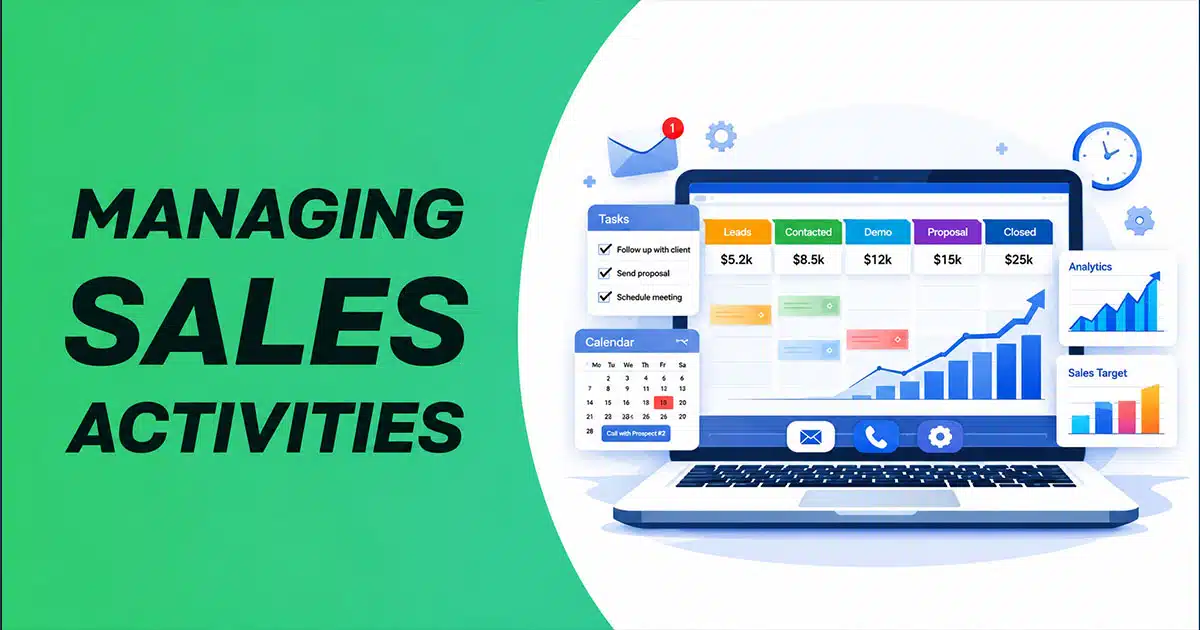
Sales activity tracking helps sales teams work with more clarity, structure, and confidence. When every call, follow-up, task, and interaction is recorded in one place, sales reps understand what to do next and managers gain a clear view of team performance. Modern sales environments move quickly, and without accurate activity data, opportunities slip through the cracks and forecasting becomes uncertain.
A strong tracking system brings order to daily work, supports better decisions, and helps teams focus on activities that move deals forward. With real-time insights and organized workflows, businesses strengthen their sales process, improve collaboration, and close deals more consistently. Sales activity tracking ultimately creates a foundation for stronger sales outcomes and smoother team operations.
What Is Sales Activity Tracking
Sales activity tracking is the process of recording and monitoring every action sales teams take throughout the sales process. A crm system for sales often powers this workflow by organizing customer data, crm data, and all sales activities in one place. A strong crm solution helps teams understand how customer interactions progress from first outreach to deal closure.
With a clear view of the customer journey, sales teams know which actions create momentum and which require follow-up. Customer relationship management tools also ensure no conversation or detail gets lost. By capturing these insights consistently, businesses build a structured sales process that supports better decisions, stronger relationships, and more predictable results.
Key Features Of The Sales Activity Tracking Tools
Sales activity tracking tools help teams work smarter by centralizing tasks, communication, and customer updates. A strong CRM platform brings clarity to daily work, improves forecasting, and keeps sales teams aligned. The right customer relationship management software accelerates decision-making and supports long-term growth.
Real-Time Activity Visibility
Sales teams need instant clarity on calls, emails, demos, and deal to track progress. CRM tools provide real-time visibility so managers and reps always know what is happening across the pipeline. This reduces confusion and keeps everyone aligned on priorities.
A reliable CRM platform ensures no activity goes unnoticed. Whether someone uses monday CRM, zoho CRM, hubspot CRM, or another option, real-time updates help teams track engagement accurately and stay focused on high-value opportunities.
Centralized Task And Workflow Control
A strong CRM software solution organizes tasks, follow-ups, and reminders in one place. This prevents missed commitments and allows reps to manage their day with confidence. Sales teams stay on schedule because everything they need is visible and structured.
Centralized workflows also help managers streamline coaching and remove bottlenecks. The best CRM software keeps processes consistent across teams, ensuring that every rep follows the same proven method.
Automated Data Capture For Accuracy
Manual activity entry wastes time and creates inconsistent records. Essential CRM features include automatic tracking of emails, cold calls, notes, and touchpoints. Automation ensures that customer activity is recorded without extra effort from the sales team.
Accurate data leads to stronger insights and cleaner pipeline management. Customer relationship management software that captures information automatically helps leaders evaluate performance and make better strategic decisions.
Strong Integration With Daily Sales Tools
Modern sales teams rely on calendars, email platforms, communication apps, and scheduling systems. Sales activity tracking works best when CRM tools integrate directly with these systems. Smooth integration removes friction and ensures consistent data flow.
A CRM platform with strong integration improves adoption because it fits naturally into workflows. Whether someone explores a free trial of Gain.io, Monday CRM, Zoho CRM, or HubSpot CRM, seamless connectivity helps teams stay productive without switching between multiple apps.
Better Forecasting And Sales Insights
Sales activity records reveal patterns that improve forecasting. CRM software analyzes emails sent, calls made, deals touched, and engagement timelines to highlight what drives success. Managers gain better visibility into pipeline health and team performance.
Customer relationship management software that offers deep insights helps companies adjust Business Strategies quickly. Teams forecast more accurately, plan resources better, and understand where deals are moving or slowing down.
Clear Performance Tracking For Sales Teams
Sales leaders need clarity on individual and team activity levels. Essential CRM features include dashboards, scorecards, and activity breakdowns that reveal who is performing well and who needs support. Transparent activity tracking improves accountability and coaching.
Performance visibility also strengthens motivation. Reps see their progress in real time, helping them stay focused and improve consistently. This feature appears across the best CRM software options, including popular choices such as Gain.io CRM.
Why Sales Teams Struggle Without Activity Visibility
Sales teams lose clarity and momentum when they cannot see customer activity, internal progress, and key touchpoints. Lack of visibility slows the entire sales cycle, weakens decisions, and disrupts business processes that drive predictable revenue growth.
Poor Insight Into Customer Activity
Sales reps often operate with incomplete information when customer activity is scattered across tools or undocumented. Missing details about current and potential customers lead to weak follow-ups and missed opportunities.
Company data becomes harder to trust when teams cannot see the full path of interactions. Without accurate visibility, reps struggle to understand intent, urgency, or engagement signals across the entire sales cycle.
Weak Alignment Across Sales Workflows
Teams fail to stay aligned when sales workflows are not clearly documented. Reps may duplicate work, skip crucial steps, or rely on outdated assumptions during deal progression.
Business processes lose consistency because no one has a clear view of activity handoffs. The lack of alignment creates friction across prioritize tasks and slows momentum throughout the entire sales cycle.
Difficulty Understanding Where Deals Stand
Managers and sales reps face challenges when they cannot see which stage each deal is in, what was done, and what is pending. Without this clarity, planning becomes reactive and inaccurate.
The sales cycle becomes unpredictable because no one can pinpoint whether deals are moving forward or stalling. This uncertainty limits forecasting accuracy and weakens overall execution.
Gaps In Managing Relationships
Teams struggle to manage relationships effectively when customer activity and notes are scattered. Reps lose context about past touchpoints, concerns, or objections raised by current and potential customers.
Relationship gaps make conversations feel disconnected. Customers notice when a rep lacks awareness of previous interactions, which harms trust and reduces the chance of winning complex deals.
Delayed Decisions And Slow Deal Movement
When sales reps lack clear visibility, every decision takes longer. They waste time searching for information, checking multiple sources, or waiting on updates from others. Slow access to company data stretches out sales workflows unnecessarily.
Deal progress slows because no one knows who engaged last, what action is required next, or where bottlenecks exist. The result is a longer sales cycle and fewer closed deals.
Essential Sales Activities That Require Daily Tracking
Daily tracking keeps sales teams organized and consistent across the entire sales pipeline. Strong visibility helps teams understand performance, manage leads effectively, and ensure every opportunity receives the right attention at the right time.
Sales Calls And Follow-Ups
Sales calls shape the pace of every deal, making them one of the most important activities to track. Teams gain clarity on conversation history, objections, next steps, and overall engagement when every call is logged properly.
Accurate tracking improves follow-up timing and reduces missed opportunities. This helps reps maintain meaningful contact with prospects while strengthening business development efforts across the sales pipeline.
Lead Management And Contact Management
Effective lead management starts with knowing where each lead stands, how they entered the funnel, and which actions were taken. Tracking helps teams manage leads consistently and prevents promising prospects from slipping away unnoticed.
Contact management also benefits from organized sales data. Reps understand past interactions, preferences, and decision-makers clearly, allowing them to personalize outreach and manage relationships with more confidence.
Sales Pipeline Movement
Daily updates keep the sales pipeline accurate and actionable. Teams need live visibility to know which deals move forward, which stall, and where immediate attention is required.
Tracking pipeline movement helps companies forecast better and align resources strategically. Clear sales data supports smarter decisions, stronger prioritization, and a more predictable path to revenue.
Activities That Support Business Development
Consistent tracking helps teams see how marketing campaigns influence outreach and how reps generate leads each day. Activities such as prospecting, email outreach, and engagement touchpoints become easier to evaluate when logged consistently.
Tracking these efforts allows leaders to measure which actions deliver the strongest return. This creates a clearer strategy for improving business development and strengthening future marketing campaigns.
How Activity Tracking Improves Pipeline Accuracy
Accurate activity tracking gives sales teams a clearer view of pipeline health. Strong visibility helps leaders make better sales predictions, understand performance patterns, and support strategies that improve customer experience, customer satisfaction, and customer retention.
Better Sales Predictions With Real Data
Activity tracking strengthens sales predictions by giving teams complete visibility into outreach, engagement, and movement across the pipeline. When every interaction is logged, leaders can identify what drives momentum and what slows deals down.
Data analysis becomes far more reliable because the information reflects actual team behavior. Predictive decisions improve when analytical CRM platforms combine activity records with deal trends and performance metrics.
Stronger Insights Through Analytical CRM
Analytical CRM systems use detailed activity data to highlight patterns across customer behavior, deal outcomes, and rep performance. These insights help teams understand which actions positively influence results and where improvements are needed.
Better visibility encourages smarter prioritization. Leaders can identify high-value opportunities sooner and focus on the deals most likely to close. Activity trends support decisions that strengthen customer satisfaction and long-term customer retention.
Reliable Execution With Operational CRM
Operational CRM tools depend on accurate activity tracking to automate tasks, schedule follow-ups, and manage day-to-day processes. When updates are consistent, automation flows correctly and teams avoid missed steps.
A more reliable workflow strengthens customer experience by ensuring every prospect receives timely outreach. Consistent execution helps maintain deal momentum and reduces the chance of losing opportunities due to gaps in follow-up.
Better Collaboration Through Collaborative CRM
Collaborative CRM platforms rely on activity visibility to help teams share updates, coordinate communication, and manage relationships as a unified group. Activity records prevent duplicated work and keep conversations consistent across channels.
Reliable collaboration improves customer satisfaction because every rep understands the full context of previous interactions. This continuity helps teams build trust and maintain a stronger customer experience throughout the sales journey.
Better Control Through Project And Document Management
Accurate activity tracking supports project management and document management by linking key tasks, files, and updates to each deal. Teams know exactly which documents were shared, which approvals are pending, and which tasks require attention.
This level of clarity helps prevent delays and miscommunication. Strong organizational control keeps the pipeline accurate and ensures deals progress smoothly toward closing without hidden blockers or missing information.
How Tracking Activities Strengthens Team Accountability
Activity tracking gives sales teams clarity on responsibilities, progress, and performance. A structured view of daily actions helps leadership guide sales reps more effectively while supporting service teams that rely on accurate information to deliver better customer support.
Clear Responsibility Across Sales Teams
Sales tools and sales CRM platforms highlight who completed each task, who engaged a prospect last, and what actions remain. This clarity removes confusion about ownership and ensures every sales rep understands their response rates.
Teams work with more confidence when tasks are visible. Service teams also benefit because they can reference accurate activity records instead of relying on assumptions or outdated notes.
Strong Alignment Through Management Software
Management software keeps everyone aligned by showing activity timelines, deal stages, and communication history. Teams stay organized because each update becomes part of a shared record that guides next steps.
Stronger alignment reduces delays and prevents duplicated effort. Managers gain a reliable view of contribution levels, allowing them to provide targeted coaching and maintain consistent performance across the group.
Better Support With Service Tools
Service tools paired with a sales CRM help teams deliver better customer support because all actions are transparent. When activity tracking is consistent, support teams understand customer issues, previous conversations, and existing commitments.
Access to complete history helps teams respond faster and more accurately. This strengthens accountability by ensuring every customer receives informed, high-quality service regardless of who engages them.
Enhanced Flexibility With Customizable CRM
A customizable CRM lets organizations track activities in a way that matches team structure and workflow. Sales reps log actions quickly, and managers tailor dashboards to show the metrics that matter most.
Customization reduces clutter and improves focus. Teams maintain accountability because their CRM reflects real processes, not generic templates that fail to match actual work habits.
Seamless Coordination With Third-Party Software And Social Media
Modern sales work spreads across multiple channels, including emails, calls, social media, and third party software. Activity tracking unifies these actions into a single record, giving sales professionals reps a complete view of engagement.
Unified tracking keeps collaboration strong because no team member misses critical updates. Accountability rises as every action, from outreach to follow-up, becomes visible and traceable across the entire workflow.
Sales Coaching Benefits From Activity Tracking
Sales coaching becomes far more effective when leaders can review real actions, complete histories, and all their customer data. Activity visibility removes guesswork, strengthens guidance, and helps teams improve as the business grows with more clarity and confidence.
Shorter Learning Curve For New Reps
New reps learn faster when coaches can reference real activity records instead of relying on memory or incomplete updates. A clear learning curve forms because trainees see which actions work, which fail, and which patterns lead to progress.
Structured visibility helps coaches personalize training. Reps understand expectations sooner, gain practical context, and adapt their approach with more accuracy. Better insights reduce early mistakes and build stronger performance habits.
Better Insights Through AI-Powered Coaching
AI-powered systems enhance coaching by analyzing patterns in calls, emails, and customer interactions. AI tools highlight strengths, weak points, and opportunities for improvement based on actual activity, not assumptions or random snapshots.
These insights help leaders deliver coaching grounded in facts. Reps receive clear direction supported by trends, performance markers, and consistent data that reflect their daily work. The result is more precise development and faster skill growth.
Faster Workflows With Automation Support
Modern platforms automate routine tasks that distract reps from high-value work. Coaches gain more time to guide strategy because systems automate workflows, track updates, and organize interactions without manual effort from the team.
Automatic updates also give managers a reliable view of rep activity. With better transparency, coaching focuses on execution quality, not administrative reminders. Automation strengthens accountability and ensures coaching targets meaningful performance areas.
Stronger Processes As The Business Grows
Activity tracking helps teams streamline processes as the business grows. Coaches see exactly where deals slow down, where messaging fails, and where reps need better support. With these insights, leaders refine tactics to match scaling demands.
A clean user interface improves overall adoption. Reps log actions faster, review guidance quickly, and maintain consistent habits. As the business grows, these refinements support smoother workflows and more predictable results.
Better Visibility Into All Your Customer Data
Coaches make better decisions when they can review all your customer data in one place. Activity tracking combines interactions, notes, sentiment, and timing into a unified view that shows what influences outcomes.
This visibility strengthens coaching sessions because leaders understand context behind wins and losses. With clearer insight, teams streamline processes, adjust communication methods, and refine strategies built around real customer behavior.
How Centralized Data Speeds Up Deal Cycles
Centralized data helps teams work faster by removing information gaps, unifying communication, and improving the flow of business processes. A strong CRM system gives sales teams the clarity needed to accelerate deal movement and increase overall sales strategy success.
Unified View Across The CRM System
A centralized CRM system brings customer details, interactions, and deal info into one place. Teams avoid searching multiple platforms and move confidently through each stage because critical data stays accessible and organized.
Sales automation becomes more effective when the system holds complete records. Reps act faster, respond accurately, and reduce delays caused by missing insights or scattered updates.
Faster Collaboration Across Teams
Collaborative CRM tools help sales activity tracker, customer support, and marketing teams share updates without confusion. A unified record prevents duplication and keeps everyone aligned on the latest customer status.
Cross-team clarity strengthens momentum across the deal cycle. Marketing tools feed qualified leads into the CRM system, while support teams offer context that helps reps position solutions more effectively.
Smarter Decisions Through Operational CRM
Operational CRM platforms streamline daily actions by automating repetitive tasks and guiding teams through consistent workflows. Reps move quickly because the system eliminates manual steps that slow the deal cycle.
Centralized data improves forecasting and planning. Sales managers understand pipeline status instantly, helping them prioritize actions that move deals forward without hesitation.
Strong Advantage With AI Powered Insights
AI powered systems analyze centralized data to highlight deal risks, customer intent, and next best actions. Reps adjust strategies based on real patterns instead of guesswork.
These insights shorten deal cycles by showing where to focus effort. Teams avoid dead ends and spend more time on accounts with strong potential for conversion rates.
Flexible Setup With A Customizable CRM
A customizable CRM helps companies structure workflows, fields, and dashboards around their unique business processes. Reps operate faster because the system reflects the way they already work.
Custom layouts, tailored automations, and role-based views simplify daily actions. This flexibility strengthens sales success by reducing friction and keeping momentum steady through every stage of the deal cycle.
Common Mistakes In Sales Performance Activity Tracking
Sales teams often struggle with activity tracking when systems are fragmented or company data is incomplete. Small businesses face these challenges more often because resources are limited and the learning curve feels overwhelming without the right structure.
Poor Planning Around CRM Cost
Many teams choose a platform without understanding long-term CRM cost. This creates frustration when features are locked behind upgrades or when the system becomes too expensive as the team grows.
A rushed decision leads to incomplete tracking habits. Companies end up with inconsistent activity logs because reps avoid tools that feel restrictive or overpriced.
Complications During Data Migration
Data migration becomes a major barrier when teams switch tools without preparation. Missing fields, broken links, and inaccurate company data reduce confidence in the new system quickly.
Poor migration also disrupts daily tracking. Sales activity management software becomes harder to use when important history is unavailable, and teams hesitate to rely on the new platform.
Misalignment With Small Businesses Needs
Small businesses often adopt tools designed for larger organizations. As a result, the platform feels too complex and creates friction instead of clarity.
Tracking becomes inconsistent because the system does not match everyday tasks. Tools should support simple activity logging instead of adding unnecessary steps to basic routines.
Slow Adoption Due To Learning Curve
A steep learning curve discourages teams from updating activities consistently. When the interface feels confusing, reps delay logging interactions or forget entirely.
Sales tools and service tools lose value if users cannot navigate them quickly. Poor adoption leads to missing activity records and unreliable tracking insights.
Lack Of Automation And Custom Workflows
Teams struggle when they do not automate processes that save time. Without automation, reps manage everything manually and lose momentum throughout the day.
Custom fields workflows are rarely set up correctly, confusing next steps. Third-party software is often connected poorly, making tracking inconsistent across platforms and weakening the overall data flow.
Gain.io Advantages For Tracking Sales Activities
Gain.io gives sales teams a clearer, faster, and more connected way to track daily activities by combining crm integration with all the tools they already use. The platform brings sales automation, social media insights, and organized activity data into one place, making it easier for teams to manage relationships and stay aligned.
The clean user interface helps reps find information quickly, while shared visibility supports better customer support across departments. Everyone sees the same history, which improves the overall existing customer experience and reduces confusion during handoffs.
Gain.io also helps teams streamline processes by allowing them to automate workflows and reduce manual steps. This saves time, strengthens consistency, and keeps deal momentum steady. Leaders gain clearer insight into performance and bottlenecks, helping them understand where deals slow down and how to guide their teams more effectively.
FAQs
What Are The Most Important Key Metrics To Track In Sales?
Sales leaders focus on key metrics that reveal progress across the pipeline. These indicators help teams track sales performance, monitor trends in sales goal activity data, and understand where improvements are needed to sell smarter and reach sales targets.
How Does Activity Tracking Improve Accurate Sales Forecasts?
Accurate sales forecasts depend on consistent tracking of key sales activities. When teams update every interaction, managers gain clearer sales activity data that reveals momentum, identifies risks, and helps predict closing deals with greater precision.
Why Does Tracking Daily Actions Help With Closing Deals Faster?
Tracking sales ensures every deal stays on schedule because reps never lose visibility of follow-up tasks or past interactions. This level of clarity strengthens team performance and keeps prospects moving toward decisions more predictably.
How Can Sales Activity Data Improve Sales Productivity?
Sales productivity increases when teams understand which actions influence outcomes. Reviewing sales activity data helps sales leaders identify the patterns that drive closing deals, refine their strategy, and guide teams to sell smarter with less effort.
How Do Sales Leaders Use Activity Tracking To Hit Sales Targets?
Sales leaders use activity tracking to maintain visibility across the entire pipeline and ensure reps focus on key sales activities. This focus keeps team performance strong, reduces uncertainty, and helps everyone move steadily toward shared sales targets.