A strong sales process does not happen by chance. It requires clear steps, defined responsibilities, and consistent execution across the entire sales team. Without a structured approach, opportunities often stall, follow-ups are missed, and revenue goals become difficult to achieve.
A sales execution checklist helps businesses standardize activities, improve accountability, and create a more successful sales process. It guides teams through every stage of the buyer journey, from prospecting and qualification to closing and post-sale engagement.
Modern B2B organizations also rely on customer success teams to maintain long-term relationships and support customer success after the deal closes. When sales and customer teams work together, businesses can improve retention and drive sustainable growth.
Building an effective sales execution checklist strengthens your sales strategy, improves team performance, and creates a repeatable process that delivers consistent results.
What Is A Sales Execution Checklist
A sales execution checklist is a structured framework that guides sales teams through every stage of the sales cycle. It outlines the activities, responsibilities, and milestones required to move opportunities from prospecting to closing. By following a consistent process, teams can reduce errors, improve accountability, and create a more predictable sales process.
A checklist often includes qualification criteria, value proposition development, follow-up activities, and performance measurement. Sales managers also use key performance indicators and marketing metrics to evaluate results and identify improvement opportunities.
Project management tools and B2B sales CRM platforms help teams track progress, reduce sales cycle length, and maintain visibility across deals. Organizations also review success stories and past wins to refine their approach and improve overall sales performance.
What Causes Sales Execution Gaps
Poor sales execution often happens because teams lack alignment, visibility, and consistent processes. Even experienced sales reps can struggle when workflows, technology, and communication fail to support the entire sales process.
Poor Content Findability And Usage
Sales teams rely on content to educate potential customers and support conversations throughout the sales pipeline. When presentations, case studies, and proposals are difficult to find, sales reps often use outdated materials or create their own assets.
Poor content accessibility affects sales performance and creates inconsistent messaging. Teams may struggle to communicate value effectively to different customer segments or address the concerns of the economic buyer. Easy access to sales content helps improve consistency and supports better sales execution.
Misalignment With The Buyer's Journey
Many B2B sales teams focus heavily on internal processes instead of buyer behavior. Potential customers often move through the buying process at different speeds, but sales activities may remain rigid and standardized.
When sales teams fail to understand customer needs, deals can stall. Market feedback and customer conversations provide valuable insights that help teams adjust their approach. Aligning sales activities with the buyer's journey improves engagement and creates a better customer experience.
Fragmented Technology And CRM Friction
Many organizations use multiple tools that do not work together. Data becomes scattered across emails, spreadsheets, CRM systems, and communication platforms.
Fragmented technology creates duplicate work and makes sales tasks more difficult to complete. Sales reps spend valuable time updating systems instead of speaking with customers. A disconnected technology stack also limits visibility into the sales pipeline and reduces cross-functional collaboration between teams.
Inconsistent Coaching And Lack Of Accountability
Sales managers play an important role in improving performance. Without regular coaching and clear accountability, teams often develop different selling habits and inconsistent processes.
Performance reviews, coaching sessions, and measurable goals help establish accountability. Sales execution improves when managers monitor progress, provide feedback, and support professional development. Consistent coaching also helps sales reps adapt to changing market conditions and customer expectations.
Vague Target Setting And Rigid Territories
Unclear goals and poorly designed territories often create confusion within sales teams. Representatives may compete for the same accounts or focus on the wrong customer segments.
Clear targets help teams prioritize opportunities and allocate resources effectively. Businesses should review territories regularly to reflect market conditions, buyer behavior, and business goals. Flexible planning allows organizations to adjust strategies as markets change.
Strong sales execution depends on several key elements, including alignment, accountability, technology, and collaboration. Addressing these common gaps helps B2B sales teams improve performance, strengthen customer relationships, and create a more predictable sales process.
How To Build A Sales Execution Checklist For B2B Success
Building a repeatable sales process with clear stages and steps helps teams improve consistency, increase revenue, and create better customer experiences. A structured checklist gives revenue teams clear direction and supports execution excellence across every stage of the buyer journey.
Planning And Targeting
Every successful sales approach starts with proper planning. Teams should identify their target market, analyze customer segments, and understand the needs of key stakeholders.
Clear planning improves resource allocation and helps sales teams focus on high-value opportunities. Understanding customer pain points also allows teams to deliver more relevant messaging and create stronger connections with buyers.
Lead Qualification (The Entry/Exit Criteria)
Qualification criteria help sales teams determine which opportunities deserve attention. Clear entry and exit rules prevent wasted effort and improve pipeline quality.
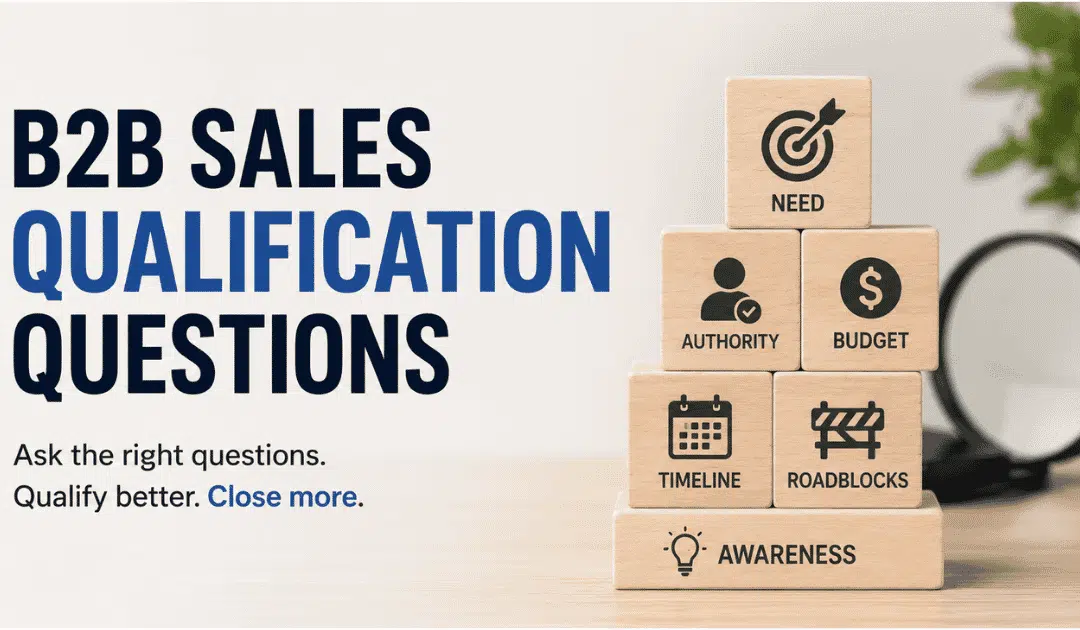
Sales teams can evaluate budget, authority, business needs, and purchase timelines before moving opportunities forward. Strong qualification also helps increase average deal size by focusing on prospects that match the ideal customer profile. Consistent qualification criteria support execution excellence and improve forecasting accuracy across revenue teams.
Solution Presentation And Pitching
A successful presentation focuses on customer problems rather than product features. Sales teams should demonstrate how their solution addresses pain points and delivers measurable business value.
Sales enablement materials such as case studies, presentations, and success stories help communicate value effectively. Teams that tailor presentations to customer needs often achieve better engagement and stronger buying interest. Clear communication also helps build trust with decision-makers and key stakeholders.
Objection Handling And Negotiation
Questions and objections are common in B2B sales. Teams should prepare responses for pricing concerns, implementation questions, and competitive comparisons.
Effective negotiation focuses on customer outcomes instead of discounts. Sales representatives who understand customer priorities can address concerns and maintain momentum throughout the buying process. Strong communication during negotiations often leads to successful outcomes and higher customer satisfaction.
Closing And Mutual Action Planning
Closing a deal requires clear next steps for both parties. Mutual action plans outline responsibilities, timelines, and implementation activities.
Collaboration between sales teams and customer success teams improves handoffs after the sale. Early involvement from customer success supports customer retention and creates a better onboarding experience. Clear expectations also help maintain trust and reduce delays after contract signing.
Track And Optimize
Sales execution requires continuous improvement. Teams should monitor key metrics such as conversion rates, average deal size, pipeline velocity, and customer retention.
Tools such as CRM platforms and Google Analytics provide valuable insights into sales performance and buyer behavior. Regular reviews help teams identify opportunities for improvement and adjust strategies as market conditions change.
Organizations that prioritize measurement and optimization create stronger sales processes, improve customer satisfaction, and achieve long-term execution excellence.
Essential Elements Of A B2B Sales Checklist
A B2B sales checklist provides structure and consistency throughout the entire sales process. It helps teams stay organized, align activities, and improve performance in a competitive world where buyers expect personalized experiences and faster decisions.
Market And Audience Definition
Every sales strategy should begin with a clear understanding of the market and target audience. Teams need to identify their ideal customer profile, analyze customer needs, and create detailed buyer persona documents.
Understanding potential buyers and decision makers helps teams deliver relevant messaging. Market research and digital channels also provide actionable insights that improve targeting and increase engagement throughout the buyer journey.
Pipeline And Process Stages
A defined sales process helps teams manage opportunities from prospecting to closing deals. Clear stages establish expectations and guide activities throughout the entire journey.
An iterative process allows teams to review performance and make adjustments when needed. Clear B2B sales pipeline stages and lead scoring also help prioritize opportunities and ensure sales representatives focus on qualified prospects.
Well-defined stages prevent deals from stalling and create greater visibility across the pipeline.
Essential Sales Assets And Content
Sales content plays a critical role during every stage of the buyer journey. Case studies, presentations, proposals, and personalized content help teams address customer concerns and demonstrate value.
Without the right assets, conversations often fall flat. Content should support different customer needs and help decision makers understand the benefits of the solution.
Integration between systems helps teams access information quickly and maintain accurate records. Technology also provides actionable insights that support forecasting, lead management, and customer engagement.
These sales pipeline CRM tools help sales teams work more efficiently and improve overall performance.
Alignment And Handoffs
Successful sales execution depends on collaboration between teams. Sales, marketing, and customer success teams should remain on the same page throughout the customer journey.
Clear handoffs prevent communication gaps and improve customer experiences after closing deals. Alignment also supports customer retention and helps businesses drive revenue over the long term.
Whether launching a new product launch or entering new markets, strong collaboration ensures teams work toward shared goals and deliver a consistent experience to customers.
How Does A CRM Improve Sales Execution
A CRM helps sales teams manage activities, improve visibility, and create a more consistent sales process. By automating tasks and organizing customer data, CRM software supports better decisions and helps teams close more deals.
Automated Lead Routing & Scoring
Sales teams often lose opportunities when leads are assigned manually. Automated lead routing sends inquiries to the right prospects based on territory, industry, or company size.
Lead scoring helps teams identify high-value opportunities and maintain a clear focus on accounts that are more likely to convert. CRM-based lead management also supports faster response times, creating a stronger first impression and improving conversion rates.
Pipeline Management
A CRM provides a structured approach to managing opportunities throughout the sales process. Visual sales pipelines that improve deal clarity help teams track deals, monitor activities, and identify bottlenecks within the pipeline.
Pipeline visibility helps managers allocate resources effectively and ensure alignment across the organization. Sales representatives can prioritize activities and focus on moving opportunities toward closing.
Following up consistently plays a crucial role in B2B sales. Automated reminders, emails, and task notifications help sales teams maintain communication without missing important opportunities.
Automation helps ensure consistency across the sales process and reduces administrative work. Sales activity tracking software also ensures representatives can spend more time speaking with customers instead of managing repetitive tasks.
Regular follow-ups also help maintain engagement throughout the buying journey.
Centralized "Single Source Of Truth"
Customer information often becomes scattered across spreadsheets, emails, and multiple systems. A CRM creates a centralized database where teams can access contacts, activities, notes, and interactions.
This single source of truth helps ensure alignment between sales, marketing, and customer success teams. Everyone works from the same information, reducing confusion and improving collaboration.
Centralized data also supports privacy compliance and helps organizations maintain accurate customer records.
Advanced Analytics & Forecasting
CRM analytics provide valuable insights into sales activities, pipeline health, and team performance. Managers can review conversion rates, sales trends, and forecast future revenue.
Advanced reporting helps teams identify opportunities, adjust strategies, and improve decision-making. Data from CRM platforms also supports social proof by highlighting successful deals and customer outcomes.
Organizations that use analytics effectively can improve performance, increase efficiency, and create more predictable sales results.
How To Build A High-Performance Sales Process
A high-performance sales process creates consistency, improves productivity, and helps teams achieve better results. Clear stages, defined responsibilities, and continuous improvement allow sales teams to reduce wasted time and move opportunities through the pipeline more efficiently.
Build An Ideal Customer Profile
Every successful sales process begins with understanding the right customer. Teams should identify company size, industry, goals, and common challenges to create an ideal customer profile.
A clear profile helps sales representatives focus on qualified opportunities instead of pursuing poor-fit accounts. Understanding customer needs also improves messaging and increases the chances of success.
Define Pipeline Stages
Well-defined pipeline stages help sales teams understand where every opportunity stands. Each stage should have specific actions, goals, and expected outcomes.
Clear stages prevent confusion and reduce wasted time. Sales managers can also identify bottlenecks and improve visibility throughout the buying process. Consistent pipeline management creates a smoother experience for both sales teams and customers.
Set Qualification Standards
Qualification standards help teams determine whether a prospect is ready to move forward. Budget, authority, needs, and timelines often play an important role during evaluation.
Strong qualification reduces unnecessary activities and helps representatives focus on high-value opportunities. Sales teams can also identify common objections earlier and prepare better responses during future conversations.
Establish Sales SLAs
Sales service level agreements create accountability and establish clear expectations. Response times, follow-up schedules, and activity requirements help teams maintain consistency.
Sales managers can use email templates, communication guidelines, and workflow standards to improve productivity. Clear expectations help sales representatives stay organized and deliver a consistent customer experience.
Monitor Sales Activities
Tracking sales activities provides valuable insights into performance. Calls, meetings, emails, and task management for sales teams help managers understand what drives results.
CRM systems allow teams to monitor activities, identify trends, and improve decision-making. A scalable sales process for growing teams, combined with regular coaching sessions and role play exercises, also helps representatives develop stronger selling skills and handle customer conversations more effectively.
Improve Pipeline Conversion
Improving conversion rates requires ongoing evaluation and continuous improvement. Sales teams should review performance data, identify obstacles, and adjust their approach based on results.
Building trust with prospects often plays a major role in moving deals forward. Customer success stories, social proof, and personalized conversations can increase confidence and improve buying decisions.
A high-performance sales process is never static. Teams that review their results, refine their methods, and focus on customer success create stronger relationships and achieve long-term sales success.
When Should Sales Teams Review Their Execution Process
Sales teams should review their execution process regularly to identify gaps, improve performance, and adapt to changing market conditions. Revisiting custom sales stages for different teams is part of this work. Most B2B organizations conduct quarterly reviews, while high-performing teams evaluate their processes monthly.
Several situations also require immediate reviews. Declining conversion rates, longer sales cycles, missed revenue targets, and lower win rates often indicate execution problems and may be improved by approaches similar to the Gain.io sales acceleration case study. Changes in customer behavior, new competitors, or product updates may also affect existing sales processes.
Sales leaders should analyze pipeline performance, sales activities, and customer feedback during each review. Metrics such as deal velocity, win rates, and pipeline coverage help teams identify areas for improvement.
Regular reviews also create opportunities for coaching, process optimization, and better alignment between sales and marketing teams. A continuous review process helps organizations improve execution, maintain consistency, and respond quickly to changing business conditions.
How Can Gain.io Improve B2B Sales Execution?
Gain.io, an all-in-one CRM, helps B2B sales teams create a more organized and consistent sales process. Instead of managing deals through spreadsheets, emails, and disconnected tools, teams can track contacts, opportunities, tasks, and activities from a single platform.
Gain.io also centralizes customer information, notes, emails, and activities, giving teams complete visibility into every opportunity through a visual sales pipeline view of deals. This improves collaboration and keeps sales activities aligned across the entire pipeline.
For growing B2B teams, Gain.io supports better sales execution by providing clearer sales pipeline CRM visibility, organized workflows, and a single workspace for managing daily sales activities.
Frequently Asked Questions
Can Small B2B Businesses Use A Sales Execution Checklist?
Yes. Small businesses often benefit the most because a checklist creates consistency and reduces mistakes. It helps teams follow the same process, prioritize opportunities, and manage customer interactions more effectively, even with limited resources.
Who Should Own The Sales Execution Process?
Sales managers typically lead the sales execution process, but successful implementation requires support from sales representatives, marketing teams, customer success teams, and revenue operations teams. Shared ownership of sales activity tracking and execution improves accountability and keeps everyone aligned.
Sales teams should review their checklist at least once every quarter. Changes in customer behavior, market conditions, products, or sales goals may require updates, especially as they refine a scalable sales process for growing teams. Regular reviews help teams improve performance and maintain a consistent sales process.
How Long Does It Take To Build A Sales Execution Checklist?
The time required depends on the complexity of the sales process and the size of the sales team. Small teams can build a basic checklist within a few days, while larger organizations may need several weeks to define stages, responsibilities, and performance standards. Regular updates also help keep the checklist relevant as business needs change.
Sales growth often creates new operational challenges. As the sales team expands, manual processes, disconnected systems, and inconsistent workflows can reduce productivity. A strong sales operations function helps businesses maintain efficiency while supporting long-term growth.
An effective sales ops strategy allows the sales operations team to standardize the sales process, improve data visibility, and reduce operational bottlenecks. The sales operations manager and sales ops team play a critical role in aligning technology, processes, and performance metrics. Organizations that build a successful sales operations team can improve forecasting, increase productivity, and create scalable systems that support revenue growth as the business expands.
What Is Sales Operations Strategy Scaling
Sales operations strategy scaling is the process of improving the sales ops function as a company grows. It focuses on optimizing processes, technology, and workflows to support revenue growth without increasing operational complexity. A successful sales ops team helps sales reps work more efficiently by reducing administrative tasks and improving data visibility. Sales enablement, automation, and standardized workflows allow the sales team to maintain productivity as the business expands. Modern revenue operations strategies also align the sales strategy with marketing and customer success teams, helping organizations build scalable systems that support long-term growth.
Why Does Sales Efficiency Decline As Revenue Teams Scale
Sales efficiency often declines as revenue teams expand and operational demands increase. Growing organizations face challenges related to processes, communication, and technology. Without scalable sales operations processes, productivity decreases, and the sales team struggles to maintain consistent performance.
Process Standardization Gaps
As organizations grow, different teams often follow different workflows. Sales representatives may use separate methods for qualification, follow-ups, and reporting. Inconsistent sales operations processes create confusion, reduce visibility, and make it difficult for sales operations leaders to maintain performance standards.
CRM Data Quality Issues
Poor data quality becomes a major challenge as the sales force expands. Duplicate records, incomplete information, and outdated opportunities affect forecasting and reporting accuracy. Sales operations analysts spend more time cleaning data instead of supporting strategic initiatives, which reduces operational efficiency.
Administrative Workload Growth
Growing teams generate additional reporting, approvals, and documentation tasks. Sales ops managers and sales operations professionals often spend valuable time managing administrative work rather than optimizing the sales function. Increasing workloads also reduce the time sales representatives spend selling.
Communication Breakdown Across Teams
Larger teams create more communication challenges between sales, marketing, and customer success. Delayed information sharing can create bottlenecks within the sales funnel and affect customer experiences. Poor communication also makes it difficult for sales operations leaders to maintain alignment across departments.
Technology Stack Complexity
New tools are often introduced as companies scale. Multiple systems for reporting, automation, and customer management can create operational complexity. Sales operations analysts may struggle to manage disconnected platforms, while sales representatives face additional administrative tasks. Implementing a purpose-built B2B sales CRM can help simplify the stack and reduce duplicate work. Complex systems can increase the average sales cycle length and reduce overall productivity.
Operational Debt That Slows Down Sales Organizations
Operational debt develops when sales organizations add new tools, processes, and people without improving their operational foundation. Over time, inefficiencies accumulate, reducing the sales team's efficiency and making it difficult to support growth.
Process Ownership Gaps
Many organizations launch sales operations initiatives without assigning clear ownership. Sales ops leaders, managers, and department heads often share responsibilities, which creates confusion. Teams become uncertain about who manages reporting, forecasting, workflow improvements, or process changes.
Without accountability, problems remain unresolved. Sales ops professionals spend time fixing issues instead of improving performance. Clear ownership helps teams maintain consistent execution and supports better operational decision-making.
CRM Data Inconsistencies
Poor data management becomes a major source of operational debt. Duplicate records, incomplete opportunities, and outdated customer information reduce forecasting accuracy and limit visibility across the organization.
Customer relationship management systems depend on reliable information. When data quality declines, sales teams lose trust in reports and dashboards. Sales ops professionals often spend significant time correcting errors instead of supporting strategic initiatives. Better data management practices improve reporting accuracy and operational performance.
Workflow Duplication Issues
As teams grow, departments frequently create their own processes for lead generation, opportunity tracking, and pipeline management. Different teams may follow different qualification methods, reporting procedures, and approval workflows.
Duplicate workflows increase complexity and reduce collaboration. Sales representatives often receive conflicting instructions, while managers struggle to maintain consistency. Standardized workflows help improve coordination and support the sales team's efficiency across departments.
Manual Reporting Dependencies
Many organizations still rely heavily on spreadsheets and manual reports. Sales ops leaders and analysts often spend hours collecting data from multiple systems before creating performance reports.
Manual reporting slows decision-making and limits visibility. Delayed reporting can affect forecasting accuracy, pipeline management, and revenue planning. It may also increase sales cycle length because managers cannot identify bottlenecks quickly. Automating reporting processes allows teams to focus on analysis instead of data collection.
Legacy System Dependencies
Older technologies often become barriers to growth. Legacy systems may not support modern customer relationship management platforms, advanced reporting tools, or automation capabilities.
Disconnected systems create additional work for sales teams and reduce operational visibility. Data may exist in multiple locations, creating inconsistencies and increasing administrative tasks. Organizations get more value when they pair a modern CRM with a simpler sales workflow instead of layering new tools on top of legacy systems. Sales operations initiatives frequently fail when organizations continue relying on outdated technology.
When Should Companies Redesign Their Sales Workflows
Growing sales teams often reach a point where existing workflows no longer support business goals. Delays, poor visibility, and operational inefficiencies can reduce performance. Recognizing these signals helps companies redesign workflows before productivity and revenue begin to decline.
Process Bottlenecks Increase
Sales workflows should be redesigned when approval delays, manual handoffs, and reporting bottlenecks begin affecting daily operations. Bottlenecks often reduce sales productivity and create friction across the sales pipeline. Teams may struggle to move opportunities between stages, causing slower responses and reduced efficiency.
As organizations grow, sales teams depend on consistent processes to maintain performance. Bottlenecks can also limit collaboration between departments and make it difficult to manage increasing workloads. Monitoring process delays helps organizations identify areas that require immediate improvement.
Revenue Targets Change
New revenue goals often require different operational strategies. Higher targets demand stronger forecast accuracy, improved resource allocation, and more effective pipeline management. Existing workflows that supported smaller teams may no longer meet new performance expectations.
Companies pursuing predictable revenue frequently redesign their sales processes to support growth. Changes in business goals often require updated reporting methods, stronger sales analytics, and better visibility into performance metrics.
Team Expansion Accelerates
Rapid hiring can create operational challenges. New employees may follow different processes, use different tools, or interpret workflows differently. Without standardized processes, productivity declines and collaboration becomes difficult.
Growing organizations often introduce project management tools and new sales technologies to support larger teams. However, adding tools without updating workflows can create additional complexity. Applying structured sales workflow automation strategies alongside process redesign helps teams maintain consistency and improve onboarding experiences.
CRM Adoption Declines
Declining CRM usage is often an early warning sign. Sales representatives may avoid updating records if workflows become too complicated or time-consuming. Poor adoption reduces the quality of sales data and limits the effectiveness of sales analytics.
When data quality declines, forecast accuracy suffers and managers lose visibility into the sales pipeline. Organizations should simplify processes, reduce administrative work, and improve user experiences to increase adoption rates.
Workflow Delays Become Frequent
Repeated delays in reporting, approvals, lead assignments, and customer follow-ups indicate that existing workflows no longer support business needs. These issues often increase the sales cycle and reduce operational efficiency.
Delayed workflows can also affect customer experiences and revenue performance. Longer sales cycle durations make it difficult to achieve predictable revenue goals. Organizations should evaluate process efficiency regularly and redesign workflows when delays become common across multiple teams.
How Should CRM Architecture Evolve During Sales Operations Scaling
As sales organizations grow, CRM architecture must evolve to support larger teams, increasing data volumes, and more complex processes. A scalable CRM improves business operations, strengthens reporting, and helps sales leadership maintain efficiency across the organization.
Standardize Pipeline Architecture
Growing companies often develop different sales processes across teams. Sales managers may create separate pipelines, stages, and qualification methods that reduce consistency. Standardized pipeline architecture allows sales professionals to follow the same process, improving sales performance and making sales forecasting more accurate.
A unified structure also supports territory planning and provides better visibility into key metrics across departments.
Implement Data Governance
Data quality becomes increasingly important as organizations scale. Without clear governance rules, duplicate records, outdated opportunities, and incomplete information can affect decision-making.
Sales leadership should establish standards for data entry, ownership, and maintenance. Strong governance improves reporting accuracy and allows sales managers to trust the information used for forecasting and performance analysis.
Automate Workflow Processes
Manual tasks often slow growing sales organizations. Workflow automation reduces repetitive activities such as lead assignments, follow-up reminders, approvals, and status updates.
Automation helps sales professionals spend more time selling and less time performing administrative work. Modern sales task automation tools also support sales training by creating consistent processes that new employees can easily follow. Automated workflows improve efficiency and strengthen overall business operations.
Centralize System Integrations
Modern sales teams rely on multiple applications, including marketing platforms, communication tools, and customer support systems. A disconnected tech stack creates data silos and limits operational visibility.
CRM systems should integrate with existing tools to create a centralized environment. Integrated systems improve collaboration, support customer satisfaction, and provide sales leadership with complete visibility into customer interactions and revenue activities.
Scale Reporting Structures
Reporting requirements become more complex as organizations grow. Sales managers need visibility into team performance, while executives require strategic insights into revenue performance and forecasting.
Scalable reporting structures allow organizations to monitor key metrics, evaluate sales performance, and improve sales forecasting accuracy. Customized dashboards can support territory planning, performance management, and strategic decision-making.
Sales Activities For Teams To Automate First
Sales teams often spend too much time on repetitive administrative work instead of selling. Automating the right activities improves efficiency, increases productivity, and allows sales teams to focus on revenue-generating tasks. Purpose-built tools for automating sales tasks make scaling easier by removing manual work and creating consistent processes.
Lead Assignment And Routing
Lead assignment is one of the first activities organizations should automate. Manual lead distribution often creates delays and causes opportunities to be overlooked. Automated routing ensures that leads reach the right sales representatives based on territory, product type, or customer profile.
Allowing sales teams to receive qualified leads instantly improves response times and increases conversion opportunities. Sales leaders also gain better visibility into workload distribution and team performance.
Follow-Up Email Sequences
Consistent follow-up plays an important role in driving revenue growth. However, manual email outreach requires significant effort from sales representatives. Automated email sequences help maintain communication with prospects throughout the buying journey.
Sales leaders can create standardized messaging for different stages of the sales process. This approach improves engagement while allowing sales teams to focus on high-value conversations rather than repetitive communication tasks.
CRM Data Updates
Many sales professionals spend valuable time entering information into CRM systems. A well-structured CRM explains exactly how CRM helps sales teams manage leads so that manual updates do not create errors, incomplete records, and inconsistent reporting.
Automating CRM updates improves data accuracy and reduces administrative work. Modern CRM systems can automatically capture activities, update records, and synchronize information across platforms, especially when paired with disciplined sales deal tracking. Better data quality supports key performance indicators and helps operations teams make informed decisions.
Meeting Scheduling Tasks
Scheduling meetings often requires multiple emails and calendar coordination. Automated scheduling tools simplify this process by allowing prospects to select available time slots.
Sales representatives spend less time managing calendars and more time engaging with customers. Faster scheduling also reduces delays within the sales cycle and improves customer experiences, similar to how dedicated tools can close deals faster with Gain.io by reducing friction throughout the buying process.
Pipeline Reporting Activities
Reporting remains one of the most time-consuming activities for many teams. Sales leaders frequently rely on operations teams to collect information from multiple systems and generate reports.
Automated reporting provides real-time visibility into actual revenue, pipeline health, and performance trends. Purpose-built sales pipeline CRM dashboards help managers monitor key performance indicators without manual data collection. Better reporting also allows organizations to identify risks and opportunities more quickly.
Lead Qualification Processes
Lead qualification often involves repetitive questions and manual assessments. Automation can score leads based on behavior, demographics, and engagement levels.
Qualified opportunities can move directly to sales representatives while lower-priority leads enter nurturing programs. This process helps create a great sales force by ensuring that teams focus on opportunities with the highest potential.
How Can Cross-Functional Alignment Improve Sales Efficiency
Cross-functional alignment helps revenue teams work toward shared goals. When sales, marketing, customer success, and operations collaborate effectively, organizations improve efficiency, strengthen communication, and create consistent processes that support long-term growth.
Align Processes And Tools
Different departments often use separate processes and tools to manage their responsibilities. Sales teams may use CRM platforms, while marketing and customer success teams work with other applications. This separation creates data silos and communication gaps.
Sales ops brings teams together by creating standardized workflows and improving integration between existing systems. Unified processes help teams share information more efficiently and support better revenue execution across departments.
Improve Pipeline And Lead Management
Misalignment between departments frequently creates problems in lead management and pipeline management. Marketing teams may generate leads that do not match sales requirements, while customer success teams may lack visibility into customer history.
Cross-functional collaboration improves qualification standards and handoff processes. Better coordination allows teams to manage opportunities more effectively and create smoother customer experiences throughout the buying journey.
Share Valuable Insights Across Teams
Every department collects different types of information. Sales teams understand customer objections, marketing teams track market trends, and customer success teams monitor customer behavior.
Sharing these valuable insights helps organizations make better decisions. Teams can identify changing customer needs, respond to market trends, and improve strategic planning. Collaborative decision-making also supports process optimization across the organization.
Support Technology And Operational Alignment
Organizations often invest in multiple platforms to support revenue activities. Without alignment, technology investments may create duplicate work and disconnected workflows.
Cross-functional teams can evaluate existing systems and identify opportunities to improve integrations. Better alignment allows organizations to maximize technology investments while reducing operational complexity. Sales operations teams also help departments adopt consistent workflows and reporting methods.
Increase Customer Value And Revenue Performance
Collaboration between departments directly affects customer experiences and long-term revenue performance. Sales teams, marketing teams, and customer success teams all contribute to customer lifetime value.
Improved communication creates more consistent customer interactions and supports stronger relationships. Organizations with aligned teams often achieve better revenue execution because departments work toward shared objectives. Cross-functional alignment also allows businesses to respond more quickly to market changes and customer needs.
What Does A Scalable Sales Operations Model Look Like
A scalable sales operations model provides the structure, processes, and technology required to support growth. As organizations expand, sales operations must evolve to improve efficiency, maintain visibility, and support predictable revenue generation.
Standardized Processes And Workflows
Scalable sales organizations rely on consistent workflows across the entire revenue team. Sales activities, qualification methods, approvals, and reporting processes should follow clear standards.
Standardization reduces confusion and allows teams to work more efficiently. Sales managers can monitor performance more effectively, while new employees adapt quickly to established processes. Consistent workflows also improve forecasting accuracy and operational visibility.
Integrated Technology Infrastructure
Technology plays a major role in scalable operations. CRM platforms, communication tools, automation systems, and analytics platforms should work together within a connected environment.
Integrated systems eliminate duplicate work and improve data accuracy. Sales teams gain access to reliable information, while managers receive better visibility into performance. A unified technology environment supports growth without increasing operational complexity.
Data-Driven Decision Making
Modern sales operations depend on accurate data and measurable outcomes. Organizations should track performance metrics, pipeline health, conversion rates, and forecasting accuracy.
Sales leaders use these insights to identify opportunities, resolve problems, and improve operational efficiency. Real-time reporting allows managers to make faster decisions and adjust strategies as business conditions change.
Cross-Functional Revenue Alignment
Scalable sales operations extend beyond the sales department. Marketing, customer success, operations, and leadership teams should work toward common goals and share information regularly.
Cross-functional collaboration improves communication and strengthens revenue performance. Shared visibility through strong sales pipeline management also helps teams align priorities, improve customer experiences, and respond more effectively to changing market conditions.
Continuous Optimization And Improvement
A scalable model requires ongoing evaluation and improvement. Organizations should review processes, technology, reporting structures, and operational performance regularly.
Sales operations teams can identify inefficiencies, improve workflows, and support changing business requirements. Continuous optimization allows organizations to maintain productivity as teams grow and market conditions evolve.
Strong sales operations models provide clear processes, integrated systems, reliable data, and collaborative teams. These elements help organizations build predictable revenue, improve operational efficiency, and support long-term business growth.
How Gain.io Supports Sales Operations Efficiency And Growth
Gain.io helps growing sales teams improve operational efficiency by bringing contacts, deals, tasks, and pipeline activities into a single workspace. The all-in-one CRM to grow your sales and team offers visual pipeline management, contact management, task tracking, email integration, and follow-up capabilities that support daily sales activities.
Sales teams can track deal progress, manage activities, and maintain visibility across the pipeline without relying on multiple tools. Gain.io also supports workflow consistency through smart CRM tools for sales teams, task management, communication tracking, and centralized customer information that strengthen task management for sales teams.
For organizations focused on sales operations efficiency, Gain.io provides a straightforward CRM environment that helps teams stay organized, improve pipeline visibility, and support scalable sales processes as the business grows. This is especially valuable as a CRM for startups and small sales teams that need a simpler sales workflow without enterprise-level complexity.
FAQs
When Should Companies Invest In Dedicated Sales Operations Teams?
Companies usually invest in dedicated sales operations teams when manual processes begin affecting productivity, forecasting accuracy, and revenue performance. Rapid growth, larger teams, and increasing operational complexity often create the need for specialized support.
How Can Sales Operations Improve Forecast Accuracy?
Sales operations improve forecast accuracy through standardized processes, reliable data, consistent reporting, and better pipeline visibility. Accurate forecasting helps organizations allocate resources effectively and make informed revenue decisions.
What Causes Sales Operations Bottlenecks During Growth?
Common bottlenecks include disconnected systems, inconsistent workflows, poor CRM adoption, manual reporting, and unclear ownership. These issues often reduce productivity and create operational debt as organizations scale.
How Does Sales Operations Affect Revenue Performance?
Effective sales operations improve pipeline management, sales productivity, conversion rates, and forecasting. Strong operational processes help teams identify opportunities faster and support more predictable revenue growth.
What Metrics Should Sales Operations Leaders Monitor?
Sales operations leaders typically monitor sales cycle length, forecast accuracy, pipeline velocity, win rates, rep productivity, and revenue attainment. These metrics help identify operational issues and measure team performance.
How Can Companies Reduce Operational Debt In Sales Teams?
Organizations can reduce operational debt by standardizing workflows, improving CRM data quality, automating repetitive tasks, and clearly defining process ownership. Continuous optimization helps prevent inefficiencies from accumulating.
Why Does CRM Architecture Matter During Sales Growth?
CRM architecture influences reporting, automation, data quality, and user adoption. A scalable CRM structure allows organizations to support larger teams, improve visibility, and maintain operational efficiency as the business grows.
Great sales teams are not built by hiring talented reps alone. Success comes from consistent coaching that helps salespeople improve every week. Without a clear coaching process, managers often rely on occasional feedback and one-off training sessions. As a result, skill gaps remain, performance stalls, and revenue opportunities slip away.
A sales coaching framework solves that problem. It gives managers a structured way to observe performance, provide feedback, set goals, and track progress. More importantly, it turns coaching into a repeatable habit instead of an occasional activity. Research shows that sales reps who receive more than two hours of coaching each week achieve significantly higher win rates than those who receive little coaching.
In this guide, you will learn what a sales coaching framework is, why it matters, how to build one, and the proven coaching models, strategies, and metrics that help sales teams improve performance and hit quota more consistently.
What Is A Sales Coaching Framework
A sales coaching framework is a structured system that helps sales managers guide sales reps toward better results. Instead of giving random advice, it creates a repeatable sales coaching process built around observation, feedback, coaching sessions, and follow-up. An effective sales coaching program focuses on improving sales skills, closing performance gaps, and helping reps achieve their sales goals. Many sales leaders use proven sales coaching models and a clear coaching plan to make coaching more consistent across the sales organization.
A strong framework matters because it turns coaching into a habit rather than an occasional event. Regular coaching conversations, deal coaching, and reviews of sales calls help reps develop negotiation skills, objection handling, active listening, and strategic thinking. Good coaching also helps managers track metrics, assess progress, and create an action plan for continuous growth, especially when supported by CRM tools that fit your workflow.
Most importantly, effective sales coaching can improve team performance, build confidence, reinforce positive behavior change, and help the entire team win more deals. It also supports employee retention rates, strengthens sales enablement, and creates a culture of continuous improvement, especially for organizations using CRM for startups and small sales teams to stay organized and aligned.
Signs Your Sales Team Needs A Better Coaching Framework
A strong sales coaching framework helps sales teams improve skills, close more deals, and stay aligned with business goals. Without a structured approach, performance often becomes inconsistent. Small issues can grow into bigger problems over time. Here are some common signs that your team needs a better coaching framework.
Performance Stays Flat
Many sales managers notice that results stop improving even when sales training continues. Reps attend workshops and team meetings, but quota attainment remains unchanged. A lack of effective coaching often sits at the center of the problem.
Sales reps need regular coaching sessions that focus on real challenges. A formal coaching process helps identify performance gaps and create an action plan for improvement. Good coaching reinforces learning and helps reps apply new skills during sales calls. Over time, that leads to stronger team performance and more consistent results.
Coaching Happens Only After Problems Appear
Some sales leaders start coaching only after a deal is lost or a target is missed. Reactive coaching can solve immediate issues, but it rarely creates lasting improvement. Salespeople need support before problems become habits.
An effective sales coaching program follows a consistent schedule. Coaching conversations should happen every week, not just during reviews. Frequent feedback helps reinforce behaviors, build confidence, and support continuous improvement. A coaching program works best when it becomes a natural part of the sales process.
Managers Have Little Time For Coaching
Many sales managers spend most of their week reviewing reports, attending meetings, and handling administrative work. Coaching often becomes a lower priority. As a result, sales reps receive less guidance and fewer opportunities to improve.
A strong coaching strategy makes development a priority. Research shows that reps coached for more than two hours each week can achieve win rates as high as 56%. Regular one-on-one coaching helps managers assess progress, review sales calls, and provide constructive criticism that drives growth, which is especially important for startups choosing CRM tools to grow smarter.
Top Performers Work In Isolation
High performers often develop effective methods for objection handling, active listening, and negotiation. Other team members may never learn those approaches if knowledge remains with a few individuals.
Sales coaching models help spread success across the entire team. Managers can review successful sales calls and identify behaviors that lead to positive outcomes. A structured coaching model allows account executives and other team members to learn proven techniques that help close more deals.
Feedback Lacks Clear Direction
General advice such as "work harder" or "make more calls" rarely leads to behavior change. Salespeople need clear guidance tied to measurable goals. Without specific coaching goals, many reps struggle to understand what success looks like.
An effective sales coaching framework uses data, conversation intelligence, and KPI tracking to guide coaching efforts. Managers can track metrics, evaluate a rep's current position, and uncover performance gaps. Clear feedback builds self-awareness, strengthens soft skills, and helps sales reps have better conversations with prospects and customers.
Key Elements Of An Effective Sales Coaching Framework
A sales coaching framework works best when it follows a clear structure. Great coaching is not based on guesswork. Sales managers need a repeatable system that helps sales reps learn, improve, and achieve better results. The following elements form the foundation of an effective sales coaching program.
Clear Coaching Goals
Every coaching program needs a clear direction. Without defined coaching goals, sales reps may struggle to understand what success looks like. Goals should connect directly to sales performance, skill development, and business outcomes.
A strong coaching strategy focuses on measurable targets. That could include improving win rate, increasing conversion rates, or strengthening objection handling. Clear goals also help sales managers track progress and identify performance gaps before they become bigger issues.
Regular One-On-One Sessions
Consistency is one of the most important parts of effective coaching. Sales coaching should happen regularly, not only when problems arise. Frequent coaching sessions create accountability and help reinforce positive behaviors.
Research shows that sales reps who receive more than two hours of coaching per week can achieve a 56% win rate. Regular one-on-one meetings give managers time to review sales calls, discuss challenges, and create action plans. Small improvements made each week often lead to significant gains over time.
Data-Driven Feedback
Good coaching relies on facts rather than opinions. Data helps sales managers understand where reps are succeeding and where support is needed. Without data, coaching conversations can become vague and less effective.
Sales leaders should use B2B CRM reports and pipeline views, conversation intelligence, pipeline reviews, and activity metrics to guide feedback, supported by modern CRM adoption practices that keep data accurate and coaching-ready. Data makes it easier to assess progress, spot trends, and track metrics that matter. As a result, coaching efforts become more focused and productive.
Personalized Development Plans
Every sales rep has different strengths and weaknesses. One person may need help with negotiation skills, while another may struggle with prospecting or active listening. A single coaching style rarely works for everyone.
An effective sales coaching framework adapts to individual needs. Personalized coaching plans help salespeople focus on the skills that will have the biggest impact on performance. Tailored feedback also helps build confidence and encourages continuous improvement across the entire team.
Follow-Up And Accountability
A coaching conversation should not end when the meeting is over. Real growth happens when sales reps apply what they learned and receive follow-up support. Accountability keeps momentum moving in the right direction.
Sales managers should review progress from the last session and discuss outcomes during future meetings. A simple follow-up process helps reinforce behaviors and supports long-term behavior change. Over time, this approach strengthens sales skills, improves performance, and helps sales teams close more deals.
How To Build A Sales Coaching Framework Step By Step
A successful sales coaching framework does not happen by chance. It requires a clear process that sales managers can repeat across the team. When each step is consistent, coaching becomes more effective, measurable, and easier to scale as the sales organization grows.
Step 1: Define Coaching Goals
Every effective sales coaching program starts with clear goals. Sales managers need to know what they want sales reps to improve. Goals might focus on win rate, objection handling, pipeline management, or negotiation skills.
Specific goals create direction for coaching conversations. They also make it easier to track metrics and assess progress. When coaching goals align with business objectives, sales teams can focus their efforts on the activities that drive the biggest impact.
Step 2: Identify Skill Gaps
A coaching plan should address real challenges, not assumptions. Managers need to understand where sales reps struggle before offering guidance. Data often reveals issues that may not appear during team meetings.
Sales calls, pipeline reviews, CRM reports, and conversation intelligence tools can uncover performance gaps. Some reps may need help with active listening. Others may struggle with closing deals. Accurate assessments help sales leaders provide more focused and strategic coaching.
Step 3: Schedule Regular Coaching Sessions
Consistency is what turns coaching into a habit. Many sales managers coach only when problems arise. That approach often leads to slow improvement and missed opportunities.
An effective sales coaching process includes scheduled one-on-one sessions. Research shows that reps who receive more than two hours of coaching weekly can achieve a 56% win rate. Regular sessions help reinforce behaviors, review progress from the last session, and create momentum for continuous improvement.
Step 4: Create Action Plans
Every coaching conversation should end with a clear action plan. Sales reps need practical next steps they can apply during their daily work. Without action, feedback often gets forgotten.
A good action plan focuses on one or two areas at a time. That may include improving cold calls, strengthening objection handling, or developing better questioning techniques. Small improvements are easier to manage and often produce stronger long-term behavior change.
Step 5: Review Results And Adjust
Coaching should never be a one-time exercise. Sales managers need to review results regularly and adapt their coaching strategy when needed. What works for one rep may not work for another.
Performance metrics help determine whether coaching efforts are working. Managers can evaluate sales goals, assess progress, and identify new development opportunities. Regular reviews help sales teams stay aligned, improve performance, and build confidence over time.
How Sales Managers Can Coach Reps More Effectively
A sales coaching framework is only as effective as the people using it. Sales managers play a major role in shaping performance, confidence, and long-term growth. The right coaching approach helps sales reps learn faster, stay motivated, and achieve better results across the entire sales team.
Focus On Coaching, Not Managing
Many sales managers spend most of their time reviewing numbers, approving deals, and handling administrative work. Coaching often receives less attention. That can slow rep development and create skill gaps across the sales organization.
Effective sales coaching requires dedicated time. Managers should spend at least 30 minutes each week with every rep. Regular coaching sessions create opportunities to discuss challenges, review sales calls, and strengthen important sales skills. Consistent support helps salespeople improve performance and close more deals.
Ask Better Questions
Great coaching conversations are not built around giving all the answers. Strong coaches help reps think through challenges on their own. Open-ended questions encourage deeper thinking and create stronger learning opportunities.
Questions such as "What could you have done differently?" or "What was the customer's biggest concern?" build self-awareness and strategic thinking. This coaching style helps sales reps develop problem-solving skills. Over time, reps become more confident and better prepared for future conversations.
Use Real Sales Data
Good coaching relies on facts instead of assumptions. Data helps sales managers identify performance gaps and focus coaching efforts where they matter most. Without data, feedback can feel subjective and unclear.
Pipeline reviews, CRM reports, and conversation intelligence tools provide valuable insights. Managers can track metrics such as conversion rates, win rate, and deal progression with structured tracking. Data-driven coaching helps reps understand their current position and create action plans based on measurable outcomes.
Create A Safe Coaching Environment
Trust plays a major role in effective coaching. Sales reps are more willing to discuss mistakes when they know coaching conversations are meant to help rather than criticize. A supportive environment encourages honest communication.
Constructive criticism should focus on behaviors and skills, not personal traits. Active listening helps managers understand challenges from the rep's perspective. A psychologically safe coaching environment can improve engagement, build confidence, and support continuous improvement across the team.
Reinforce Learning Consistently
One coaching session rarely creates lasting behavior change. Sales coaching should be a habit, not an event. Repetition helps new skills become part of a rep's daily routine.
Research shows that reps who receive more than two hours of coaching each week can achieve win rates of up to 56%. Follow-up discussions, action plan reviews, and feedback from the last session help reinforce behaviors. Consistent coaching strengthens objection handling, negotiation skills, and overall sales performance over time.
Sales Coaching Framework Examples For Different Team Sizes
Every sales team has different coaching needs. A framework that works for five reps may not work for fifty. Team size affects coaching frequency, communication, reporting, and performance tracking. Here are practical examples of how sales leaders can adapt a sales coaching framework for different team structures.
Small Team Coaching
Small sales teams often have close relationships and direct communication. Sales managers can spend more time with each rep and provide highly personalized feedback. Coaching conversations are usually more frequent and informal.
A simple coaching program works well in this environment. Weekly one-on-one sessions, sales call reviews, and clear coaching goals can drive strong results. Managers can quickly identify performance gaps and create action plans that help sales reps improve their sales skills and close more deals.
Growing Team Structure
As the sales organization expands, coaching becomes harder to manage. More account executives mean less time for individual attention. Without structure, coaching efforts can become inconsistent across the team.
A formal coaching process helps maintain quality. Sales managers can schedule regular coaching sessions, use conversation intelligence tools, and track metrics through CRM systems supported by structured sales pipeline management. Standard coaching techniques ensure every rep receives support while allowing room for personalized development.
Mid-Sized Team Framework
Mid-sized sales teams often need a balance between individual coaching and team development. Managers must support multiple reps while keeping the entire team aligned with business goals.
A strategic coaching approach combines one-on-one meetings with team workshops. Pipeline reviews, role-play exercises, and peer learning sessions help reinforce behaviors alongside CRM-driven sales productivity improvements. This coaching model improves collaboration and gives other team members opportunities to learn from high performers and core performers.
Enterprise Sales Teams
Large sales teams require a scalable coaching strategy. One sales manager may oversee many reps across different regions or markets. Consistency becomes a major challenge in this environment.
Successful enterprise teams use structured sales coaching models and detailed performance tracking. Coaching plans are often supported by sales enablement platforms, AI sales assistants for pipeline efficiency, and reporting tools, and case studies of closing deals faster with Gain.io show how standardizing these processes accelerates results. Data helps managers assess progress, identify coaching opportunities, and improve performance at scale across the go-to-market team.
Remote Sales Teams
Remote work creates unique coaching challenges. Managers have fewer opportunities to observe daily interactions and informal conversations. Sales reps can also feel disconnected from the broader team.
An effective coaching framework relies on regular virtual coaching sessions and clear communication. Sales calls can be recorded and reviewed to provide constructive criticism and personalized feedback, supported by CRM systems with integrated email communication. Frequent check-ins help build confidence, support employee retention rates, and maintain engagement within a remote workforce.
Common Sales Coaching Mistakes That Hurt Team Performance
Even the best sales coaching framework can fail when common mistakes go unnoticed. Many sales managers have good intentions but follow habits that limit growth. Recognizing these issues early helps sales teams improve performance, strengthen skills, and get better results from every coaching effort.
Coaching Only When Problems Appear
Many sales managers start coaching after a missed quota or lost deal. That approach creates a reactive coaching culture. Reps receive support only when something goes wrong instead of getting guidance before issues grow.
An effective sales coaching program should be consistent. Regular coaching sessions help reinforce behaviors and build confidence over time. Research shows that reps who receive more than two hours of coaching each week can achieve win rates as high as 56%. Consistency often separates high performers from average performers.
Focusing Too Much On Numbers
Metrics matter, but numbers alone do not tell the full story. Some sales leaders spend entire coaching conversations reviewing reports and dashboards. Sales reps leave with data but little direction.
Effective coaching explores the reasons behind the numbers. Managers should review sales calls, customer interactions, and pipeline activity. A balanced coaching strategy combines performance data with skill development. That approach helps salespeople improve objection handling, active listening, and other critical sales skills.
Giving Generic Feedback
Comments like "do better" or "make more calls" rarely create improvement. Sales reps need clear guidance that connects directly to their daily work. Vague feedback often creates confusion instead of progress.
Good coaching focuses on specific behaviors. Managers should identify performance gaps and explain how to address them. Constructive criticism paired with a practical action plan helps reps understand expectations. Clear feedback also improves self-awareness and supports long-term behavior change.
Ignoring Individual Needs
Every rep has different strengths and challenges. One coaching style cannot work for everyone. Some account executives may need help with negotiation skills, while others struggle with prospecting or closing.
Personalized coaching helps sales reps grow faster. A strong coaching plan focuses on each person's current position and development goals. Tailored coaching conversations also build trust and motivation. As a result, coaching efforts become more relevant and effective across the entire team.
Skipping Follow-Up Discussions
Many coaching conversations end without accountability. Managers share advice, but no one checks whether changes happen afterward. Without reinforcement, valuable lessons often disappear quickly.
Effective sales coaching includes follow-up after every session. Managers should assess progress, review results from the last session, and adjust goals when needed. Regular follow-ups help reinforce behaviors and create continuous improvement. Over time, this process strengthens sales performance and helps teams close more deals with confidence.
Metrics To Measure The Success Of Your Sales Coaching Framework
A sales coaching framework should produce measurable results. Without tracking performance, sales managers cannot tell whether coaching efforts are helping sales reps improve. The right metrics, combined with structured sales pipeline management, reveal progress, uncover skill gaps, and help teams make smarter coaching decisions over time.
Win Rate Growth
Win rate is one of the clearest signs of coaching success. It shows how often sales reps convert opportunities into closed deals. A rising win rate usually indicates stronger sales skills and better execution.
Research shows that sales reps who receive more than two hours of coaching each week can achieve win rates of up to 56%. Sales leaders should track win rates before and after coaching sessions. That comparison helps determine whether coaching conversations are creating meaningful performance improvements.
Quota Attainment
Quota attainment measures how many sales goals a rep or team achieves within a specific period. Strong coaching often leads to higher quota achievement because reps gain the skills needed to perform consistently.
Sales managers should review quota performance across the entire team. Patterns can reveal which coaching techniques are working and which areas need more attention. Consistent improvement in quota attainment is often a strong indicator of an effective sales coaching program.
Pipeline Conversion Rates
A healthy pipeline does not always lead to revenue. Sales reps must move opportunities through each stage successfully. Pipeline conversion rates help measure how effectively they do that.
Managers can review conversion rates between prospecting, qualification, proposal, and closing stages. Low conversion rates often point to performance gaps in specific sales activities. Data from pipeline reviews helps create targeted coaching plans and improve overall sales performance.
Skill Development Progress
Sales coaching is not only about revenue numbers. It should also improve important sales skills. Areas such as active listening, objection handling, negotiation skills, and strategic thinking often influence long-term success.
Sales managers can assess progress through call reviews, role-play exercises, and coaching feedback. Conversation intelligence tools can also help identify improvements over time, which is especially valuable for real estate agents using CRM tools to save time. Regular assessments make it easier to reinforce behaviors and support continuous improvement.
Employee Retention And Engagement
Effective coaching has a direct impact on employee retention rates. Many professionals value career development and ongoing support. Coaching helps sales reps feel invested in and supported throughout their growth journey.
Organizations that invest in employee development often see stronger engagement and lower turnover. Regular coaching conversations build confidence, strengthen relationships, and create a positive work environment. High retention rates often signal that a coaching framework is helping both people and performance succeed.
How Technology And CRM Tools Support Sales Coaching
Modern sales coaching relies on more than experience and intuition. Technology gives sales managers better visibility into performance, customer interactions, and skill development. With the right CRM and coaching tools, including organizational CRM systems for retail teams and clear Gain.io vs HubSpot CRM comparisons, teams can make smarter decisions and create more focused coaching conversations.
Track Performance In Real Time
A CRM system gives sales managers access to real-time sales data. Instead of waiting for monthly reports, managers can see how sales reps perform every day. That visibility makes coaching more proactive.
Real-time dashboards help track metrics such as win rate, conversion rates, pipeline health, and sales activity. Managers can quickly spot performance gaps and address issues before they affect results. Strong sales visibility into performance with smart CRM tools for sales teams makes data-driven coaching easier and helps sales teams stay aligned with their sales goals and coaching objectives.
Review Sales Calls More Easily
Sales calls contain valuable coaching opportunities. Without technology, managers often rely on memory or limited notes when reviewing conversations. Important details can easily be missed.
Conversation intelligence tools record, transcribe, and analyze customer interactions. Managers can identify patterns in objection handling, questioning techniques, and active listening skills. Reviewing actual calls helps sales reps learn from both successful and unsuccessful conversations. It also helps reinforce behaviors that lead to more deals.
Identify Coaching Opportunities Faster
Not every rep needs help with the same skills. Some struggle with prospecting. Others face challenges during negotiations or closing discussions. AI sales automation tools and other technology help managers find those issues quickly.
CRM reports and analytics tools highlight trends that may otherwise go unnoticed. Sales pipeline CRM systems help sales leaders assess progress, compare performance, and uncover specific coaching needs, especially when combined with automated sales task workflows. That insight allows for more personalized coaching plans and more effective coaching efforts across the sales organization.
Support Consistent Follow-Up
Many coaching programs fail because follow-up is inconsistent. Managers provide feedback, but action items often get lost after the meeting ends. Technology helps keep coaching plans organized and visible.
CRM systems can document coaching goals, action plans, and progress updates. Sales managers can review notes from the last session and monitor improvements over time, using task management for sales teams to keep follow-ups on track. Consistent follow-up supports behavior change and helps sales reps stay accountable for their development goals.
Improve Team-Wide Learning
Technology makes it easier to share knowledge across the entire team. Top performers often use techniques that other team members can learn from. Without a system, valuable insights may stay with a small group of people.
Sales enablement platforms help organize training materials, call recordings, and coaching resources. Managers can share examples of successful sales calls and best practices, supported by centralized notes and activity tracking software. This approach helps build confidence, strengthen sales skills, and create a culture of continuous improvement throughout the go-to-market team.
How Gain.io Helps Sales Teams Turn Coaching Into Better Results
A sales coaching framework becomes much more effective when managers have access to accurate data and clear visibility. Gain.io helps sales teams connect coaching efforts with daily sales activities. Instead of relying on assumptions, sales managers can use real insights to guide coaching conversations and track progress over time.
Gain.io’s all-in-one CRM brings contacts, deals, tasks, notes, and communication into one place with dynamic contact management for smarter relationship tracking. Managers can review pipeline movement, monitor activity levels, and use CRM-based lead management to identify performance gaps before they affect results. Features such as visual sales pipelines and a simpler workflow, activity tracking, task management, follow-up reminders, and communication history help create more focused coaching sessions. Sales leaders can quickly see where reps need support and build action plans based on real performance data.
The platform also supports accountability and continuous improvement. With integrated tools to manage contacts better and build stronger relationships, sales reps can track goals, review deal progress, and stay organized throughout the sales process. With better visibility and structured workflows, coaching becomes more consistent, helping teams improve performance, strengthen sales skills, and close more deals with confidence.
FAQs
How Long Does It Take To See Results From A Sales Coaching Framework?
Most sales teams start seeing early improvements within a few weeks, but meaningful behavior change and performance growth often take several months. Consistent coaching sessions, clear coaching goals, and regular feedback help accelerate results.
Can A Sales Coaching Framework Work For Remote Sales Teams?
Yes. A sales coaching framework can be highly effective for a remote workforce when supported by CRM tools, conversation intelligence, and regular one-on-one coaching conversations. Technology helps sales managers track metrics and provide timely feedback from anywhere.
Should Sales Coaching Focus More On Skills Or Revenue Targets?
No. Effective sales coaching should not focus only on revenue numbers. A strong coaching program develops sales skills such as active listening, negotiation skills, objection handling, and strategic thinking, which ultimately drive better sales performance.
Which Sales Coaching Model Is Best For New Sales Reps?
The best coaching model depends on the team's needs. Many sales leaders use the GROW model because it provides a simple structure around Goal, Reality, Options, and Will. It helps new sales reps build confidence and create clear action plans.
Can Sales Coaching Help Improve Employee Retention?
Yes. Regular coaching helps employees feel supported in their career growth. A structured sales coaching process improves engagement, strengthens employee retention rates, and encourages continuous improvement across the sales organization.
Revenue teams often struggle to decide whether RevOps or Sales Ops is the better approach for growth. While both aim to improve performance, they solve different challenges. Sales Ops focuses on optimizing sales processes, while RevOps aligns marketing, sales, and customer success under a unified strategy. The right choice depends on your business goals, growth stage, and operational complexity.
Companies seeking predictable revenue and better cross-functional collaboration increasingly adopt RevOps, while organizations with mature sales teams may benefit from specialized Sales Ops functions. Understanding the differences between the two models can help businesses eliminate silos, improve efficiency, and create a smoother customer journey from acquisition to retention.
RevOps Vs Sales Ops: Core Differences
The fundamental difference lies in scope and strategic focus.
Sales operations focuses on optimizing sales team performance within the sales department. It handles pipeline hygiene, CRM administration, territory planning, quota design and compensation management. Sales Ops typically reports to the Head of Sales or a Chief Sales Officer, keeping its influence concentrated on the sales function.
Revenue Operations (RevOps) is a broader operating model that unifies operations across sales, marketing and customer success. RevOps manages the entire revenue lifecycle from lead to renewal, creating shared metrics, unified customer data and cross-functional process governance. RevOps typically reports to a Chief Revenue Officer, COO, or CEO, which helps maintain neutrality across revenue-generating teams.
Aspect
Sales Operations
Revenue Operations
Primary Focus
Sales team efficiency and quota attainment
Cross-functional revenue alignment and growth
Departments Served
Sales only
Sales, Marketing, Customer Success
Reporting Structure
VP of Sales or Chief Sales Officer
Chief Revenue Officer or CEO
Implementation Stage
5-10 sales reps, $1M-$10M ARR
Established teams, $10M+ ARR
Scope And Organizational Impact
The breadth of influence determines how each function affects company operations.
Sales Operations Scope
Sales operations focuses on optimizing sales team performance and efficiency within departmental boundaries. The sales ops team manages CRM hygiene, pipeline forecasting, territory planning, sales process optimization and handling sales forecasting with precision. Sales ops improves forecast accuracy from plus or minus 25% to plus or minus 10%, giving sales leadership reliable data for planning, provided there is strong CRM adoption to maximize ROI across the team.
This concentrated approach allows deep specialization in sales-specific challenges. Sales ops manages CRM and sales tools for efficiency, and sales operations supports onboarding and training for sales reps, which is critical for overcoming common CRM adoption challenges and best practices. However, it limits visibility into pre-sale marketing activities and post-sale customer success processes, creating blind spots in the entire revenue process.
Revenue Operations Scope
Revenue Operations orchestrates the entire customer lifecycle across marketing, sales and customer success teams. It standardizes data definitions, integrates technology stacks and aligns cross-departmental processes from lead generation through renewal. RevOps drives cross-departmental alignment to maximize revenue potential, treating the organization as one entire revenue engine rather than separate departments, often by implementing custom sales stages aligned to different teams.
A unified RevOps function can lead to a 30% reduction in go-to-market expenses. According to Forrester research, companies with aligned operations across GTM functions experience 36% more overall revenue growth and up to 28% higher profitability versus their non-aligned peers. RevOps is expected to grow in adoption to 75% by 2026, with survey data from 1,200+ B2B firms showing that 78% already have a dedicated RevOps function.
Customer Journey Management
How each function approaches customer interactions reveals fundamental strategic differences.
Sales Operations Customer Focus
Sales Operations concentrates on optimizing customer interactions during active buying phases. It supports relationship building from initial sales contact through contract signature, focusing on conversion rates, closing deals and deal velocity. Sales ops tracks close rate, sales pipeline health metrics and sales cycle length, giving managers clear insight into how sales reps spend their time during the sales cycle.
The customer experience depends heavily on individual rep performance and sales process adherence within this focused timeframe. Sales ops optimizes lead management and pipeline tracking from lead to close to ensure opportunities move through the funnel efficiently. However, what happens before a lead enters the pipeline (marketing) and after a contract is signed (customer success) falls outside the sales operations team's direct control.
Revenue Operations Customer Focus
Revenue Operations manages the entire customer journey across all touchpoints. It coordinates marketing touchpoints, sales interactions, onboarding processes and renewal activities to create seamless transitions between departments. RevOps creates a seamless customer journey by eliminating departmental silos, ensuring that the handoff from marketing to sales and from sales to customer success follows clear SLAs with full visibility.
RevOps improves customer experience by unifying sales, marketing, and customer success into a coordinated system. Companies with strong RevOps frameworks see a 24% improvement in retention. RevOps also reduces customer churn by standardizing onboarding processes, ensuring that promises made during the sales cycle are fulfilled during implementation. A case study from INSIDEA documented a B2B fintech that achieved a 23% increase in SQL-to-opportunity conversion within three quarters after implementing RevOps solutions with integrated tech stack and common definitions.
Data Management And Analytics
Each approach handles data collection, analysis and reporting differently based on organizational scope.
Annual Recurring Revenue, Net Revenue Retention, Customer Lifetime Value
RevOps monitors ROI and revenue retention metrics across the entire revenue journey. RevOps improves revenue predictability through better data insights, connecting revenue data from marketing operations, sales and customer success operations into a unified view by leveraging predictive sales analytics. RevOps provides a holistic view of the customer journey to improve revenue retention, tracking key metrics like CAC, CLV, ARR and NRR alongside traditional sales performance indicators.
However, data quality remains the top challenge. A survey of 1,200+ B2B firms found that 71% of RevOps teams cite data quality as their primary obstacle, followed by cross-functional alignment (64%), tool and stack sprawl (58%), hiring talent (53%) and proving ROI (41%), making disciplined sales reporting in a CRM and strong data governance essential.
Revenue Operations provides broader data integration but requires more complex technology infrastructure and cross-team coordination.
Technology Stack Requirements
The tools and systems needed vary significantly between focused and integrated approaches.
Sales Operations Technology
Sales Operations typically manages CRM systems for modern sales teams, sales engagement platforms, CPQ (configure-price-quote) tools, forecasting tools and commission tracking software. The tech stack remains relatively contained within sales-specific applications, giving the sales ops professionals clear ownership.
Implementation is straightforward with fewer integration requirements across departments. For early-stage companies with a simple go-to-market model, choosing the right CRM software for small sales teams and this contained approach keeps costs low and reduces complexity.
Revenue Operations Technology
Revenue Operations requires integrated platforms connecting marketing automation, CRM systems, customer success tools and analytics dashboards. Strategic CRM implementation for scalable growth helps revenue operations professionals orchestrate data flows between tools like HubSpot, Salesforce and Gainsight so that customer success data, marketing engagement and revenue data are accessible in a single system.
According to industry analysis, companies with mature RevOps functions use 25% fewer tools while achieving better data quality through strategic consolidation. Average RevOps tool consolidation takes 6 to 12 months, but the result is a cleaner, more reliable infrastructure. When data is scattered across multiple tools, revenue operations takes ownership of rationalization and integration to create a single source of truth.
Performance Measurement
Success indicators reflect each function's strategic priorities and organizational impact.
Metric Category
Sales Operations Focus
Revenue Operations Focus
Efficiency
Time spent selling, admin task reduction
Cross-team handoff quality, process automation
Growth
Quota attainment, new bookings
Net new ARR, revenue retention, expansion
Quality
Forecast accuracy, pipeline health
Customer satisfaction, lifecycle value
Team Performance
Individual rep productivity
Cross-functional collaboration scores
A Deloitte Digital study across 650 US B2B sales executives found that companies with robust RevOps are more than twice as likely to invest in sales enablement, and those organizations reported stronger resilience with sustained double-digit growth, largely because they track and optimize sales performance metrics for SaaS teams and similar KPIs consistently.
Implementation Timeline And Costs
Resource requirements and rollout complexity differ substantially between approaches.
Sales Operations Implementation
Sales Operations can be implemented within 3 to 6 months with dedicated sales ops professionals. Initial investment focuses on CRM implementation for successful deployment, process documentation, lead management workflows and sales tool integration.
According to salary benchmarks from the RevOps Report, a Sales Ops Manager earns between $85,000 and $115,000 at mid-level, with Director-level roles reaching approximately $170,000. Combined with technology expenses and investment in a scalable sales process for growing teams, the total annual investment remains accessible for growing companies focused on quick wins in sales performance.
Revenue Operations Implementation
Revenue Operations requires 6 to 12 months for full implementation across marketing, sales and customer success teams. Change management, cross-team training and technology integration demand significant coordination. Many companies mistakenly believe renaming Sales Ops to "RevOps" is sufficient. A structured revenue operations strategy for scalable growth shows that successful revenue operations requires audits of the tech stack, data clean-ups, alignment workshops and negotiation of reporting lines.
RevOps Manager salaries range from $95,000 to $130,000, with RevOps Directors earning $200,000 or more. The salary premium for revenue operations professionals runs 15 to 25% higher than equivalent sales ops roles, reflecting the broader scope and strategic impact. Despite higher upfront investment, RevOps can reduce go-to-market expenses by 30%, and ROI studies show significant revenue growth acceleration within 18 months of implementation.
Implementation Factor
Sales Operations
Revenue Operations
Timeline
3-6 months
6-12 months
Annual Personnel Cost
$80,000-$170,000 per role
$95,000-$200,000+ per role
Team Composition
1-5 analysts and CRM admins
Sales Ops, Marketing Ops, CS Ops, BI specialists
Change Management
Low to moderate
Significant executive sponsorship required
ROI Timeline
Quick wins within first quarter
Measurable impact over 2-4 quarters
When To Choose Each Approach
Your company stage, growth challenges and organizational maturity determine the optimal choice.
Business Scenario
Recommended Approach
Key Indicators
Early Growth Stage
Sales Operations
5-20 sales reps, basic CRM needs, sales process gaps
For growing companies between $10M and $100M ARR, RevOps tends to start as one or two strategic operators, with sales ops making up 60 to 70% of the initial workload, often by introducing sales automation CRM capabilities to handle repetitive tasks at scale. For companies above $100M ARR, RevOps becomes a distinct function with multiple sub-teams (Sales Ops, Marketing Ops, CS Ops) under unified leadership, enabling scalable revenue growth and predictable revenue growth across the entire customer lifecycle.
Sales Ops remains the right starting point when the company is small, the GTM model is simple and the sales department is the dominant revenue-generating function. Starting with a strong sales process definition and structure within the sales operations team gives early wins in pipeline discipline, sales forecasting accuracy and rep productivity before expanding to an effective revenue strategy across all revenue teams.
RevOps Vs Sales Ops: Making The Right Choice
Choose Sales Operations if you need focused sales team optimization, have limited cross-departmental complexity and want quick wins in sales efficiency. Sales Ops delivers immediate value in aligning sales strategies, improving forecast accuracy and driving revenue growth within a single department.
Choose Revenue Operations if you require cross-functional alignment across marketing and customer success, manage complex customer journeys and prioritize sustainable growth over immediate sales improvements. RevOps aligns sales, marketing, and customer success teams into a unified system that drives predictable revenue growth and reduces friction across the entire revenue engine.
Both Sales Operations and Revenue Operations can drive significant business growth when matched with appropriate company needs and implementation strategies. The key is recognizing that Sales Ops is not a lesser version of RevOps. It is a focused function that serves a specific stage and need. As organizations scale, the most effective approach often involves Sales Ops evolving into a specialized team within a broader RevOps framework, combining tactical depth with strategic alignment across every revenue opportunity.
Frequently Asked Questions
Can A Business Use RevOps And Sales Ops Together?
Yes. Many organizations use Sales Ops as a function within a broader RevOps framework. Sales Ops focuses on improving sales performance, while RevOps aligns sales, marketing, and customer success to drive overall revenue growth.
When Should A Company Transition From Sales Ops To RevOps?
Businesses often consider RevOps when growth creates silos between teams or when customer data becomes fragmented. RevOps is particularly valuable for scaling companies that need better alignment across the customer journey.
Which Teams Are Typically Involved In RevOps?
RevOps usually brings together sales, marketing, customer success, and operations teams. By sharing processes, data, and goals, these departments can work more efficiently and create a more consistent customer experience.
Does RevOps Require New Software Or Tools?
Not necessarily. Many companies start by improving processes and integrating existing tools. However, CRM platforms, analytics tools, and automation software can help support a successful RevOps strategy.
How Does RevOps Impact Customer Retention?
RevOps improves visibility across the entire customer lifecycle, allowing teams to deliver more personalized experiences and proactive support. Better alignment often leads to stronger customer relationships, higher retention rates, and increased lifetime value.
SaaS revenue can look predictable on the surface. But anyone who runs a SaaS business knows it is rarely that simple. Customers upgrade, downgrade, or leave. Sales pipelines shift. Small changes in churn can have a huge impact on future revenue. Without accurate forecasts, growth plans quickly turn into guesswork.
That is why SaaS revenue forecasting matters. A strong forecasting model helps teams predict recurring revenue, spot risks early, and make smarter decisions about hiring, budgeting, and expansion. Modern SaaS companies rely on metrics like MRR, ARR, and churn to understand where revenue is headed and how to sustain growth over time. As the SaaS market continues to expand, accurate forecasting has become a competitive advantage rather than just a finance exercise.
What Is SaaS Revenue Forecasting
SaaS revenue forecasting is the process of predicting future revenue using historical data, customer behavior, and business metrics. Unlike traditional sales forecasting, SaaS businesses rely on recurring revenue from subscriptions and monthly contracts. Revenue forecasting models SaaS companies use often track Monthly Recurring Revenue (MRR), Annual Recurring Revenue (ARR), churn rate, and customer acquisition cost (CAC). Accurate SaaS revenue forecasting helps teams understand how much revenue they can expect and where revenue growth may come from.
Forecasting SaaS revenue is not only about numbers. It helps sales teams plan marketing and sales efforts, improve resource allocation, and prepare for market shifts. By analyzing historical sales data, sales pipeline data, customer retention, and usage trends, SaaS companies can create a reliable forecast of future income. Strong forecasting models also help predict customer churn, track expansion revenue, and support better business strategy for long-term growth.
Why Traditional Revenue Forecasting Fails In SaaS
Traditional forecasting works well for one-time sales. SaaS works differently. Revenue changes every month as customers upgrade, downgrade, or leave. That makes forecasting harder. A small change in churn or retention can quickly affect future revenue and growth.
Recurring Revenue Changes Constantly
Traditional models often assume revenue moves in a straight line. That rarely happens in SaaS. Most SaaS companies rely on recurring revenue from subscriptions, monthly contracts, and enterprise deals.
Customer churn, expansion revenue, and new customer acquisition can shift revenue fast. A company may add many paying customers but still lose revenue if churn rises. Accurate SaaS revenue forecasting must track these moving parts to build a reliable revenue forecast.
Churn Creates Unpredictable Outcomes
Customer churn is one of the biggest challenges in forecasting SaaS revenue. Even a small increase in churn rate can reduce expected revenue and future income.
Seasonality trends make things harder. Some customers cancel during certain times of the year. Others reduce usage. SaaS businesses need forecasting models that account for customer retention, customer lifetime value, and usage trends to improve forecast accuracy.
Traditional Data Misses SaaS Metrics
Revenue forecasting models SaaS teams use depend on more than sales data. Metrics like Monthly Recurring Revenue (MRR), Annual Recurring Revenue (ARR), and customer acquisition cost (CAC) play a major role.
Historical sales data alone cannot explain future revenue. Accurate forecasting requires key metrics, billing systems, and internal data from across the business. Data silos often limit visibility and reduce forecast accuracy.
Complex Pricing Adds New Risks
Many SaaS companies offer usage-based pricing, tiered plans, and enterprise contracts. Such pricing models create multiple revenue streams and make revenue projections more difficult.
Usage metrics can change every month. Existing customers may upgrade or downgrade plans. Deferred revenue also affects a company's revenue statement. Revenue forecasting models must adapt to these changes to deliver accurate forecasts.
Market Shifts Change Customer Behavior
Market trends can quickly affect sales performance and customer acquisition. Economic changes often influence buying decisions and sales cycles.
Recent surveys show that 77% of CFOs plan to increase technology spending in 2025, highlighting the growing focus on analytics tools and predictive systems. Businesses need reliable forecasts to support resource allocation and business strategy in changing markets.
Traditional sales forecasting often struggles with rapid market shifts. Modern forecasting models use predictive analytics, sales pipeline data, and historical data to identify trends and create more accurate future predictions.
Key Revenue Metric For SaaS Forecasting
A strong SaaS forecast starts with the right data. Revenue does not grow by chance. It moves with customer behavior, retention, and expansion. When teams track the right metrics, they can build more accurate forecasts and make smarter decisions.
MRR
Monthly Recurring Revenue (MRR) is the foundation of most SaaS forecasts. It shows how much recurring revenue a business earns every month. Since subscription revenue repeats, MRR gives teams a clear view of short-term performance.
MRR also helps track growth and customer changes. New sign-ups, upgrades, and cancellations all affect this metric. Companies that monitor Monthly Recurring Revenue closely can spot trends early and build a more reliable revenue forecast.
ARR
Annual Recurring Revenue (ARR) provides a broader view of business health. While MRR tracks monthly performance, ARR shows long-term revenue growth. SaaS companies often use both metrics together for forecasting.
ARR is especially useful for businesses with annual plans and enterprise customers. It helps leaders estimate future income and plan budgets. Recent SaaS benchmarks show that companies with strong ARR growth often outperform slower-growing peers.
Churn Protects Future Revenue
Churn rate measures how many customers leave over time. Even small increases in customer churn can reduce future revenue. A company may acquire many customers but still lose revenue if retention falls.
Customer retention matters just as much as acquisition. Research shows that SaaS companies with higher retention rates often achieve stronger growth and profitability. Net Revenue Retention above 100% is widely viewed as a sign of healthy expansion.
LTV And CAC
Customer Lifetime Value (LTV) estimates how much revenue a customer generates over their lifetime. Customer Acquisition Cost (CAC) shows how much a company spends to gain that customer. Together, they reveal whether growth is sustainable.
A healthy LTV-to-CAC ratio supports better forecasting and resource allocation. Rising acquisition costs have become a challenge across SaaS. Recent benchmarks show CAC pressure increased in 2024 and 2025, making efficient growth more important than ever.
NRR
Net Revenue Retention (NRR) measures revenue kept from existing customers after upgrades, downgrades, and churn. An NRR above 100% means expansion revenue is outpacing losses. That is often a sign of a strong SaaS business.
Top-performing SaaS companies continue to post NRR above 100%. Recent studies show median NRR ranges from about 103% to 106%, while leading companies exceed 120%. Higher NRR is closely linked to faster growth rates.
7 Revenue Forecasting Models SaaS Companies Use
No single model works for every SaaS business. Customer behavior changes. Markets shift. Revenue moves up and down. Smart teams use different forecasting models based on company size, data quality, and growth stage.
1. Historical Forecasting
Historical forecasting uses past performance to estimate future revenue. This model assumes that previous trends may continue over time. Many SaaS companies start here because it is simple and easy to build.
Historical sales data, churn rate, and customer growth often shape the forecast. The model works best for mature businesses with stable revenue streams. However, sudden market shifts or pricing changes can reduce forecast accuracy.
2. Straight-Line Forecasting
Straight-line forecasting assumes revenue grows at a steady rate. If a company grows 10% each month, the model expects similar growth ahead. It is one of the simplest revenue forecasting models.
This approach works well for early-stage SaaS businesses with predictable revenue. But real growth rarely follows a straight line. Customer churn, seasonality, and sales cycles often create unexpected changes in future revenue.
3. Pipeline Forecasting
Pipeline forecasting uses sales pipeline data to predict expected revenue. Sales teams estimate how many deals may close and when revenue may arrive. This model connects sales efforts directly to revenue projections.
The method depends on clean sales pipeline CRM data and forecast accuracy. According to Salesforce research, high-performing teams are far more likely to use data-driven sales forecasting than low-performing teams. Strong pipeline visibility leads to better decisions.
4. Cohort-Based Forecasting
Cohort forecasting groups customers by shared traits, such as signup month or acquisition channel. It helps SaaS companies track customer retention and churn over time, and pairs well with predictive sales analytics for more accurate forecasts.
This model reveals patterns that standard reports often miss. Teams can compare customer lifetime value across different groups. Cohort analysis also shows how existing customers contribute to long-term revenue growth and expansion revenue.
5. Bottom-Up Forecasting
Bottom-up forecasting starts with individual deals and customer data. Defining custom sales stages for different teams helps those deals move through a consistent process. Sales leaders gather insights from the sales team to estimate future income. Each opportunity contributes to the overall revenue forecast.
This model works well when businesses have strong sales pipeline data. It also supports resource allocation and business strategy. Since estimates come from real opportunities, forecasts often become more reliable and practical.
6. Time Series Forecasting
Time series forecasting studies revenue patterns over time. It uses historical data to identify trends, seasonality, and recurring behavior. Many SaaS forecasting models rely on this approach and other sales forecasting methods for accurate revenue planning.
The model helps companies understand predictable revenue and future predictions. Seasonal buying patterns or usage trends become easier to spot. Strong data availability improves results and increases the quality of revenue projections.
7. AI-Powered Forecasting
AI-powered forecasting uses predictive analytics and machine learning to analyze large data sets. Modern analytics tools, including AI sales assistants for pipeline efficiency, can process customer behavior, billing systems, and internal data in real time.
A 2025 Gartner survey found that 77% of CFOs plan to increase technology spending, reflecting growing demand for automation and advanced forecasting tools. AI helps teams identify trends, reduce manual work, and build more accurate revenue forecasts.
How To Choose The Right Forecasting Model
The right forecasting model depends on your business stage, data quality, and growth goals. No single method fits every SaaS company. A model that works for startups may fail for enterprises. The key is choosing a model that matches your reality.
Business Stage Matters
Early-stage SaaS businesses often have limited historical data. That makes advanced forecasting harder. Startups usually rely on simple methods such as straight-line or bottom-up forecasting.
Larger SaaS companies have more data and stable revenue streams. They can use cohort analysis, pipeline forecasting, and predictive analytics supported by specialized sales pipeline software. As a business grows, its forecasting needs also change.
Data Quality Comes First
Even the best model fails with poor data. Accurate forecasting depends on clean CRM records, billing systems, and sales data. Data silos often create gaps that reduce forecast accuracy.
Teams should centralize internal data before building forecasts. A reliable forecast requires consistent metrics across departments and disciplined CRM adoption across modern sales teams. Companies with strong data practices often make faster and better decisions.
Revenue Model Shapes Forecasts
The SaaS business model affects which forecasting method works best. Subscription plans, usage-based pricing, and enterprise contracts create different revenue patterns.
Businesses with predictable Monthly Recurring Revenue (MRR) may prefer historical forecasting. Companies with variable usage metrics often need more advanced models. The goal is to match the model with actual revenue drivers.
Growth Goals Influence Choice
Companies focused on rapid expansion need different forecasts than mature businesses. Customer acquisition, churn rate, and expansion revenue all affect future revenue.
A 2025 Gartner survey found that 77% of CFOs plan to increase technology spending, showing the growing demand for better forecasting and analytics. Accurate forecasts support resource allocation and long-term strategy.
Multiple Models Improve Accuracy
Many leading SaaS companies do not rely on one forecasting method. They combine historical analysis, sales forecasting, and cohort models to improve results.
Running multiple scenarios creates better revenue projections. Market shifts, seasonality, and customer behavior can quickly change outcomes. Anchoring those scenarios in the right sales KPIs for smarter revenue decisions often delivers stronger forecast accuracy and more reliable future predictions.
How Leading SaaS Teams Build Revenue Forecasts Step By Step
Strong forecasts do not happen by chance. Leading SaaS teams follow a clear process backed by data and proven models. A step-by-step approach helps reduce errors, improve forecast accuracy, and support smarter business decisions.
Step 1: Centralize Your Data
Accurate forecasting starts with clean and centralized data. Sales records, billing systems, CRM platforms, and product analytics should work together. Data silos often create gaps that hurt revenue forecasts.
Teams should gather internal data from one source of truth. Historical sales data, usage metrics, and customer records become more useful when they stay connected. Better data availability leads to a more reliable forecast and stronger future predictions.
Step 2: Track The Right Metrics
Key metrics drive every SaaS revenue forecast. Monthly Recurring Revenue (MRR), Annual Recurring Revenue (ARR), churn rate, and Customer Lifetime Value (LTV) reveal the health of a business and should be reflected in how you track deals from lead to close.
Customer Acquisition Cost (CAC) also matters. It shows how efficiently a company gains new customers and how well your CRM helps sales teams manage leads. SaaS Capital research shows that companies with stronger retention often achieve higher growth rates and better profitability. Strong metrics create more accurate forecasting and better resource allocation.
Step 3: Choose The Right Model
No forecasting model fits every business. Early-stage SaaS companies may rely on historical forecasting or bottom-up forecasting. Larger companies often combine cohort analysis, pipeline forecasting, and AI tools.
The right model depends on revenue drivers, customer behavior, and business goals. A company with stable recurring revenue may use time series analysis. Businesses with complex pricing often need multiple forecasting models informed by sales pipeline health metrics for revenue planning.
Step 4: Build Multiple Scenarios
Markets change quickly. Customer churn, seasonality, and economic shifts can affect expected revenue. A single forecast rarely captures every possible outcome.
Top SaaS teams build best-case, base-case, and worst-case scenarios. This approach improves forecast accuracy and prepares teams for uncertainty. Pairing those scenarios with a visual sales pipeline that improves deal clarity helps leaders make smarter financial and operational decisions.
Step 5: Review And Improve Forecasts
Forecasting is not a one-time task. Sales performance, market trends, and customer behavior change over time. Teams should compare actual results with forecasted numbers regularly.
Modern analytics tools make this process easier. A 2025 Gartner survey found that 77% of CFOs plan to increase technology spending to improve planning and analytics capabilities. Continuous reviews help teams identify trends and create more accurate revenue forecasts.
Common Revenue Forecast Mistakes SaaS Companies Should Avoid
Even strong SaaS companies make forecasting mistakes. Small errors in data or assumptions can lead to poor decisions. A forecast is only as good as the information behind it. Avoiding common mistakes helps teams build more reliable revenue projections.
Ignoring Customer Churn
Customer churn has a direct impact on future revenue. Many SaaS teams focus heavily on new customer acquisition but overlook retention. That often creates an overly optimistic revenue forecast.
Even a small rise in churn rate can reduce recurring revenue over time. SaaS Capital research shows that companies with higher retention rates usually achieve stronger growth and better Net Revenue Retention. Accurate SaaS revenue forecasting must always account for churn.
Relying On Poor Data
Forecasts fail when the underlying data is incomplete or outdated. Data silos across sales, finance, and customer success teams often create conflicting numbers. That hurts forecast accuracy.
Clean CRM records and connected billing systems improve data quality. Historical sales data, usage metrics, and customer records should come from a single source of truth, ideally surfaced through a sales visibility CRM. Reliable data helps SaaS companies build accurate forecasts and make better business decisions.
Using Only One Model
No single forecasting model captures every business scenario. Markets change. Customer behavior shifts. Sales cycles also vary across industries and customer segments.
Leading SaaS teams combine historical forecasting, pipeline forecasting, and cohort analysis. Multiple models create stronger future predictions and reduce risk. Research from Gartner shows finance leaders are increasing investments in analytics tools to improve planning and forecasting capabilities.
Overestimating Revenue Growth
Fast growth can create unrealistic expectations. Teams sometimes assume that current trends will continue forever. Real markets rarely behave that way.
Customer acquisition costs may rise. Market shifts can slow demand. Existing customers may downgrade or leave. Conservative growth assumptions often produce a more reliable forecast than aggressive projections.
Missing Seasonal Patterns
Many SaaS businesses experience seasonality trends. Enterprise buyers may delay purchases near year-end. Some industries spend more during specific months.
Historical data helps identify these patterns. Time series analysis can reveal recurring trends that affect sales performance and expected revenue. Forecasts that ignore seasonality often miss targets and reduce planning accuracy.
How AI Is Changing SaaS Revenue Forecasting
AI is changing how SaaS companies predict revenue and manage growth. Traditional methods often rely on manual work and static reports. AI can process large data sets faster, uncover hidden patterns, and improve forecast accuracy in real time by extending core predictive sales analytics practices.
Better Predictions With Machine Learning
Machine learning models learn from historical data and improve over time. They analyze customer behavior, churn rate, and sales trends to create more accurate revenue forecasts. This helps teams make smarter decisions with less guesswork.
Traditional forecasting models often miss complex patterns. AI can detect changes in customer retention and future revenue before they become obvious. That gives SaaS companies more time to act and reduce risk.
Real-Time Insights From Data
AI tools connect with CRM systems, billing platforms, and analytics software. They process internal data continuously instead of waiting for monthly reports. This creates faster and more reliable forecasts.
Sales teams can monitor revenue drivers as they change. Customer usage, expansion revenue, and sales pipeline activity become easier to track. Real-time insights help businesses respond quickly to market shifts and customer needs.
Smarter Churn And Retention Analysis
Customer churn remains one of the biggest threats to SaaS revenue. AI models analyze customer actions, usage patterns, and support data to identify at-risk accounts earlier.
This allows teams to improve customer retention before revenue declines. Existing customers often generate more value over time than new ones. Better retention also increases Customer Lifetime Value (LTV) and Net Revenue Retention (NRR).
Scenario Planning At Scale
AI can create multiple revenue projections in seconds. Teams can test best-case, worst-case, and base-case scenarios without manual spreadsheets. Using the right sales pipeline health metrics alongside these models improves business planning and resource allocation.
Market trends, seasonality, and growth assumptions can change quickly. AI helps companies adapt their forecasts as conditions shift. A flexible forecast often leads to better strategic decisions and stronger financial outcomes.
Automation Improves Forecast Accuracy
Automation reduces manual errors and speeds up forecasting. Modern AI platforms combine sales data, billing systems, and customer metrics into one view. That creates a single source of truth for finance teams.
A 2025 Gartner survey found that 77% of CFOs plan to increase technology spending, highlighting the growing demand for AI and analytics tools. Finance leaders increasingly view AI as essential for forecasting and growth planning.
AI will not replace finance teams. Instead, it helps them build more accurate forecasts, identify trends faster, and make better business decisions.
How Gain.io Helps SaaS Teams Build Smarter Revenue Forecasts
Revenue forecasting is only as good as the data behind it. Many SaaS companies struggle with disconnected systems, outdated reports, and limited visibility into key metrics. Gain.io helps solve those problems by bringing revenue data into one place for faster and more accurate decisions.
With Gain.io’s all-in-one CRM, teams can track important SaaS metrics like MRR, ARR, churn rate, and customer retention in real time using smart CRM tools for sales teams. The platform helps sales, finance, and customer success teams work from the same data source. That improves forecast accuracy and reduces manual work. As shown in a recent sales acceleration case study, teams can also spot revenue risks early, monitor growth trends, and make better strategic decisions. By turning complex data into clear insights, Gain.io helps SaaS businesses build reliable revenue forecasts and drive sustainable growth.
FAQs
Can Small SaaS Businesses Use Advanced Revenue Forecasting Models?
Yes. Small SaaS businesses can use revenue forecasting models without large finance teams. Many start with MRR, ARR, and churn rate. As historical data grows, they can adopt cohort analysis, pipeline forecasting, and predictive analytics for more accurate revenue forecasts.
Does Deferred Revenue Affect SaaS Revenue Forecasts?
Yes. Deferred revenue represents payments received before revenue recognition. Since SaaS companies often use subscriptions and annual contracts, deferred revenue can affect a company's revenue statement and future revenue projections.
How Often Should SaaS Companies Update Their Revenue Forecasts?
Most SaaS companies update forecasts monthly or quarterly. Fast-growing businesses may review forecasts more often. Frequent updates help teams react to market trends, customer churn, and changes in sales pipeline data.
What Is The Difference Between Revenue Forecasting And Sales Forecasting?
Sales forecasting estimates future sales opportunities and deal closures. Revenue forecasting goes further by including recurring revenue, churn rate, customer retention, and expansion revenue to predict total SaaS revenue.
Can Forecasting Improve Investor Confidence In SaaS Companies?
No forecast is perfect, but accurate revenue forecasting can improve investor confidence. Reliable forecasts show strong business planning, predictable revenue streams, and a clear understanding of future growth opportunities.
Every B2B deal starts with understanding whether a prospect is truly the right fit. Successful sales teams know that qualification goes beyond collecting information. It helps uncover pain points, business goals, and purchase readiness at an early stage.
By using the right sales qualification questions, sales reps can identify serious buyers and avoid spending time on leads that are unlikely to convert. A well-defined sales process also shortens the sales cycle and creates more productive conversations. The best sales qualification questions reveal how prospects manage their buying process, who influences the decision process, and what challenges need immediate attention.
Effective qualifying questions strengthen every sales strategy by helping teams prioritize high-value opportunities. When teams ask better questions, they build stronger relationships, improve conversions, and drive long-term business growth.
What Is B2B Sales Qualification
B2B sales qualification is the process of evaluating whether a prospect is a good fit for your product or service. It helps businesses prioritize high-quality sales leads and focus sales efforts on opportunities with the greatest potential. During qualification, teams assess business needs, budgets, timelines, and decision makers involved in the purchase decision.
The process also uncovers valuable insights about challenges, goals, and the current solution a prospect uses. Understanding the current solution's financial impact helps determine urgency and potential ROI. Since many B2B deals involve multiple stakeholders, qualification creates realistic expectations and identifies whether prospects are considering other solutions before moving forward.
Sales Qualification Process
A structured sales process helps teams identify the right buyers and improve conversions. It allows businesses to focus on qualified lead opportunities, understand customer needs, and move prospects through the sales funnel more efficiently.
Define Your Target Market
Every qualification process starts with a clear target market. Sales teams should identify industries, company sizes, and buyer profiles that match their offerings. Focusing on the right audience improves B2B lead generation efforts and makes qualifying prospects easier. It also helps teams avoid spending time on leads that are unlikely to convert.
Identify Key Stakeholders And Decision Makers
B2B purchases often involve multiple stakeholders across different departments. Sales teams must identify key stakeholders and determine who has decision-making authority. Knowing who influences the final decision helps create better engagement strategies. A team-focused approach ensures everyone involved receives relevant information and strengthens sales team collaboration.
Ask Discovery Questions
Strong discovery questions uncover business goals, key challenges, and desired outcomes. The best sales qualifying questions help sales teams provide valuable insights while understanding customer priorities. Effective sales conversations also reveal whether prospects use similar solutions or are searching for potential solutions to existing problems.
Evaluate Fit And Disqualify Prospects
Not every lead is a qualified lead. Sales teams should assess budgets, timelines, and business needs during qualifying prospects. When there is no fit, it is better to disqualify prospects early. This approach saves resources and keeps sales efforts focused on high-value opportunities.
Align Solutions With Buyer Goals
Successful solution selling connects customer needs with business outcomes. Sales reps should tailor the sales pitch around desired outcomes and measurable value. Clear communication helps set realistic expectations and supports the buyer throughout the sales funnel. As trust grows, prospects move closer to the purchase decision and final decision.
27 B2B Sales Qualification Questions
The right questions help sales teams identify high-value buyers and improve conversions. Effective qualification creates a deeper understanding of customer needs, uncovers priorities, and ensures sales reps focus on the right prospects throughout the buying journey.
1. What Business Challenges Are You Trying To Solve?
This question uncovers pain points and reveals whether your solution addresses the prospect's needs. It also helps sales teams understand business priorities and identify potential customers with urgent requirements.
2. What Goals Do You Want To Achieve In The Next 12 Months?
Understanding objectives helps align your offering with business outcomes. The answer provides a deeper understanding of expectations and shows whether the prospect fits your target audience.
3. How Are You Currently Solving This Problem?
Learning about the current provider or internal process reveals gaps in performance. It also helps sales reps position their value against existing methods or similar solutions.
4. What Do You Like And Dislike About Your Current Provider?
This question highlights strengths and weaknesses in the current relationship. It also reveals opportunities where your solution addresses unmet needs better than competing options.
5. Have You Evaluated Other Similar Solutions?
Prospects often compare multiple vendors before making decisions. Understanding the competitive landscape helps sales teams tailor conversations, apply a Challenger sales model approach, and differentiate their offering effectively.
6. Who Will Be Involved In The Purchase Decision?
B2B buying often includes several stakeholders. Identifying decision-makers early helps sales teams engage the right people and avoid delays during the sales cycle.
7. What Does Your Decision Making Process Look Like?
Every company follows a unique process before selecting a vendor. Understanding the decision making process helps sales teams predict timelines and prepare for future discussions.
8. Has A Budget Been Allocated For This Project?
Budget discussions help determine purchasing readiness. Knowing whether a budget allocated already exists allows teams to prioritize qualified opportunities and forecast revenue more accurately.
9. What Happens If This Problem Remains Unsolved?
This question uncovers business impact and urgency. It also helps sales teams understand risk, prioritize right prospects, and prepare stronger discovery calls that resonate with buyers as part of a structured lead qualification process.
10. What Does Your Current Process Look Like Today?
This question helps sales teams understand workflows, bottlenecks, and inefficiencies. A clear view of the current process reveals gaps that your product can improve. It also creates opportunities to show value during discovery calls. Understanding existing workflows often leads to more relevant conversations. Open-ended questions like this encourage prospects to share details that matter. Research shows that strong discovery questions help sales reps uncover buyer priorities and qualify opportunities more effectively.
11. What Are The Biggest Obstacles Preventing Growth?
Every business faces challenges that slow progress. Asking about obstacles uncovers key pain points and their business impact. It also helps determine whether your solution aligns with urgent needs. Sales teams gain a deeper understanding of what motivates change. Prospects who face costly problems are often more likely to move forward with a purchase. This insight allows reps to tailor their sales approach to the situation.
12. Who Else Will Influence The Buying Decision?
B2B purchases rarely involve one person. Hidden stakeholders often shape requirements, approvals, and timelines. Identifying them early prevents surprises later in the sales cycle. It also helps sales teams build relationships across departments. Research shows that B2B buying commonly involves multiple participants and decision layers.
13. What Criteria Will You Use To Evaluate Vendors?
Understanding decision criteria allows sales teams to align their messaging with buyer expectations. Prospects may prioritize pricing, integration, security, or customer support. When reps know evaluation standards, they can focus on what matters most. This creates stronger conversations and reduces friction during the selection process.
14. Are You Under A Current Contract With Another Provider?
Existing agreements can affect timelines and budgets. Asking about a current contract reveals renewal dates and switching barriers. It also shows whether prospects are actively seeking alternatives or simply exploring options. This information helps sales teams forecast opportunities more accurately.
15. How Do You Typically Make Major Purchasing Decisions?
Every company follows a unique buying decision process. Some organizations require executive approval, while others rely on committees. Understanding the process helps sales teams plan follow-ups and avoid delays. It also ensures resources reach the right people at the right time.
16. What Would Success Look Like After Implementation?
This question helps define measurable goals and expected outcomes. Buyers often have different ideas of success. Clear expectations allow sales teams to position value effectively. It also creates alignment between business objectives and product capabilities.
17. How Has Your Team Addressed This Issue In The Past?
Past experiences reveal what worked and what failed. Prospects may have tested other approaches with limited results. Learning about previous attempts helps refine your sales approach and avoid repeating mistakes. It also uncovers gaps that your solution can fill.
18. What Concerns Do You Have About Adopting A New Solution?
Buyers often hesitate because of risk, cost, or implementation challenges. Thoughtful questions help uncover objections before they become deal blockers. Sales reps who actively listen can address concerns with relevant examples and data. Building rapport through honest conversations creates trust and improves long-term relationships. Research shows that active listening and discovery calls play a major role in successful qualification.
19. What Potential Obstacles Could Delay This Project?
Every deal faces challenges along the way. Asking about potential obstacles helps sales teams prepare for delays before they happen. Buyers may mention internal approvals, budget concerns, or resource limitations. Addressing issues early makes it easier to move forward with confidence.
20. Who Else Should Be Involved In This Discussion?
Many B2B deals include other stakeholders beyond the primary contact. Identifying them early prevents surprises later in the process. It also helps sales teams create alignment across departments. Research shows that business purchases often involve groups rather than individuals.
21. What Is Your Current Budget For Solving This Problem?
Budget discussions reveal purchasing readiness and priorities. Understanding the current budget helps determine whether expectations align with available resources. It also allows sales teams to recommend solutions that fit business needs without creating friction.
22. Which Tools Are Part Of Your Existing Tech Stack?
A prospect's tech stack can affect implementation and integration. Learning about current systems helps identify compatibility issues early. It also ensures your solution fits into existing workflows and reduces future disruptions.
23. How Will You Measure Success After Implementation?
Success metrics vary from one company to another. Some focus on revenue growth, while others prioritize efficiency or customer experience. Understanding success criteria helps buyers make an informed decision and creates stronger alignment throughout the sales cycle.
24. What Would Prevent Your Team From Moving Forward?
This question uncovers hidden concerns and potential roadblocks. Buyers may hesitate because of risk, timing, or internal priorities. Open discussions allow sales teams to address objections before they affect progress.
25. What Additional Information Do You Need To Decide?
Prospects often require case studies, demos, or technical details before making a choice. Asking thoughtful, open ended questions helps uncover missing information. Sales teams can then provide relevant resources that support the buying process.
26. Would More Meetings With Other Teams Be Helpful?
Complex deals often require conversations with finance, operations, or IT teams. Additional discussions can clarify requirements and build internal support. Early collaboration also strengthens sales lead qualification and improves deal momentum.
27. What Happens If You Keep Your Current Approach?
This question encourages prospects to evaluate the cost of inaction. It helps them dig deeper into existing challenges and compare your offering with other providers. Great sales conversations ask questions early, actively listen to responses, and pay attention to body language. Those insights reveal urgency and help buyers make informed decisions. Research shows that open-ended discovery and active listening improve qualification outcomes and customer trust.
B2B Buyer Readiness Checklist For High-Quality Leads: P.R.I.M.E.S. Qualification Model
Not every lead is ready to buy. The P.R.I.M.E.S. Qualification Model helps sales teams evaluate buyer readiness, prioritize opportunities, and focus on prospects that are more likely to convert into long-term customers by clarifying the difference between MQL vs SQL.
P – Problem Recognition
A buyer must first recognize a clear business problem. Prospects who understand the cost of their challenges are more likely to seek solutions actively. Sales teams should ask whether the problem affects revenue, productivity, or customer satisfaction. When buyers acknowledge the impact, urgency increases and deals move faster. Research shows that effective qualification begins with understanding business pain and buying intent.
R – Resource Availability
Even interested buyers need resources to move forward. Sales teams should confirm budget, staff availability, and technical readiness. A prospect without resources may delay implementation despite strong interest. Resource checks also help set realistic expectations and improve sales forecasting accuracy. Traditional qualification frameworks consistently use budget and readiness as core buying signals.
I – Influence & Authority
B2B purchases rarely depend on one person. Teams must identify decision-makers, champions, and influencers early in the process. A contact may support the solution but lack purchasing authority. Understanding internal dynamics reduces delays and strengthens account strategies. Enterprise deals often involve multiple stakeholders and buying committees, making authority mapping essential.
M – Market Need
A prospect may have authority and budget but still lack a strong need. Sales teams should evaluate whether the solution aligns with business priorities and market demands. Buyers with urgent needs are more likely to act quickly. Strong qualification focuses on fit, intent, and timing rather than interest alone. Matching solutions to real business challenges across clear sales pipeline stages improves conversion rates and sales efficiency.
E – Execution Barriers
Many deals fail because of hidden obstacles. Procurement rules, integration issues, legal reviews, or internal resistance can slow progress. Sales teams should uncover barriers early and create plans to address them. Identifying risks before they become problems helps maintain momentum and improves close rates. Modern frameworks emphasize spotting deal risks during discovery rather than late in the sales cycle, especially when using a visual sales pipeline.
S – Sales Timeline
Timing is a critical indicator of readiness. Prospects with defined deadlines often have stronger intent to buy. Sales teams should understand implementation goals, renewal dates, and purchase schedules. A clear timeline helps prioritize opportunities and allocate resources effectively. Most qualification models include timing because it directly influences deal velocity and forecasting accuracy.
The P.R.I.M.E.S. framework gives sales teams a practical method for identifying high-quality leads. By evaluating problems, resources, authority, market need, execution barriers, and timelines, businesses can focus on buyers who are truly ready to move forward.
Why Do You Need A Sales Qualification?
Sales qualification is not just a filtering exercise. In modern B2B sales, it determines forecast accuracy, resource allocation, and deal velocity. Without qualification, teams risk pursuing opportunities that never reach a buying decision or distort core sales pipeline health metrics.
Prevent Pipeline Inflation
Many sales pipelines look healthy on paper but contain low-probability deals. Poor qualification creates inflated forecasts and unrealistic revenue expectations. Frameworks like MEDDIC were designed specifically to solve this problem by identifying buyer intent, authority, and decision paths early. Companies that apply structured qualification and use a dedicated sales pipeline CRM often achieve more predictable pipelines and stronger forecast accuracy. Research consistently links qualification frameworks with improved pipeline quality and revenue predictability.
Navigate Complex Buying Committees
B2B purchases rarely involve a single buyer. Modern deals often include finance, procurement, IT, and executive teams. Missing one stakeholder can stall a deal for months. Sales qualification helps uncover economic buyers, champions, and hidden influencers before they become obstacles and is essential for an effective account-based selling strategy. Studies show that enterprise deals increasingly involve multiple decision-makers and complex approval processes.
Reduce Wasted Sales Effort
Sales teams often spend valuable time on opportunities that were never viable. Qualification reveals whether a prospect has budget, urgency, authority, and business need. Early disqualification is just as important as qualification because it frees resources for high-value accounts and prevents common lead generation mistakes. High-performing teams use qualification frameworks to focus only on winnable deals rather than relying on intuition.
Improve Deal Velocity And Close Rates
Long sales cycles often result from unclear buying processes and missing information. Qualification identifies decision criteria, approval steps, and purchase timelines early in the cycle. This allows sales teams to remove friction before it delays progress and to align with upstream lead generation strategies. Organizations using structured qualification methods frequently report faster sales cycles and higher win rates.
Build Data-Driven Revenue Forecasts
Revenue forecasting fails when pipelines contain unqualified opportunities. Accurate qualification creates cleaner CRM data and stronger predictions. Research in B2B predictive modeling and predictive sales analytics shows that data-driven opportunity evaluation improves decision-making and increases monetary outcomes. Sales leaders can allocate resources more effectively when forecasts reflect actual deal quality rather than optimism.
Open-Ended vs. Closed Questions in B2B Sales
Great sales conversations rely on asking the right question at the right time. Open-ended and closed questions serve different purposes. Top-performing sales reps use both strategically to uncover needs, qualify buyers, and advance deals, supported by modern sales communication tools.
Aspect
Open-Ended Questions
Closed Questions
Purpose
Explore context and challenges
Confirm facts and details
Response Length
Detailed answers
Short answers
Best Stage
Discovery and qualification
Validation and closing
Buyer Insight
High
Limited
Example
"What challenges are affecting growth?"
"Do you have a budget?"
Main Benefit
Reveals motivations
Speeds up decisions
Use Open-Ended Questions To Discover Buyer Needs
Open-ended questions encourage prospects to share experiences, priorities, and challenges. They usually begin with "what," "how," or "tell me about." Such questions help sales reps uncover hidden pain points and understand the business context behind a purchase. Research shows that open-ended questions reveal decision criteria and buyer motivations that closed questions often miss. They also support stronger discovery calls and consultative selling.
Use Closed Questions To Confirm Key Information
Closed questions typically require a yes, no, or short response. They are useful for verifying budgets, timelines, and decision-making authority. Sales teams use them to confirm facts before moving deals forward. While they provide less context, they create clarity and reduce ambiguity during qualification. Research on survey methods consistently finds that closed questions are easier to analyze but offer less detailed insight.
Match Question Types To The Sales Stage
Open-ended questions work best during discovery because they encourage buyers to explain challenges and goals. Closed questions become more valuable later when confirming next steps or securing commitments. High-performing sales teams shift between both styles throughout the sales cycle. Research suggests that effective discovery balances exploration with validation rather than relying on one approach alone.
Build Trust Through Better Conversations
Buyers prefer conversations that focus on their business rather than product features. Open-ended questions allow prospects to speak more and help reps listen actively. Studies suggest successful reps often let buyers do most of the talking during discovery calls. This approach creates trust and improves qualification quality. Closed questions then help summarize agreements and maintain momentum.
Combine Both For Better Qualification
The best sales professionals do not choose between open and closed questions. They combine both to gather insights and validate information. An open question may uncover a challenge, while a closed question confirms urgency or budget. Using both methods creates a complete picture of buyer readiness and leads to stronger sales outcomes. Research consistently shows that balanced questioning improves qualification and conversion rates, which are core sales KPIs for most B2B teams.
Finally, How to Spot Poor-Fit Prospects Before They Drain Your Pipeline
Not every prospect deserves a place in your pipeline. Poor-fit leads consume time, delay forecasts, and reduce sales productivity. Watch for warning signs early in the qualification process. Prospects without a clear business problem, budget, or decision-making authority rarely move forward. Frequent delays, vague timelines, and low engagement often signal weak buying intent.
Be cautious when stakeholders avoid meetings or cannot explain their purchase criteria. A lack of urgency or measurable goals is another red flag. Great sales teams are not afraid to disqualify leads that do not match their ideal customer profile. By focusing on high-intent buyers and learning how to organize sales leads, businesses improve win rates, shorten sales cycles, and build a healthier pipeline with stronger revenue potential.
FAQs
What Criteria Define A Qualified Prospect In B2B Sales?
A qualified prospect typically has a clear business need, budget, decision-making authority, and a realistic purchase timeline. They also fit the ideal customer profile and demonstrate genuine interest. Strong prospects show urgency, involve key stakeholders, and have challenges that your solution can effectively address.
Why Is Lead Qualification Essential For Sales Success?
Lead qualification helps sales teams focus on high-value opportunities instead of unqualified leads. It improves forecast accuracy, shortens sales cycles, and increases win rates. By prioritizing the right buyers and using robust sales reporting in a CRM, businesses use resources more efficiently and create stronger customer relationships that drive long-term revenue growth.
Which Sales Qualification Framework Works Best For B2B?
There is no universal framework for every business. BANT works well for simple sales, while MEDDIC suits complex enterprise deals. CHAMP emphasizes customer challenges, and GPCT focuses on goals. The best framework depends on deal size, sales complexity, and target market requirements and should integrate with a structured lead management process.
When Should Sales Teams Disqualify A Prospect?
Sales teams should disqualify prospects when there is no clear business need, budget, authority, or timeline. Consistent delays, lack of engagement, and poor fit with the ideal customer profile are also warning signs. Early disqualification protects pipeline quality and improves sales productivity.
How Often Should Businesses Requalify Sales Opportunities?
Sales opportunities should be requalified at major stages of the sales cycle. Buyer priorities, budgets, and stakeholders can change over time. Regular requalification ensures deal data remains accurate, reduces forecasting errors, and helps sales teams focus on opportunities that remain viable.
Every stakeholder in the buying committee weighs qualification questions differently, which is exactly why understanding the full B2B buying journey matters before a single discovery call happens.
Contains information related to marketing campaigns of the user. These are shared with Google AdWords / Google Ads when the Google Ads and Google Analytics accounts are linked together.
90 days
__utma
ID used to identify users and sessions
2 years after last activity
__utmt
Used to monitor number of Google Analytics server requests
10 minutes
__utmb
Used to distinguish new sessions and visits. This cookie is set when the GA.js javascript library is loaded and there is no existing __utmb cookie. The cookie is updated every time data is sent to the Google Analytics server.
30 minutes after last activity
__utmc
Used only with old Urchin versions of Google Analytics and not with GA.js. Was used to distinguish between new sessions and visits at the end of a session.
End of session (browser)
__utmz
Contains information about the traffic source or campaign that directed user to the website. The cookie is set when the GA.js javascript is loaded and updated when data is sent to the Google Anaytics server
6 months after last activity
__utmv
Contains custom information set by the web developer via the _setCustomVar method in Google Analytics. This cookie is updated every time new data is sent to the Google Analytics server.
2 years after last activity
__utmx
Used to determine whether a user is included in an A / B or Multivariate test.
18 months
_ga
ID used to identify users
2 years
_gali
Used by Google Analytics to determine which links on a page are being clicked
30 seconds
_ga_
ID used to identify users
2 years
_gid
ID used to identify users for 24 hours after last activity
24 hours
_gat
Used to monitor number of Google Analytics server requests when using Google Tag Manager
1 minute
PostHog is used to collect anonymous usage statistics and product interaction data to help improve website performance and user experience.