Most teams have more tools and data than ever before. Yet common lead generation mistakes continue to drain budgets, stall pipelines, and push revenue targets further out of reach. The problem is rarely about “bad leads” in general. It comes down to a handful of repeatable errors that happen across industries and company sizes.
Research shows that businesses waste significant marketing efforts by targeting the wrong audience, skipping critical stages of the buyer’s journey, or failing to follow up consistently. These generation mistakes compound over time, creating friction between sales and marketing while leaving money on the table. This blog post walks through seven specific, fixable mistakes and shows you how to address them before they cost you another quarter.
What Is Lead Generation
Lead generation is the process of attracting potential customers and converting them into prospects who have expressed interest in your products or services. A lead represents someone who has engaged with your brand through actions like downloading content, filling out forms on landing pages, or subscribing to communications.
The distinction between generating leads and converting them matters. Lead generation focuses on acquisition, while conversion focuses on turning those leads into paying customers. When your lead generation efforts are flawed, you end up spending money on tactics that do not align with your ideal customers. The result is poor ROI, extended sales cycles, and a sales team that struggles to hit targets. Understanding this foundation helps you recognize where your strategy might be breaking down.
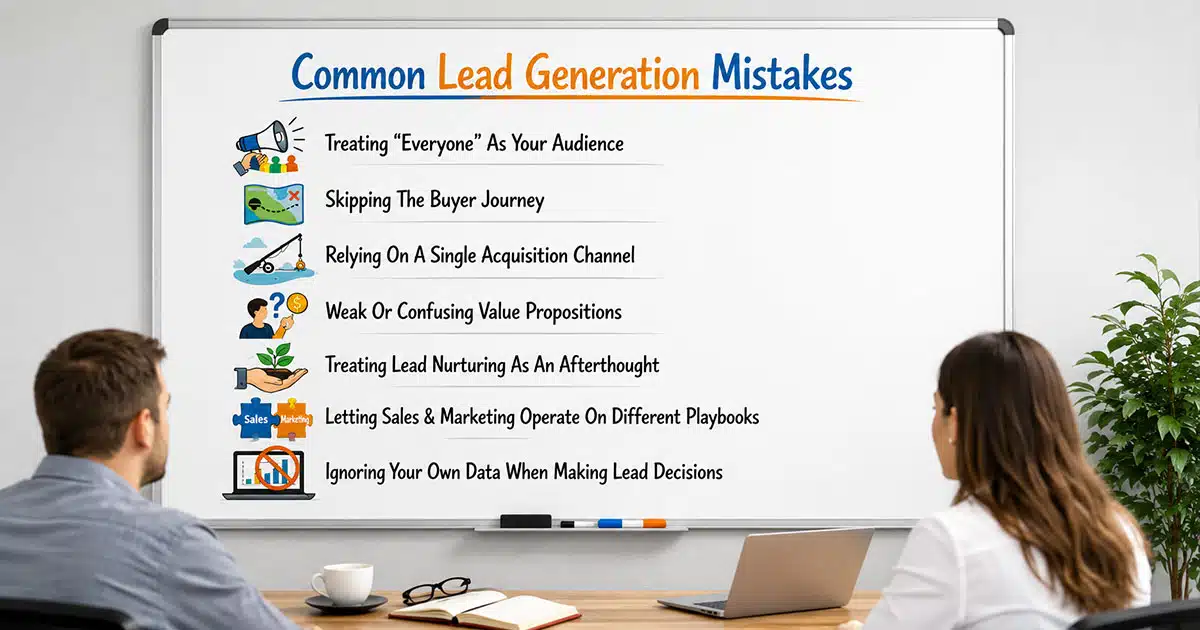
7 Common Lead Generation Mistakes You Can Fix This Quarter
Each of the following mistakes includes what it looks like in real campaigns, why it hurts results, and what to do instead. These examples are B2B focused but relevant to most lead driven businesses.
Mistake 1: Treating “Everyone” As Your Audience
This is one of the most common pitfalls in lead generation. Teams target overly broad segments like “all SMBs in North America” and end up with low intent, mismatched leads. Casting a wide net feels logical, but it delivers the opposite of what you need: unqualified leads that consume resources while qualified leads get overlooked.
The cost is measurable. Low conversion rates mean your sales team ignores MQLs. Rising cost per opportunity makes it harder to justify campaign spend. Without a clear ideal customer profile, your content resonates with no one in particular.
Consider a SaaS company that initially targeted “any HR team.” Their pipeline was full of leads that never converted. After narrowing focus to US based HR leaders at 200 to 1,000 employee companies using Slack and Zoom, their lead to opportunity ratio improved significantly. They stopped wasting effort on the wrong audience.
To fix this, validate your personas with sales, refresh audience data quarterly, and use negative targeting to filter out poor fit segments. Your sales pipeline depends on reaching the right audience from the start.
Mistake 2: Skipping The Buyer Journey And Pushing For The Demo Too Early
Many teams ask for demos or trials on first touch, before prospects even understand the problem or category. This mistake shows up when your homepage is dominated by “Book a demo” CTAs, when LinkedIn ads are generic, and when there is no mid funnel content.
The buyer’s journey has three primary stages. Awareness stage prospects are researching solutions and need educational content like guides or ebooks. Consideration stage prospects are evaluating options and benefit from webinars, case studies, and comparisons. Decision stage prospects are ready to purchase and respond to demo requests and pricing information.
When early stage prospects encounter heavy handed sales messaging, they perceive your company as too pushy and leave. Pushing for the demo too early is one of the most common mistakes that kills conversion rate before prospects reach the next stage.
Map your existing content to each stage. Align CTAs to intent. Nurture leads through relevant content instead of expecting immediate sales calls. This builds trust and moves prospects through the funnel naturally.
Mistake 3: Relying On A Single Acquisition Channel
When teams lean almost entirely on one channel like Google Ads, cold email, or organic LinkedIn, they create dangerous exposure. Platform policy changes, algorithm updates, and cost spikes can cause sudden drops in lead volume.
A company that depends on paid search might lose 40 percent of their pipeline for a month after a single policy change. This happens more often than most teams expect. Diversification across multiple channels creates resilience without requiring massive budget increases.
For B2B in 2024, a balanced mix includes paid search, paid social, partner referrals, outbound, and content led inbound. Test one new channel per quarter. Set channel level targets. Regularly review performance by source in your CRM using tools like Google Analytics to track where valuable leads originate.
Mistake 4: Weak Or Confusing Value Propositions
Generic taglines like “We help businesses grow” make it hard for prospects to understand why they should care. When your value proposition is unclear, you see low click through rates on ads, poor landing page conversion, and high bounce rates.
A strong value proposition formula answers four questions: who you serve, what problem you solve, what outcome you deliver, and what makes you different. Listing features without translating them into benefits is a common mistake. “Advanced automation features” means nothing to a cost conscious business owner. “Reduce manual task time by 20 hours per week” directly addresses their pain points.
Run A/B tests on core messaging. Interview five to ten recent customers about why they chose you. Align ad copy with landing page promises. When your value proposition is strong, every other lead generation tactic works better. To refine messaging further, some teams use tools to generate tagline ideas that clearly communicate value and differentiate their brand.
Mistake 5: Treating Lead Nurturing As An Afterthought
Teams obsess over generating more leads but fail to follow up with structured, personalized sequences. One off email blasts, no lead segmentation by industry or role, and long gaps between touches are common signs of neglected nurturing.
In B2B, buying cycles can stretch over months. Few leads are ready to buy immediately. Consistent nurturing keeps you top of mind. Effective nurturing includes behavior based email marketing flows, role specific content, and multi channel touches across email, LinkedIn, and retargeting.
A simple 14 to 21 day nurture flow might start with a download confirmation, move to a related blog post, then share a case study, and finally invite the prospect to a demo. This creates a natural path that respects where the lead is in their journey while moving them toward conversion.
Mistake 6: Letting Sales And Marketing Operate On Different Playbooks
Misalignment shows up when marketing celebrates lead volume while the sales team complains about lead quality and slow handoffs. Delayed follow up, inconsistent messaging, and prospects hearing different stories from different people are symptoms of this disconnect.
The knock on effects are serious: missed opportunities, wasted resources, and finger pointing that distracts from revenue goals. When sales and marketing stay aligned, leads convert faster and pipeline predictability improves.
Establish shared definitions of MQL and SQL. Document your lead handoff process. Create a simple service level agreement, like “sales responds to all SQLs within 24 business hours.” Hold regular pipeline reviews where both teams look at the same data. Shared dashboards and feedback loops create a single source of truth.
Mistake 7: Ignoring Your Own Data When Making Lead Decisions
Teams still make choices based on opinions instead of pipeline and revenue data. “This channel feels better” is not a strategy. Without data driven strategies, you invest heavily in channels that do not work while abandoning channels that do.
Track cost per lead, lead to opportunity conversion, sales cycle length, and revenue by source. These metrics reveal patterns that pure intuition misses. A team might cut a “cheap” channel after data shows poor opportunity quality and low close rates. Without measurement, that insight remains invisible.
Start small. Pick three core metrics. Build one simple dashboard. Review it monthly. Iterate your strategy every 90 days based on what the data shows. This approach turns up to date data into actionable insights that improve results over time.
Impact Of Lead Generation Mistakes On Revenue Growth
Lead generation mistakes do not just create inefficiency. They directly impact revenue growth in measurable ways. When your lead generation process breaks down, the effects ripple through your entire business.
Lower Conversion Rates Across The Funnel
When you target the wrong audience or skip stages of the buyer’s journey, fewer leads convert at each funnel stage. A lead that enters without understanding your product rarely becomes a sales qualified lead. Industry benchmarks show that companies with clear targeting and stage appropriate content see two to three times higher conversion rates than those without. Every percentage point of conversion rate improvement compounds as leads move through your pipeline.
Higher Customer Acquisition Costs
Generation mistakes inflate customer acquisition costs. When you spend money reaching people who will never buy, your cost per qualified lead rises. Marketing campaigns that lack focus require more budget to produce the same number of valuable leads. Companies that regularly review their targeting and messaging typically reduce acquisition costs by 20 to 30 percent over time.
Longer Sales Cycle Duration
Poor lead qualification and weak nurturing extend sales cycles. When prospects enter your pipeline unprepared or receive inconsistent follow up, deals take longer to close. B2B sales cycles are already lengthy. Adding friction through lead generation errors can add weeks or months to the timeline, delaying revenue recognition and straining cash flow.
Reduced Pipeline Predictability
When lead generation efforts are inconsistent, forecasting becomes unreliable. Your sales team cannot plan effectively when lead volume and quality fluctuate unpredictably. This makes it harder to hit quarterly targets and creates stress across the organization. A solid strategy with consistent execution produces steady, predictable pipeline growth.
Lost Opportunities To Competitors
Slow follow up and poor messaging give competitors an opening. When your team fails to respond quickly or cannot articulate a clear value proposition, prospects look elsewhere. Lost leads often end up becoming customers of competitors who executed their lead generation process more effectively. Every lost opportunity represents revenue you will never recover.
How To Identify Lead Generation Gaps Early
Catching problems early prevents small issues from becoming major revenue drains. Watch for these warning signs in your lead generation efforts.
Declining Lead To Opportunity Ratio
If the percentage of leads that become opportunities drops over time, something in your process is broken. This often indicates targeting problems, poor lead qualification, or misalignment between marketing messaging and sales conversations. Track this ratio monthly and investigate when it falls below your baseline.
Inconsistent Lead Quality Scores
When lead quality fluctuates dramatically between campaigns or channels, your targeting lacks precision. Consistent quality comes from clear ideal customer profile definitions applied across all lead generation efforts. Use lead scoring models to quantify quality and identify which sources produce the most consistent results.
Low Engagement In Campaign Performance
Low open rates, click through rates, and time on page signal that your content does not resonate with your audience. If prospects are not engaging with your content strategy, they are unlikely to convert. Segment your data to identify which audiences respond and which do not.
Weak Follow Up Response Rates
When your sales team reaches out and prospects do not respond, the leads may be poorly qualified or the timing may be wrong. Track response rates by lead source and stage. Weak follow up response rates often indicate that leads are being contacted before they are ready or with messaging that does not match their needs.
Poor Alignment Between Marketing And Sales Data
When marketing reports strong lead numbers but sales reports poor quality, the teams are not looking at the same data. Establish shared metrics and regular sync meetings. If marketing and sales data tell different stories, identify where the disconnect occurs and create unified reporting.
Best Practices To Avoid Lead Generation Mistakes
Avoiding common pitfalls requires intentional effort across your marketing and sales processes. These best practices help teams generate leads that convert into revenue.
Define A Clear Ideal Customer Profile
Your ideal customer profile should go beyond basic demographics. Include firmographic details, specific job roles, technology stack, and trigger events that indicate buying readiness. Validate this profile with your sales team and existing customers. Update it quarterly based on which clients deliver the highest value and best fit.
Use Multi Channel Lead Acquisition Strategies
Do not rely on a single source for leads. Combine inbound content marketing, outbound email, paid advertising, and partner referrals. Each channel reaches different segments of your target audience at different stages. Test new tools and channels regularly. Measure which combinations produce the best cost per qualified lead.
Implement Lead Scoring And Qualification Models
Not all leads deserve the same attention. Build scoring models that evaluate both explicit fit factors like company size and role and behavioral signals like website visits and content downloads. Automate initial qualification to ensure your sales team focuses on high potential prospects. Review and refine your scoring criteria based on which leads convert.
Strengthen Sales And Marketing Collaboration
Create formal processes for lead handoff and feedback. Define what makes a lead marketing qualified versus sales qualified. Establish connection requests response time standards. Hold weekly or biweekly meetings where both teams review pipeline data together. When sales and marketing operate as one team, fewer leads fall through the cracks.
Optimize Landing Pages And Conversion Path
Your landing pages are where leads convert or leave. Test headlines, form length, and calls to action. Ensure each page has a single, clear objective. Map the full conversion path from first touch to demo request. Remove friction wherever possible. Small improvements in landing page conversion compound into significant lead increases over time.
How Gain.io Improves Lead Generation Performance
Gain.io is a sales CRM built specifically for sales teams that need full visibility into their pipeline. With visual sales pipelines, you track every deal from lead to close without switching between scattered tools. Contact management keeps your prospects, leads, and customers organized throughout the sales lifecycle.
Sales task management helps your team stay on top of follow up, reminders, and deal related actions. Email integration supports outreach and engagement tracking. Calendar features keep demos, meetings, and pipeline planning in one place. When your team has a single source of truth for customer data and deal progress, leads convert faster and fewer opportunities slip away. Explore Gain.io to see how it helps sales teams close more deals with less complexity.
FAQs
What Is The Most Common Lead Generation Mistake?
The most common mistake is targeting too broad an audience. Teams often attempt to reach everyone instead of focusing on their ideal customer profile. This results in low intent leads that waste sales team time and inflate acquisition costs. Narrowing your focus to specific segments that match your best customers improves both lead quality and conversion rates.
How Does Poor Lead Quality Affect Sales Teams?
Poor lead quality forces sales teams to spend time on prospects who will never buy. This creates frustration, lowers morale, and reduces time available for qualified leads. When the sales team loses trust in lead quality, they may stop following up promptly, creating a cycle that further damages conversion rates and pipeline health.
When Should Businesses Audit Their Lead Generation Process?
Most teams should audit their lead generation process quarterly. Look for declining conversion rates, rising acquisition costs, or sales complaints about lead quality. Major changes in your market, product, or competitive landscape also warrant a review. Regular audits catch problems early before they significantly impact revenue.
Which Tools Help Improve Lead Tracking Accuracy?
CRM platforms like Gain.io provide centralized lead tracking with pipeline visibility. Google Analytics tracks website behavior and source attribution. Marketing automation platforms help score and nurture leads. The right tools for your business depend on your team size, sales lead process complexity, and integration needs. Choose tools that your team will use consistently.
Can Automation Reduce Lead Generation Errors?
Automation reduces manual errors in lead nurturing, scoring, and follow up. Automated workflows ensure consistent outreach timing and messaging. Lead scoring automation helps prioritize prospects objectively. However, automation works best when built on solid strategy. Automating a broken process amplifies problems rather than solving them. Combine automation with regular human review of high value deals and edge cases.