Sales teams are under constant pressure to do more with less. More leads. More pipeline. More revenue. Yet bigger budgets do not always lead to better results. That is why top-performing companies pay close attention to sales efficiency metrics.
Sales efficiency metrics show how much revenue your team generates for every dollar spent on sales and marketing. They reveal whether your growth is profitable, sustainable, and scalable. A team that closes plenty of deals can still struggle if acquisition costs are too high. On the other hand, a smaller team with strong efficiency can outperform larger competitors.
For revenue leaders, investors, and sales managers, sales efficiency is more than a performance measure. It is a way to evaluate business health, forecast future growth, and identify opportunities to improve results. In this guide, you will learn the most important sales efficiency metrics, how to calculate them, what benchmarks to target, and practical ways to improve them.
What Are Sales Efficiency Metrics And Why Do They Matter?
Revenue growth is important. But growth alone does not tell the full story. A company can add new customers and increase sales revenue while spending too much on sales and marketing. That is where sales efficiency metrics become essential. They help sales leaders measure sales efficiency, understand how much revenue each dollar spent generates, and evaluate whether sales and marketing efforts are producing profitable results.
Strong sales efficiency is the foundation of a scalable business. Metrics such as sales efficiency ratio, gross sales efficiency, net sales efficiency, customer acquisition cost (CAC), customer lifetime value, and sales cycle length reveal the health of your go-to-market strategy. They show whether sales teams are generating more revenue with fewer resources.
This guide explains the key metrics, formulas, benchmarks, and strategies that help sales and marketing teams track performance, calculate sales efficiency, and build a more efficient sales engine for sustainable revenue growth.
Sales Efficiency Formula And Core Concepts Explained
Sales efficiency looks simple on the surface. Yet it tells a powerful story about growth, profitability, and sustainability. A company can generate new revenue every month, but that growth may not be healthy if sales and marketing costs rise too fast. Sales efficiency metrics help teams understand whether every dollar invested produces enough revenue to support long-term growth.
What Is Sales Efficiency?
Sales efficiency measures how much revenue a company generates for every dollar spent on sales and marketing. It shows whether sales and marketing efforts create enough return to justify the investment.
A company with strong sales efficiency can generate more revenue without dramatically increasing costs. That is why sales leaders, investors, and revenue operations teams track it closely. Sales efficiency directly impacts profitability and helps determine whether growth is sustainable over time.
How To Calculate Sales Efficiency
The basic sales efficiency ratio is calculated by dividing revenue generated by sales and marketing expenses.
A simple formula looks at how much new revenue comes from a specific sales and marketing investment. For example, if a company spends $100,000 and generates $150,000 in new revenue, the sales efficiency ratio is 1.5. That means every dollar spent returns $1.50 in revenue. A higher ratio usually signals a stronger and more efficient sales engine.
What A Good Sales Efficiency Ratio Looks Like
A sales efficiency ratio above 1.0 generally indicates profitable sales efforts. Ratios below 1.0 often suggest that sales and marketing spend is not generating enough return. A ratio below 0.75 can signal significant inefficiencies that require attention.
Many SaaS companies view ratios between 1.0 and 3.0 as strong. Some analysts consider 0.75 to 1.0 acceptable, while anything above 1.0 demonstrates healthy revenue generation and scalable growth potential.
Gross Vs Net Sales Efficiency
Gross sales efficiency measures new annual recurring revenue without accounting for churn. It focuses only on revenue added through customer acquisition and expansion efforts.
Net sales efficiency takes a deeper view. It includes lost revenue from churn and downgrades. As a result, net sales efficiency provides a more realistic picture of overall sales performance. A business may show strong gross sales efficiency, but high churn can weaken net sales efficiency and reduce long-term revenue growth.
Why Investors And Leaders Track It
Investors use sales efficiency to assess business sustainability and revenue quality. A strong ratio often signals a sound business model with predictable growth. It also helps forecast future revenue more accurately.
Sales efficiency alone does not tell the whole story. A highly efficient sales team may still struggle if total revenue remains too low. For that reason, companies also track customer acquisition cost, customer lifetime value, sales velocity, quota attainment, and average deal size alongside sales efficiency measures. Together, these key metrics provide a complete view of growth and performance.
Revenue And Pipeline Sales Efficiency Metrics Every Team Should Track
Revenue growth means little if the pipeline cannot support it. Strong sales teams track the right metrics to understand performance, forecast revenue, and improve decision-making. Revenue and pipeline metrics reveal whether sales and marketing efforts create sustainable growth or simply increase costs.
Pipeline Coverage Ratio
Pipeline coverage ratio compares the total value of open opportunities against a sales target. It helps sales leaders determine whether the pipeline contains enough potential revenue to hit quota.
Most B2B companies target a pipeline coverage ratio of at least 3:1. That means a team needs three dollars in pipeline value for every dollar of sales target. A lower ratio can signal future revenue gaps. A healthy ratio improves forecasting and helps teams focus on the right opportunities before problems appear.
Win Rate
Win rate measures the percentage of opportunities that become closed deals. It is one of the most important sales efficiency metrics because it reflects how effectively sales reps convert prospects into customers.
A higher win rate often means stronger sales messaging, better lead qualification, and a more consistent sales process. Recent industry data shows average B2B win rates often range between 20% and 30%, although top-performing teams regularly exceed 35%. Strong win rates help increase sales efficiency without requiring higher sales and marketing spend.
Quota Attainment
Quota attainment tracks the percentage of sales reps who meet or exceed their targets. This metric helps evaluate both individual performance and the team's sales efficiency.
Research from sales performance studies shows many organizations have fewer than 60% of reps reaching quota each year. A higher quota attainment rate usually points to better coaching, stronger sales strategies, and improved revenue operations. It also helps leaders identify top performers and uncover areas where sales effectiveness needs improvement.
Sales Velocity
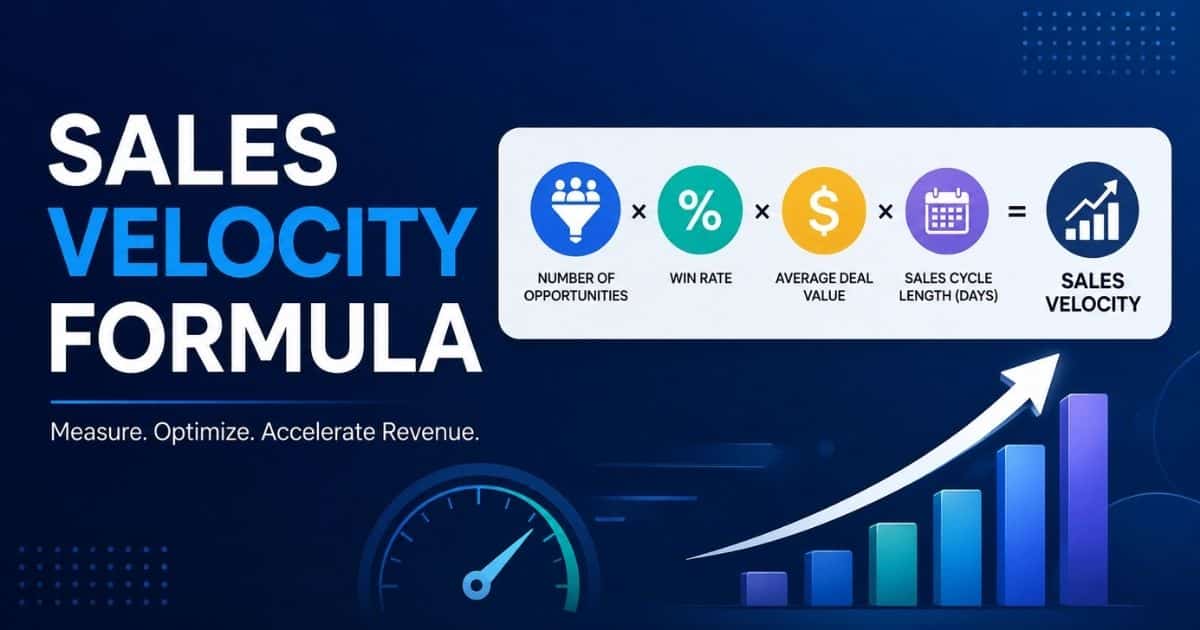
Sales velocity measures how quickly opportunities move through the pipeline and generate sales revenue. It combines several factors, including win rate, average deal size, number of opportunities, and sales cycle length.
A strong sales velocity means revenue reaches the business faster. Faster sales cycles allow sales teams to close more deals within the same period. Even small improvements in velocity can create significant gains in annual recurring revenue and overall sales efficiency when supported by AI sales assistants for pipeline efficiency. That makes sales velocity a critical metric for growth-focused companies.
Average Deal Size
Average deal size shows the typical revenue value of a closed sale. It helps teams understand how much new revenue each successful opportunity contributes.
Larger deals can boost efficiency because sales and marketing expenses often remain similar regardless of contract value. However, deal size should always be reviewed alongside sales cycle length. Large contracts may take longer to close. The best sales organizations balance deal value, customer acquisition cost, and closing speed to maximize revenue generated per dollar invested and maintain a high sales efficiency ratio.
Conversion And Win Rate Metrics That Impact Sales Performance
A healthy pipeline means little if opportunities fail to convert. Conversion metrics help sales teams understand where prospects move forward and where deals stall. They also reveal how sales effectiveness impacts revenue growth, forecasting accuracy, and overall sales efficiency.
Win Rate
Win rate shows the percentage of opportunities that become customers. It is one of the most important sales efficiency metrics because it connects sales efforts directly to revenue outcomes.
Recent B2B benchmarks show average win rates around 20% to 21%, while top-performing teams often achieve 30% or higher. A higher win rate means sales reps close more deals from the same number of opportunities. That boosts sales productivity and improves revenue generated per dollar spent, especially when teams apply structured sales win rate strategies for B2B growth.
Lead-To-Opportunity Conversion
Lead-to-opportunity conversion measures how many qualified leads become real sales opportunities. It helps sales and marketing teams evaluate lead quality and the effectiveness of their go-to-market strategy.
Strong conversion rates usually point to better customer acquisition processes, stronger sales messaging, and disciplined CRM-based lead management. Industry benchmarks show SQL-to-opportunity conversion rates often range from 50% to 62% in B2B sales. Teams that monitor this metric can identify funnel leaks before they affect total sales revenue.
Opportunity-To-Close Rate
Opportunity-to-close rate tracks how many active opportunities become closed-won deals. Unlike general win rate, this metric focuses on the final stages of the sales process.
Average B2B opportunity-to-close conversion rates typically fall between 15% and 30%. High-performing organizations often exceed those numbers through better qualification, stronger discovery calls, and more effective deal management. A stronger close rate helps improve sales efficiency because sales and marketing investment produces more new revenue from the same pipeline.
Quota Attainment Rate
Quota attainment tracks the percentage of sales reps who meet or exceed their targets. It helps sales leaders understand whether the team can consistently convert opportunities into revenue.
Recent benchmark data shows average quota attainment across B2B organizations is about 65%. Top-performing reps often achieve 120% or more of quota. Consistent attainment usually reflects a healthy sales process, effective coaching, and strong pipeline quality. It also provides insight into the team's sales efficiency and future revenue potential.
Sales Cycle Conversion Speed
Conversion speed measures how quickly prospects move from opportunity to closed deal. Faster movement through sales cycles improves sales velocity and allows teams to generate more revenue within the same period.
Research shows opportunities that close within 50 days can achieve win rates as high as 47%. Shorter sales cycle length reduces acquisition costs and increases sales capacity. Companies that remove bottlenecks from the buyer journey often see better conversion rates, stronger sales effectiveness, and higher overall sales efficiency.
A few additional metrics round out the picture worth tracking alongside the ones above. Quote-to-close ratio shows how many sent quotes actually convert, which flags pricing or proposal problems separate from win rate. Average profit margin per deal catches teams that are winning volume but eroding margin through discounting. Monthly bookings growth tracks new commitments before they show up as recognized revenue, giving an earlier read on momentum than lagging revenue reports do.
Sales Productivity Metrics For Measuring Rep Effectiveness
Sales productivity goes beyond closed deals. It shows how efficiently sales reps use their time, resources, and opportunities to generate revenue. The right productivity metrics help sales leaders identify top performers, improve coaching, and build a more effective sales process that supports long-term growth.
Revenue Per Rep
Revenue per rep measures how much sales revenue each salesperson generates during a specific period. It is one of the clearest indicators of individual productivity and team performance.
A higher number usually points to strong sales skills, better territory management, and effective sales strategies. Revenue per rep also helps leaders understand whether new sales and marketing investment is translating into measurable results. When this metric rises, overall sales efficiency often improves as well.
Quota Attainment
Quota attainment tracks the percentage of sales reps who achieve or exceed their assigned targets. It provides a direct view of how well a team performs against expectations.
Recent industry reports show that roughly 43% of sales professionals reached quota in 2024, highlighting a major challenge for many organizations. Low attainment may signal issues with sales messaging, lead quality, or coaching. High attainment often reflects a healthy sales process and stronger sales effectiveness.
Sales Activity Rate
Sales activity rate measures the volume of calls, emails, meetings, and follow-ups completed by sales reps. Activity alone does not guarantee success, but it helps uncover productivity patterns.
Top-performing reps typically maintain consistent outreach while focusing on high-quality opportunities. A balanced approach matters most. Too little activity can reduce customer acquisition. Too much activity without results can waste resources and increase sales and marketing expenses. Dedicated sales activity tracking software helps ensure activity metrics work best when paired with conversion and revenue data.
Sales Cycle Length
Sales cycle length tracks the average time required to convert a lead into a customer. Shorter sales cycles allow sales teams to close more opportunities within the same period.
Research shows that reducing sales cycle length can increase sales capacity by as much as 50%. Faster cycles also improve sales velocity and help generate more revenue without increasing headcount. Teams that remove bottlenecks often see stronger sales efficiency and better customer experiences.
Average Deal Size
Average deal size measures the typical value of a closed sale. It helps businesses understand how much new revenue each customer contributes.
A larger average deal size can improve overall sales efficiency because the same sales and marketing spend produces more revenue. However, deal size should be reviewed alongside win rate and sales cycle length. Large contracts may take longer to close. The most productive sales teams balance deal value, speed, and conversion rates to maximize revenue growth and maintain a high sales efficiency ratio.
Customer Acquisition Cost, CAC Payback, And Revenue Efficiency Metrics
Revenue growth can look impressive on paper. Yet strong growth means little if customer acquisition costs rise too fast. Revenue efficiency metrics help sales and marketing teams understand profitability, recover investments faster, and build a sustainable path to long-term revenue growth.
Customer Acquisition Cost (CAC)
Customer Acquisition Cost (CAC) measures the total cost required to acquire a new customer. It includes sales and marketing expenses such as advertising, software, salaries, commissions, and campaign costs.
CAC is one of the most important sales efficiency metrics because it shows how much a company spends to generate new business. A lower CAC often signals higher sales efficiency. Companies that control acquisition costs can generate more revenue from the same sales and marketing investment and improve overall profitability.
CAC Payback Period
CAC payback period measures how long it takes to recover customer acquisition costs after a new customer signs up. This metric helps businesses understand how quickly revenue offsets upfront expenses.
Many SaaS companies aim for a CAC payback period below 12 months. Faster payback improves cash flow and reduces growth risk. A shorter recovery period also allows companies to reinvest revenue into customer acquisition, sales strategies, and revenue operations more aggressively while maintaining strong sales efficiency.
Customer Lifetime Value (LTV)
Customer Lifetime Value estimates the total revenue a customer generates throughout the customer lifetime. It helps businesses understand the long-term value of customer relationships.
A higher customer lifetime value gives companies more flexibility with sales and marketing spend. Businesses with strong retention and recurring revenue often achieve higher LTV numbers. That creates a healthier balance between acquisition costs and revenue generated, making growth more sustainable and predictable.
LTV To CAC Ratio
The LTV ratio compares customer lifetime value to customer acquisition cost. It is one of the clearest indicators of revenue efficiency and business health.
Many experts consider a ratio of 3:1 a strong benchmark. That means every dollar invested in customer acquisition returns three dollars in lifetime value. A higher LTV ratio signifies a healthy and profitable growth model. A low ratio may indicate rising marketing costs, weak retention, or poor sales effectiveness.
Revenue Efficiency Ratio
Revenue efficiency ratio measures how effectively a company turns sales and marketing expenses into new revenue. It helps leaders evaluate the return from every dollar spent.
A strong revenue efficiency ratio shows that sales and marketing efforts generate meaningful incremental revenue. Companies with high efficiency ratios can scale faster with fewer resources. This metric also helps sales leaders forecast growth, assess sales performance, and determine whether the business can sustain revenue expansion over time. Together with CAC, LTV, and payback period, it provides a complete picture of overall sales efficiency.
Sales Efficiency Benchmarks: What Good Performance Looks Like
Sales efficiency metrics become more valuable when you compare them against proven benchmarks. A number by itself tells only part of the story. Benchmarks help sales leaders understand whether sales and marketing efforts support healthy growth, strong profitability, and a sustainable business model.
Sales Efficiency Ratio Benchmarks
The sales efficiency ratio measures revenue generated divided by sales and marketing costs. It remains one of the most important benchmarks for revenue-focused organizations.
A sales efficiency ratio below 0.75 often signals significant inefficiencies. A ratio between 0.75 and 1.0 suggests room for improvement. Most experts consider ratios between 1.0 and 3.0 healthy and scalable. A ratio above 1.0 means sales efforts generate more revenue than the company spends to acquire it. That is a strong sign of profitability and sustainable growth.
SaaS Magic Number Targets
The SaaS Magic Number measures how efficiently a company turns sales and marketing investment into incremental recurring revenue. It is widely used by SaaS companies and investors.
A Magic Number above 1.0 is generally considered strong. It indicates that sales and marketing spend produces healthy annual recurring revenue growth. Numbers below 0.75 may suggest inefficient customer acquisition or weak revenue generation. Strong SaaS businesses often use this metric alongside gross sales efficiency and net sales efficiency to evaluate overall performance.
CAC Payback Expectations
CAC payback period tracks how long it takes to recover customer acquisition cost (CAC). This benchmark helps companies understand the speed of return on sales and marketing expenses.
Many high-performing SaaS businesses aim for payback periods below 12 months. World-class companies often recover acquisition costs in less than a year. Shorter payback periods improve cash flow and allow businesses to invest more confidently in customer acquisition, revenue operations, and sales growth. Faster recovery also supports stronger overall sales efficiency.
LTV To CAC Performance
The LTV ratio compares customer lifetime value against customer acquisition cost. It shows whether new customers create enough long-term value to justify acquisition expenses.
A ratio near 3:1 is often considered the gold standard. That means every dollar invested in customer acquisition returns three dollars in customer lifetime value. Ratios below 1:1 indicate that acquisition costs exceed customer value. Higher ratios usually reflect better retention, stronger sales effectiveness, and healthier revenue growth over time.
Pipeline And Quota Benchmarks
Pipeline coverage ratio and quota attainment provide valuable insight into the team's sales efficiency. Both metrics help forecast revenue and evaluate sales productivity.
Many sales organizations target a pipeline coverage ratio of at least 3:1. This means three dollars in pipeline value for every dollar of quota. For quota attainment, top-performing companies often aim for at least 60% to 70% of sales reps reaching their targets. Strong performance in both areas usually points to an efficient sales engine, effective sales strategies, and predictable revenue growth.
How To Improve Sales Efficiency Metrics With Proven Strategies
Strong sales efficiency does not happen by chance. High-performing companies improve it through better processes, smarter decisions, and consistent execution. Small changes across sales and marketing efforts can increase revenue, reduce costs, and create a more scalable growth engine.
Set SMART Sales Goals
Clear goals help sales teams focus on the right activities. Without measurable targets, it becomes difficult to track progress or identify performance gaps.
SMART goals are specific, measurable, achievable, relevant, and time-bound. They help sales reps prioritize high-value opportunities and improve accountability. Strong goal setting also supports better forecasting and helps sales leaders measure sales efficiency more accurately. Teams with clear objectives often achieve stronger quota attainment and more consistent revenue growth.
Improve Lead Qualification
Not every lead deserves equal attention. Poor qualification wastes time, increases customer acquisition cost, and lowers overall sales productivity.
A strong qualification process helps sales reps focus on prospects with the highest likelihood of closing. Better lead quality often improves win rates and shortens sales cycle length. It also helps sales and marketing teams align around customer data and ideal buyer profiles while reinforcing disciplined sales time management practices. As a result, more revenue comes from the same sales and marketing investment.
Use The Right Sales Tools
Technology can remove manual work and help teams close deals faster. The right tools also improve sales visibility across the entire sales process.
Recent studies show sales professionals spend less than one-third of their time actively selling. Administrative tasks consume much of the remaining time. CRM platforms, sales intelligence tools, and AI sales automation software help teams reclaim productive hours and boost efficiency. Better tools also support revenue operations and more accurate tracking sales efficiency.
Reduce Sales Cycle Length
A shorter sales cycle allows sales teams to close more deals within the same period. Faster conversions increase sales capacity without adding new headcount.
Research suggests shortening sales cycles can increase sales capacity by up to 50%. Faster deal movement improves sales velocity and helps generate incremental revenue more quickly. Companies often reduce cycle length by simplifying approvals, improving sales messaging, and removing friction from the buying process. These improvements can significantly increase sales efficiency and profitability.
Focus On Customer Retention
New customer acquisition matters, but retention often delivers higher returns. Existing customers usually cost less to retain than new customers cost to acquire.
Strong retention improves customer lifetime value and strengthens net sales efficiency. It also reduces the impact of churn on annual recurring revenue and net new ARR. Businesses that keep customers longer often achieve a higher LTV ratio and a stronger sales efficiency ratio. A focus on retention helps create sustainable revenue growth and a more efficient sales engine over time.
How Gain.io Helps Improve Sales Efficiency
Sales efficiency improves when teams have complete visibility into customer relationships, account activity, and revenue opportunities. Gain.io’s all-in-one CRM helps sales, customer success, and account management teams work from a shared source of truth. Instead of wasting time searching for information across multiple tools, teams can rely on centralized contact management to access critical customer insights in one place.
With better customer intelligence and smart CRM features for sales teams, sales reps can identify expansion opportunities, reduce churn risks, and focus on high-value accounts. Gain.io also helps improve forecasting accuracy through sales pipeline CRM visibility, providing a clearer view of customer health and revenue potential. Stronger collaboration across revenue teams and structured task management for sales teams leads to faster decisions, better customer retention, and more predictable growth. As a result, businesses can generate more revenue from the same sales and marketing investment while improving overall sales efficiency and long-term profitability.
FAQs
Can A Company Have Strong Revenue Growth But Poor Sales Efficiency?
Yes. A company can generate new revenue while spending too much on sales and marketing. If sales and marketing expenses grow faster than revenue, the sales efficiency ratio declines and profitability suffers despite revenue growth.
Does A High Sales Efficiency Ratio Always Mean Strong Sales Performance?
No. A high sales efficiency ratio shows cost-effective sales efforts, but it does not guarantee enough total sales revenue. A business may operate efficiently yet still fall short of its growth targets if overall revenue remains low.
How Often Should Businesses Track Sales Efficiency Metrics?
Most companies track sales efficiency metrics monthly or quarterly. Regular tracking helps sales leaders identify trends, measure sales productivity, evaluate sales and marketing investment, and make faster decisions based on customer data and revenue performance.
Can Customer Retention Improve Sales Efficiency?
Yes. Strong customer retention increases customer lifetime value and reduces pressure on customer acquisition. Higher retention also improves net sales efficiency by protecting annual recurring revenue and reducing revenue lost to churn.
Which Metric Best Predicts Long-Term Revenue Sustainability?
No single metric tells the full story. The best approach combines sales efficiency ratio, customer acquisition cost (CAC), customer lifetime value (LTV), CAC payback period, and net sales efficiency to evaluate sustainable growth and overall business health.