Customer interaction tracking plays a central role in how modern businesses manage relationships across the entire customer lifecycle. As customers interact with brands across multiple channels, teams need a reliable way to capture, organize, and interpret every touchpoint inside one system.
Clear interaction visibility directly influences customer experience, customer satisfaction, and long-term revenue growth. When teams understand how customers engage, what they need, and where friction appears, they serve customers more effectively and build stronger customer relationships.
This article provides practical guidance on tracking customer interactions in CRM systems, explains best practices, highlights key metrics, and shows how the right tools help businesses turn interaction data into valuable insights.
What Is Customer Interaction Tracking
Customer interaction tracking refers to the systematic process of recording and managing every interaction between a business and its current and future customers. These customer interactions include emails, calls, meetings, support tickets, service requests, website activity, and social media conversations.
Within customer relationship management platforms, interaction data becomes part of a unified customer history. This customer information gives teams context about customer behavior, customer preferences, purchase history, and past customer communications.
Basic CRM records often store contact details and deal stages. True customer interaction tracking goes further by capturing real engagement over time, helping teams understand customer sentiment, identify customer pain points, and track customer engagement across the entire customer journey.
Why Customer Interaction Tracking Is Important For Growing Businesses
Customer interaction tracking creates consistency across the sales process and ensures timely follow-ups. Sales teams manage sales opportunities more effectively when they track customer conversations, past objections, and next steps inside one customer tracking system.
Customer retention improves when teams respond with context and empathy. Access to customer history allows teams to immediately address concerns, resolve issues before frustration grows, and turn frustrated customers into satisfied customers.
Cross-team alignment also depends on effective customer tracking. Sales, support, and marketing teams rely on shared CRM data to manage sales, handle support tickets, run marketing campaigns, and engage customers with a unified message.
How CRM Systems Track Customer Interactions
CRM systems enable structured customer interaction tracking by consolidating touchpoints from multiple channels into a single customer tracking system. This unified approach helps teams manage customer data accurately, understand customer behavior, and maintain consistent customer communications throughout the entire customer lifecycle.
Centralized Customer Data
CRM systems store all customer information in one place, creating a reliable foundation for effective customer tracking. Emails, calls, meetings, support tickets, and service requests appear within a unified customer profile. This structure builds a complete customer history that teams access without delays or tool switching.
Centralized customer data strengthens customer relationship management by removing fragmented records. Sales teams manage sales opportunities with full context, while support teams resolve issues faster. A single source of truth also helps segment customers, identify inactive customers, and align actions with business goals.
Email And Message Records
CRM software tracks email conversations and message exchanges across customer communications. Integration with email marketing platforms allows teams to review outreach, responses, and follow-ups directly inside the CRM. This visibility supports accurate customer interaction tracking across the sales funnel.
Clear email records reveal customer preferences and response patterns. Teams use this insight to refine marketing campaigns, personalize outreach, and track customer engagement over time. Reliable email data also supports better customer satisfaction by ensuring consistent and timely communication.
Call And Meeting History
Call logs and meeting records form a core part of customer tracking systems. CRM tools store summaries, timestamps, and notes from each interaction. Sales teams rely on this history to manage the sales process and plan next steps with confidence.
Meeting records also help teams understand customer sentiment and recurring customer pain points. Support teams reference previous conversations to avoid repeated questions. Detailed call history strengthens customer relationships and improves customer experience across current and potential customers.
Support Tickets And Service Data
Support tickets and service requests provide direct insight into customer satisfaction and customer loyalty. CRM systems link each ticket to a customer profile, preserving resolution history and communication details. This approach supports consistent service across teams.
Support data helps identify frustrated customers and recurring issues. Teams gather feedback and analyze customer behavior trends through ticket patterns. Over time, this information supports improved customer retention, higher customer satisfaction score outcomes, and stronger long-term customer relationships.
Automated Interaction Capture
Automation improves accuracy within customer interaction tracking by capturing data without manual effort. Automated tracking tools record emails, website activity, form submissions, and engagement signals as customers interact across digital channels.
Automated capture reduces data gaps and ensures consistent CRM data quality. Marketing teams use this tracking data to track customer behavior and optimize marketing automation strategies. Reliable automation supports effective customer tracking and delivers valuable insights across the customer journey.
Integrated Tools And Platforms
CRM integrations connect multiple tools into an existing CRM system. Social media platforms, analytics tools, email marketing platforms, and marketing automation systems feed interaction data directly into CRM tools.
Integrated systems remove silos and support a complete view of current and future customers. Teams rely on this structure to engage customers consistently, manage customer interactions across multiple channels, and support revenue growth through informed marketing efforts.
Activity Feeds And Real-Time Updates
Activity feeds inside CRM systems display real-time updates whenever customers engage. New emails, support tickets, form submissions, or responses appear instantly within the customer profile.
Real-time visibility helps teams immediately address opportunities and risks. Sales teams respond faster to sales opportunities, while support teams resolve issues promptly. Continuous visibility into customer engagement helps identify trends, improve customer experience, and maximize customer satisfaction across the entire customer lifecycle.
Types Of Customer Interactions Businesses Should Track
Customer interaction tracking becomes effective when businesses define which touchpoints matter most across the customer journey. A structured approach helps teams track customer engagement, understand customer behavior, and collect customer data that supports stronger customer relationships and long-term revenue growth.
Sales Conversations And Outreach
Sales conversations form the foundation of customer tracking within the sales process. Outreach emails, calls, product demos, negotiations, and follow-ups reveal how customers engage at each stage of the sales funnel. These interactions help sales teams manage sales opportunities with clarity.
Consistent tracking of sales conversations supports accurate customer insights. Teams identify objections, evaluate deal momentum, and align messaging with customer preferences. Clear records also help serve customers better by maintaining continuity across conversations and building trust with current and potential customers.
Support Tickets And Requests
Support tickets and service requests provide direct signals about customer satisfaction and customer sentiment. Each ticket captures a moment where customers interact due to a need, issue, or question. CRM systems link these records to customer profiles for full context.
Support interaction data highlights recurring customer pain points and frustrated customers. Teams gather feedback, refine processes, and improve customer retention through faster resolution. Over time, service records help improve customer satisfaction score performance and strengthen customer loyalty.
Digital Engagement Activity
Digital engagement reflects how customers engage outside direct conversations. Website visits, form submissions, app usage, and content interactions reveal patterns in customer behavior. Tracking customer interactions across digital touchpoints helps teams understand interest levels and intent.
This data supports effective customer tracking by showing how customers move through the customer journey. Marketing teams use these insights to segment customers, personalize messaging, and optimize marketing strategies that improve customer experience.
Marketing Campaign Responses
Marketing campaigns generate valuable customer interaction data across email marketing platforms and marketing automation tools. Opens, clicks, replies, and conversions indicate how customers engage with outreach efforts.
Tracking campaign responses helps teams evaluate marketing efforts and refine future campaigns. Clear visibility into response behavior supports better customer engagement and ensures consistent communication across multiple channels. Marketing data also supports revenue growth by aligning messaging with customer preferences.
Social Media Interactions
Social media interactions reveal real-time customer sentiment and public engagement patterns. Comments, messages, mentions, and reactions show how customers perceive a brand. CRM systems capture these interactions through integrations.
Social data adds emotional context to customer interactions. Teams use this insight to engage customers proactively, address concerns, and reinforce trust. Social interaction records also support customer tracking for future customers and long-term brand loyalty.
Feedback And Survey Responses
Customer feedback from surveys, reviews, and direct responses provides structured insight into customer satisfaction. Feedback data highlights strengths, weaknesses, and unmet expectations across the customer lifecycle.
Feedback analysis supports understand customer sentiment and identify trends that influence customer retention. When teams gather feedback consistently, they create a feedback loop that improves products, service quality, and overall customer experience.
Purchase And Usage History
Purchase history and usage patterns reflect long-term customer behavior and value. CRM systems track transactions, renewals, upgrades, and usage frequency as part of customer tracking systems.
This interaction type supports customer insights that inform upsell strategies, retention planning, and personalized offers. Teams rely on purchase data to manage customer relationships, identify inactive customers, and align future engagement with business goals.
Benefits Of Customer Interaction Tracking In CRM
Customer interaction tracking delivers measurable value when businesses use CRM systems to capture, analyze, and act on customer data. Clear visibility into customer interactions helps teams improve performance, strengthen customer relationships, and align daily actions with long-term business goals.
Stronger Sales Follow-Ups
Sales teams perform better when they access complete customer interaction histories. CRM tools display previous emails, calls, meetings, and notes, allowing sales representatives to respond with context and confidence. This visibility helps manage sales opportunities and maintain momentum throughout the sales funnel.
Consistent follow-ups improve trust and reduce missed opportunities. When teams track customer communications accurately, they address objections faster and advance deals efficiently. Strong follow-up practices contribute directly to higher close rates and sustainable revenue growth.
Personalized Customer Engagement
Personalization depends on understanding customer preferences, customer behavior, and past interactions. Customer interaction tracking provides this context across multiple channels. Teams tailor conversations based on real customer history rather than assumptions.
Personalized engagement improves customer experience and helps maximize customer satisfaction. When customers feel understood, they respond positively and remain loyal. Over time, consistent personalization strengthens customer loyalty and long-term customer relationships.
Improved Customer Satisfaction
Customer satisfaction improves when teams respond with clarity and speed. Access to customer history, support tickets, and feedback allows teams to resolve issues without repetition. Customers interact with teams that already understand their situation.
This approach reduces frustration and improves customer satisfaction score outcomes. Satisfied customers remain engaged, provide positive feedback, and support customer retention. Clear interaction data helps teams serve customers more effectively across the entire customer lifecycle.
Deeper Customer Insights
Customer interaction tracking turns raw data into valuable insights. CRM systems reveal patterns across customer behavior, engagement frequency, and purchase history. Teams identify trends that influence buying decisions and customer sentiment.
These customer insights support informed decision-making across sales, support, and marketing. Businesses rely on this intelligence to adjust strategies, improve offerings, and maintain relevance with current and future customers.
Smarter Marketing Strategies
Marketing teams benefit from accurate interaction data across marketing campaigns. CRM tools track responses from email marketing platforms, social media, and marketing automation systems. This visibility shows which messages resonate with different customer segments.
Clear data helps refine marketing efforts and improve campaign timing. When teams engage customers at the right moment, engagement increases and marketing impact improves. Data-driven strategies support stronger customer engagement and revenue growth.
Better Customer Retention
Customer interaction tracking helps identify at-risk and inactive customers early. CRM data highlights changes in engagement, response patterns, and service usage. Teams act before dissatisfaction leads to churn.
Proactive outreach improves customer retention and protects long-term value. When businesses understand customer pain points and preferences, they maintain stronger relationships. Retention-focused tracking supports stable growth and improved lifetime value.
Scalable Decision Support
As businesses grow, manual tracking becomes unreliable. CRM systems provide scalable customer tracking software that supports consistent processes across teams. Data-backed insights guide decisions without reliance on guesswork.
Scalable systems help align teams with business goals. Leadership teams use CRM data to forecast revenue growth, evaluate performance, and allocate resources effectively. Customer interaction tracking becomes an essential tool for sustainable expansion.
Key Metrics To Measure Customer Interaction Tracking Success
Customer interaction tracking success depends on clearly defined metrics that reflect customer engagement, responsiveness, and relationship quality. CRM systems provide tracking data that allows teams to evaluate performance, understand customer behavior, and align daily actions with broader business goals.
Response Time And Speed
Response time measures how quickly teams reply when customers interact across multiple channels. CRM data records timestamps for emails, calls, support tickets, and service requests, creating visibility into follow-up speed. Faster responses signal reliability and professionalism.
Consistent response speed improves customer experience and customer satisfaction. When teams respond promptly, customers feel valued and heard. Strong response metrics also support customer retention and reduce the risk of frustrated customers disengaging during the customer journey.
Interaction Frequency Trends
Interaction frequency reflects how often customers engage with a business over time. CRM systems track customer communications, touchpoints, and activity levels across sales and support channels. This metric helps teams understand engagement patterns.
High-quality interaction frequency supports healthy customer relationships. Sudden drops in engagement may signal inactive customers or dissatisfaction. Monitoring frequency trends helps teams engage customers proactively and maintain consistent customer engagement across the customer lifecycle.
Engagement Across Channels
Engagement across channels shows how customers interact through email, calls, social media, support tickets, and digital platforms. Customer tracking systems consolidate this data into a single view.
Multi-channel engagement metrics help teams understand customer preferences and channel effectiveness. Balanced engagement across multiple channels improves customer experience and supports effective customer tracking for current and potential customers.
Conversion And Deal Progress
Conversion metrics reveal how customer interactions influence sales outcomes. CRM tools track movement through the sales funnel, deal progression, and closed opportunities. Interaction quality often correlates directly with conversion rates.
Clear visibility into conversions supports better sales process optimization. Teams analyze which interactions drive progress and which stall deals. These insights help boost sales and improve revenue growth predictability.
Customer Satisfaction Indicators
Customer satisfaction score, feedback volume, and sentiment analysis reflect interaction quality. CRM systems capture survey responses, support feedback, and customer sentiment across touchpoints.
Strong satisfaction metrics indicate effective customer interaction tracking. Teams use this data to identify customer pain points, refine service approaches, and maximize customer satisfaction across the customer journey.
Retention And Loyalty Metrics
Customer retention metrics track repeat engagement, renewals, and long-term activity. CRM data highlights loyal customers and identifies risks among disengaged segments.
Retention analysis supports improved customer loyalty and lifetime value. Teams act early when engagement declines, which helps improve customer retention and maintain strong customer relationships over time.
Reporting And Dashboards
Dashboards and reports convert CRM data into actionable insights. Visual summaries display key metrics such as response speed, engagement levels, and satisfaction trends.
Clear reporting helps leadership monitor progress and align teams with business goals. When teams track customer behavior consistently, dashboards become an essential tool for strategic decision-making and performance improvement.
Common Challenges In Customer Interaction Tracking
Customer interaction tracking often faces operational and technical obstacles that reduce data quality and adoption. Clear processes, reliable customer tracking software, and aligned teams help businesses overcome these issues and build a complete view of customer interactions across the entire customer lifecycle.
Incomplete Interaction Records
Incomplete interaction records appear when teams rely on manual updates or inconsistent habits. Important customer communications, support tickets, or service requests may never reach the CRM, which weakens customer data accuracy and customer insights.
Clear standards and automation resolve this challenge. A customer tracking system that captures emails, calls, and digital activity automatically reduces gaps. Standard workflows also help teams track customer interactions consistently and maintain a reliable customer history for current and future customers.
Data Inconsistency Across Teams
Data inconsistency occurs when sales, support, and marketing teams record customer interactions differently. Mismatched formats and vague notes reduce the value of customer tracking and affect customer relationship management decisions.
Unified data guidelines improve consistency. Shared definitions, required fields, and structured templates help teams align. Consistent CRM data supports better customer experience, improves customer satisfaction, and enables accurate reporting across business goals.
Disconnected Tools And Silos
Disconnected tools create fragmented customer information across multiple platforms. Email marketing platforms, social media tools, and support systems often operate separately from CRM systems.
Integrations across multiple tools solve this issue. Connected CRM tools consolidate tracking data into one interface. A unified system supports effective customer tracking, reveals customer behavior across multiple channels, and strengthens customer relationships with a complete customer journey view.
Low Team Adoption
Low adoption limits the value of customer interaction tracking. Complex interfaces and unclear benefits discourage teams from consistent usage. Sales and support teams may rely on memory or personal tools instead of CRM systems.
Simple design and clear value messaging improve adoption. When teams see how customer tracking helps manage sales, resolve issues faster, and improve customer satisfaction score outcomes, engagement increases. Adoption grows when CRM tools support daily workflows naturally.
Poor Data Quality Over Time
CRM data quality declines without regular maintenance. Duplicate contacts, outdated customer information, and inactive customers reduce trust in customer tracking software and reports.
Routine audits and ownership prevent this issue. Assigned data stewards and automated cleanup rules maintain accuracy. Clean customer data supports valuable insights, improves customer retention strategies, and strengthens long-term customer loyalty.
Limited Visibility Into Customer Sentiment
Customer sentiment often remains hidden when interaction data lacks context. Notes without detail or missing feedback prevent teams from understand customer sentiment and customer pain points.
Structured feedback collection addresses this challenge. CRM systems that capture customer feedback, survey responses, and interaction outcomes provide clarity. Sentiment visibility helps teams immediately address concerns, engage customers effectively, and maximize customer satisfaction.
Growth And Scale Challenges
Customer interaction tracking becomes harder as businesses grow. Higher interaction volume across marketing efforts, sales opportunities, and support channels strains manual processes.
Scalable CRM systems and AI powered tools support growth. Automation, dashboards, and tracking tools help manage volume without losing accuracy. Scalable systems ensure effective customer tracking remains an essential tool for sustained revenue growth.
How Gain.io Helps Businesses Improve Customer Interaction Tracking
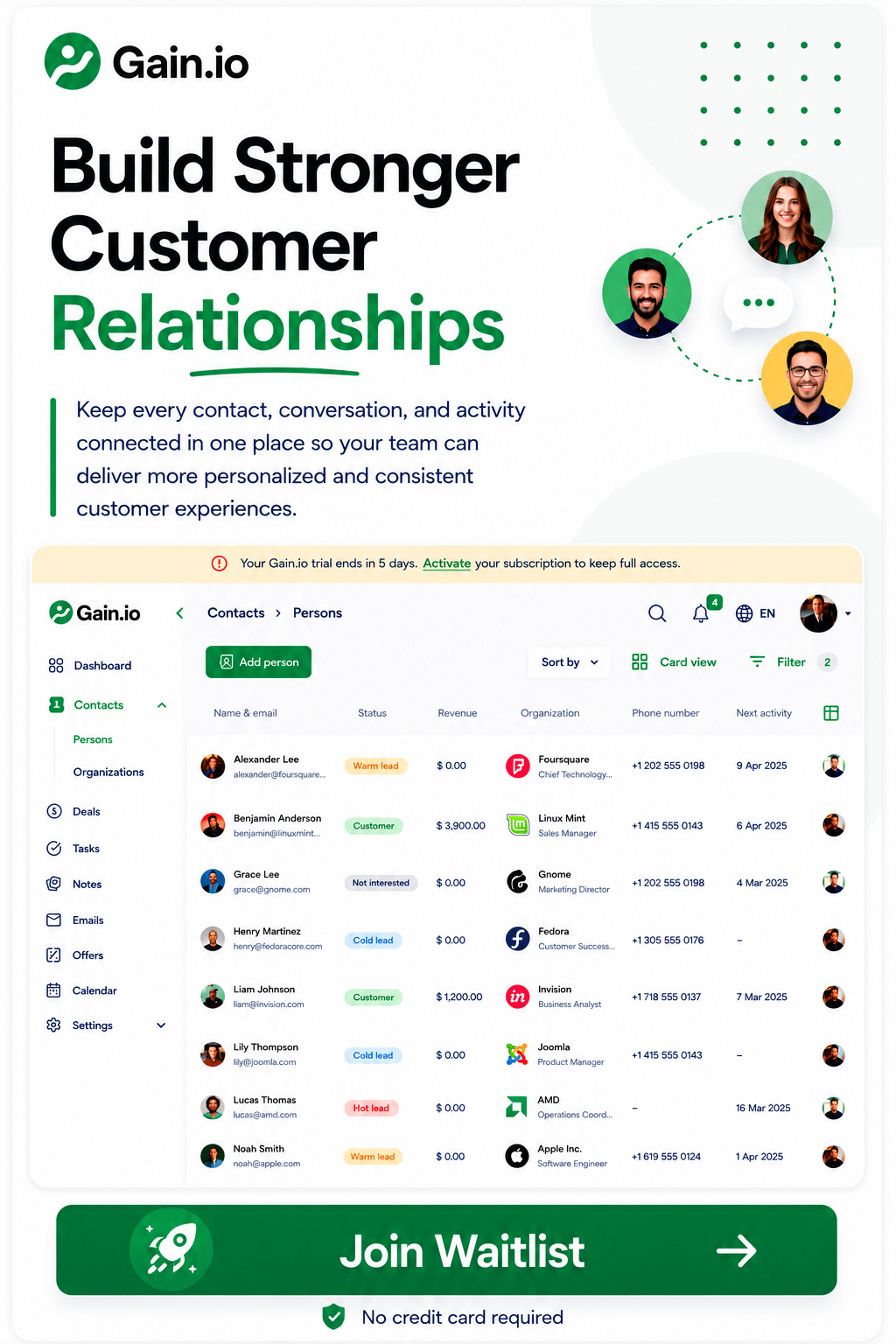
Gain.io provides a centralized timeline that brings all customer interactions into one clear and accessible view. Emails, notes, activities, support tickets, and customer communications appear in a single place, which removes the need to switch between multiple tools or search across disconnected systems. Teams always work with complete and accurate customer history. They have several features for your business to improve customer interaction tracking
Automatic interaction capture reduces manual effort and protects data quality across sales and support workflows. Accurate tracking data helps teams track customer engagement, understand customer behavior, and maintain reliable CRM data throughout the customer lifecycle. Automation also ensures no critical interaction gets missed.
Shared visibility across teams improves collaboration and alignment. Sales, support, and management teams access the same customer information and customer insights, which supports consistent decisions and faster responses. Clear interaction history enables better follow-ups, stronger customer relationships, improved customer retention, and scalable customer relationship management for current and potential customers.
FAQs
What Is Customer Interaction Tracking In CRM?
Customer interaction tracking refers to the process of recording and organizing all customer interactions within CRM systems. This approach helps teams manage customer data, track customer engagement, and make informed decisions across sales, support, and marketing activities.
How Does Customer Interaction Tracking Improve Customer Satisfaction?
Access to complete customer history and customer feedback allows teams to understand customer sentiment quickly. Faster and more informed responses help resolve issues efficiently and improve overall customer satisfaction.
Which Channels Should Businesses Track Inside A CRM?
Businesses should track email, calls, meetings, support tickets, website activity, social media, and digital engagement across multiple channels. Centralized tracking ensures consistent customer communications and a complete customer journey view.
How Does Interaction Tracking Support Customer Retention?
Interaction tracking supports consistent follow-ups and personalized engagement based on customer preferences. Faster issue resolution and proactive outreach help improve customer retention and reduce churn.
Is Customer Interaction Tracking Useful For Small Business Owners?
Customer interaction tracking helps small business owners manage sales opportunities and customer relationships with limited resources. Clear visibility into customer interactions improves efficiency and supports sustainable growth. Pairing interaction tracking with a simple CRM built for small businesses keeps setup light while still centralizing every touchpoint.
How Does Interaction Data Support Marketing Strategies?
Interaction data supports customer segmentation and targeted marketing campaigns. Better visibility into customer behavior helps marketing teams engage customers at the right time with relevant messages.
What Makes Customer Interaction Tracking An Essential Tool?
Customer interaction tracking connects customer behavior, customer insights, and revenue growth. This alignment makes it an essential tool for long-term business success and stronger customer relationships.
What Is Customer Interaction Tracking In CRM?
Customer interaction tracking refers to the process of recording and organizing all customer interactions within CRM systems. This approach helps teams manage customer data, track customer engagement, and make informed decisions across sales, support, and marketing activities.
How Does Customer Interaction Tracking Improve Customer Satisfaction?
Access to complete customer history and customer feedback allows teams to understand customer sentiment quickly. Faster and more informed responses help resolve issues efficiently and improve overall customer satisfaction.
Which Channels Should Businesses Track Inside A CRM?
Businesses should track email, calls, meetings, support tickets, website activity, social media, and digital engagement across multiple channels. Centralized tracking ensures consistent customer communications and a complete customer journey view.
How Does Interaction Tracking Support Customer Retention?
Interaction tracking supports consistent follow-ups and personalized engagement based on customer preferences. Faster issue resolution and proactive outreach help improve customer retention and reduce churn.
Is Customer Interaction Tracking Useful For Small Business Owners?
Customer interaction tracking helps small business owners manage sales opportunities and customer relationships with limited resources. Clear visibility into customer interactions improves efficiency and supports sustainable growth. Pairing interaction tracking with a simple CRM built for small businesses keeps setup light while still centralizing every touchpoint.
How Does Interaction Data Support Marketing Strategies?
Interaction data supports customer segmentation and targeted marketing campaigns. Better visibility into customer behavior helps marketing teams engage customers at the right time with relevant messages.
What Makes Customer Interaction Tracking An Essential Tool?
Customer interaction tracking connects customer behavior, customer insights, and revenue growth. This alignment makes it an essential tool for long-term business success and stronger customer relationships.
For more on this topic, see our guide on How A Customer Engagement CRM Helps Teams Stay Close To Customers.