Customer lifecycle management is the backbone of sustainable growth. When acquisition costs continue rising and competition intensifies, the smartest teams focus on the entire customer relationship rather than just filling the top of the funnel.
Think about it this way. Winning a new customer costs five to seven times as much as keeping an existing one. Yet many organizations pour resources into acquisition while neglecting the customer journey after the first sale. This creates a leaky bucket that no amount of new leads can fill.
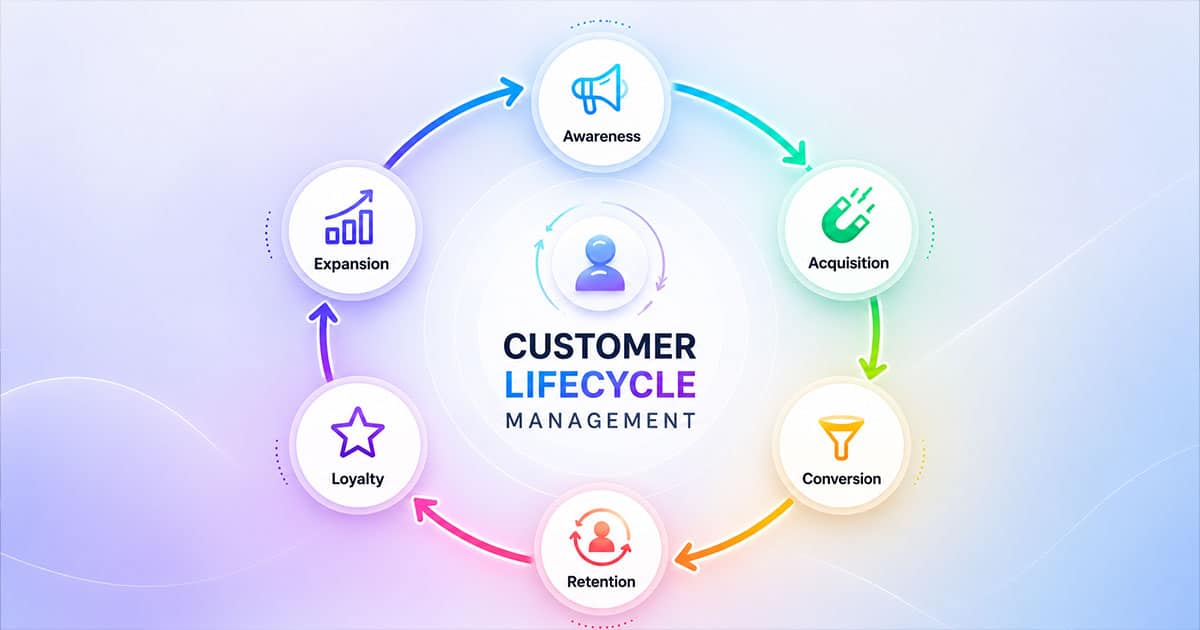
Customer lifecycle management (CLM) focuses on managing customer relationships throughout their entire journey, from initial contact to retention and beyond. It connects your marketing campaigns, sales pipeline, onboarding process, and renewal strategy into one coordinated effort.
This article walks through each stage of the lifecycle, shows you how to design a practical lifecycle map, reveals common pitfalls, and explains how Gain.io helps teams turn these strategies into real growth.
What Customer Lifecycle Management Means
Customer lifecycle management is how you guide a person from stranger to loyal advocate. It is broader than customer relationship management or marketing automation because it includes product usage, support interactions, renewals, expansions, and referrals over months or years.
The five main stages of the customer lifecycle include awareness, consideration, conversion, retention, and advocacy, representing the customer’s entire journey with a brand. For this article, we will use a slightly expanded framework: Awareness, Evaluation, Acquisition, Onboarding, Adoption and Engagement, Retention and Expansion, and Advocacy.
Both B2B SaaS and B2C brands can adapt this model. B2B cycles often span 12 to 36 months with emphasis on net revenue retention. B2C compresses to weeks with a focus on repeat purchases. The underlying logic stays the same.
Customer Relationship Management (CRM) is generally focused on data management and sales transactions, while CLM is a more strategic, holistic approach to the entire relationship. Understanding each stage of the customer lifecycle and how modern CRM software supports sales teams helps businesses identify opportunities to improve customer experience and drive growth.
Why Customer Lifecycle Management Drives Compounding Growth
Customer lifecycle management drives sustainable business success by strengthening retention, improving customer experience, and increasing lifetime value. A well-structured lifecycle marketing approach helps brands build customer loyalty, reduce churn, and fuel long term customer relationships that support consistent business growth.
The Financial Impact Of Retention
Research from Bain and Company shows that a 5% retention lift can boost profits by 25 to 95% in subscription models. Retained customers spend 67% more over time than new ones. This math changes everything about how you allocate resources.
Retention strategies strengthen customer loyalty and convert satisfied users into loyal customers who repeatedly engage with your brand. Reducing customer churn while improving retention and loyalty creates long term customer relationships that directly influence business growth and overall business success.
Reducing Acquisition Pressure
When you increase customer lifetime value through better lifecycle management, you reduce the pressure to acquire new customers constantly. Efficient upsell and cross-sell motions can generate 20 to 30% of revenue in mature SaaS businesses. That revenue comes at a fraction of the new customer acquisition cost.
A defined customer lifecycle management process supported by lifecycle marketing reduces reliance on costly acquisition channels. Businesses using customer lifecycle management software optimize marketing campaigns, improve conversion efficiency, and focus on strengthening long term customer relationships rather than constantly chasing new demand.
Improving Forecast Accuracy
A well-run lifecycle program improves forecast accuracy and cash flow predictability. When you understand customer health scores and renewal patterns, you can project revenue with confidence. Sales teams gain efficiency as marketing efforts align with lifecycle stages.
Customer lifecycle analysis combined with tracking customer behavior improves visibility into future revenue trends. Implementing a dedicated sales pipeline CRM to improve visibility and performance alongside customer data platforms helps manage customer data effectively, allowing teams to refine lifecycle marketing strategies and support business success through predictable forecasting and optimized resource allocation.
Internal Alignment Benefits
Cross-functional collaboration among marketing, sales, and support teams is necessary to maintain a consistent customer experience. CLM creates shared dashboards and clear ownership at each stage, reducing handoff gaps by up to 40%.
Customer lifecycle management software enables teams to create meaningful interactions across every stage of the entire lifecycle. Aligning individual customer interactions improves customer experience, strengthens managing customer relationships, and ensures all departments contribute to building lasting customer relationships efficiently.
Long-Term Growth Divergence
Consider two companies. One optimizes only top-of-funnel acquisition. The other invests heavily in lifecycle and retention. By year three, the acquisition-focused company sees growth plateau at around 15 to 20% year over year. The lifecycle-optimized company achieves 50 to 70% growth through retention compounding. The gap only widens from there.
Lifecycle marketing drives brand advocacy and builds a loyal customer base that sustains growth over time. Businesses focusing on customer lifecycle management strategy and following structured customer lifecycle stages for business growth outperform competitors by improving customer loyalty, reducing churn, and establishing long term customer relationships that consistently fuel business growth.
The Core Customer Lifecycle Stages And What To Focus On
This section walks through each stage with concrete priorities, example metrics, and retention levers. While names may vary by company, the underlying intent of each stage stays consistent and should remain stable to avoid confusion across teams.
Awareness And First Touch
Prospective customers discover the brand, product, or service through targeted advertising, SEO, content marketing, and social media. The customer learns about the product or brand via targeted ads or content. This is where brand visibility begins.
The goal at this stage is clear positioning and accurate expectation-setting rather than hard selling. Track metrics like branded search volume, social reach, and cost per engaged visitor. A targeted webinar series that hints at onboarding value can lift downstream conversions by 15%.
Evaluation And Consideration
During evaluation, buyers compare vendors, read reviews, and engage with product tours. Leads are gathered and evaluated against competitors during the acquisition phase.
Design content for this stage specifically. Interactive demos, ROI calculators, and comparison sheets that speak to long-term outcomes help potential customers make informed decisions. Track trial sign-ups, demo requests, and time spent on key pages.
Clear expectations during evaluation prevent future churn by avoiding poor-fit deals and mismatched promises.
Acquisition And First Purchase
Acquisition marks when a lead becomes a paying customer. A seamless, user-friendly purchase process and strong onboarding can reduce friction and encourage prompt product adoption.
Lifecycle management here means more than closing the deal. It includes smooth contracting, payment, and immediate next-step communication. A clear welcome sequence within 24 hours of signing reduces second-thought cancellations and builds customer confidence.
Onboarding And Time To First Value
Onboarding is the most critical retention stage. This is where you prove your promise and get the customer to meaningful first value quickly.
Strong onboarding programs have documented playbooks, defined milestones, and simple progress tracking. Target time to first value under 7 to 14 days. Track onboarding completion rate, early usage patterns, and CSAT after 30 days.
B2B teams can design role-based onboarding for admins, end users, and executives. B2C apps use guided tours and checklists. Either approach can boost activation by 35%.
Adoption, Engagement, And Everyday Usage
This is the long stretch where customers decide whether your product becomes part of their routine. Track feature adoption, login frequency, and depth of usage.
Use lifecycle-triggered engagement like helpful tips and proactive outreach when key behaviors slow down. Nudging users to activate a collaboration feature within their first 60 days can increase stickiness by 22%.
Retention, Renewal, And Expansion
Retaining customers through ongoing satisfaction and support is essential to reducing churn. Lifecycle planning turns renewals into a year-round process with regular value reviews and health scoring.
CLM enables companies to track metrics such as churn rate and conversion rate to identify bottlenecks and optimize the customer journey. Applying customer retention CRM strategies that boost loyalty and revenue makes these metrics more actionable. Target churn under 5 to 8% annually and net revenue retention between 110 and 130%.
Advocacy, Referrals, And Community
Satisfied customers can become loyal advocates who promote the brand to others. Advocacy lowers acquisition costs and improves deal velocity through social proof.
Programs like referral incentives and customer advisory boards nurture advocates. Pairing advocacy with thoughtful upselling strategies to boost customer lifetime value ensures you capture more revenue from your happiest customers. Encouraging and rewarding customer reviews and referrals can generate more positive testimonials, which are crucial for influencing potential customers during their purchasing decisions.
How To Design A Customer Lifecycle Map That Actually Gets Used
A well-designed customer lifecycle map helps teams visualize stages, align ownership, and improve customer experience across the entire journey. Clear structure, shared metrics, and regular updates ensure teams manage customer relationships effectively and use the map consistently in daily decision-making.
Define What Goes On The Map
Include customer stages, key goals per stage, leading and lagging metrics, primary channels, and accountable teams. Keep it printable on one or two pages so people actually reference it in daily planning.
A well-structured customer lifecycle map simplifies complex customer relationships and helps teams manage the customer lifecycle more effectively. It ensures every team understands the customer journey, aligns efforts with lifecycle management goals, and supports better decision-making based on real customer data and measurable performance indicators.
Run Cross-Functional Workshops
Work with marketing, sales, product, and customer success together. Agree on stage definitions and handoff points. This alignment reduces friction and prevents the confusion that leads to lost customers.
Cross-functional collaboration helps teams align on customer lifecycle stages and ensures consistent understanding of the entire customer relationship. It improves communication, reduces silos, and enables better coordination across departments, resulting in smoother customer transitions, improved customer experience, and stronger long term customer relationships.
Assign Clear Ownership
Use a simple RACI approach for each stage. Everyone should know who leads improvements at each point. When ownership is clear, problems get fixed faster.
Clear ownership strengthens accountability across the entire lifecycle and improves managing customer relationships at scale. Teams can act quickly on issues, improve customer satisfaction, and ensure consistent performance across stages. This clarity helps businesses build customer confidence and maintain a high standard of customer experience.
Connect Map To Real Metrics
Businesses can identify friction points and deliver tailored experiences by analyzing data at each stage of the customer journey. Link each stage to the dashboards teams actually check weekly.
Connecting lifecycle maps to customer lifecycle analysis allows teams to track customer behavior and measure outcomes accurately. Leveraging CRM tools for customer retention in 2026 alongside customer data platforms helps manage customer data effectively, improves visibility into lifecycle performance, and ensures decisions are driven by insights that enhance customer retention and business growth.
Schedule Regular Reviews
Revisit the map at least twice a year to reflect changes in product, pricing, and go-to-market motions. Regularly reviewing your customer journey map and analyzing data helps adapt strategies to meet evolving customer, business, and industry trends.
Regular updates ensure the customer lifecycle map reflects changing customer expectations and evolving market conditions. Reviewing lifecycle marketing strategies helps teams stay aligned with business goals, improve customer experience, and continuously optimize processes to strengthen retention, loyalty, and long term customer relationships.
Common Pitfalls In Customer Lifecycle Management
Common pitfalls in customer lifecycle management can limit growth and weaken customer relationships. Misalignment, poor data usage, and overcomplicated processes reduce customer experience and increase churn. Avoiding these issues helps teams improve retention, manage the customer lifecycle effectively, and support consistent business growth.
Misaligned Stage Definitions
Many organizations struggle to implement customer lifecycle management effectively due to a lack of alignment between teams, which can lead to confusion and lost customers. When marketing defines “qualified” differently than sales, handoffs fail. One SaaS company found 25% of leads fell through cracks due to inconsistent definitions.
Misalignment breaks the flow of the customer journey and weakens customer relationships across teams. Clear, shared definitions help teams manage customer relationships better and reduce friction. When everyone agrees on lifecycle stages, teams collaborate more effectively, improve customer experience, and ensure fewer potential customers are lost during transitions between marketing, sales, and customer success.
Over-Reliance On Automation
Balancing automation with empathy is a common challenge. While technology can enhance efficiency, neglecting the human element can damage customer relationships. Over-automating touchpoints makes customers feel processed, increasing churn by up to 12%.
Automation should support, not replace, human interaction across the customer lifecycle. Personalized interactions build trust, improve customer satisfaction, and strengthen long term customer relationships. When businesses combine automation with thoughtful engagement, they create meaningful interactions that enhance retention and loyalty while ensuring customers feel valued instead of treated like data points.
Vanity Metrics Focus
Tracking emails sent instead of healthy activations hides real problems. Focusing solely on lagging indicators, such as retention rates, without considering leading indicators can hinder proactive management of the customer lifecycle.
Focusing on the wrong metrics prevents teams from understanding real customer behavior. Businesses need to track both leading and lagging indicators to improve lifecycle management. Monitoring engagement, activation, and customer health scores provides better insights, helping teams improve customer retention, identify risks early, and make smarter decisions that support long term business success.
Building For Internal Process
Designing journeys around your workflow instead of customer outcomes creates friction. Always validate with customer feedback and actual behavior data.
Customer lifecycle management should reflect how customers interact, not how teams operate internally. Listening to customer feedback and analyzing customer data ensures journeys stay relevant. Aligning processes with real customer expectations helps businesses create smoother experiences, improve satisfaction, and build lasting customer relationships that support retention and growth.
Starting Too Complex
Avoid building 50-branch journeys from day one. One company simplified their lifecycle from 12 stages to 6 and saw NRR improve 18% within two quarters.
Simplicity helps teams manage the entire lifecycle more effectively and reduces operational complexity. Starting with clear, focused stages allows better tracking customer behavior and easier optimization over time. As teams gain insights, they can gradually expand strategies without overwhelming systems, ensuring consistent improvements in customer experience and stronger retention outcomes.
A Step-by-Step Framework To Manage The Customer Lifecycle
A step-by-step framework helps teams manage the customer lifecycle with clarity and consistency. It aligns goals, customer data, and processes across stages, enabling better customer relationships, improved customer experience, and higher customer lifetime value through structured execution and continuous optimization.
Define Customer Outcomes And Ideal Segments
Translate business goals into specific customer outcomes per segment. Write short success statements like “By month three, mid-market teams can run weekly campaigns with less than two hours of manual work.”
Segmenting your audience based on demographics, purchase history, or engagement patterns allows for delivering more targeted experiences, increasing engagement and loyalty across your customer base.
Clear outcomes help teams align lifecycle management with measurable impact. When you define success for each segment, you improve customer relationships and guide marketing campaigns with precision. Strong segmentation enables teams to target potential customers effectively, personalize experiences, and build customer loyalty. It also ensures resources focus on high-value customer segments that drive long term business growth and retention.
Map Stages, Touchpoints, And Ownership
List each lifecycle stage and map every major touchpoint customers experience. Assign a clear owner for each stage. Identify gaps where customers get stuck or receive conflicting messages.
A structured customer lifecycle map helps teams manage the entire customer relationship more effectively. Defining ownership ensures accountability at every stage and reduces confusion across departments. When teams understand where customers interact and who is responsible, they improve coordination, enhance customer experience, and eliminate friction points that negatively impact customer satisfaction and retention.
Select Metrics And Signals
Choose 2 to 3 key metrics per stage, balancing leading indicators like product activation steps with lagging indicators like renewal rate. Customer lifecycle management best practices prioritize understanding customer expectations, needs, preferences, and behaviors through surveys and data analytics.
Selecting the right metrics helps teams track customer behavior and make informed decisions. Combining customer data with insights from customer lifecycle analysis improves visibility into performance. Monitoring indicators like customer health scores, engagement rates, and retention trends enables proactive lifecycle management, helping businesses reduce churn, improve customer satisfaction, and drive consistent growth across the entire lifecycle.
Design Engagement And Retention Plays
Turn lifecycle maps into specific plays. Create playbooks by segmenting customers into groups, with clear triggers like no logins for 14 days and defined next actions. Blend digital touches with human outreach at critical moments.
Well-designed plays ensure consistent engagement across the customer journey and strengthen the management of customer relationships. Personalizing interactions based on customer data improves relevance and builds trust. Combining automation with human support helps create meaningful interactions that increase retention and loyalty. Effective engagement strategies encourage repeat purchases, improve customer confidence, and support long-term customer relationships across different lifecycle stages.
Implement, Test, And Iterate
Start with a limited set of high-impact journeys. Use simple tests like A/B testing onboarding emails. Biweekly reviews help teams learn from data and expand what works. Effective customer lifecycle management tools help businesses maximize customer lifetime value, reduce churn, improve customer satisfaction, and build long-term relationships.
Continuous improvement is essential for successful lifecycle management. Testing different approaches helps teams understand what drives better outcomes across customer segments. Using insights from customer data platforms and tracking customer behavior allows businesses to refine strategies over time. Iterative optimization ensures lifecycle marketing efforts remain effective, improve retention, and support sustainable business growth while adapting to changing customer expectations.
Retention Strategies That Strengthen Every Stage Of The Lifecycle
Retention strategies strengthen every stage of the lifecycle by improving engagement, reducing customer churn, and increasing customer lifetime value. Consistent communication, personalization, and proactive support help businesses build customer loyalty, improve customer satisfaction, and create long term customer relationships that drive sustainable growth.
Use Personalization Beyond First Names
Modern personalization means tailoring content, timing, and channels based on customer behavior and lifecycle stage. Segmentation tools can tailor messages based on customer behavior rather than assumptions. Use feature usage, plan type, and job role to shape communications.
Personalization across the customer journey improves customer experience and strengthens customer relationships. Using customer data platforms helps teams segment customers accurately and deliver personalized interactions at scale. When businesses align messaging with real behavior and needs, they increase engagement, improve customer satisfaction, and build customer loyalty that drives retention and long term customer relationships.
Make Proactive Support Part Of The Journey
Proactive outreach like health checks catches issues before customers consider leaving. Use customer health scores and risk signals to trigger timely contact. Blending in-app guidance with quick live help makes customers feel supported.
Proactive support helps businesses manage the customer lifecycle more effectively by addressing problems early. Monitoring customer behavior and engagement signals allows teams to act before dissatisfaction grows. This approach improves customer confidence, reduces customer churn, and ensures customers feel valued throughout their entire lifecycle, leading to stronger retention and improved overall customer experience.
Communicate Value Continuously
Customers often forget the full value they receive. Send periodic usage and outcome reports tied to their original goals. Quarterly business reviews that connect metrics to customer expectations build retention and loyalty.
Continuous communication reinforces the entire customer relationship and keeps customers engaged. Sharing insights from purchase history and usage data helps customers understand value clearly. When businesses align updates with customer expectations and goals, they improve customer satisfaction, encourage repeat purchases, and strengthen long term customer relationships that support consistent business growth.
Incentivize Loyalty And Advocacy
Well-structured loyalty programs reward long-term customers without cheapening your brand. Tiered benefits and exclusive access for high-value customers create valuable repeat customers who become brand advocates.
Strong loyalty programs increase customer loyalty and turn satisfied users into brand advocacy drivers. Recognizing valuable repeat customers encourages deeper engagement and builds trust over time. Businesses that invest in retention and loyalty strategies create a strong customer base, improve customer lifetime value, and establish long term customer relationships that continuously fuel sustainable business growth.
Customer Lifecycle Tools And Data You Need In 2026
Customer lifecycle tools and data help teams centralize insights, automate workflows, and improve customer experience across every stage. In 2026, businesses rely on integrated platforms to manage customer data, track customer behavior, and drive smarter decisions that increase retention and long term customer relationships.
CRM And Sales Pipeline Tools
Modern organizations utilize a variety of specialized tools to manage different aspects of the customer lifecycle. CRM systems track contacts, deals, and customer contacts throughout the buying process and beyond.
CRM systems act as the backbone of customer relationship management by organizing customer data and supporting lifecycle management across teams. All-in-one platforms like Gain.io as a CRM to grow your sales and team help manage customer relationships, track interactions, and improve visibility into the customer journey. With structured pipelines, teams can align sales and marketing efforts, improve conversion rates, and strengthen long term customer relationships.
Marketing Automation Platforms
Marketing automation platforms enable personalized interactions at scale. They trigger campaigns based on customer behavior and lifecycle stage, supporting everything from awareness to advocacy.
These platforms streamline lifecycle marketing by automating repetitive tasks while maintaining relevance. When connected with a CRM that offers smart features to organize sales better, they help businesses segment customers, execute targeted marketing campaigns, and improve engagement across the customer lifecycle stages. By aligning messaging with customer behavior, teams can nurture potential customers effectively and increase retention through timely, data-driven communication.
Customer Data Platforms
Customer data platforms unify signals from multiple sources to create complete profiles. Pairing these with dynamic contact management for smarter relationship tracking helps teams manage customer data effectively and track the entire lifecycle in one view.
Customer data platforms improve customer lifecycle analysis by consolidating fragmented data into a single source of truth. They enable teams to track customer behavior, personalize experiences, and make informed decisions. With better data visibility, businesses can optimize customer segments, improve targeting accuracy, and enhance overall customer experience across the entire lifecycle.
Analytics And Product Tools
Technologies that enhance customer lifecycle management include analytics tools that surface usage patterns and leading indicators. Tracking customer behavior reveals where customers interact most and where they drop off.
Analytics tools provide actionable insights into customer behavior and engagement trends. They help identify friction points in the customer journey and highlight opportunities to improve customer retention. Real-world examples, like companies that close deals faster with Gain.io through better visibility, show how leveraging these insights lets teams refine lifecycle management strategies, improve product adoption, and ensure a smoother experience across different stages of the customer lifecycle.
Customer Success Software
These platforms manage onboarding playbooks, health scores, and renewal processes. Combined with self service resources and knowledge bases, they reduce friction throughout the customer life cycle.
Customer success tools focus on improving customer satisfaction and long term retention. They help monitor customer health scores, automate onboarding processes, and provide timely support. Platforms that combine customer success capabilities with smart CRM tools for sales teams integrate self service resources, empower customers while reducing support load, and enable teams to build customer confidence and maintain strong, lasting customer relationships across the entire lifecycle.
Customer Lifecycle Management Best Practices For Modern Teams
Customer lifecycle management best practices help modern teams stay aligned, improve customer experience, and drive retention. Clear processes, shared data, and continuous optimization enable teams to manage customer relationships effectively while adapting to changing customer behavior and evolving business goals.
Align Teams Around One Shared View
Maintain shared definitions of lifecycle stages and key metrics. Hold monthly lifecycle councils where teams review the same dashboards. A single customer record reduces friction for both staff and existing customers.
Shared visibility helps teams manage the customer lifecycle consistently across departments. When everyone works from the same customer data, collaboration improves and decisions become faster. Strong CRM adoption that changes how modern sales teams work is often the foundation for this alignment, which strengthens customer relationships, improves customer experience, and ensures existing customers receive consistent interactions across every stage of the customer journey.
Segment By Behavior And Value
Segment on behaviors like frequency of use and feature adoption rather than just demographics. Create an “underutilizing” segment and design specific activation plays. Revisit segments as customer expectations evolve and markets change.
Behavior-based segmentation allows teams to better understand customer behavior and tailor lifecycle management strategies accordingly. It improves targeting, helps identify high-value customer segments, and increases engagement. Optimizing how segments flow through your CRM with a simpler, more focused sales workflow also ensures processes stay lean. As customer expectations evolve, regularly updating segments ensures marketing efforts remain relevant and effective across different stages of the customer lifecycle.
Use Experiments To Learn
Treat lifecycle management as ongoing experimentation. Test different onboarding sequences, add value review calls, or change timing of upgrade prompts. Document learnings so new hires benefit from past tests.
Experimentation helps teams continuously improve lifecycle marketing strategies and adapt to changing customer needs. Testing different approaches provides insights into what drives engagement and retention. Keeping an eye on future CRM technology trends and tools ensures these experiments take advantage of new capabilities. By learning from data and past experiments, businesses can refine customer journey strategies, improve customer satisfaction, and achieve better outcomes across the entire lifecycle.
Keep Journeys Simple
Avoid overly complex journeys with dozens of branches. Start with core paths for your most important target customers. Build customer confidence through consistency rather than complexity. Lasting customer relationships come from reliable experiences.
Simple journeys improve clarity and make it easier to manage customer relationships effectively. When processes are straightforward, teams can focus on delivering value rather than managing complexity. Choosing tools carefully with CRM selection tips that fit your workflow reinforces this simplicity. This approach enhances customer experience, supports retention and loyalty, and helps build long term customer relationships that contribute to sustainable business growth.
How Gain.io Helps Teams Turn Customer Lifecycle Management Into Real Growth
Gain.io connects customer and performance data into a unified view that revenue and client lifecycle teams can act on together. Our platform helps you map lifecycle stages to concrete metrics and dashboards so you can see where growth or churn risk sits by segment and channel.
With Gain.io, teams can identify leading indicators of retention like early activation steps and product usage milestones. Combined with the right CRM tools for customer retention in 2026, this visibility supports proactive outreach before problems become cancellations.
The platform makes it easier to design and prioritize lifecycle experiments. Track the impact of onboarding changes or retention initiatives. Understand how adjustments made this quarter affect customer lifetime value over the coming year.
Gain.io supports fast-moving growth teams who need to update targets, compare historical cohorts, and fuel sustainable growth without getting buried in spreadsheets. It works well as a CRM for startups and small sales teams, helping them stay organized without extra complexity. Whether you are trying to improve customer retention in one segment or increase customer retention across your entire customer base, clarity on the data makes all the difference. The same unified approach can help sales teams manage leads more effectively with CRM, keep retail teams organized with connected CRM tools, and manage contacts better to build stronger relationships.
If you want to see where your lifecycle is leaking value and where your biggest retention and expansion opportunities sit, explore what Gain.io can do for your team.
FAQs
How Long Does It Take To See Results From Customer Lifecycle Management Improvements?
Small wins like better onboarding emails can improve activation and customer satisfaction within 30 to 60 days. Deeper changes to retention and expansion often take one to three renewal cycles to show up fully in metrics. Set expectations by stage with quicker gains in early engagement and slower but larger gains in net revenue retention.
What Kind Of Team Do I Need To Run Customer Lifecycle Management Well?
At minimum, you need a lifecycle or growth lead, marketing support for campaigns, a sales or account owner, customer success or support, and a data partner. In smaller companies, one person may wear several hats. Larger organizations might have dedicated specialists for each customer lifecycle stage.
How Often Should We Update Our Customer Lifecycle Map And Playbooks?
Review key metrics weekly. Update the formal customer lifecycle map and playbooks at least twice a year or whenever major changes happen to product, pricing, or go-to-market motions. Quarterly reviews work well for experiments. Deeper reviews happen every six months for structural changes.
Can Customer Lifecycle Management Work If We Have A Mostly Offline Or Hybrid Business?
CLM principles apply equally to offline, online, and hybrid models, as long as customer touchpoints and data are captured consistently. A retail or field-sales business can combine point-of-sale data, visit frequency, and follow-up communications to manage awareness, repeat purchases, and advocacy. Some hybrid retailers see repeat customer rates improve 20% with this approach.
How Do I Prioritize Which Part Of The Lifecycle To Fix First?
Start with a simple funnel analysis to find the largest drop-offs. Layer in revenue impact by asking which change would drive the biggest lift in net revenue retention or customer lifetime value. Focus on one or two stages at a time like onboarding and early adoption. Use tools like Gain.io and a dedicated B2B sales CRM for revenue teams to measure changes in cohort performance and target audience response over time.