Customer expectations have changed fast. Most companies now compete on customer experience, not just price. Research shows 73% of customers say experience influences buying decisions. That shift makes CRM trends more important than ever. Modern CRM systems go far beyond contact storage. Today’s CRM software helps sales teams track the entire customer lifecycle across multiple channels.
AI-powered CRM solutions use artificial intelligence, machine learning, and real-time data to deliver actionable insights. Sales representatives can access customer information instantly. Support teams handle customer inquiries faster. Marketing teams understand customer behavior and customer sentiment through data analytics and sentiment analysis.
In this article, you will explore the top CRM trends shaping the future of CRM, from AI-powered CRM solutions and generative AI to mobile CRM, social CRM, and seamless integration across digital channels.
What Is CRM Software
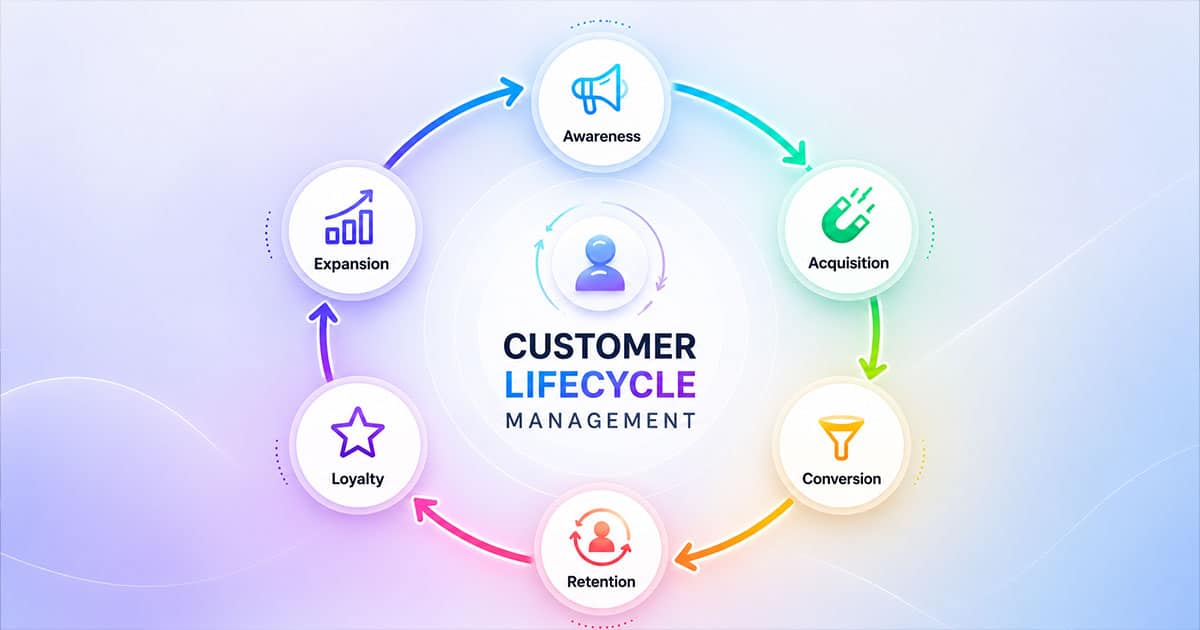
CRM software stands for customer relationship management software. It helps businesses manage customer relationships across the entire customer lifecycle. Modern CRM systems store data collected from emails, calls, websites, and social CRM channels. Sales teams, marketing teams, and support teams use CRM platforms to access customer information in one place. Studies show that companies that use CRM systems can increase sales by up to 29% and improve customer satisfaction significantly.
Today’s CRM technology does more than update records. AI-powered CRM solutions use artificial intelligence, machine learning, and data analytics to deliver actionable insights. Sales representatives track customer interactions, understand customer behavior, and anticipate customer needs.
From mobile CRM to seamless integration across digital channels, CRM solutions streamline operations, improve customer engagement, and support long-term business success. Customer Relationship Management (CRM) is evolving from a passive database into an active 'system of action' driven by autonomous AI, deep data integration, and hyper-personalized customer journeys by 2026.
Why CRM Trends Are More Important In 2026 Than Ever Before
Customer expectations rise every year. Digital channels multiply fast. Most companies now compete on customer experience, not price. CRM trends shape how sales teams, marketing teams, and support teams manage customer relationships. In 2026, CRM technology decides who gains a competitive edge and who falls behind.
Customer Expectations Have Changed
Customers expect fast replies and seamless customer interactions. Salesforce reports 88% of customers say experience matters as much as products. Customer satisfaction now depends on how well companies understand customer behavior and customer sentiment.
Modern CRM systems track the entire customer journey across multiple channels. CRM platforms collect real-time data from emails, calls, chat, and social CRM. That unified view helps sales representatives anticipate customer needs and build deeper connections.
AI-Powered CRM Is Now Standard
Artificial intelligence is no longer optional in the CRM industry. Gartner predicts that most CRM software will include AI-powered features by 2026. AI-powered CRM solutions analyze data collected from every touchpoint.
AI systems deliver actionable insights. Sales reps receive alerts about high-intent leads. AI agents handle routine tasks and customer inquiries. Generative AI even drafts emails and suggests responses. Human agents focus on closing deals and building relationships.
Artificial Intelligence is moving beyond simple chatbots to Agentic AI, autonomous agents that can execute multi-step communication workflows across departments without manual intervention.
Data Drives Every Sales Decision
Data analytics now guides sales processes. Companies that use CRM systems effectively see up to 29% higher sales and 34% better sales productivity, according to industry research.
Modern CRM solutions access customer information instantly. Sales software tracks customer emotions through sentiment analysis. Real-time data helps teams update records and forecast revenue accurately. Data becomes a game-changer for business success.
Omnichannel Engagement Is Essential
Customers move between digital channels fast. They switch from email sync to chat to mobile apps without notice. CRM platforms must provide seamless integration across all touchpoints.
Mobile CRM supports sales representatives on smart devices. Social CRM captures conversations from social media. Support teams and marketing teams share one unified view. That coordination improves customer engagement and customer loyalty across the entire customer lifecycle.
Automation And Efficiency Define Growth
Automation reduces manual work. Routine tasks such as follow-ups and data entry no longer slow sales reps. CRM technology streamlines operations across business operations.
Citizen developers now customize workflows without heavy IT support. Machine learning improves forecasting and identifies upsell opportunities. Productivity gains increase revenue without hiring more staff. Companies that adopt these top CRM trends position themselves for stronger business impact and long-term driving growth.
Top 10 CRM Trends In 2026
CRM trends in 2026 focus on AI powered CRM, automation, and deeper customer insights. Modern CRM systems now shape the entire customer lifecycle. Sales teams rely on CRM technology to improve customer experience, increase productivity gains, and create a strong competitive edge.
1. AI-Powered CRM And Generative AI
AI-powered CRM solutions now dominate the CRM industry. Gartner predicts that most CRM platforms will integrate artificial intelligence features by 2026. AI systems analyze data collected from every customer interaction to deliver actionable insights.
- AI agents handle routine tasks
- Machine learning improves lead scoring
- Generative AI drafts emails and proposals
- Sentiment analysis tracks customer emotions
- Real-time data supports sales processes
- Virtual assistants assist human agents
2. Hyper Personalization
Customers expect brands to understand their needs. Studies show 80% of buyers prefer personalized experiences. CRM software uses data analytics to study customer behavior and customer sentiment across digital channels.
- Unified view of customer interactions
- Anticipating customer intent
- Personalized offers and follow-ups
- Higher customer engagement
- Improved customer satisfaction
- Stronger customer loyalty
3. Mobile CRM Adoption
Mobile CRM becomes essential for modern sales representatives. Over 65% of sales reps access sales software from smart devices. CRM solutions now support real-time updates from anywhere.
- Access customer information instantly
- Update records on the go
- Faster response to customer inquiries
- Better collaboration with support teams
- Seamless integration with CRM systems
- Improved business operations
4. Sales And Support Automation
Automation drives measurable business impact. Companies that use CRM systems effectively report up to 30% productivity gains. AI-powered workflows streamline operations.
- Automate follow-ups
- Reduce manual data entry
- Shorter sales cycles
- Improved coordination with marketing teams
- Better email tracking of customer interactions
- Faster closing deals
5. Advanced Data Analytics
Data analytics now guides sales decisions. Modern CRM platforms transform raw data into customer insights that improve forecasting accuracy.
- Clear view of entire customer lifecycle
- Early churn detection
- Accurate revenue forecasting
- Smarter sales strategies
- Real-time dashboards
- Stronger competitive edge
6. Self-Service CRM
Research shows 67% of customers prefer self-service before contacting human agents. Self-service CRM improves customer experience and reduces pressure on support teams.
- AI agents answer common questions
- 24/7 support across digital channels
- Faster issue resolution
- Better customer engagement
- Reduced support costs
- Higher customer satisfaction
7. Social CRM And Omnichannel Strategy
Customer relationships now span multiple channels. Social CRM captures conversations from social media, chat apps, and email in one unified view.
- Track customer sentiment in real time
- Respond faster across platforms
- Improve customer journey visibility
- Strengthen brand trust
- Align marketing teams and sales teams
- Build deeper connections
8. Low Code Customization
Citizen developers now customize CRM systems without heavy IT support. Low code tools make CRM technology more flexible.
- Faster workflow setup
- Reduced implementation costs
- Tailored sales processes
- Quick updates to CRM solutions
- Better alignment with business goals
- Scalable business operations
9. Seamless Integration Across Tools
CRM platforms no longer operate alone. Seamless email integration connects CRM software with marketing automation and support systems.
- Shared customer data across teams
- Consistent messaging
- Improved collaboration
- Unified customer insights
- Better tracking of the customer journey
- Increased sales efficiency
10. Customer Experience As Growth Driver
Customer experience defines the future of CRM. Most companies now invest heavily in CRM technology to improve customer relationships and drive growth.
- Focus on customer satisfaction metrics
- Monitor customer emotions and sentiment
- Strengthen long-term customer loyalty
- Support the entire customer lifecycle
- Increase business success
- Deliver measurable business impact
How CRM Trends Impact Small Businesses And Startups
Small businesses and startups face tight budgets and high competition. CRM trends now play a critical role in business success. Modern CRM systems help small teams manage customer relationships, streamline operations, and compete with larger companies using smarter CRM technology.
AI-Powered Efficiency
AI-powered CRM solutions reduce manual work. Small teams cannot afford wasted time. Research shows automation can improve productivity gains by up to 30%.
AI systems handle routine tasks such as follow-ups and data entry. Sales representatives focus on closing deals and building relationships. Artificial intelligence also delivers actionable insights from data collected across digital channels.
Better Customer Insights
Startups often lack deep market data. CRM software changes that. Modern CRM platforms track customer behavior, customer sentiment, and customer interactions in one unified view.
Data analytics helps anticipate customer needs. Real time data reveals patterns in the customer journey. Better customer insights lead to smarter decisions and stronger customer satisfaction.
Improved Customer Experience
Customer experience defines growth for small companies. Studies show 73% of customers say experience influences buying decisions. CRM solutions support the entire customer lifecycle.
Sales teams and support teams access customer information instantly. Faster replies to customer inquiries improve customer engagement. Stronger service builds customer loyalty early.
Mobile CRM For Flexible Teams
Small businesses rely on flexibility. Mobile CRM allows sales reps to use smart devices from anywhere. Over 65% of sales representatives use mobile sales software daily.
Mobile CRM helps update records in real time. Seamless integration across tools keeps business operations smooth. Quick access to data supports faster decisions.
Cost-Effective Automation
Budgets matter for startups. Automation within CRM systems reduces the need for large support teams. AI agents manage common customer inquiries through self-service CRM tools.
Generative AI drafts emails and proposals. Citizen developers customize workflows without heavy IT costs. Efficient automation creates measurable business impact without increasing overhead.
Stronger Sales Processes
Clear sales processes drive revenue. CRM technology structures pipelines and tracks every stage of the customer journey. Companies using CRM software report up to 29% higher sales.
Sales teams gain sales visibility into deals. Managers access real-time dashboards. Accurate forecasting supports driving growth with confidence.
Competitive Edge In Crowded Markets
Startups compete with established brands. Social CRM and omnichannel strategies level the field. CRM platforms connect multiple channels into one system.
Unified data improves marketing teams and sales coordination. Hyper-personalization strengthens deeper connections with customers. Smart use of top CRM trends gives small businesses a real competitive edge in the CRM industry.
Common Mistakes Companies Make When Following CRM Trends
CRM trends evolve fast. Many companies rush to adopt new CRM technology without a clear plan. Gartner reports that up to 50% of CRM projects fail to meet expectations. Poor execution often hurts customer relationships, sales processes, and overall business success.
No Clear CRM Strategy
Many companies buy CRM software without defining goals. They focus on key features instead of business impact. CRM systems then become complex tools with little direction.
Sales teams feel confused. Support teams struggle to align workflows. A clear customer relationship management strategy should guide every CRM solution. Without that foundation, even AI powered CRM fails to deliver real value.
Overlooking Data Quality
Data collected across digital channels must stay accurate. Poor data hygiene damages customer insights. Studies show bad data costs businesses millions each year.
Duplicate records affect customer interactions. Incomplete data weakens sentiment analysis and forecasting. Modern CRM platforms depend on real-time data. Clean and updated records support better customer experience and smarter decisions.
Ignoring User Adoption
CRM systems only work when people use them. Many sales representatives avoid CRM software because it feels complicated. Research shows low adoption remains a top CRM industry challenge.
Training often gets ignored. Sales reps return to spreadsheets. That habit reduces visibility across the entire customer lifecycle. Simple interfaces and clear processes increase adoption and productivity gains.
Chasing Every New Feature
Artificial intelligence, generative AI, and AI agents sound exciting. Yet not every feature fits every business. Companies often implement tools without assessing customer needs.
AI-powered automation may create noise instead of value. A new CRM platform must solve real problems. Focus on actionable insights and measurable results. Smart decisions create a competitive edge.
Poor Integration Across Tools
CRM platforms must connect with marketing teams and support teams. Lack of integration with existing platforms leads to data silos. That disconnect harms the unified view of the customer journey.
Sales software should share customer information across multiple channels. Without integration, teams duplicate efforts. Customer satisfaction declines when communication feels fragmented.
Neglecting Customer Experience
Customer experience drives loyalty. Research shows 88% of customers value experience as much as products. Some companies focus only on automation and forget the human side.
Self-service CRM tools and AI systems help, but human agents still matter. Customer emotions and customer sentiment require empathy. Balanced CRM solutions strengthen deeper connections and long-term customer loyalty.
Measuring The Wrong Metrics
Vanity metrics create false confidence. Companies track logins instead of revenue impact. CRM technology must support real growth.
Track conversion rates, closing deals, and customer engagement. Measure churn and customer retention. Real data analytics reveal business impact. Correct metrics guide driving growth and sustainable business success.
How Gain.io Puts Modern CRM Trends Into Action
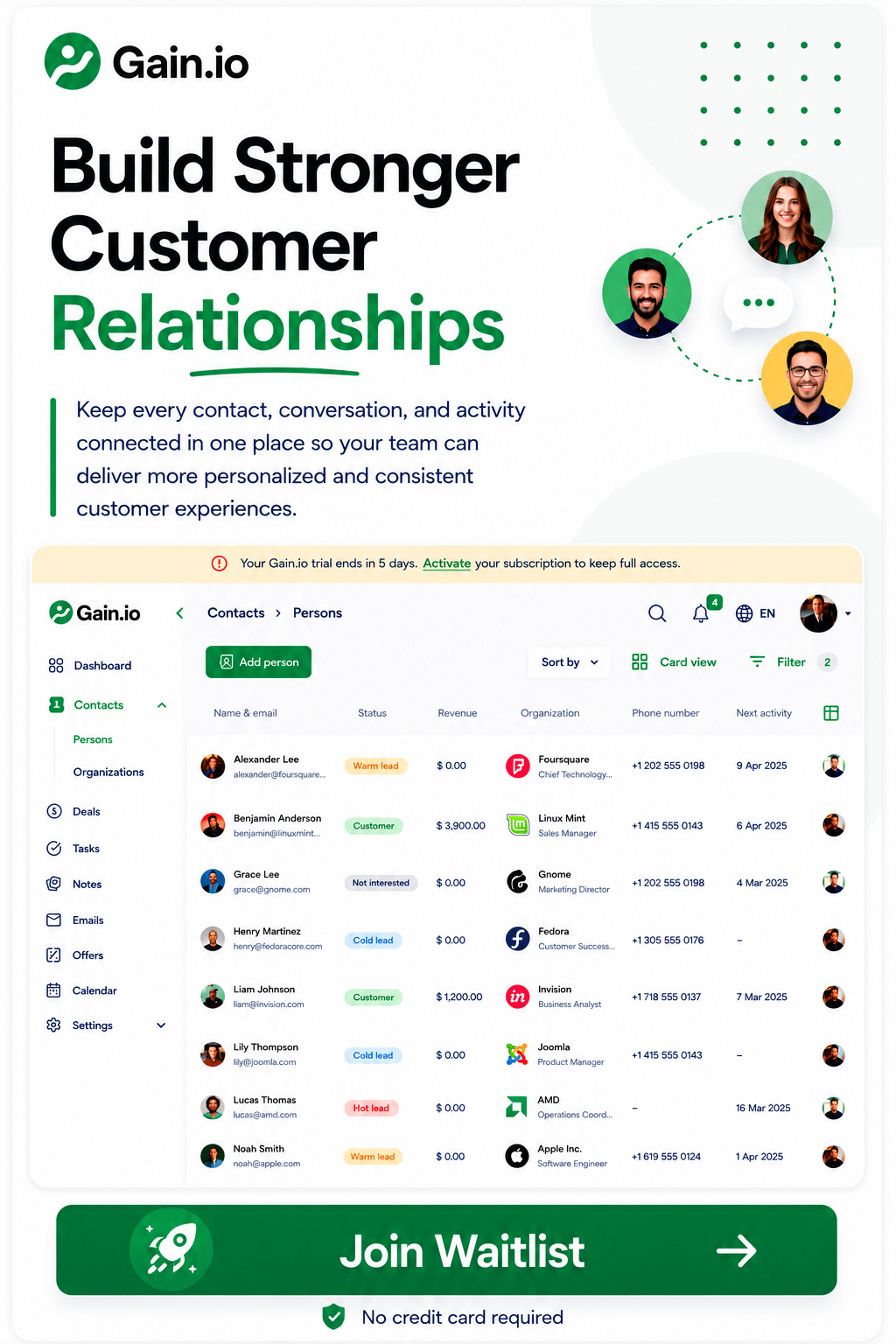
Gain.io brings modern CRM trends to life by centralizing customer relationship management in one simple platform. It helps teams manage contacts, deals, email communication, and follow-ups without switching apps. Gain.io uses real-time data to improve customer insights, align sales teams, and streamline business operations for stronger customer engagement and growth.
Gain.io makes customer experience easier to manage with visual pipelines, task reminders, and built-in calendars. It helps sales teams organize leads and close deals faster by keeping all customer interactions in one place. Users see complete customer information at a glance, reducing manual work and boosting productivity gains.
The platform also integrates CRM workflows with inboxes and calendars so teams never miss a customer inquiry. This unified view supports collaboration across sales, marketing, and support, improving CRM software value throughout the entire customer journey.
FAQs
How Do CRM Trends Affect B2B Sales Cycles In 2026?
CRM trends shorten B2B sales cycles through automation, real-time data, and AI-powered insights. Sales teams respond faster to customer inquiries and track the entire customer journey. Better customer insights improve lead qualification and closing deals.
Can AI-Powered CRM Improve Forecast Accuracy For Small Teams?
Yes, AI-powered CRM solutions use machine learning and data analytics to analyze historical data collected across multiple channels. That process improves forecasting accuracy and reduces guesswork. Even small businesses gain stronger visibility into revenue and pipeline performance.
Is Social CRM Necessary For Growing Startups?
Yes, social CRM helps startups monitor customer interactions across digital channels. Customers often share feedback publicly. Social CRM tools track customer sentiment and protect brand reputation while strengthening customer engagement.
Do CRM Systems Help Increase Customer Retention Rates?
Yes, modern CRM systems improve customer satisfaction by offering a unified view of customer relationships. Teams anticipate customer needs and personalize communication. Stronger customer experience leads to higher customer loyalty and long-term retention.
How Does Generative AI Support Sales Representatives In Daily Tasks?
Generative AI supports sales representatives by drafting emails, summarizing customer interactions, and suggesting follow-ups. AI agents reduce routine tasks and free time for deeper connections. Productivity gains improve overall business success.
Can CRM Technology Support Remote And Hybrid Sales Teams?
Yes, mobile CRM and seamless integration across tools allow remote sales reps to access customer information anytime. Real-time dashboards keep business operations aligned. Remote teams stay productive without losing visibility into the customer lifecycle.
What Role Does Data Analytics Play In Modern Customer Relationship Management?
Data analytics turns raw customer data into actionable insights. CRM platforms analyze customer behavior, customer emotions, and buying patterns. That intelligence supports smarter decisions, stronger sales processes, and measurable business impact.