Every sales rep hears objections. “Your pricing is too high.” “We already use another tool.” “Now isn’t the right time.” In SaaS sales, objections are part of the journey, not the end of it. In fact, objections often signal interest. A prospect who asks questions is usually trying to reduce risk before making a decision. Research shows organizations with structured objection handling frameworks can improve close rates from 20–30% to as high as 50–64%.
A strong objection handling framework SaaS teams use does more than save deals. It builds trust, shortens the sales cycle, and helps sales teams focus on business value instead of features. The best sales professionals do not argue with prospects. They listen carefully, uncover the real concern, and respond with evidence, empathy, and clear outcomes.
This guide explains how objection handling works in B2B SaaS, common objections buyers raise, proven frameworks, and practical techniques your team can use to close more deals.
What Is An Objection Handling Framework In SaaS?
An objection-handling framework SaaS teams use is a structured method for responding to buyer concerns during the sales process. Instead of reacting on instinct, sales reps follow a repeatable approach to understand objections, address concerns, and move deals forward. In B2B SaaS, objections are common because software purchases often involve multiple decision makers and longer sales cycles.
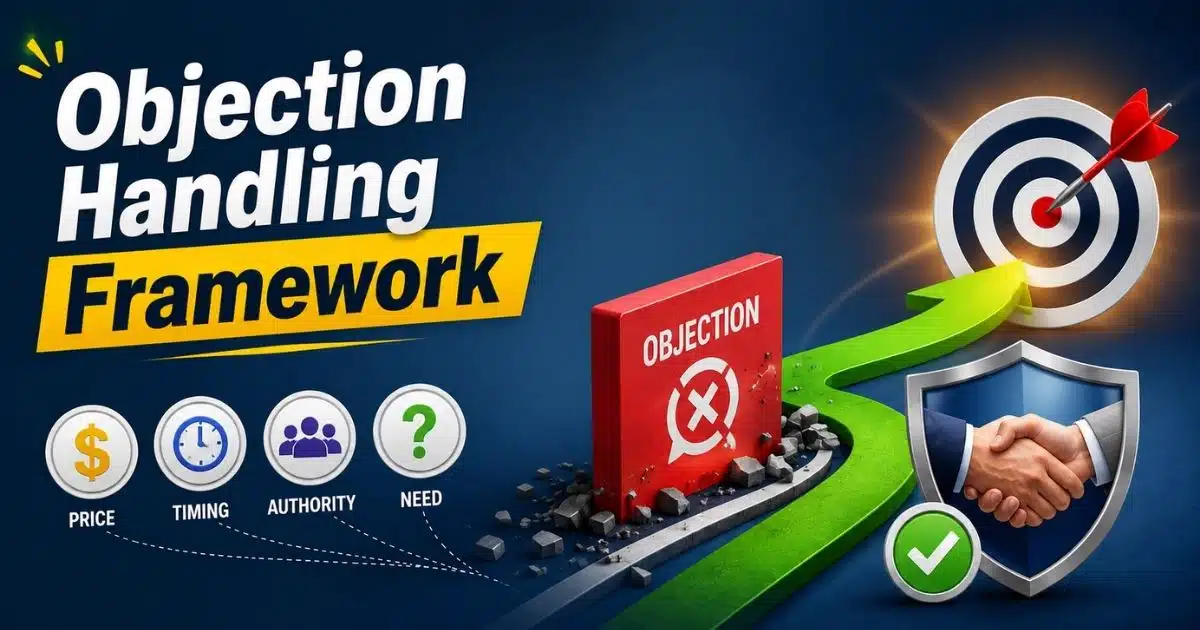
A good objection-handling framework helps sales teams handle sales objections with confidence. Common sales objections usually relate to price, timing, need, or authority. Rather than pushing harder, effective objection handling focuses on active listening, empathy, and business outcomes. Research shows that structured frameworks like LAER help sales professionals uncover the real issue behind a prospect's concerns and build trust.
When done well, handling objections becomes an opportunity. It helps sales teams overcome objections, shorten the sales pipeline, and close more deals.
Why Objection Handling Is Important In SaaS Sales
Every SaaS deal comes with questions, doubts, and hesitation. Buyers rarely say yes right away. A strong objection-handling process helps sales teams build trust, remove friction, and move deals forward with confidence.
Objections Show Buyer Interest
Sales objections are not always bad news. In many cases, they show that a prospective buyer wants more information before making a decision. Questions about pricing, security, or implementation often mean the buyer sees potential value.
Research shows that objections surface when buyers need clarity or reassurance. Instead of avoiding objections, a sales rep should treat them as opportunities. Good sales conversations uncover pain points and create a clear understanding of the buyer's needs. That approach leads to more closed deals and stronger customer relationships.
Better Responses Lead To More Deals
Effective objection handling has a direct impact on revenue. Organizations with a structured objection handling framework often improve close rates from 20–30% to as high as 50–64%. Sales reps with strong skills consistently close more deals.
A repeatable objection-handling framework SaaS teams use creates consistency across the sales process. Rather than guessing what to say, the sales team follows proven methods to overcome objections. Better responses shorten the sales cycle and improve sales pipeline performance.
Trust Helps Buyers Move Forward
Trust plays a major role in SaaS sales. Buyers want proof before they commit to software purchases. Acknowledge concerns and show empathy. That simple step helps reduce tension and builds credibility.
Active listening also matters. Let prospects explain their specific concerns without interruption. Sales professionals who listen carefully can address concerns with customer references, social proof, and measurable outcomes. Buyers are more likely to move forward when they feel completely understood.
Complex Deals Need Better Frameworks
B2B SaaS deals often involve many decision makers. Recent research shows that the average technology purchase can include up to 25 stakeholders. Every stakeholder may raise different objections during the decision-making process.
A strong objection-handling framework helps sales teams manage complex buying journeys. It gives reps a structured way to address budget constraints, implementation risk, and ROI objections. Clear communication keeps deals moving through the sales funnel instead of stalling.
Skills Improve With Regular Practice
Objection handling is a skill that fades without practice. Great sales professionals do not rely only on talent. They sharpen their skills through role-play, coaching, and feedback.
Many teams now use conversation intelligence tools to review sales calls and help reps refine their responses. Regular sales training improves confidence and prepares teams for similar objections in future deals. A well-built objection-handling playbook turns everyday challenges into long-term business outcomes, especially when it is reinforced by a structured B2B sales CRM system that keeps complex deals and stakeholders organized.
Common SaaS Objections Sales Teams Face
Every SaaS buyer has concerns before making a purchase. That is normal. Sales objections are often signs of interest, not rejection. The key is to understand why objections happen and respond with the right message at the right time.
Price Concerns
Price is one of the most common sales objections in B2B SaaS. Buyers may say your solution is too expensive or outside their budget constraints. In many cases, the issue is not cost. The real problem is perceived value.
A sales rep should shift the conversation from price to business outcomes. Show measurable outcomes and long-term value. Customer references and social proof help prove ROI. Research shows that price objections often reflect uncertainty about value rather than a lack of budget, which is why many teams now rely on AI sales automation to surface ROI insights and tailor conversations at scale.
Timing Questions
Timing objections are common in software sales. Prospects may say, “Not right now” or “Maybe next quarter.” Most customers already use an existing system and hesitate to change the status quo.
Timing objections often reveal competing priorities. A prospective buyer may see value but lack urgency. Ask open-ended questions to understand the decision process. SaaS experts note that “not right now” is one of the most common objections in SaaS sales.
Lack Of Need
Need objections happen when buyers do not see a strong problem or opportunity. Potential customers may believe their current solution works well enough. They may not recognize hidden pain points in their workflow.
Great sales professionals help buyers see gaps without pressure. Connect features to real business outcomes. Explain how the solution improves efficiency or revenue. A strong sales pitch focuses on outcomes rather than technical details. That approach makes sense to decision makers and creates a clear understanding of value.
Missing Stakeholders
SaaS purchases rarely depend on one person. Many deals involve other decision makers from finance, IT, operations, and leadership teams. A buyer may like your product but still need approval from relevant decision makers.
Research shows that the average technology purchase can involve around 25 decision-makers, making strong sales visibility across the pipeline essential to keep every stakeholder aligned. Every stakeholder brings different concerns to the decision-making process. Strong objection handling helps sales teams address specific objections before they slow down the sales cycle.
Risk And Change
Buyers often worry about implementation risk, switching costs, or company stability. Change feels risky, especially in B2B SaaS. Prospects want confidence that the move will succeed without disrupting operations.
Effective objection handling starts with empathy. Acknowledge the prospect's concerns and listen carefully. Share success stories from other clients with similar business models or company structures. Evidence builds trust and helps overcome objections. When buyers feel safe, more deals move through the sales funnel and become closed deals.
How An Objection Handling Framework Works
A good framework gives sales teams a clear path during difficult conversations. Instead of reacting quickly, reps follow a process to uncover the real issue. That approach improves trust, reduces friction, and helps move deals through the sales pipeline.
Listen Before You Respond
Most objections surface because buyers need more clarity. A sales rep should let the prospect speak without interruption. Active listening helps uncover pain points and hidden concerns that may not appear at first.
Experts recommend listening first because buyers often reveal the real problem after their initial objection. Many top performers let prospects talk most of the time during sales conversations. That creates trust and helps sales professionals gather better information.
Show Empathy And Understanding
Buyers want to feel heard before they accept a solution. Acknowledge the objection and validate the prospect's position. Simple responses like "That makes sense" or "I completely understand" can reduce tension quickly.
Research shows empathy increases buyer trust and improves communication. Effective objection handling starts with understanding the prospect's concerns instead of pushing back. Trust becomes especially important in B2B SaaS, where software purchases often involve multiple decision makers.
Explore The Real Issue
The first objection is not always the real objection. Price concerns may hide ROI objections. Timing objections may reveal other decision makers or budget constraints.
Ask open-ended questions to uncover specific concerns. Questions like "What makes this decision difficult?" help clarify the decision-making process. The LAER model emphasizes exploration because tailored responses work better than generic answers.
Respond With Relevant Proof
Once the root cause becomes clear, provide evidence that addresses concerns directly. Share customer references, success stories, or measurable outcomes from other clients. Social proof reduces risk and builds credibility.
Focus on business outcomes rather than technical features. Explain the long-term value and ROI instead of listing product capabilities. Prospective buyers care more about solving problems than learning every feature of your software.
Document And Improve Responses
Great objection handling does not stop after one sales call. High-performing sales teams document common objections and successful responses in an objection-handling playbook. That creates consistency across the sales process.
Conversation intelligence tools and an AI sales assistant for pipeline efficiency now help reps refine their approach by analyzing calls and identifying patterns. Teams that practice regularly become more confident and close more deals. The LAER objection handling framework remains one of the most widely used methods because it creates a repeatable system for handling objections.
Popular Objection Handling Frameworks Used By SaaS Teams
Great sales reps do not rely on guesswork when objections appear. They follow proven frameworks that create consistency and build trust. A structured objection-handling framework helps teams respond with confidence and keep deals moving through the sales funnel.
LAER Framework
The LAER model stands for Listen, Acknowledge, Explore, and Respond. Many SaaS teams use it because it works across almost every type of sales objection. The framework encourages sales professionals to understand concerns before offering solutions. Research shows that LAER remains one of the most widely used methods in B2B sales.
A sales rep first listens carefully and then acknowledges the prospect's concerns. Open-ended questions help uncover the root cause. After that, the rep responds with evidence, customer references, or ROI data. This approach improves trust and creates better sales conversations.
Feel Felt Found Method
The Feel Felt Found framework works well for emotional objections. It helps prospects feel understood instead of pressured. A rep might say, "I completely understand how you feel. Other clients felt the same way. What they found was..." That simple structure reduces tension and builds rapport.
This method works especially well when prospects raise concerns about implementation risk, company stability, or switching costs. Success stories and social proof make responses more credible. Buyers often trust experiences from other clients who faced similar objections.
CRAC Framework
CRAC stands for Clarify, Restate, Argue, and Confirm. Sales teams often use this objection-handling framework for price and ROI objections. The process helps uncover decision criteria before presenting a solution. Experts consider it effective for budget-related discussions in software sales.
Clarifying the objection prevents misunderstandings. Restating the concern shows active listening. Data, measurable outcomes, and long-term value strengthen the response. The final confirmation ensures the specific objection has been resolved before moving forward.
Boomerang Technique
The Boomerang method turns an objection into a reason to buy. A concern about cost, for example, can become a discussion about business outcomes and ROI. Many customer objections become easier to address when framed from a value perspective.
Price objections often reflect low perceived value rather than true budget constraints. A strong sales team connects features to results. Showing how the solution saves time, increases revenue, or reduces risk helps overcome objections and close more deals.
Custom SaaS Playbooks
No single framework fits every company. High-performing B2B SaaS teams often build an objection-handling playbook tailored to their business model, company structure, and sales process. That playbook includes common objections, proven responses, and customer stories.
Conversation intelligence tools now help reps refine responses by analyzing sales calls and identifying patterns. Teams that practice regularly become more consistent, especially when they pair training with disciplined sales deal tracking that shows where objections appear most often. Structured objection handling frameworks can improve close rates from 20–30% to as high as 50–64%, according to industry research.
How To Respond To Price Objections Without Discounting
Price objections happen in almost every SaaS deal. Yet discounting is not always the answer. In many cases, buyers are unsure about value, risk, or ROI. A smart sales team shifts the conversation from cost to outcomes and keeps the deal moving forward.
Focus On Business Value
Price objections often reflect low perceived value rather than a lack of budget. Buyers want to know what they gain from the investment, and a well-designed sales pipeline CRM makes it easier to connect each deal stage to concrete business outcomes. A sales rep should connect the solution to measurable outcomes such as revenue growth, time savings, or lower costs. Experts consistently note that value matters more than price in B2B purchases.
Avoid talking only about features. Explain how your product improves business outcomes. When potential customers see the long-term value, price becomes less of a barrier. That approach strengthens your objection handling framework SaaS teams rely on.
Ask Questions First
A prospect who says, "It's too expensive," may have other concerns. Budget constraints sometimes hide ROI objections, implementation risk, or uncertainty about change. Great objection handling starts with curiosity, not defense.
Ask open-ended questions to uncover specific objections. Questions like "Compared to what?" or "What concerns you most about the investment?" create a clear understanding of the prospect's position. That helps sales professionals address concerns with tailored solutions.
Use Data And Proof
Buyers trust evidence more than promises. Customer references, case studies, and social proof make your sales pitch more credible. Data helps prospects see the financial impact of their decision.
Share success stories from other clients with similar pain points, such as a SaaS startup that used Gain.io to close deals faster and shorten its sales cycle. Show how your solution improved efficiency or reduced costs. Research shows that providing evidence builds trust and supports better decision-making in software purchases.
Highlight The Cost Of Waiting
Many prospects focus on the price today but ignore the cost of delay. An outdated existing system may waste time, reduce productivity, or create lost opportunities. That hidden cost can be much higher than the software itself.
Help buyers compare the cost of action versus inaction. A strong objection-handling framework encourages teams to discuss future business outcomes, not just current expenses. That shift helps overcome objections and shortens the sales cycle.
Offer Flexibility Without Discounts
Discounts can reduce perceived value and hurt long-term growth. Research in SaaS shows that companies often rely too heavily on discounts, with average SaaS discounts reaching around 17%. Excessive discounting can weaken margins and customer expectations.
Instead, offer flexible payment terms, phased implementation, or customized onboarding. Those options address specific concerns without lowering price. Smart SaaS sales teams protect value while helping prospects move through the decision-making process with confidence.
Real Examples Of SaaS Objection Handling In Action
Theory helps, but real examples make objection handling easier to understand. Every sales conversation is different, yet many customer objections follow familiar patterns. The key is to listen carefully, uncover the real issue, and respond with value.
Price Objection Example
A prospective buyer says, "Your software costs more than competitors." Many sales reps react by offering discounts. That approach often lowers perceived value and hurts long-term revenue. Research shows price objections usually reflect uncertainty about ROI, not budget alone.
A better response is: "I understand your concern. Can we explore what success would look like for your team?" Then connect the solution to business outcomes. Share customer references and measurable outcomes. Great SaaS sales teams sell value, not price, and they reinforce that mindset with disciplined sales pipeline management that highlights business impact at each stage. That approach helps overcome objections without reducing cost.
Current Tool Example
A buyer says, "We already have an existing system." This is one of the most common sales objections in software sales. Buyers often prefer the status quo because change feels risky. Switching costs and implementation risk can create hesitation.
A strong sales rep might ask, "What would you improve about your current solution if you could?" That question uncovers hidden pain points. Once gaps become clear, discuss how your solution delivers better results. Effective objection handling focuses on problems the buyer still faces, not on attacking competitors.
Timing Objection Example
A prospect says, "Let's revisit this next quarter." Timing objections are common in B2B SaaS because companies juggle many priorities. Yet delays often extend the sales cycle and postpone results. Most objections hide deeper concerns that require exploration.
A useful response could be: "What would need to change for this project to become a priority?" Open-ended questions help uncover the real barrier. The answer may reveal budget constraints, decision makers, or missing information. Great sales professionals explore before they respond.
Authority Objection Example
A buyer says, "I need approval from leadership." Modern software purchases rarely depend on one person. Research shows the average technology purchase can involve up to 25 decision makers, which makes the decision-making process more complex.
Instead of waiting, ask: "Who else should join our next conversation?" Involve relevant decision makers early in the sales process. Provide materials that other decision makers can review internally, or share structured proposals through offer management with a client portal to keep feedback and approvals moving. That step reduces friction and keeps the sales pipeline moving toward closed deals.
Trust Objection Example
A buyer says, "How do I know your company will support us long term?" Trust objections often relate to company stability, support quality, or risk. Buyers want proof before they commit to B2B SaaS solutions. Empathy and active listening build confidence during difficult conversations.
A strong response is: "That makes sense. Let me share how similar clients achieved success with us." Success stories, social proof, and evidence build credibility. Studies show that empathy and active listening increase buyer trust and strengthen customer relationships.
Common Mistakes Sales Reps Make When Handling Objections
Even experienced sales reps make mistakes during difficult conversations. A poor response can damage trust and slow the sales cycle. Knowing what to avoid helps sales teams improve objection handling and close more deals.
Rushing To Respond
Many sales reps answer too quickly after a prospect raises an objection. Fast responses may sound defensive or scripted. Buyers often need time to explain their specific concerns before they are ready to hear a solution.
Active listening is one of the most important objection-handling techniques. Sales experts recommend letting prospects talk more during sales conversations to uncover hidden pain points. A pause creates space for better questions and a clearer understanding of the prospect's position.
Arguing Instead Of Empathizing
A prospect wants to feel heard, not challenged. Some sales professionals immediately defend their product when objections surface. That reaction often creates tension and weakens trust.
Effective objection handling starts with empathy. Phrases like "That makes sense" or "I completely understand" help acknowledge concerns. Research shows that empathy increases buyer trust and improves customer relationships. A respectful approach makes it easier to address concerns and move the sales process forward.
Missing The Real Problem
The first objection is not always the true objection. Price concerns may hide budget constraints or ROI objections. Timing objections may point to missing decision makers or company priorities.
Ask open-ended questions to uncover the root cause. A good objection-handling framework helps sales reps explore before responding. Sales teams that identify specific objections early can improve outcomes and prevent deals from stalling in the sales pipeline.
Talking Too Much About Features
Many sales reps focus on features instead of outcomes. Buyers care less about technical details and more about results. A long sales pitch rarely solves a prospect's concerns.
Connect your product to measurable outcomes and business value. Explain how your solution improves efficiency, saves money, or reduces risk. In B2B SaaS, decision makers care about ROI and long-term value more than feature lists. That approach helps overcome objections and creates more closed deals.
Skipping Practice And Feedback
Objection handling is a skill that fades without regular practice. Great sales teams train often because many customer objections repeat across deals. Sales training helps reps build confidence and prepare for similar objections.
Conversation intelligence tools now analyze sales calls and help reps refine responses, while focused task management for sales teams ensures every follow-up tied to an objection actually happens. Teams with an objection handling playbook respond more consistently and improve performance over time. Organizations with structured objection handling frameworks have reported close rates as high as 50–64%.
How To Measure The Success Of Your Objection Handling Process
Great objection handling should produce measurable results. If your sales team handles objections well, you should see better outcomes across the sales process. The right metrics help teams spot gaps, improve performance, and close more deals.
Track Your Win Rate
Win rate is one of the clearest signs of effective objection handling. It measures how many opportunities turn into closed deals. A rising win rate often means your sales reps handle objections more effectively.
Organizations with structured objection-handling frameworks have reported close rates between 50% and 64%, compared to 20% to 30% for teams without a process. Track win rates monthly to see whether your objection-handling framework SaaS strategy is working.
Monitor Sales Cycle Length
Poor objection handling often extends the sales cycle. Unresolved concerns create delays and slow decision-making. Buyers may leave deals in the sales pipeline if their questions remain unanswered.
Measure how long deals take to close before and after sales training, and use structured sales pipeline management to see exactly where objections slow momentum. A shorter sales cycle usually means reps address concerns earlier. Sales leaders often track pipeline velocity and time spent at each stage of the sales funnel to identify bottlenecks.
Review Call Quality
Sales calls reveal whether reps use effective objection handling techniques. Conversation intelligence tools now analyze talk-to-listen ratios, objections, and next steps automatically. Those insights help teams improve performance over time.
Experts recommend that sales reps listen more than they talk during difficult conversations. Active listening helps uncover specific objections and prospect's concerns. Teams that review calls regularly can help reps refine their approach and strengthen customer relationships.
Measure Objection Outcomes
Not every objection should end in a lost deal. Track how often your sales team successfully overcomes objections related to price, timing, or authority. That data shows which areas need more coaching.
Analysis of more than 800,000 sales objections found that many objections can be overturned when handled correctly. Cost-related objections, for example, often improve when reps focus on business outcomes and perceived value.
Evaluate Team Improvement
Objection handling is a skill that improves with practice. Measure how sales professionals perform after role-play sessions, coaching, and sales training. Better performance should appear in revenue, conversion rates, and customer feedback.
Modern teams combine metrics with conversation intelligence to improve consistency, supported by disciplined sales deal tracking and dynamic contact management that keep every interaction connected. A strong objection-handling playbook helps reps address common objections with confidence, especially when paired with a CRM that supports a simpler, more effective sales workflow. When teams measure results regularly, they create a culture of continuous improvement and close more deals.
How Gain.io Helps Sales Teams Handle Objections Better
Gain.io helps sales teams handle objections with better visibility into every deal and customer interaction as an all-in-one CRM to grow your sales and team. Instead of relying on guesswork, reps can track conversations, manage follow-ups, and understand where prospects slow down in the sales process. A clear sales pipeline helps teams spot common objections early and respond with the right message at the right time, especially when supported by modern sales deal tracking that surfaces risk before deals stall.
With centralized customer data and smart CRM tools for sales teams, sales reps can review past interactions, identify pain points, and tailor responses to specific concerns. Teams can also track decision makers, monitor deal progress with structured sales pipeline management, and focus on business outcomes rather than features by using a CRM that supports a simpler sales workflow. That leads to stronger sales conversations and more closed deals, because improved sales visibility helps teams anticipate objections before they become blockers. For B2B SaaS companies, Gain.io helps create a repeatable objection-handling framework SaaS teams can use to build trust, shorten the sales cycle, and drive more sales.
FAQs
Can Small SaaS Teams Benefit From An Objection Handling Framework SaaS?
Yes. Even small teams can benefit from a structured objection handling framework SaaS approach. A repeatable process helps sales reps respond consistently, shorten the sales cycle, and close more deals without relying on experience alone.
Does Objection Handling Work For Self-Service SaaS Products?
Yes. Objection handling is useful even in self-service models. Potential customers still have concerns about pricing, security, or value. Clear messaging, customer references, and social proof help address concerns before buyers leave the sales funnel.
How Often Should Sales Teams Update Their Objection Handling Playbook?
Sales teams should review their objection-handling playbook regularly. New competitors, market changes, and customer feedback can create new objections. Frequent updates help reps refine responses and stay aligned with buyer needs.
Can CRM Data Improve Objection Handling In SaaS Sales?
Yes. CRM data gives sales professionals a clear understanding of prospect's concerns, past interactions, and decision-making patterns, especially when they use it to manage leads more effectively. Better insights help teams personalize sales conversations and overcome objections more effectively.
What Skills Make Someone Better At Handling Objections?
Active listening, empathy, and communication are essential skills for handling objections, but they’re even more effective when backed by strong contact management to support relationships. Strong sales reps listen carefully, ask open-ended questions, and focus on business outcomes instead of pushing a sales pitch.


