Many businesses rely on channel partners to reach new markets and grow sales. Yet many still manage partner relationships with spreadsheets, scattered emails, and manual updates. As the partner network grows, keeping track of leads, deals, commissions, and performance becomes harder. A channel partner CRM brings everything into one place, helping teams stay organized and work more efficiently. Modern channel programs also rely on partner portals, deal registration, CRM integration, and automation to keep partners engaged and productive.
This guide explains what a channel partner CRM is, how it differs from a regular CRM, and why it matters for growing businesses. You will also learn the key features to look for, how to measure partner performance, common mistakes to avoid, and how Gain.io can help you build stronger partner relationships without the complexity of spreadsheets.
What Is A Channel Partner CRM
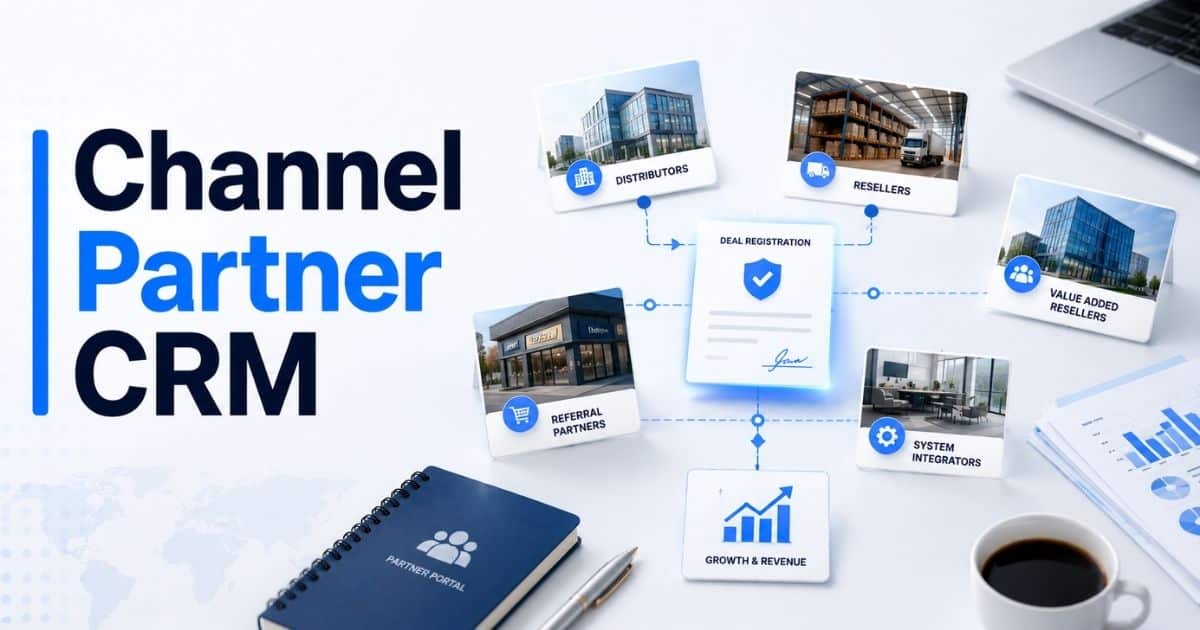
A channel partner CRM is a customer relationship management solution built to help businesses manage relationships with their channel partners. Instead of focusing only on direct customers, it helps companies organize their partner network, track partner activities, manage deals, and improve communication from one place. It supports every stage of channel partner management, from onboarding and collaboration to partner performance tracking.
A modern channel partner CRM centralizes partner data, sales opportunities, and communications, making it easier to manage a growing partner ecosystem. Sales teams can monitor progress, share marketing materials, automate follow-ups, and strengthen partner relationships without relying on spreadsheets or scattered emails. Many businesses also integrate it with partner relationship management processes to improve visibility, boost customer satisfaction, and support long-term business growth through more effective channel management.
Channel Partner CRM VS Regular CRM
A regular CRM helps your sales team manage direct customer relationships. A channel partner CRM extends that capability to businesses that sell through resellers, distributors, and other channel partners. It provides tools to manage partner relationships, deal registration, and partner performance from one platform.
Feature | Channel Partner CRM | Regular CRM |
|---|---|---|
Primary Focus | Managing channel partners and partner relationships | Managing direct customers and prospects |
Main Users | Partner managers, channel teams, and external partners | Internal sales and customer service teams |
Sales Model | Indirect channel sales | Direct sales |
Relationship Management | Partner recruitment, onboarding, and engagement | Customer acquisition and retention |
Deal Management | Includes deal registration to prevent channel conflict | Tracks customer opportunities and sales deals |
Partner Portal | Provides partners with secure access to resources and updates | Usually not available |
Lead Distribution | Assigns leads to the most suitable partners automatically | Assigns leads to internal sales representatives |
Performance Tracking | Measures partner revenue, commissions, and partner performance | Measures sales rep performance and customer metrics |
Marketing Support | Shares co-branded marketing materials and campaign assets | Focuses on customer marketing activities |
Best For | Businesses with reseller, distributor, or referral partner networks | Businesses that sell directly to end customers |
Why Do You Need A Channel Partner CRM
Managing a growing partner network becomes difficult when information is spread across spreadsheets, emails, and disconnected tools. A channel partner CRM brings everything into one place, making partner management easier and more organized. It helps businesses improve partner relationships, increase visibility, and support long-term business growth through a more effective channel partner management strategy.
Keep Partner Information In One Place
A channel partner CRM stores all partner data in one central location. Your sales team can quickly access contact details, deal history, contracts, and performance records. Everyone works with the same information, which reduces confusion and saves time.
A centralized management platform also makes it easier to manage relationships with active partners, strategic partners, and other partners. Better access to accurate data improves collaboration and helps teams make faster, data-driven decisions.
Improve Partner Communication
Strong partner relationships depend on regular communication. A channel partner CRM helps businesses streamline communication through shared updates, automated follow-ups, and a partner portal. Partners stay informed without relying on long email threads.
A partner relationship management approach also keeps marketing materials, product updates, and technical support in one place. Better communication improves partner engagement and helps partners support sales efforts with confidence.
Increase Sales Visibility
A growing partner network can make channel sales difficult to track. A channel partner CRM gives managers a clear view of every opportunity, from lead assignment to closed deals. It also shows how partners contribute to overall revenue growth.
Deal registration protects opportunities and helps reduce channel conflict between partners. Many modern platforms also automate lead distribution, sending opportunities to the right partners based on territory or expertise.
Measure Partner Performance
You cannot improve what you do not measure. A channel partner CRM tracks key performance indicators such as partner revenue, leads generated, win rates, and sales targets. Regular reports help identify top-performing partners and areas that need support.
Performance tracking also connects partner activities with business outcomes. Managers can reward partners based on results instead of assumptions, creating a stronger and more productive partner program.
Help Partners Succeed Faster
Recruiting new channel partners takes time and money. A structured onboarding process helps new partners become productive sooner by giving them the right product knowledge, sales enablement tools, and marketing resources from day one.
Many businesses combine their CRM with a learning management system and partner portal to simplify training and certifications. Well-supported partners use CRM tools to manage leads more effectively, close deals faster, stay engaged longer, and deliver a better customer experience.
Key Features Of Channel Partner CRM
A channel partner CRM does much more than store partner contacts. It helps businesses manage the entire partner journey from onboarding to performance tracking. The right features improve collaboration, reduce manual work, and support a stronger channel partner management strategy as your partner network grows.
Centralized Partner Data
A channel partner CRM keeps all partner data in one place. Your sales team can quickly access contact details, agreements, sales history, certifications, and account notes without searching through different systems. Everyone works from the same information, which reduces mistakes and saves time.
A centralized management platform also makes it easier to manage relationships with strategic partners, referral partners, and other channel partners. Better visibility helps teams make faster, data-driven decisions and improves operational efficiency across the entire partner ecosystem.
Partner Portal
A partner portal gives partners one secure place to access everything they need. They can find product documents, marketing materials, training resources, performance reports, and support information without contacting your team for every request.
Modern partner portals also support self-service tasks such as deal registration, order tracking, and support requests. Role-based access keeps information secure while helping partners work independently. That improves partner engagement and creates a better customer experience.
Deal Registration And Lead Distribution
Deal registration protects partner opportunities and reduces channel conflict. Partners can register new deals, while managers review and approve them through a structured workflow. Many businesses also reserve approved deals for a limited period, giving partners confidence to invest their sales efforts.
Automated lead distribution sends new opportunities to the right partners based on location, expertise, or target market. Faster lead routing improves response time and helps partners sell more effectively.
Workflow Automation
Manual partner management takes time. Workflow automation handles routine tasks such as lead routing, follow-up reminders, notifications, and approval processes. Your partner manager spends less time on administration and more time building strong business relationships.
Automation also keeps partner communication consistent. Partners receive updates at the right time without manual follow-up. Recent partner programs from leading technology companies continue to invest in sales task automation tools to simplify channel management and improve partner productivity.
Performance Tracking And Analytics
Performance tracking helps businesses measure partner performance with real data. Managers can monitor partner revenue, leads generated, sales targets, conversion rates, and other key performance indicators from one dashboard.
Analytics tools also help identify top-performing partners and uncover areas that need support. Regular performance reviews help reward partners fairly and improve future sales strategies. Better insights lead to stronger channel partnerships and smarter business decisions.
Partner Enablement Tools
Strong partner programs give partners the tools they need to succeed. A modern channel partner CRM often connects with partner relationship management systems, learning platforms, and content libraries. Partners can access product training, sales enablement tools, and co-branded marketing materials whenever they need them.
Many businesses also provide certifications, guided onboarding, and automated marketing tools through one platform. Recent partner platforms continue to expand training, onboarding, and sales automation capabilities, while dedicated task management for sales teams helps partners become productive faster and stay engaged for the long term.
How To Set Up A Channel Partner CRM Step By Step
A successful channel partner CRM needs more than a software installation. It requires a clear plan, the right partners, and structured processes. Following a step-by-step approach helps you build a stronger partner network, improve partner engagement, and support long-term business growth.
Step 1: Define Your Partner Program
Start with a clear channel partner management strategy. Decide which types of channel partners fit your business. You may work with referral partners, value-added resellers, distributors, managed service providers, or technology providers. Strong contact management and relationship tracking help ensure every partner supports your target market and business goals.
Create clear rules before inviting potential partners. Define sales territories, incentive programs, and partner responsibilities. A structured partner program helps attract the right partners instead of simply growing the largest partner network. Strong partner programs focus on quality, not quantity.
Step 2: Organize Partner Onboarding
New partners need a simple onboarding process. Give them access to product knowledge, sales enablement tools, technical support, and marketing materials from the first day. A learning management system and partner portal make training easier, especially when supported by a simpler sales workflow that keeps resources available at any time.
Many companies use a structured 30 to 90-day onboarding plan because the first 90 days often determine long-term partner success. Clear milestones help partners reach their first deal faster and build confidence in your products or services.
Step 3: Configure CRM Workflows
Set up your channel partner CRM before partners begin selling. Import partner data, create user roles, and connect the platform with your customer relationship management system. CRM integration keeps customer and partner information synchronized across teams.
Next, automate routine work. Set up deal registration, lead routing, follow-up reminders, and approval workflows. Following proven sales workflow automation strategies reduces manual work, improves operational efficiency, and helps your sales team respond more quickly to new opportunities.
Step 4: Enable Partners To Sell
Partners perform better when they have the right resources. Upload sales playbooks, pricing guides, product documents, and co-branded marketing materials into the partner portal. Easy access to smart CRM tools for sales teams helps partners support sales efforts without waiting for manual assistance.
Regular training also keeps certified partners informed about new features and sales strategies. Many technology companies now invest in continuous partner enablement and CRM tools designed for startups and small sales teams because well-equipped partners close more opportunities and deliver a better customer experience.
Step 5: Measure And Improve Performance
Launching your channel partner CRM is only the beginning. Track key performance indicators such as partner revenue, leads generated, deal conversions, and customer satisfaction. Performance tracking helps measure partner performance with real business data instead of assumptions.
Review reports regularly with each partner manager. Reward active partners who deliver results and provide extra support to partners who need guidance. Regular reviews strengthen partner relationships, improve channel management, and help identify top-performing partners across your partner ecosystem, especially when you choose tools after a Gain.io vs Pipedrive CRM comparison that fit your channel strategy.
How To Track Partner Performance And Commissions
A strong channel partner program depends on clear performance data. You need to know which partners create value, where deals slow down, and whether your incentive programs deliver results. A channel partner CRM gives you the visibility to measure partner performance and reward success with confidence.
Set Clear KPIs From The Start
Every partner program should begin with measurable goals. Decide which key performance indicators matter most for your business. Common metrics include partner revenue, leads generated, deal win rate, average deal size, and customer satisfaction. Clear targets help every partner understand what success looks like.
Review those goals with your partner manager on a regular schedule. When partners know how performance is measured, they stay focused on the same business goals. A consistent scorecard also makes partner performance easier to compare across your partner network.
Monitor Sales And Pipeline Activity
Revenue tells only part of the story. A healthy pipeline often shows future success before deals close. Track deal registration, pipeline value, sales cycle length, and conversion rates to understand how channel partners support channel sales.
A channel partner CRM gives your sales team real-time visibility into every opportunity. Early warning signs help you step in before small issues become larger problems. Better visibility also reduces channel conflict and improves forecasting across your partner ecosystem.
Measure Partner Engagement
Active partners usually produce better results. Track how often partners access the partner portal, complete training, use marketing materials, and join joint marketing initiatives. Those activities often predict future sales performance.
Partner engagement also shows whether your channel partner management strategy works. Low activity may point to gaps in onboarding, communication, or sales enablement tools. Regular communication helps keep partners informed and ready to support sales efforts.
Manage Commissions With Accurate Data
Commission payments should match real performance. A channel partner CRM records completed deals, partner revenue, and approved deal registrations in one place. That reduces manual work and lowers the risk of payment errors.
Automated incentive management also builds trust. Partners can see how commissions and rebates are calculated without waiting for manual updates. A transparent process encourages long-term partner relationships and motivates top-performing partners to keep growing sales.
Review Results And Improve Performance
Performance tracking should lead to action. Use sales pipeline management insights to review reports every month or quarter, identify top-performing partners and partners who need extra support, and compare results against business outcomes instead of relying on assumptions.
Use analytics tools to spot trends across your channel partner management program. Adjust incentive programs, training, or sales strategies based on real partner data and the capabilities highlighted in a Gain.io vs Salesforce CRM comparison. Regular reviews help improve operational efficiency and strengthen your business relationship with every active partner.
Channel Partner CRM Vs Partner Relationship Management Software
A channel partner CRM and partner relationship management (PRM) software both support indirect sales, but they serve different purposes. A channel partner CRM focuses on managing partner data, communication, and sales activities in ways similar to a B2B sales CRM, while PRM software offers a broader set of tools for onboarding, enablement, incentives, and partner program management. Many growing businesses use both together for a complete channel management strategy.
Feature | Channel Partner CRM | Partner Relationship Management (PRM) Software |
|---|---|---|
Primary Purpose | Manage channel partners, partner data, and sales activities | Manage the complete partner lifecycle and partner program |
Main Users | Sales teams, partner managers | Partner managers, channel teams, and external partners |
Relationship Focus | Partner relationships and channel sales | Partner recruitment, onboarding, enablement, and long-term partner success |
Partner Portal | May offer basic portal features | Comprehensive partner portal with role-based access |
Deal Registration | Supports deal registration and lead tracking | Advanced deal registration with approval workflows and conflict protection |
Partner Enablement | Basic sales resources and communication | Training, certifications, learning management, and sales enablement tools |
Incentive Management | Limited or integrated through third-party tools | Built-in commission, rebate, and incentive program management |
Marketing Support | Shares marketing materials and updates | Supports co-branded marketing materials, MDF, and campaign management |
CRM Integration | Central feature that syncs partner and customer data | Integrates with CRM to synchronize partner and customer information |
Best For | Businesses that need better partner management inside their CRM | Businesses with large or complex channel partner programs requiring end-to-end partner relationship management |
Common Mistakes Businesses Make With Channel Partner CRMs
A channel partner CRM can improve partner management, but only when businesses use it the right way. Small mistakes often lead to poor partner engagement, lower revenue, and weak channel partnerships. Avoiding those issues helps you build stronger relationships and achieve mutual success.
Recruit Too Many Partners
Many businesses think more partners always mean more sales. That is not true. Over-recruitment often creates a situation where partners compete for the same customers and the same opportunities. As a result, not all partners receive enough support or generate meaningful revenue.
Focus on quality instead of quantity. Choose partners that fit your target market and customer segments. Strong channel partner management depends on the right partners, not the biggest partner network. Recent channel management guidance also warns that over-recruitment reduces partner effectiveness and creates unnecessary channel conflict.
Treat Every Partner The Same
Not all partners contribute equally to your business. Referral partners, system integrators, distributors, and value-added resellers all play different roles. Referral partners earn commissions by introducing customers, while distributors buy products in bulk and sell them to resellers. Value-added resellers also provide services such as customization and technical support.
Build tiered partner programs based on performance, expertise, and business goals. Tailored communication, marketing efforts, and incentives help every partner succeed in the role that fits them best.
Skip Partner Enablement
Many companies stop after onboarding. Partners receive a few documents and are expected to sell on their own. That approach rarely works. Partners need ongoing product updates, sales enablement tools, and practical training throughout the partnership.
Modern partner programs also use gamification through points, badges, and rewards to increase partner engagement. Industry research shows companies with strong partner enablement achieve higher engagement, while structured onboarding and practical training help partners reach their first deal sooner and improve deal success rates.
Ignore Deal Protection
Partners invest time and resources before closing a sale. Without clear deal registration rules, they may lose opportunities to other partners or even direct sales efforts. That quickly reduces trust in your partner program.
A clear deal registration process protects partner investments for a defined period, commonly between 30 and 90 days depending on the program. It also reduces channel conflict and gives partners confidence to invest in new opportunities.
Measure Activity Instead Of Results
Many businesses only count portal logins or completed training. Those numbers do not always reflect business success. Tracking performance should focus on key metrics such as partner revenue, deal conversion, customer satisfaction, and time to first deal.
Regular performance reviews help identify top-performing partners and show where additional support is needed. Better analytics lead to smarter decisions and stronger business relationships. When you measure outcomes instead of activity alone, your channel partner CRM delivers far greater value.
How Gain.io Helps You Manage Channel Partners More Effectively
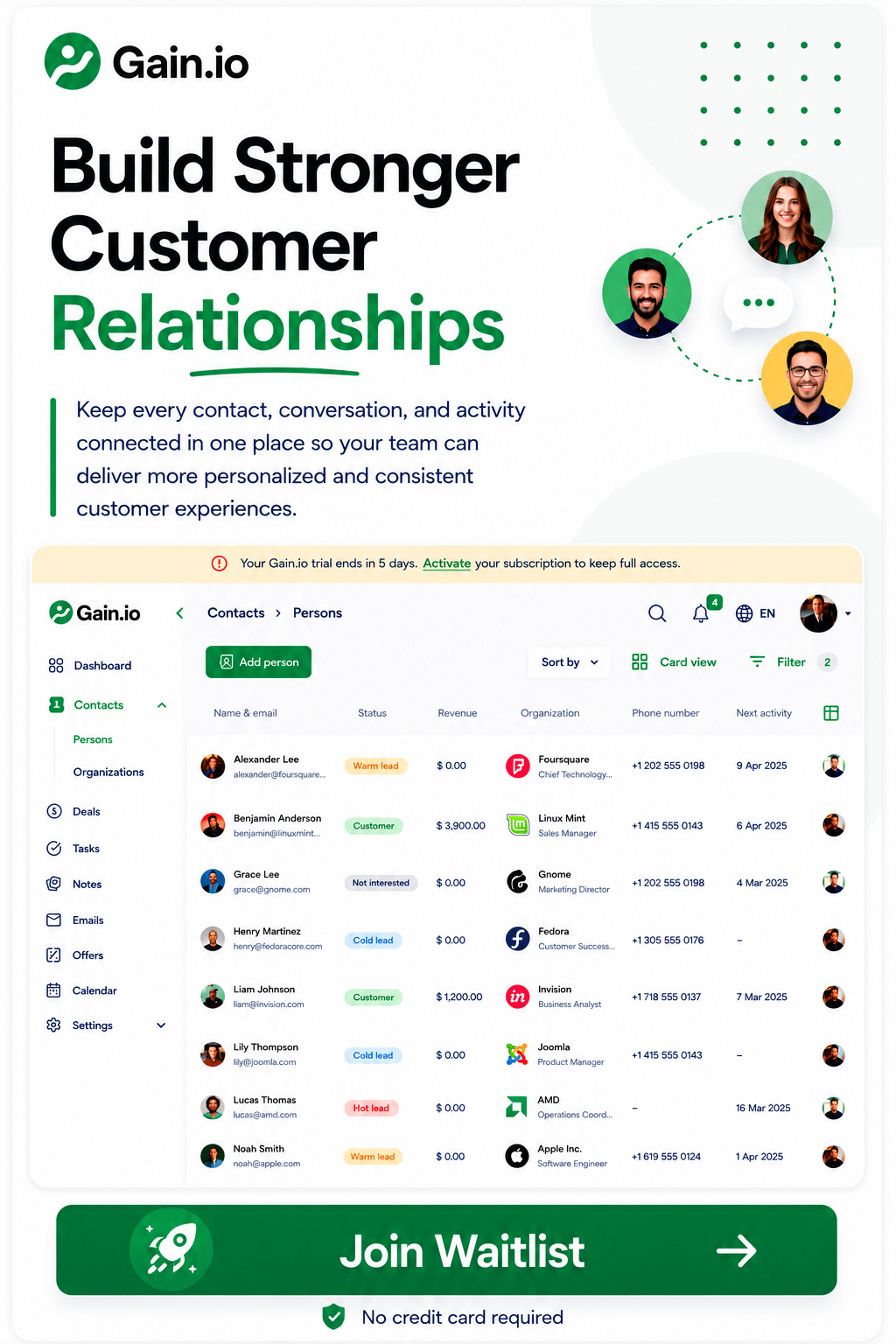
Gain.io helps businesses keep partner information, deals, and communication organized in one CRM. You can centralize partner data, manage opportunities through visual sales pipelines, and link contacts, tasks, notes, and emails in one place. Automated follow-ups and reminders help teams stay on top of every opportunity without relying on spreadsheets or manual tracking.
While Gain.io is not a dedicated partner relationship management platform, it gives sales teams the tools to strengthen partner relationships and improve channel partner management. Teams gain better visibility into partner activities, streamline communication with CRM email integration, and maintain a structured sales process. With email and calendar integration, task management, and real-time pipeline tracking, Gain.io helps businesses work more efficiently and build a stronger foundation for long-term business growth.
Frequently Asked Questions
Can A Small Business Benefit From A Channel Partner CRM?
Yes. A small business can use a channel partner CRM to organize channel partners, track deals, and improve partner relationships without hiring a large channel management team. It also creates a stronger foundation for future business growth.
Do You Need Both A CRM And PRM Software?
Yes. A CRM manages direct customer relationships, while partner relationship management software supports partner onboarding, deal registration, enablement, and partner engagement. Businesses with a growing partner ecosystem often use both platforms together.
Can A Channel Partner CRM Help Reduce Channel Conflict?
Yes. A channel partner CRM helps reduce channel conflict through deal registration, lead tracking, and clear partner communication. It gives channel partners better visibility into opportunities and prevents duplicate sales efforts.
How Often Should You Review Partner Performance?
Most businesses review partner performance monthly or quarterly. Regular tracking performance against key metrics helps identify top-performing partners, improve sales strategies, and reward partners based on measurable results instead of assumptions.
What Types Of Businesses Use A Channel Partner CRM?
Technology companies, manufacturers, SaaS providers, managed service providers, and businesses that sell through resellers, distributors, referral partners, or system integrators commonly use a channel partner CRM to manage their partner network more effectively.