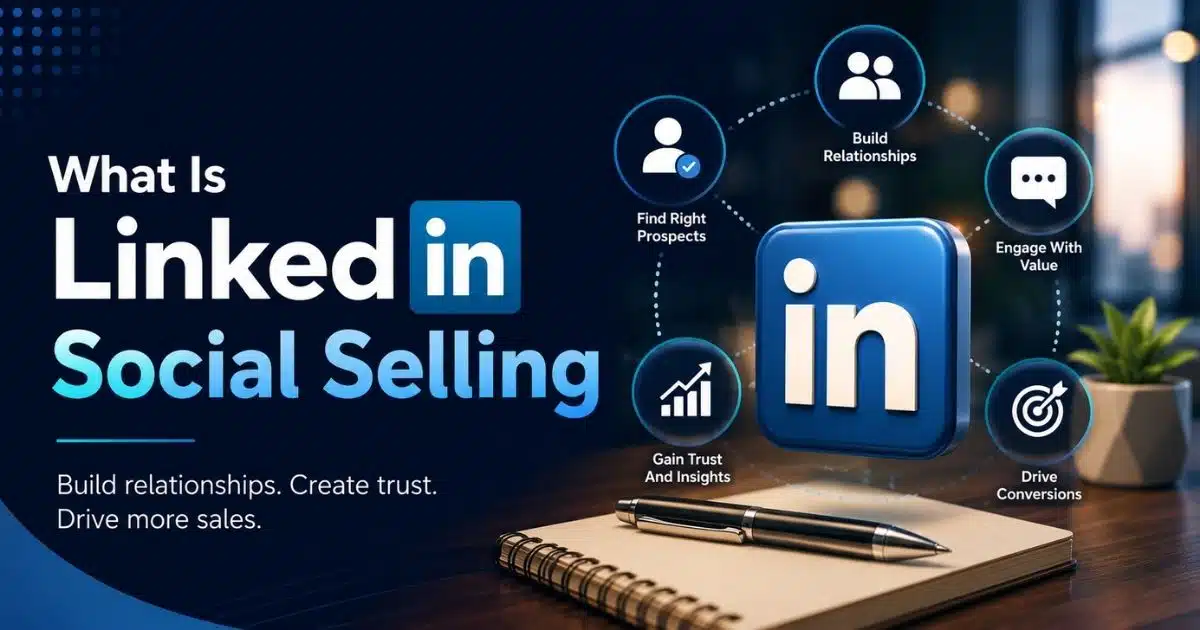
LinkedIn social selling means using your profile, content, and conversations to build relationships that turn into sales, instead of relying on cold calls or mass emails. Salespeople who focus on social selling consistently outperform peers who skip it, and LinkedIn tracks this through the Social Selling Index, a score that measures how well you build your professional brand, find the right people, share insights, and build relationships on the platform.
Most B2B buyers already check a seller's LinkedIn profile before replying to any outreach. A strong LinkedIn social selling index signals credibility before the first message even lands. This article breaks down how social selling works, what separates it from cold outreach, and how to build a strategy that brings in qualified leads without feeling like a pitch.
What Is LinkedIn Social Selling?
LinkedIn social selling is the practice of building relationships with prospects through meaningful engagement instead of pushing sales pitches. Sales professionals use tools like Sales Navigator to find the right people, send targeted connection requests, and stay visible through comments and posts.
LinkedIn Sales Navigator makes this easier by surfacing decision-makers who match your ideal customer profile. Your LinkedIn SSI score reflects how consistently you're building relationships, sharing relevant content, and engaging with the right network instead of chasing volume.
How LinkedIn Supports B2B Lead Generation And Sales
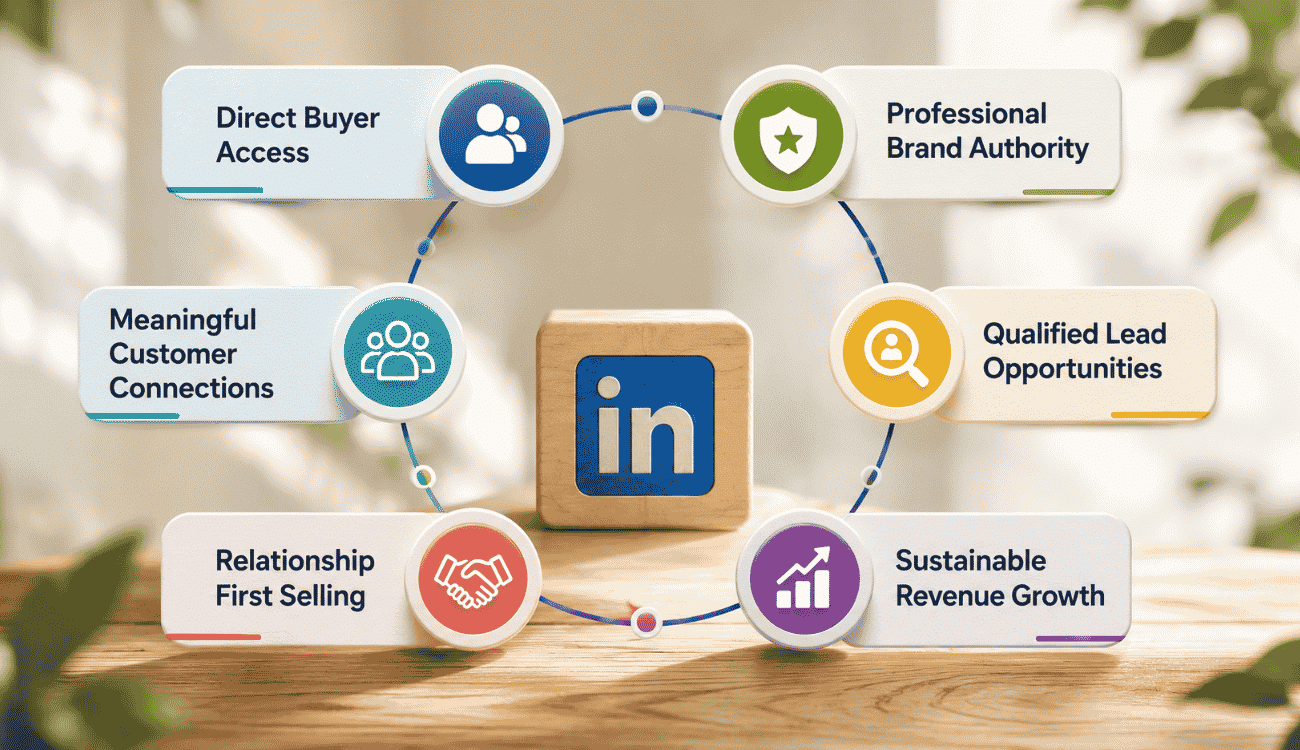
LinkedIn gives B2B teams direct access to decision-makers without gatekeepers or cold call scripts. It turns a sales rep's LinkedIn account into a trust-building asset that shapes how prospects respond before any pitch happens.
Direct Buyer Access
Most B2B buyers are already researching vendors on LinkedIn before a single call takes place. A senior account executive can message a target audience directly, without waiting on a gatekeeper or a warm intro from someone else on the team.
This direct access cuts weeks off a typical sales cycle. Instead of chasing contact information or hoping an email lands in the right inbox, sales reps reach the actual decision maker through a platform that buyer is already checking daily.
Professional Brand Authority
Your LinkedIn account works as a first impression for every prospect who checks it before replying. A strong personal brand tells buyers you understand their industry before you say a word about your product.
Social sellers who post valuable content regularly build authority faster than reps who only send pitches. Over time, this authority means prospects arrive at conversations already trusting your expertise, which shortens the time it takes to move from first message to real discussion.
Meaningful Customer Connections
Social selling replaces generic outreach with meaningful relationships built over time. Instead of sending one-off messages and moving on, reps stay present in a prospect's feed through comments, shares, and relevant replies.
Sales Navigator users can track this engagement and follow up when a prospect actually shows interest, not just when a quota deadline hits. That timing difference is often what separates a reply from a message that gets ignored.
Qualified Lead Opportunities
Joining groups relevant to your industry puts you in front of prospects who are already discussing the problems you solve. These conversations happen before any sales pitch, which means the interest is already there.
When you join LinkedIn groups and contribute real answers instead of generic comments, the leads that come from those conversations tend to be more qualified than names pulled from a cold list. Group members already trust each other, and that trust extends to active contributors.
Relationship First Selling
The Social Selling Index SSI exists because LinkedIn rewards relationship building over pitch volume. A high SSI score usually means a rep is engaging consistently across their network, not just sending connection requests and disappearing.
Buyers respond better to reps who show up before they ask for anything. This relationship-first approach takes longer to set up than a mass email blast, but it produces replies from people who actually want to talk.
Sustainable Revenue Growth
The Social Selling Index measures four things: building your professional brand, finding the right people, engaging with insights, and building relationships. Each one plays a role in whether a pipeline holds up past one good quarter.
Reps who score well across social media platforms and LinkedIn specifically tend to build pipelines that stay consistent over time. Instead of relying on one big push, they generate qualified leads on a rolling basis, which makes revenue easier to forecast.
How LinkedIn Social Selling Works
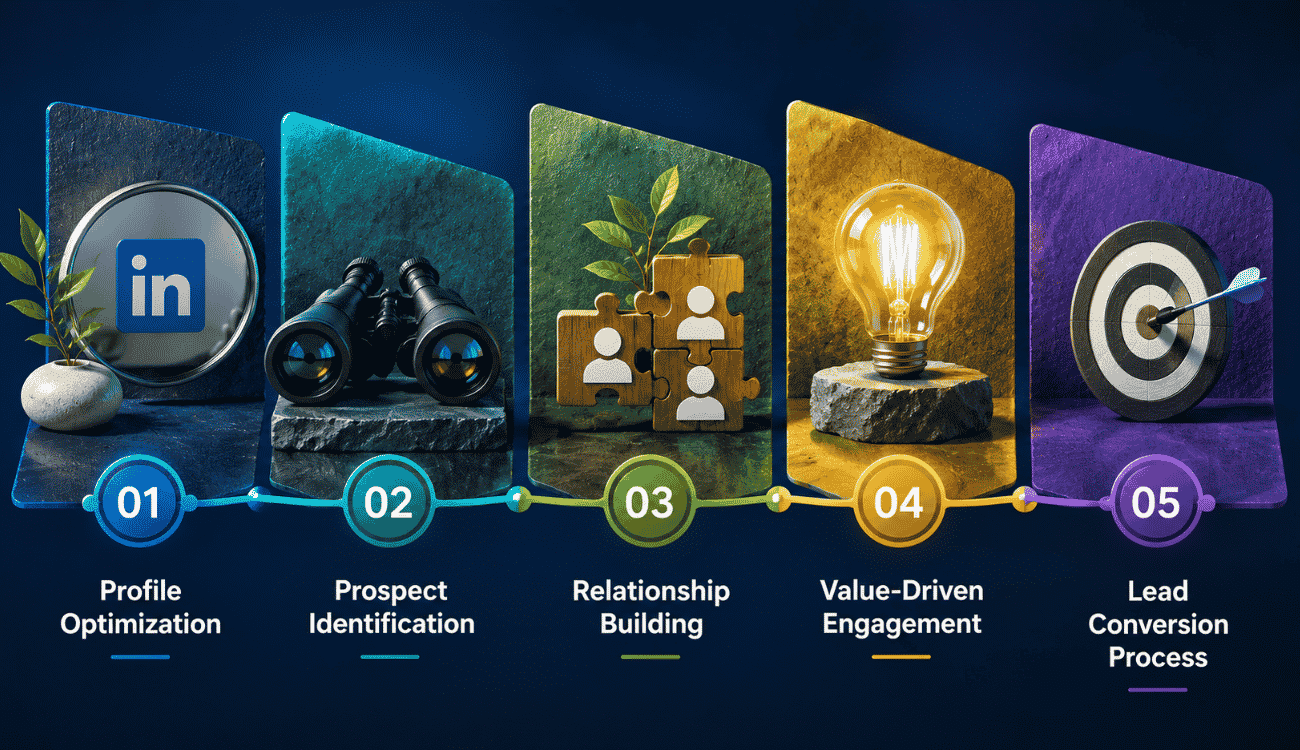
A social selling strategy follows a clear sequence, from setting up your profile to converting a warm lead into a customer. It works best as one part of a broader, structured B2B lead generation approach for high-quality leads. Unlike traditional selling, each step builds trust before any pitch happens, which changes how prospects respond.
Profile Optimization
Successful social sellers treat their profile as a landing page, not a resume. Every section should answer what a prospect wants to know: who you help, what problem you solve, and why your experience matters.
A clear job title, a summary written for your target buyer, and mentions of a past company or result build credibility fast. Social selling leaders keep this section updated, since it's often the first thing a prospect checks before responding to any message.
Prospect Identification
Finding the right people matters more than finding a lot of people. A strong LinkedIn network grows around quality connections, not volume, which keeps engagement rates high and outreach relevant.
Search filters based on industry, job title, and company size help narrow down who actually fits your offer. Joining LinkedIn groups tied to your niche also surfaces prospects who are already interested in the problems you solve, before you even send a message.
Relationship Building
Lead generation through social selling depends on relationships built before any ask. This means commenting on posts, replying to updates, and engaging with a prospect's content over weeks, not just sending a connection request and waiting.
A high SSI score usually reflects this consistency. Reps who show up regularly in a prospect's feed build familiarity, so by the time a conversation starts, it feels like a continuation, not a cold approach.
Value-Driven Engagement
Positioning yourself as a thought leader means sharing actionable insights instead of generic updates. Posts that solve a real problem or answer a common question get more engagement than posts that only promote a product.
This kind of content also works as a filter. Prospects who engage with useful posts are already showing interest, which makes the next outreach message easier to write and more likely to get a reply.
Lead Conversion Process
Once trust is built, moving a conversation toward a sales discussion feels natural instead of forced. The prospect already knows your background, has seen your content, and recognizes your name in their feed.
This is where social selling turns into pipeline. A warm conversation moves faster than a cold one, since most of the trust-building work happened before the first direct ask for a meeting or call.
LinkedIn Social Selling vs Cold Outreach
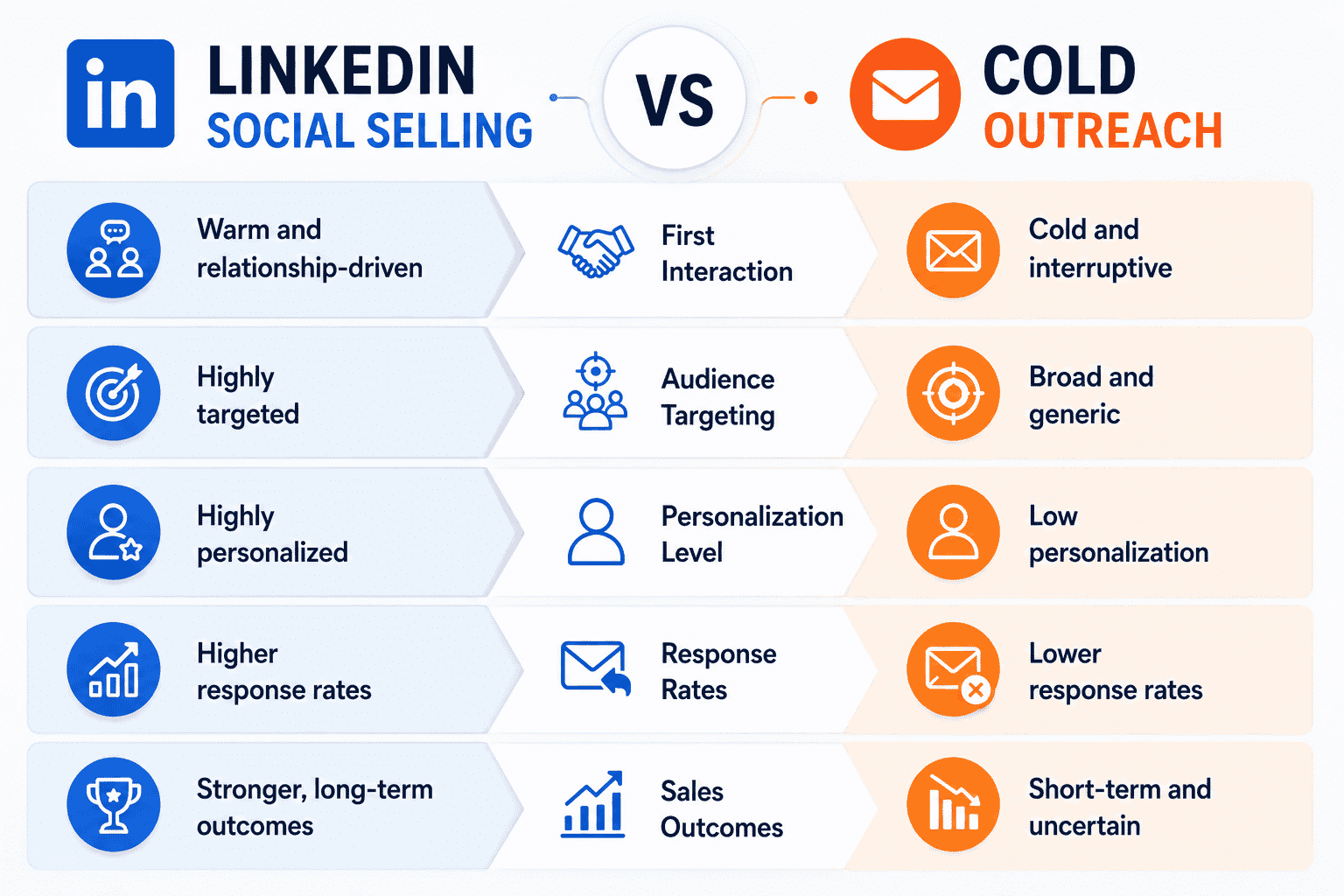
Social selling and cold outreach take different paths to the same goal: a closed deal. Understanding where they diverge helps sales teams choose the right approach within broader lead generation strategies that drive high-quality leads for each stage of the buyer's journey.
First Interaction
Cold outreach starts with a message a prospect has never asked for, often a cold call or a templated email sent to a purchased list. There's no context, no prior touchpoint, and no reason for the prospect to trust the sender yet.
Social selling starts differently. The first interaction might be a comment on a post, a reaction to shared content, or a connection request with a personal note. By the time a direct message goes out, the prospect already recognizes the name.
Audience Targeting
Cold outreach often relies on broad lists sorted by job title or industry, with little room to confirm real fit before reaching out. Volume becomes the strategy, since response rates are expected to stay low.
Social selling narrows the audience using signals like group activity, content engagement, and connection patterns. Reps target people who are already active around relevant topics, which means outreach goes to prospects more likely to have a real need.
Personalization Level
Cold messages are frequently templated, swapping in a name and company but keeping the rest identical across hundreds of sends. This scales fast but reads as generic to most recipients.
Social selling allows deeper personalization, since reps reference a prospect's recent post, shared connection, or specific role before ever pitching. That context takes more time per prospect but changes how the message lands.
Response Rates
Cold outreach typically sees lower response rates, since the message arrives with no prior relationship or context to justify a reply. Many messages get ignored or marked as spam before they're even read.
Social selling tends to generate stronger response rates because the groundwork happens before the ask. A prospect who has already engaged with a rep's content is more likely to respond to a direct message than a stranger.
Sales Outcomes
Cold outreach can still produce deals, especially at scale, but conversion often depends on sending high volumes to offset low engagement. The sales cycle can stretch longer since trust has to be built after the first contact.
Social selling tends to shorten the sales cycle once a conversation starts, since trust was already established through prior engagement. Deals sourced this way often come with fewer objections, since the prospect had time to evaluate the rep before talking.
Factor | Cold Outreach | LinkedIn Social Selling |
|---|---|---|
First Interaction | Unsolicited message, no prior contact | Comment, reaction, or engagement before outreach |
Audience Targeting | Broad lists, volume-based | Narrow, signal-based targeting |
Personalization Level | Templated, minimal customization | Deep, context-driven personalization |
Response Rates | Typically lower | Typically higher |
Sales Outcomes | Longer cycle, higher volume needed | Shorter cycle, fewer objections |
How To Build A LinkedIn Social Selling Strategy
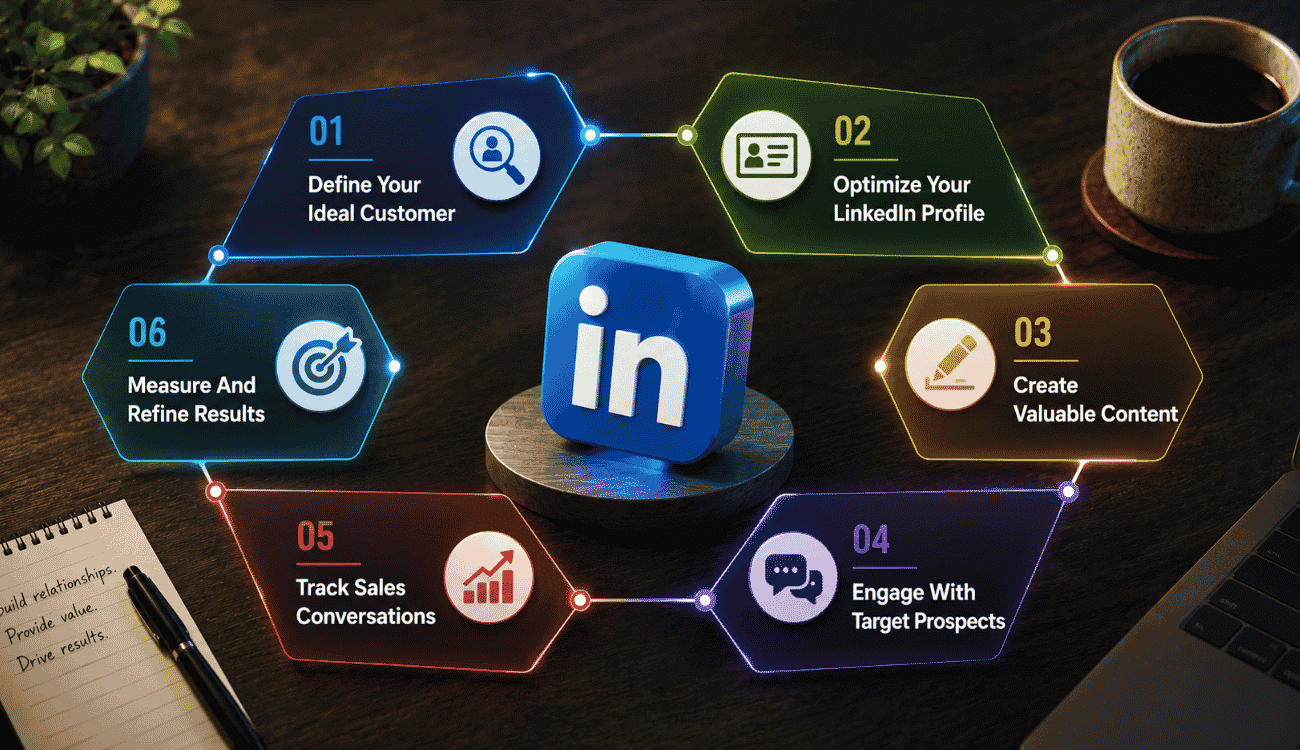
Building a working strategy means moving through clear steps, from defining who you sell to, all the way to measuring results. Pairing these steps with a structured CRM lead management process keeps every conversation organized and moving forward. Each stage feeds the next, so skipping one weakens the whole approach.
Define Your Ideal Customer
A strategy only works if you know exactly who you're targeting. Start by mapping out the decision makers most likely to buy, based on role, industry, and the service categories they typically need help with, then mirror that structure inside a contact management CRM for growing businesses.
Without this clarity, outreach turns into guesswork. Sales teams that define their potential customers upfront spend less time chasing unqualified leads and more time building strong relationships with people who actually fit the offer.
Optimize Your LinkedIn Profile
Your LinkedIn profile is often the first thing a prospect checks before responding to any message. It needs to build a strong online presence that signals credibility within seconds, just like a customer engagement CRM centralizes touchpoints to shape how buyers experience your brand.
This means a clear headline, a summary focused on the problems you solve, and visible proof of results. LinkedIn users scanning a profile decide quickly whether to engage further, so every section should earn that next click.
Create Valuable Content
Posting relevant content regularly positions you as someone worth following, not just another rep with a pitch. Valuable information shared consistently builds trust with your professional network over time and, when tracked inside a CRM built to improve sales productivity, makes it easier to see which efforts actually move deals forward.
This doesn't require constant posting. A steady rhythm of useful updates, industry takes, or answers to common questions works better than sporadic promotional posts that most prospects scroll past without engaging.
Engage With Target Prospects
Once your profile and content are in place, actively engage with the people you want to reach. Comment on their posts, respond to updates, and show up in their feed before sending any direct message, while using solid sales time management practices for sales teams so engagement doesn’t crowd out actual selling.
This step builds familiarity ahead of outreach. Prospects who see a rep engage genuinely, rather than dropping a lead gen form link immediately, are more likely to respond when a real conversation starts.
Track Sales Conversations
As conversations move from LinkedIn into actual sales discussions, tracking becomes critical. Sales activity tracking software for smarter sales teams gives you visibility into what’s happening, while disciplined use of CRM notes and mentions best practices preserves the context from earlier messages so nothing important gets lost.
Recording who said what, what stage a conversation is at, and when to follow up keeps momentum going. This tracking step is often where social selling efforts either turn into pipeline or quietly stall out.
Measure And Refine Results
A strategy is only as good as the results it produces. Reviewing engagement, response rates, and your LinkedIn SSI regularly shows what's working and what needs adjusting, especially when tied to sales performance metrics for SaaS teams and structured sales reporting in a CRM that connects activity to revenue.
Measurable sales outcomes, not just activity, should guide any changes to the approach. Reps who refine based on actual data build stronger, more efficient strategies over time instead of repeating tactics that only feel productive.
Best Practices For Successful LinkedIn Social Selling
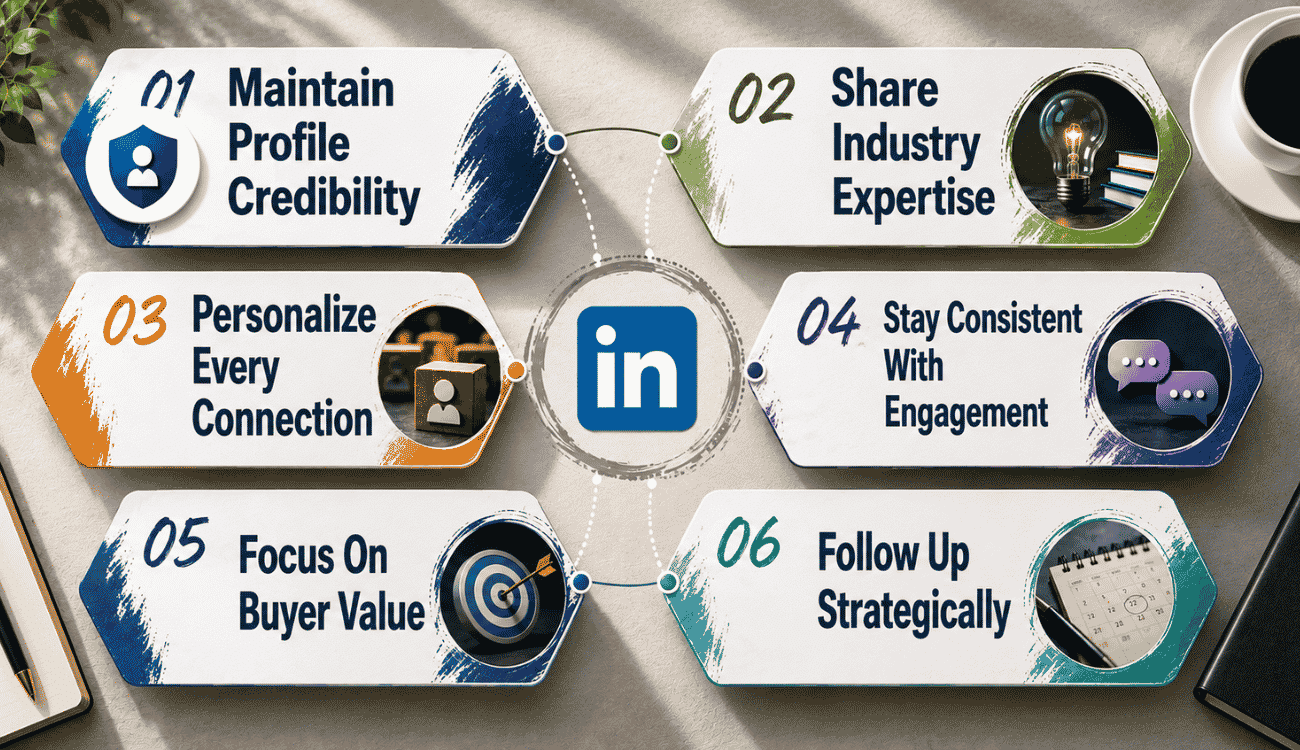
In a modern sales environment, small habits separate reps who convert consistently from those who don't. These best practices turn social selling activities into a repeatable system instead of random effort, especially when paired with a sales pipeline CRM for better visibility and performance.
Maintain Profile Credibility
Your profile needs to reflect where you actually work and what you actually do. Keep your current company, role, and achievements updated, since outdated information makes potential buyers question your credibility before a conversation even starts; just as dynamic contact management for smarter relationship tracking keeps your CRM records accurate and trustworthy.
Credibility also comes from consistency across social platforms, not just LinkedIn. When your profile matches what prospects find elsewhere, it removes doubt and makes the next step, a message or a call, feel safer for them to take.
Share Industry Expertise
Publishing insights through LinkedIn Pulse or regular posts positions you as someone who understands the buyer's world, not just your own product. This builds authority before any pitch happens, and pairing that content with CRM automation for sales and growth ensures your best insights reach the right people at the right time.
Expertise shared consistently also supports building rapport at scale. Prospects who read useful posts over time start to trust the person behind them, which makes future outreach feel like a continuation of a relationship rather than a cold ask.
Personalize Every Connection
A generic connection request rarely gets accepted or remembered. Reference something specific, a shared group, a recent post, or a mutual connection, before asking someone to connect.
The same applies to first messages. A personalized message that references the prospect's role or recent activity performs far better than a templated pitch. This small effort at the start often decides whether a conversation continues or gets ignored.
Stay Consistent With Engagement
Set up a saved search to track new decision makers in your target market as they show up on LinkedIn. Checking this regularly keeps your outreach fresh instead of relying on one-time list building, and an integrated CRM calendar for modern sales teams helps you schedule consistent touchpoints and follow-ups.
Consistency also shows up on your SSI dashboard, which reflects how regularly you engage, not just how often you post. Reps who show up daily, even briefly, tend to build stronger networks than those who post occasionally and disappear.
Focus On Buyer Value
Every interaction should give the potential buyer something useful, whether that's an insight, an answer, or a relevant resource. Selling too early in the conversation tends to shut it down before it starts, so building in thoughtful sales workflow automation strategies can keep value-driven touches going without feeling robotic.
Meaningful conversations happen when the focus stays on the buyer's problem instead of your product. AI powered tools can help surface relevant content or timing, but the value still needs to come from understanding what the buyer actually needs.
Follow Up Strategically
Following up isn't about repeating the same message until someone answers. It means checking in with new information, a relevant update, or a genuine question tied to something they mentioned earlier, guided by the kind of sales visibility CRM insights that show which deals truly need attention.
Strategic follow-up respects the buyer's time while keeping the conversation alive. Reps who space out thoughtful check-ins, instead of sending repeated pings, tend to keep more prospects engaged through a longer sales cycle.
How CRM Helps You Manage LinkedIn Social Selling Efforts
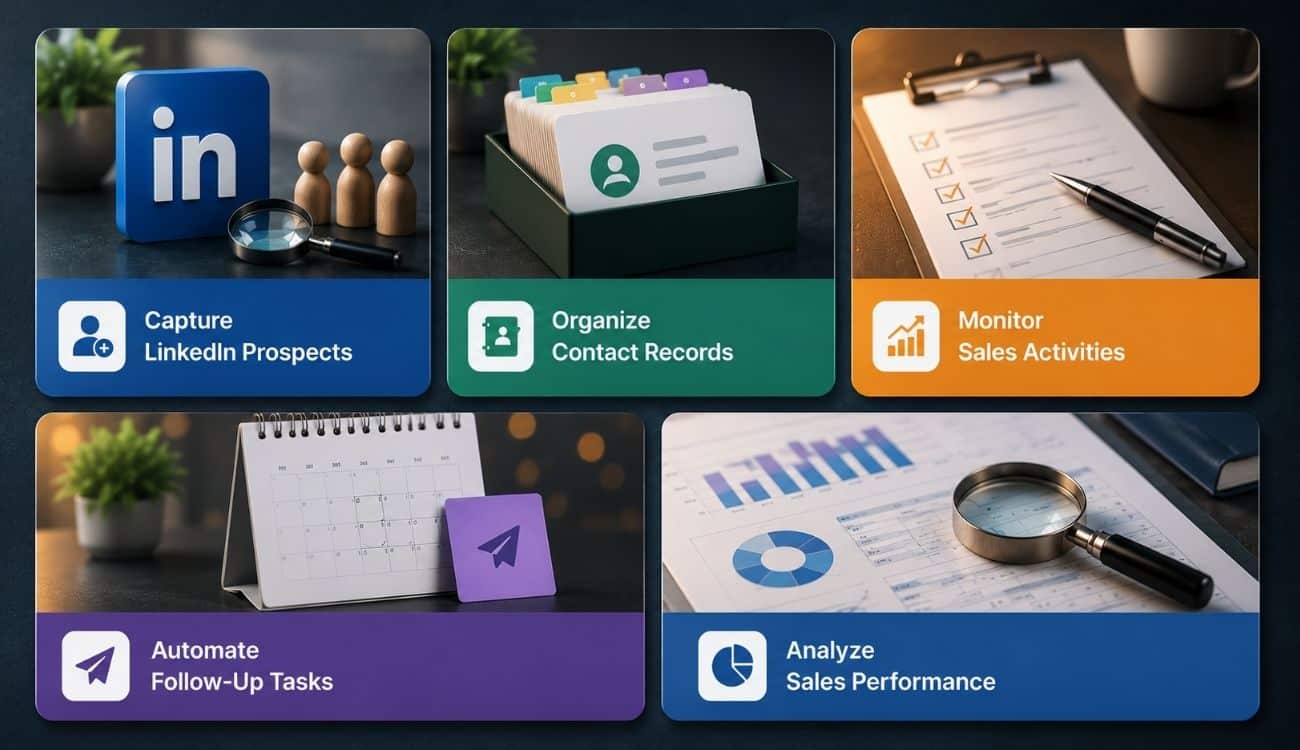
Social selling generates conversations faster than most reps can track manually. A CRM turns scattered LinkedIn interactions into organized records, so nothing about the right prospects or key decision-makers gets lost between platforms. The right smart CRM features for organizing sales make this process far easier for busy teams.
Capture LinkedIn Prospects
Once you start sending connection requests and building your network, prospects can pile up faster than memory allows. A CRM lets you log potential prospects as soon as a conversation starts, before details get forgotten.
Reps juggling multiple platforms as part of their tech stack benefit most from this habit. Capturing a lead right after a company page visit or a personalized note exchange keeps that context available for every future interaction.
Organize Contact Records
A complete profile in your CRM does more than store a name and job title. It holds message history, notes from past conversations, and context on where a prospect sits in the buying process.
Reaching out with no memory of prior contact is a common mistake this setup prevents. When every touchpoint lives in one record, follow-ups feel informed instead of repetitive, which keeps the relationship moving forward naturally.
Monitor Sales Activities
Tracking every comment, message, and reply across social selling activities gets difficult without a central system. A CRM shows exactly what's been done and what's still pending for each prospect, which is essential if you want to track deals from lead to close in a structured way.
Prioritizing the day around actual next steps, instead of guessing who needs attention, gets easier with that visibility. Managers also gain a clear view of activity levels across the team, without asking reps to report manually.
Automate Follow-Up Tasks
Manually remembering when to check back in with dozens of prospects isn't realistic. A CRM can flag follow-ups automatically, so a conversation never goes cold just because a rep got busy.
Some CRMs pair this with AI tools that suggest timing or flag prospects going quiet. Follow-up stays strategic rather than random this way, which matters more than sending frequent, unplanned messages.
Analyze Sales Performance
Reviewing which social selling efforts actually turn into pipeline requires data, not guesswork. A CRM tracks response rates, conversation-to-deal ratios, and which outreach patterns bring in the right prospects consistently—but only if you avoid common CRM implementation mistakes that derail results.
Individual wins matter less here than what this analysis shows reps and managers across the whole team. Over time, this turns social selling from a set of habits into a measurable, improvable part of the sales process.
Final Discussion
LinkedIn social selling works because it replaces cold calling with genuine connections built over time. Sharing long-form posts, engaging with past customers, and staying customer-focused consistently turns a profile into a trusted source prospects actually want to hear from.
The reps who win long-term treat this as a daily habit, not a campaign with a start and end date. AI features like message assist can speed up drafting replies, but the relationship building underneath still has to be real. Buyers notice the difference between a templated nudge and a message that shows actual attention.
Paired with a CRM that tracks every conversation, social selling stops being guesswork. It becomes a repeatable system that brings in qualified leads consistently, quarter after quarter.
Frequently Asked Questions
Can Small Businesses Benefit From LinkedIn Social Selling?
Yes. Small businesses often benefit more than larger teams, since they can build direct relationships with decision-makers without layers of approval slowing things down. A single founder or sales rep engaging consistently can compete with bigger competitors who rely on cold outreach at scale.
How Long Does LinkedIn Social Selling Take To Show Results?
Most reps see early signs, like higher response rates and more profile visits, within four to six weeks of consistent activity. Real pipeline impact usually takes two to three months, since trust builds gradually through repeated engagement rather than a single post or message.
Is LinkedIn Premium Required For Social Selling?
No. A free LinkedIn account supports the core activities: connecting, posting, commenting, and messaging. Sales Navigator, a paid add-on, makes prospecting faster with advanced filters and lead tracking, but it's not required to start building relationships and generating leads.
Can LinkedIn Social Selling Replace Cold Emailing?
It can reduce reliance on cold emailing but rarely replaces it completely. Social selling works best for warming up prospects before a direct ask, while cold email still serves high-volume outreach where personal engagement isn't practical for every contact on a list.
How Do You Measure LinkedIn Social Selling Success?
Track response rates, connection acceptance rates, and your Social Selling Index score as early indicators. For actual business impact, measure how many conversations convert into meetings, and how many of those meetings turn into pipeline your CRM can track through to a closed deal.