Every growing B2B company eventually hits the same wall. Lead volume increases, but conversion rates decline. Marketing and sales teams blame each other. High value prospects slip through the cracks while sales reps chase unqualified contacts. The root cause is almost always the same: no structured system to manage leads from first touch to closed deal.
Building a lead management system that scales requires more than purchasing software. It demands clear definitions, documented processes, and alignment across your entire organization. This guide walks through the practical framework that mid-market companies can implement to handle 3-10x growth in lead volume over the next 18-24 months.
What Is A Lead Management System
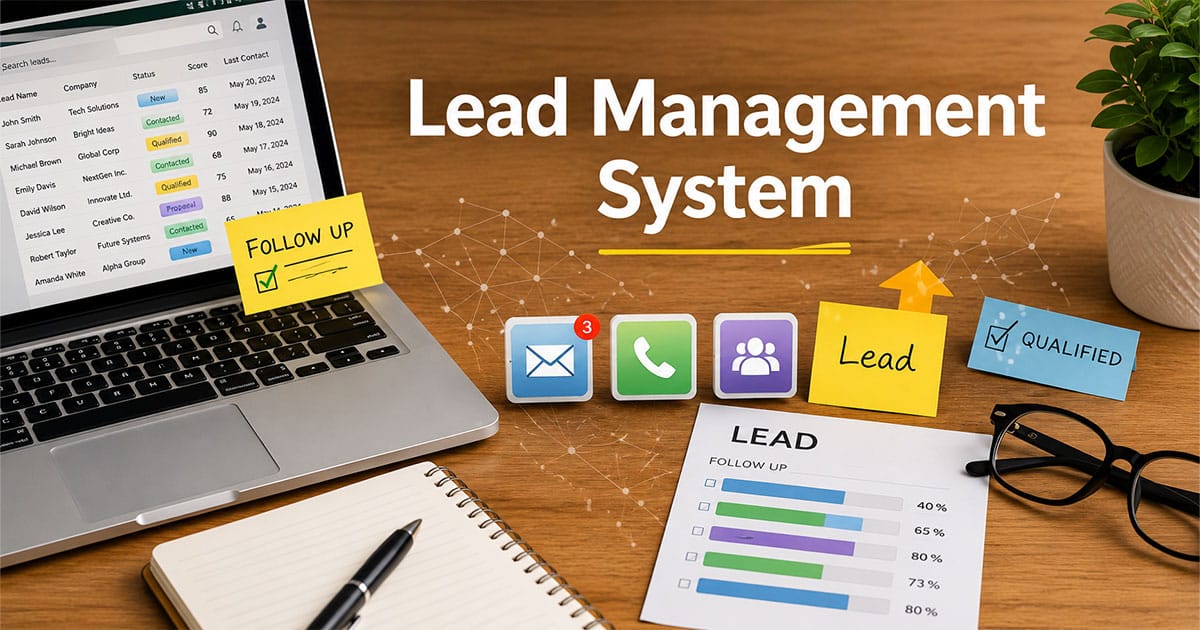
A lead management system is the combination of strategy, workflows, and tools used to capture, qualify, nurture leads, and route them from first interaction to closed-won deal. It orchestrates the entire customer journey before someone becomes a paying customer, ensuring no potential buyers fall through the cracks along the way.
This differs meaningfully from a general customer relationship management approach. CRM software manages relationships across the full customer lifecycle, including accounts, opportunities, renewals, and support interactions. A lead management system focuses specifically on the pre-revenue pipeline, emphasizing rapid qualification and routing to the right person at the right time.
The linear journey progresses through distinct stages. A visitor becomes a lead when they provide contact data through web forms, chat, or other capture points. Marketing teams then qualify that lead based on fit and engagement criteria, creating a marketing-qualified lead (MQL). Sales reps further validate the opportunity, converting promising MQLs into sales-qualified leads (SQLs). From there, mutual fit confirmation creates an opportunity that moves through the sales funnel toward becoming a customer.
In 2026, these systems must handle multi-channel complexity. Leads arrive from Google Ads, LinkedIn campaigns, virtual events, outbound SDR sequences, partner referrals, and organic content. Remote and hybrid sales teams need one shared source of truth to coordinate effectively without duplicate outreach or missed follow ups.
Consider a mid-market analytics company that formalized their lead management process after years of ad-hoc handling. By defining specific firmographic bands (50-500 employees, technology sector) and behavioral triggers (three or more page views on product pages), they improved their MQL-to-SQL conversion from 22% to 41% within two quarters. The difference was not new software alone but clear definitions that put marketing and sales on the same page.
How To Build A Lead Management System That Scales
This section provides the main framework for companies expecting significant growth in lead volume. The following six subsections walk chronologically through planning, implementation, automation, and optimization. While examples assume a B2B context, the principles adapt readily to B2C scenarios.
Throughout this guide, terminology like MQL, SQL, and SLAs will include concrete numeric examples. Response times measured in minutes, scoring thresholds with specific point values, and pipeline stages with clear entry criteria give you actionable starting points rather than abstract theory.
Define Lead Stages And Qualification Rules
Scalable systems start with precise definitions, not tools. Misaligned definitions between marketing and sales teams cause an estimated 60% of cross-functional conflicts. Before selecting any lead management software, document exactly what each lifecycle stage means.
Create a shared playbook defining Subscriber (email opt-in only), Lead (form submission with business context), MQL (score of 60 or higher, verified business email, firmographic fit), SQL (pain validated, budget confirmed), Opportunity (proposal stage), and Customer (closed-won). These definitions eliminate the daily sales arguments about lead quality.
Qualification criteria typically span three dimensions. Demographic factors include job titles (C-level adds 20 points, Manager adds 10). Firmographic factors cover company size and industry (enterprise revenue adds 30 points, target vertical adds 15). Behavioral signals track engagement (pricing page visit adds 15, demo request adds 50).
Codify these rules in a decision tree that can be implemented in marketing automation tools or platforms like Gain.io. When a lead crosses your MQL threshold, automatic routing begins without manual triage.
Map The End To End Lead Journey
Before buying any management software, whiteboard every touchpoint from first impression to closed-won. This mapping reveals dead ends where leads currently leak out of your sales process from lead to close.
Catalogue all 2026 lead sources: Google Ads with UTM tracking, LinkedIn conversational ads, partner marketplaces, live and virtual events, outbound SDR sequences, organic search, and content syndication. Each source requires specific capture and attribution mechanisms.
Design an ideal journey with no dead ends. Every ad click leads to a confirmation page, which triggers a follow-up email, which feeds into a nurture stream, which provides clear paths to talk to sales when buying intent increases. Document ownership at each step: marketing operations manages the nurture, SDRs handle initial qualification, account executives close deals.
One fintech company discovered a 28% drop-off between webinar attendance and demo requests. The cause was a missing automated routing step. By implementing immediate post-webinar outreach, they improved that conversion by 17%.
Centralize Lead Capture And Data Enrichment
Scalable lead management requires consolidating all the leads from forms, chat widgets, webinars, and outbound lists into a single repository. Fragmented lead data across multiple tools creates duplicate outreach and inconsistent experiences.
Implement standardized forms and APIs so every captured lead contains consistent fields: source UTM, campaign identifier, consent status for GDPR and CCPA compliance, and core contact data. This standardization makes reporting and workflow automation dramatically simpler.
Automated data enrichment appends company size, industry, technology stack, and other firmographic details without manual research. This can reduce sales rep research time by 70% while ensuring your sales pipeline contains accurate information for prioritization.
Gain.io acts as the orchestration layer that pulls in lead data from all channels, normalizes fields, and syncs clean records to your lead management software for sales teams and marketing automation tools.
Implement Lead Scoring And Prioritization
Lead scoring helps small sales teams focus limited time on leads most likely to close this quarter. Without scoring, reps waste hours on potential customers who will never buy while high quality leads go cold.
Implement two scoring dimensions. Fit score measures who the lead is based on demographics and firmographics. Engagement score measures what the lead has done based on content consumption, email clicks, and product interactions. Combining both produces accurate prioritization.
Concrete scoring examples: VP Marketing title adds 40 points. Demo request adds 50 points. Visited pricing page twice in seven days adds 25 points. Downloaded case study adds 10 points. Set your MQL threshold at 60 points and SQL threshold at 85 points, then adjust quarterly as close rate data accumulates.
Many teams in 2026 layer AI-driven sales automation and predictive scoring on top of rules-based models. Before fully switching, run a side-by-side test comparing prediction accuracy against your existing approach.
Automate Routing, Nurturing, And Sales Handoffs
Sales automation software is where systems begin to truly scale. Rules can instantly route thousands of new leads without manual triage, ensuring timely follow ups that correlate to 391% higher conversion rates according to industry benchmarks.
Implement routing rules matching your go-to-market structure. Territory-based routing sends EMEA leads to the London pod within two minutes of MQL status. Account-based routing directs leads from target accounts to dedicated teams. Round-robin distribution balances workload across SDRs.
Structure automated nurture programs for different segments using tools that automate sales tasks to stay focused and organized. Stalled MQLs receive a 14-day re-engagement sequence achieving 32% reactivation. New trial users enter a 10-email onboarding track. Cold leads enter long-term nurturing with monthly touchpoints.
A clean sales handoff includes enrichment completion, key activities summarized, clear reason for MQL status, and an agreed SLA for first response time. One company implemented a five-step sequence (email within one hour, call on day two, LinkedIn on day three) and achieved 28% higher booking rates.
Measure Performance And Continuously Optimize
A scalable lead management system is never finished, and understanding what lead management is in depth helps you refine it over time. Review performance at least quarterly using concrete metrics that reveal funnel health and identify bottlenecks.
Track these key KPIs: lead-to-MQL rate (target 35%), MQL-to-SQL rate (target 50%), SQL-to-opportunity rate, close rate by segment, speed-to-lead (under 5 minutes ideal), and cost per opportunity by channel. Build dashboards comparing performance across sources, such as webinar leads (18% close rate) versus paid search leads (12% close rate).
Run controlled experiments to improve results. Adjust scoring weights, change nurture sequences, test different routing rules. Measure impact on SQL volume and pipeline value before rolling out changes broadly.
Schedule recurring funnel review meetings between marketing, sales, and RevOps. These sessions refine rules, update definitions based on campaign performance data, and agree on next optimizations.
Components Of A Scalable Lead Management System
The following building blocks work together regardless of your current tech stack. Each component ties directly to outcomes like faster response times, higher win rates, and better forecasting accuracy. Adopt these in stages, but design them to interconnect from day one.
Lead Capture Across All Channels
Modern capture points include website forms, chat widgets, mobile apps, outbound prospecting tools, marketplace listings, and offline events. Consistent form fields and UTM tracking ensure every lead can be attributed to a specific campaign and date.
Consider a 2026 scenario: capturing leads from a virtual summit platform and syncing them into your system within minutes after each session. This requires API connections, standardized field mapping, and automated consent capture to stay compliant with privacy laws.
Unified Lead Database And Source Of Truth
A single, deduplicated database reduces conflicts between teams and prevents duplicate outreach. Deduplication rules based on email address and company domain prevent fragmented profiles when leads use multiple touchpoints.
Create a golden record combining form fills, website behavior from analytics, email engagement from marketing campaigns, and product activity using dynamic contact management for smarter relationship tracking. This unified view gives sales reps complete context without switching between tools to track leads effectively.
Lead Scoring, Segmentation, And Views
Scoring and segmentation transform raw data into prioritized workstreams, especially when supported by an AI sales assistant for pipeline efficiency. Segment leads by lifecycle stage, persona, industry vertical, region, and buying intent to qualify leads efficiently.
Different teams need different saved views. SDRs need “New MQLs in the last 24 hours.” Marketing needs “Reactivated leads this quarter.” Scalable systems allow non-technical users to adjust segments without engineering help.
Workflow Automation And Playbooks
Workflow automation executes playbooks automatically: sending email campaigns, creating tasks for reps, and notifying teams in real time, especially when powered by smart CRM tools for sales teams. Document playbooks with triggers, steps, timing, and owners before implementing in your lead management tools.
Common automated workflows include new demo request response, content download follow-up, trial activation sequence, and stalled opportunity re-engagement. Personalize these by persona and region using conditional logic.
Reporting, Attribution, And Forecasting
A scalable system shows which channels actually generate leads that convert to pipeline and revenue, not just raw volume. This enables effective closed loop reporting that connects marketing activities to business outcomes.
Basic attribution models (first touch, last touch) work initially, but growing companies typically adopt sales pipeline CRM with multi-touch attribution to credit all influential touchpoints. Track a lead from a January LinkedIn ad through a March webinar to a June closed-won deal to understand true channel value.
How To Align Marketing, Sales, And Revops Around Lead Management
Technology alone cannot create effective lead management. Cross-team alignment determines whether your system actually produces results or generates friction. Misaligned incentives and definitions lead to wasted spend even with sophisticated tools.
Agree On Shared Definitions And Slas
Run workshops where marketing, sales, and RevOps agree on definitions with numeric thresholds. Document these in a shared playbook that everyone references. What exactly makes an MQL? What response time SLA does the sales department commit to?
Example SLA: Sales follows up on all MQLs within 15 minutes during business hours. Marketing commits to minimum lead quality scores before routing. Both teams review adherence weekly. Revisit these agreements every 6-12 months as data accumulates.
Establish Feedback Loops Between Teams
Continuous feedback from sales reps about lead quality helps marketing refine targeting and messaging. Without this loop, marketing keeps generating leads that never convert while sales loses trust in the process.
Implement quantitative feedback mechanisms. Sales reps rate lead quality inside the system. Tags capture reasons for disqualification (wrong company size, no budget, timing). Weekly pipeline reviews surface patterns that inform campaign adjustments.
Coordinate Campaigns With Sales Capacity
Generating more leads than sales can handle results in poor response times and damaged brand perception. Plan campaigns, product launches, and events around hiring plans and available SDR capacity.
Forecast lead volume for major campaigns and ensure routing rules and teams are ready. Gain.io-style reporting can simulate expected workload by region and role before campaigns go live.
Enable Reps With Context And Playbooks
A scalable system gives sales reps full context about each lead’s journey: content consumed, channels touched, and intent signals. This context enables personalized outreach that resonates with potential customers.
Build standardized outreach playbooks for the first 24-72 hours after a lead becomes SQL. Include call scripts, email templates, and LinkedIn messaging tailored by persona. A structured sequence with multiple touchpoints achieves 2.4x higher reply rates.
Train And Onboard New Team Members Efficiently
Documented processes, data definitions, and playbooks dramatically shorten onboarding for new team members. Create a structured onboarding track covering the lead lifecycle, key dashboards, and daily sales workflows.
Target new SDRs reaching full proficiency within 30 days. Recorded walkthroughs and internal wikis complement live training, reducing ramp time by up to 40%.
Technology Stack For A Modern Lead Management System
While tools are not the starting point, the right stack makes it possible to execute the strategies described above. Focus on capabilities and integration patterns suitable for 2026 rather than chasing the latest software options.
Role Of CRM In Lead Management
B2B sales CRM systems remain the system of record for accounts, contacts, and opportunities. They support customer relationship management across the entire sales cycle and help the sales team manage leads effectively. Modern crm software and crm systems help sales teams manage leads, store contact management data, track leads, and organize customer relationships across the sales pipeline.
To ensure effective lead management, integrate your lead management system with CRM early. This connection helps manage leads, qualify leads, and track lead data without friction. It also supports sales managers and sales reps in daily sales activities while keeping contact data structured and accessible.
Marketing Automation And Campaign Tools
Sales automation software and marketing automation tools connect lead capture with ongoing engagement. They support lead generation, lead nurturing, and email marketing across multiple marketing campaigns. Marketing teams and sales and marketing teams rely on these tools to generate leads, nurture leads, and guide potential customers through the customer journey.
Lead management tools use this data to score, segment, and prioritize leads. This improves campaign performance and helps convert leads into high quality leads. Marketing automation also reduces manual data entry and ensures marketing and sales teams stay on the same page throughout the lead management process.
Sales Engagement And Communication Platforms
Sales engagement platforms and CRM with email integration help sales reps manage outreach and follow ups. These tools support sales efforts across the sales funnel and allow teams to track leads, engage potential buyers, and move opportunities forward. Integration with the lead management system ensures every interaction connects to the unified record.
With proper setup, sales leads flow directly into the system with full context. This includes lead capture details, lead scoring, and activity history. Teams can prioritize leads, manage follow ups, and focus on high value prospects without losing visibility across the sales pipeline.
Analytics, Attribution, And Data Warehouse Layers
Advanced reporting tools, analytics layers, and simpler sales workflows in your CRM provide deeper insights into lead tracking, pipeline management, and closed loop reporting. These systems help analyze marketing activities, sales performance, and campaign effectiveness across the entire sales cycle.
Data from lead management software flows into analytics platforms to evaluate customer data, contact data, and lead data. This enables teams to identify high quality leads, improve conversion rates, and optimize marketing automation and workflow automation strategies for better results.
Where Gain.io Fits In Your Lead Stack
Gain.io — an all-in-one CRM acts as a unified platform that connects lead management software, marketing automation tools, and crm systems into one management system. It simplifies lead tracking, contact management, and pipeline management while supporting seamless integration across tools.
The platform supports lead management solutions with features like workflow automation, lead scoring, and real time routing. It helps sales teams and marketing teams manage leads, manage contacts better, and build stronger relationships, generate leads, and convert leads efficiently. Businesses of all company size, including small businesses, use Gain.io to reduce data entry, improve follow ups, and close more deals with the right tools.
Lead Management With Gain.io
Gain.io helps companies implement the framework described throughout this article by providing unified lead orchestration, strong data quality controls, easy configuration by RevOps teams, and robust reporting for modern B2B complexity.
Consider a mid-market SaaS company that scaled from 200 to 3,000 monthly leads in under a year. Before Gain.io, leads from webinars sat in one tool while ad leads lived elsewhere and outbound lists cluttered a separate spreadsheet. Conversion rates dropped as volume increased. After implementing Gain.io as their orchestration layer, they unified all sources, applied consistent scoring, automated routing to regional pods, and built attribution reporting that finally showed which channels deserved more investment. The result was a 35% improvement in lead-to-opportunity conversion and sales managers who finally trusted the leads they received, similar to outcomes in a sales acceleration case study.
If your team is ready to build a lead management system that handles rapid growth without breaking, explore how Gain.io can serve as your scalable foundation.
FAQs
How Long Does It Take To Implement A Scalable Lead Management System
Realistic implementation takes 60-90 days for a mid-market B2B company moving from ad-hoc processes to a defined, partially automated system. Discovery and stakeholder alignment typically requires two weeks. Design and documentation takes three weeks. Build, test, and initial deployment runs four weeks. Using a platform like Gain.io with pre-built integrations can cut this timeline significantly since many patterns already exist.
Do Small Businesses Really Need A Dedicated Lead Management System
Very small teams can start with simple tools and spreadsheets, but a CRM for startups and small sales teams quickly becomes essential as volume grows. However, once lead volume surpasses a few dozen weekly, a structured system prevents leakage that costs revenue. Even lightweight implementation of clear stages, basic scoring, and simple workflow automation materially improves results for small businesses. Starting with scalable practices early reduces painful rework when growth accelerates.
How Often Should We Update Our Lead Scoring Model
Review scoring at least twice yearly, or more frequently if your product, market, or pricing changes significantly. Use historical data from the previous 6-12 months to identify which attributes and behaviors best predict closed deals. Advanced teams in 2026 may use machine learning for continuous adjustment, but always sanity-check outputs with qualitative sales feedback.
What Metrics Show That Our Lead Management System Is Actually Scaling
Key signs of healthy scale include stable or improving conversion rates as volume increases, consistent speed-to-lead under five minutes, and growing pipeline per rep. Warning signs include delayed follow-ups, rising disqualification rates, or declining close rates within specific segments. Build a health dashboard specifically monitoring these indicators over time.
Can We Migrate An Existing, Messy Setup Into A New System Without Losing Data
Most teams in 2026 are modernizing from legacy or fragmented tools, making migration common but requiring careful planning. Start by auditing current data quality and completeness. Define your target data model with clean field mappings. Clean records before migration rather than importing garbage. Migrate in phases with thorough testing at each step. Platforms like Gain.io are designed to sit alongside existing customers systems, easing migration by centralizing logic while gradually replacing legacy workflows, and many teams evaluate it through a Gain.io vs Salesforce CRM comparison.