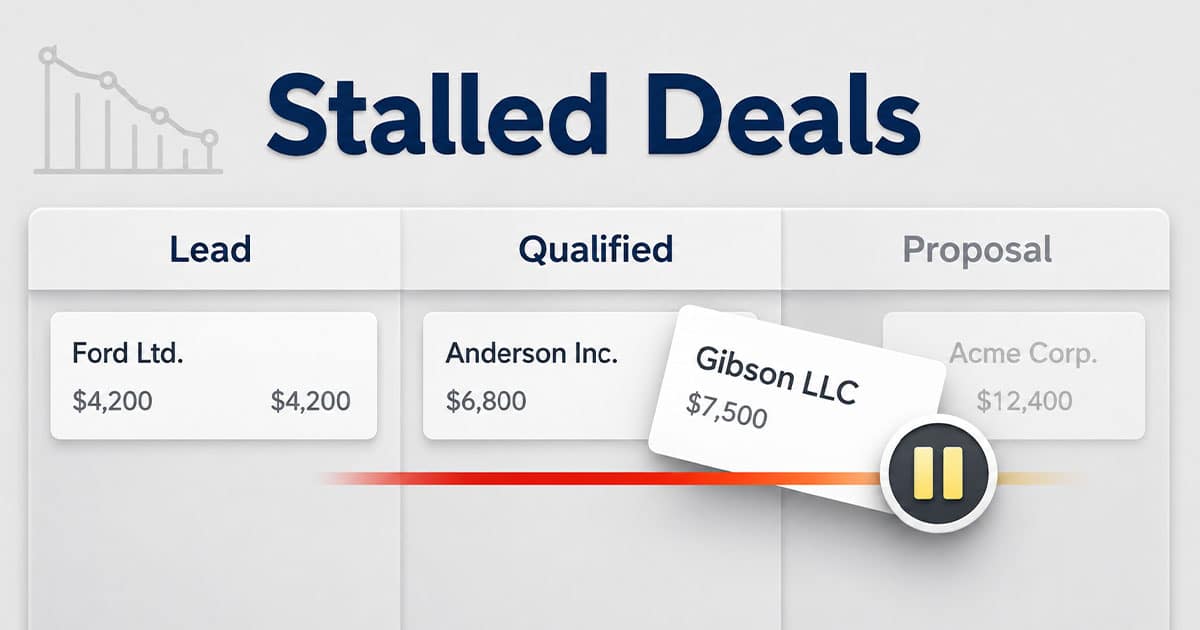
Stalled deals slow down your sales pipeline and make revenue unpredictable. A deal that once looked promising suddenly stops moving. No replies. No progress. Just silence. Many sales teams face this problem more often than they expect.
Stalled deals usually happen when buyers lose urgency or when the next step is unclear. Poor follow-ups and weak qualifications also play a role. Over time, these deals pile up and affect forecasting and team performance.
Clear visibility and the right actions can bring deals back on track. A structured approach helps sales teams spot issues early and move deals forward with confidence.
What Are Stalled Deals In Sales Pipelines
Stalled deals are deals in your pipeline that stop moving forward. The buying process slows down or gets stuck. No clear next steps. No next meeting. Sales professionals often face stalled opportunities when a prospect stays in the same stage for too long. It usually means the decision-making process is not progressing. A sales rep may lose contact with the decision maker, or the client may choose the status quo over change.
Stalled deals happen for a few reasons. Poor qualification, weak conversation, or unclear value can create confusion. Sometimes, the real problem is not identified early. People feel risk and avoid moving forward. In other cases, priorities shift, or the team gets busy. Without a shared vision, deals stall and pipelines become weak.
Sales teams must spot these moments early. The right questions help determine what is wrong. Strong follow-up, clear plan, and direct communication help move the deal forward.
Why Do Stalled Deals Happen In Sales Cycles
Stalled deals rarely happen without a reason. Small gaps in the sales process often slow momentum. Buyers hesitate, priorities shift, or value feels unclear. Sales teams must identify what blocks progress to move deals forward and protect pipeline health.
Lack Of Clear Next Steps
Many stalled deals come from no defined next steps. A sales rep ends a meeting without a clear plan. The prospect leaves without a decision path. That creates silence in the pipeline.
Data from HubSpot shows that structured follow-ups can increase close rates by over 30%. Clear next steps guide the decision-making process. Set a date for the next meeting. Confirm actions from both sides. Deals move forward when each moment has direction.
Weak Value Communication
A deal stalls when the value does not feel strong. Buyers do not see how the solution solves a real problem. The conversation stays surface-level. The sales rep talks features but misses outcomes.
Research by Gartner shows that 77% of B2B buyers say their last purchase felt complex. Clear value reduces confusion. Connect the service to business outcomes. Show how the solution impacts money, efficiency, or risk. Strong positioning and avoiding common sales follow-up mistakes helps the client move forward with confidence.
Poor Qualification Early On
Early mistakes create stalled opportunities later. Sales professionals sometimes push deals without proper qualification. The wrong prospect enters the pipeline. The decision maker may not be involved.
According to CSO Insights, poor qualification is one of the top four reasons deals stall. Ask the right questions early. Identify budget, authority, need, and timeline. A clear plan helps avoid deals lost at later stages. Strong qualifications keep the pipeline clean and focused.
Buyer Indecision And Risk Fear
People feel risk when change affects their job or team. The status quo feels safer than a new solution. The decision-making process slows down. Even interested leads can get stuck.
A study from Salesforce found that 60% of deals end in no decision. That means no win and no loss. Sellers must reduce fear. Build a shared vision with the client. Explain outcomes clearly. Strong relationships and trust help prospects move forward.
Lack Of Consistent Follow-Up
Deals stall when follow-up is weak or delayed. A sales rep may lose energy or focus on new leads. The conversation fades. The client shifts priorities.
Data from Brevet Group shows that 80% of sales need at least five follow-ups, yet many sellers stop after one or two. Consistent contact keeps momentum alive. Use a simple process and sales activity tracking software. Stay connected with value-driven messages. Regular touchpoints help deals move forward and avoid stalled pipelines.
Key Warning Signs Of Stalled Deals
Stalled deals leave signals before they stop completely. Sales teams often miss these early signs. A slow response or unclear plan can signal risk. Spot issues early to protect pipeline health and move deals forward with confidence.
No Clear Next Step After Meeting
A deal often stalls right after a meeting. No next meeting gets scheduled. No clear plan gets shared. The sales rep leaves the conversation without direction. The prospect does not know what happens next.
Research from HubSpot shows that deals with defined next steps close up to 30% more often. A simple action plan keeps momentum alive. Confirm date, tasks, and outcomes before ending any call. Clear next steps reduce confusion and push the deal forward.
Long Silence From Decision Maker
Silence from the decision maker is a strong warning sign. Replies slow down or stop. Emails stay unread. Calls go unanswered. The deal starts to feel stuck in the pipeline.
According to Gartner, B2B buying groups often include 6 to 10 people. Lack of response may mean internal delays. It may also signal low priority. Sales professionals must reconnect. Ask direct questions. Reconfirm interest and next steps to move forward.
Deal Stuck In One Stage Too Long
A deal that stays in one stage for weeks signals risk. The sales process loses momentum. The buying process does not move forward. The pipeline starts to fill with stalled opportunities.
Data from Salesforce shows that 60% of deals end with no decision. Many of them sit too long in one stage. Set clear timelines for each step. Use a structured sales deal tracking process. Review deals weekly. Identify what blocks progress and take action early.
Prospect Shows Low Engagement
Low engagement often means low intent. The prospect joins meetings but shows little energy. Questions are weak. No strong interest in the solution. The conversation feels flat.
A report by Forrester highlights that buyer engagement is a key predictor of deal success. Sales reps must read signals carefully. Ask the right questions. Identify the real problem. Reposition value to match priorities and create urgency.
No Progress In Decision Process
The decision-making process should show progress over time. A deal stalls when no new stakeholder gets involved. No budget talk happens. No clear timeline gets set.
Studies from CSO Insights show that poor deal progression leads to higher deal loss rates. Sales teams must guide the process. Build a shared vision with the client. Align on outcomes and next steps. Clear progress keeps the deal moving forward.
Impact Of Stalled Deals On Revenue And Forecasting
Stalled deals create hidden risks in the pipeline. They distort forecasts and delay revenue. Sales teams often rely on deals that may never close. That leads to poor planning and missed targets across the organization.
Unreliable Revenue Forecasts
Stalled deals make forecasts look stronger than reality. A deal stays in the pipeline without real progress. Sales leaders expect revenue that may not arrive. That creates gaps between forecast and actual outcomes.
Research from Salesforce shows that many teams struggle with forecast accuracy due to poor pipeline visibility. Deals that stall without updates damage trust in data. Teams must review deal status often. Accurate forecasting needs real movement, not assumptions.
Longer Sales Cycles
Stalled deals extend the sales cycle. A prospect delays decisions. The buying process slows down. The deal takes more time than expected. That affects overall pipeline velocity.
Data from HubSpot shows that delays in follow-up and unclear next steps increase cycle length significantly. A longer cycle reduces team efficiency. Sales reps spend more time on deals that do not move forward. Clear timelines and structured, CRM-driven deal management help reduce delays.
Higher Rate Of Deals Lost
Stalled deals often end as deals lost. A lack of momentum leads to lost interest. The client may choose a competitor or return to the status quo. The sales process fails to create urgency.
According to Gartner, many B2B deals end in no decision. That means no revenue and wasted effort. Sales professionals must act early. Identify risks and solve problems before the deal becomes stuck.
Wasted Sales Resources
A stalled deal consumes time and energy. Sales reps keep chasing leads that show low intent. The team invests effort without clear outcomes. That reduces productivity across the pipeline.
Insights from Forrester highlight that poor sales pipeline CRM and pipeline management leads to inefficient resource use. Teams must focus on high-quality opportunities. Strong qualification and regular review help remove weak deals from the pipeline.
Poor Strategic Planning
Stalled deals affect more than sales numbers. They impact planning across marketing, finance, and leadership. Revenue predictions guide budgets, hiring, and growth plans.
A report by Clari shows that inaccurate forecasts disrupt business decisions. Organizations need clean pipeline data. Sales teams must update deal status with real insights. Clear visibility supports better planning and long-term success.
Common Mistakes That Create Stalled Deals
Stalled deals often come from avoidable mistakes in the sales process. Small gaps early can grow into bigger problems later. Sales professionals must identify what goes wrong to keep deals moving forward and protect pipeline health.
Poor Qualification At Early Stage
Many stalled deals start with weak qualification. A sales rep pushes a prospect into the pipeline without a clear fit. The real problem stays unclear. The decision maker may not be involved at all.
Data from CSO Insights shows poor qualification as a top reason deals stall. Ask the right questions early. Determine budget, need, and timeline. A strong start helps avoid deals lost later in the process.
No Clear Next Steps After Conversation
A deal slows down when no plan exists after a meeting. The conversation ends without direction. The client feels unsure about what happens next. That creates delays in the buying process.
According to HubSpot, structured follow-ups can boost close rates by over 30%. Set clear next steps with a date. Confirm roles and actions. A simple plan keeps momentum and helps the deal move forward.
Weak Value Positioning
Deals stall when value feels unclear. A sales rep focuses on features instead of outcomes. The prospect does not see how the solution solves a real problem. That weakens the decision-making process.
Research from Gartner shows that 77% of buyers find purchase decisions complex. Clear value reduces confusion. Connect the solution to outcomes like revenue, cost, or risk. Strong positioning helps the client move forward.
Lack Of Consistent Follow-Up
A stalled pipeline often reflects poor follow-up. The sales rep loses contact after initial interest. The prospect shifts priorities or gets busy. The deal stays stuck without progress.
Insights from Brevet Group show that 80% of sales need at least five follow-ups. Many sellers stop too early. Consistent communication keeps the relationship active. Regular touchpoints help deals move forward.
Ignoring Buyer Concerns And Risk
People feel risk when change affects their job or team. A sales rep may ignore objections or fail to address concerns. The client returns to the status quo. The deal stalls without clear resolution.
A study by Salesforce found that 60% of deals end in no decision. Address concerns early. Build trust with clear answers. Reduce risk with proof and examples. Strong alignment helps the deal move forward.
Proven Ways To Fix Stalled Deals Faster
Stalled deals need quick and structured action. Random follow-ups rarely work. Sales teams must diagnose the real problem and guide the decision-making process. Clear steps help move deals forward and restore pipeline momentum.
Requalify The Deal With Right Questions
A stalled deal often hides a deeper issue. The original qualification may be wrong. The prospect may not have budget, authority, or urgency. Sales professionals must revisit the basics.
Ask direct and clear questions. Confirm if the real problem still exists. Identify if the decision maker is involved. Research from HubSpot shows better qualification improves close rates significantly. Requalification helps determine if the deal should move forward or exit the pipeline.
Reset Next Steps With Clear Plan
Deals stall when no clear next steps exist. A meeting without a plan leads to silence. The buying process loses direction. Sales reps must reset the path forward.
Set a specific date for the next meeting. Define actions for both sides. Confirm outcomes and expectations. Data from Salesforce highlights that structured deal management improves pipeline movement. A simple plan gives clarity and helps the deal move forward.
Rebuild Value Around Real Outcomes
A deal slows down when value feels weak. The prospect does not connect the solution to business outcomes. The conversation must shift back to value.
Focus on results like revenue growth, cost savings, or risk reduction. Explain how the solution solves a real problem. According to Gartner, buyers prefer clear and outcome-driven messaging. Strong values help people feel confident and ready to move forward.
Engage The Decision Maker Directly
Many stalled opportunities lack access to the decision maker. Conversations happen with lower-level contacts. The deal stays stuck without real progress.
Sales reps must connect with the right person. Ask for introductions or involve senior stakeholders. Research from Forrester shows that complex B2B deals involve multiple stakeholders. Direct access improves decision-making and speeds up the process.
Create Urgency And Reduce Risk
People stay with the status quo when risk feels high. A stalled deal often lacks urgency. The prospect delays action and shifts priorities.
Sales teams must create a reason to act now. Use timelines, limited resources, or clear business impact. A study by CSO Insights shows urgency plays a key role in deal success. Reduce risk with proof, case examples, and clear outcomes. That helps the deal move forward faster.
How To Prevent Stalled Deals In Your Pipeline
Stalled deals can be avoided with the right habits and structure. Sales teams need clear processes and early signals. A strong system helps keep deals moving forward and protects pipeline health over time.
Set Clear Qualification Criteria Early
A clean pipeline starts with strong qualifications. Sales professionals must identify the right prospect before moving a deal forward. Weak qualifications bring the wrong leads into the sales process. That often leads to stalled opportunities later.
Ask the right questions at the early stage. Confirm budget, authority, need, and timeline. Data from HubSpot shows that aligned qualification improves win rates and reduces deals lost. A clear standard helps sales reps focus on high-value opportunities.
Define Next Steps After Every Meeting
Every meeting must end with a clear plan. No next steps create confusion in the buying process. The deal starts to lose momentum and gets stuck.
Set a date for the next meeting. Agree on actions and outcomes with the client. Research from Salesforce highlights that structured pipelines improve deal progression. A simple step-by-step plan helps move deals forward and keeps everyone aligned.
Focus On Value And Business Outcomes
Deals move forward when value feels clear. A weak value message creates doubt in the decision-making process. The prospect may return to the status quo.
Connect the solution to real outcomes. Show impact on money, efficiency, or risk. According to Gartner, buyers respond better to outcome-driven sales conversations. Clear value helps people feel confident and ready to move forward.
Maintain Consistent Follow-Up Cadence
Regular follow-up keeps deals active. Gaps in communication lead to stalled pipelines. The prospect may shift priorities or forget the conversation.
Build a simple follow-up process. Stay connected with useful insights and updates. Data from Brevet Group shows most deals need multiple follow-ups to close. Consistent contact helps maintain relationship strength and deal momentum.
Use Pipeline Reviews And Coaching
Regular pipeline reviews help spot risks early. Sales leaders must review deal status and progress each week. A stalled deal often shows warning signs before it stops.
Coaching helps sales reps improve their approach. Identify what blocks progress and fix it fast. Insights from Forrester show that tracking deals from lead to close and structured coaching improves sales outcomes. A strong review process keeps the pipeline healthy and focused.
What Are The Metrics And Tools To Track Stalled Deals
Stalled deals become easier to manage with the right metrics and tools. Sales teams need clear visibility into the pipeline. Data helps identify risk early and guides better decision-making across the sales process.
Track Deal Aging Across Stages
Deal aging shows how long a deal stays in each stage. A deal that sits too long signals risk. Sales reps can spot stalled opportunities before they become deals lost.
Research from Salesforce shows that long stage duration often leads to no decision outcomes. Set time limits for each stage. Review deals weekly. A visual sales pipeline helps determine if the deal should move forward or exit the pipeline.
Measure Sales Velocity And Cycle Length
Sales velocity tracks how fast deals move through the pipeline. A slow cycle often means deals stall. It also impacts revenue and forecasting accuracy.
Data from HubSpot highlights that faster cycles improve close rates and team efficiency. Monitor cycle length closely. Identify where delays happen. Using visual sales pipeline software helps sales professionals take action and keep deals moving forward.
Monitor Conversion Rates By Stage
Conversion rates show how deals progress from one stage to the next. A drop at any stage signals a problem. It may reflect weak qualifications or poor value communication.
According to Gartner, low stage conversion often links to unclear decision-making processes. Sales teams must analyze each stage. Identify what blocks progress. Fix issues early to avoid stalled pipelines.
Use CRM Tools For Pipeline Visibility
CRM systems provide a real-time view of the pipeline. They help sales reps track deal status, contact history, and next steps. Without proper tools, deals often get stuck without notice.
Platforms like Salesforce and HubSpot offer dashboards and alerts. These tools help identify stalled deals quickly. A dedicated sales visibility CRM improves organization and keeps the sales process on track.
Leverage Revenue Intelligence Platforms
Revenue intelligence tools add deeper insights to pipeline data. They analyze patterns, risks, and outcomes across deals. Sales teams can identify stalled deals with more accuracy.
Solutions like Gain.io provides forecasting and pipeline health analysis. Reports show where deals stall and why. This helps teams create better plans. Data-driven insights improve decision-making and help deals move forward faster.
How Gain.io Helps You Detect And Fix Stalled Deals Faster
Stalled deals often hide inside the pipeline without clear signals. Gain.io, an all-in-one CRM, gives full visibility into every deal and sales process. Sales professionals can track deal status, next steps, and conversation history in one place. It becomes easier to identify stalled opportunities early. Teams can see where deals stall and what blocks the decision-making process. Clear data helps determine the real problem and take action.
The platform offers smart CRM tools for sales teams that help sales reps stay connected with the prospect and decision maker. It keeps follow-ups on track and highlights priorities. Teams can organize sales better with smart CRM features, simplify their sales workflow, and manage contacts better to build stronger relationships. Its dynamic contact management and lead management capabilities support a healthy sales pipeline that actually works and align with the complete CRM guide for modern sales teams. For niche teams, such as real estate agents using CRM tools, and leaders focused on why sales visibility matters more than ever, Gain.io helps teams plan better and move deals forward with confidence. Strong insights reduce deals lost and improve outcomes.
FAQs
Can Stalled Deals Distort Pipeline Velocity Metrics?
Yes, stalled deals slow down sales velocity and create misleading pipeline signals. They inflate active deal count but reduce actual movement. Sales teams must isolate inactive deals to maintain accurate velocity and forecasting.
Do Stalled Deals Indicate A Broken Decision-Making Process?
Yes, stalled opportunities often reflect gaps in the decision-making process. Lack of alignment, unclear value, or missing decision maker can stop progress. Sales professionals must diagnose where the process breaks.
Are Stalled Deals Always Worth Re-Engaging?
No, not every stalled deal deserves more effort. Some prospects lack budget, urgency, or fit. Sales reps should requalify and decide whether to move forward or remove the deal from the pipeline.
How Does Buyer Committee Complexity Influence Stalled Deals?
Multiple stakeholders can slow the buying process and delay decisions. Each person has different priorities and risk views. Strong alignment and a shared vision help reduce friction and move the deal forward.
What Role Does Internal Sales Team Alignment Play In Stalled Pipelines?
Poor alignment within the sales team can create mixed messaging and confusion. Lack of clear plan or ownership weakens execution. Consistent communication and coaching help maintain momentum and avoid stalled pipelines.
Left unresolved, a pattern of stalled deals eventually shows up as sales pipeline leakage across an entire quarter, not just a handful of accounts.