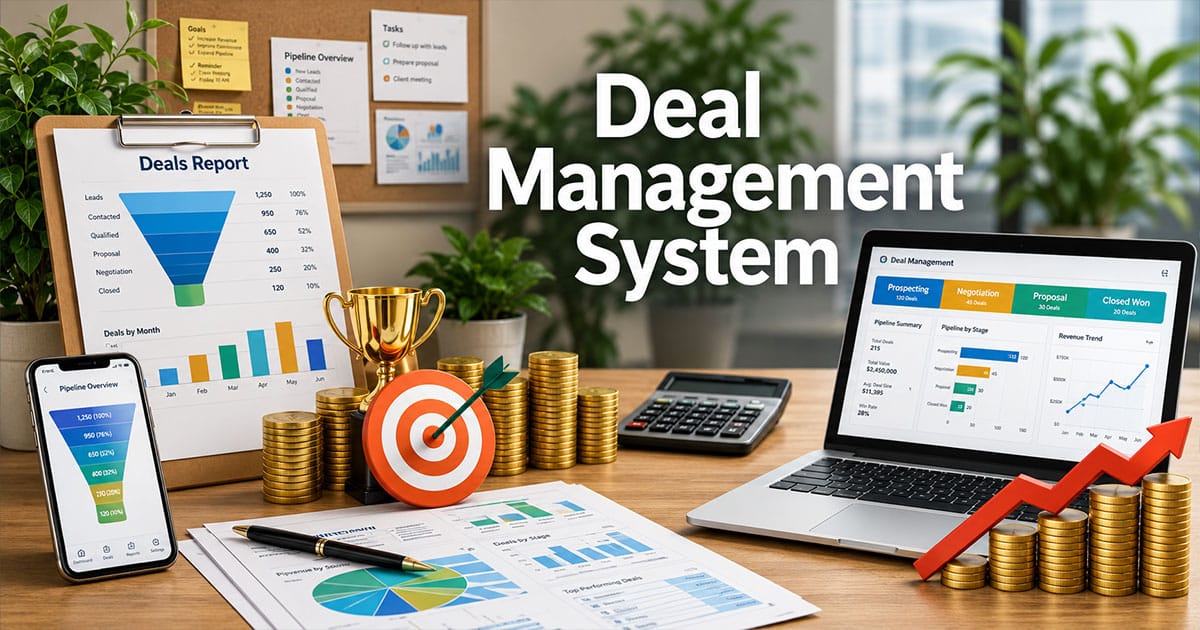
TL;DR: A deal management system focuses specifically on tracking opportunities through your sales pipeline, while a full CRM also manages contacts, marketing, and support. This guide covers the core features, how the two overlap, and which one fits a growing sales team.
Sales teams face constant pressure to close deals faster and stay organized. A deal management system brings structure to every opportunity. It keeps deals tracked, visible, and aligned across the team. Clear pipelines help teams focus on the right deals at the right time.
Without a proper system, deals get lost, updates become unclear, and forecasting turns unreliable. A deal management system solves these problems with real-time insights and better coordination. It supports smarter decisions and improves overall sales performance.
In this article, you will learn how a deal management system works and why it matters for growth.
What A Deal Management System Means
A deal management system is a structured way to track and manage every sales opportunity. It organizes deals from the first contact to final closing. Sales teams use it to monitor deal stages, update progress, and maintain clear visibility. It keeps all deal data in one place, so nothing gets lost or overlooked.
It also supports pipeline management, sales forecasting, and team collaboration. Managers can review deal status, identify risks, and guide teams with better insights. Automation helps reduce manual updates and saves time. A deal management system improves consistency and control across the sales process.
With better tracking and real-time visibility, teams make faster and smarter decisions. It creates a more predictable and efficient sales workflow.
Why Businesses Rely On A Deal Management System For Revenue Growth
A deal management system gives sales teams a clear structure and visibility across the sales pipeline. It helps track deal progress, manage customer interactions, and forecast revenue with confidence. Strong systems turn scattered efforts into predictable growth and better sales performance.
Clear Pipeline Visibility
Sales teams need a clear view of every deal. A deal management system creates a visual sales pipeline that shows deal progress across various stages. Sales managers can track deals, review deal flow, and identify gaps in pipeline health.
Each team member gains complete visibility into live deals and potential deals. Real-time data helps prioritize opportunities and move deals forward. Better pipeline visibility leads to faster deal execution and improved sales performance.
Better Forecast Accuracy
Revenue teams rely on accurate data to forecast revenue. A deal management system collects deal data and provides clear insight into sales cycles and deal lifecycle. Sales leaders can use sales analytics and custom reports to predict outcomes.
Accurate forecasting reduces risks and supports smarter decisions. Deal management software helps track deal performance and align efforts with revenue goals. Reliable forecasts create stability and support new business growth.
Stronger Team Coordination
A deal management solution keeps everyone aligned on one platform. Sales reps and sales managers can access deal information, update deal progress, and monitor team activity, supporting sales team collaboration techniques. It improves collaboration across the sales process.
Clear communication helps manage deals efficiently. Team monitoring ensures no deal gets ignored. Better coordination improves deal execution and supports faster closing deals with consistent results.
Faster Deal Execution
A structured deal management process removes delays from the deal cycle. Sales automation reduces repetitive tasks and supports faster follow-ups. Sales reps can focus on negotiating terms and moving deals forward.
Workflow automation and lead scoring help prioritize high-value sales opportunities. Sales task automation tools further support faster deal execution, leading to shorter sales cycles and more deals closed. Efficient processes improve overall sales performance.
Data Driven Decision Making
Modern deal management platforms use artificial intelligence to deliver deal insights. AI sales assistant helps sales leaders understand customer data and deal performance. It supports smarter decision-making across the tech stack.
Sales analytics and custom reports provide clear insight into customer expectations and deal outcomes. Real-time visibility allows teams to adjust strategies quickly. Data-driven decisions help convert leads and maximize revenue from potential customers.
Essential Features Of A High-Performance Deal Management System
A high-performance deal management system gives sales teams full control over deals, data, and decisions. It combines visibility, automation, and analytics in one platform. The right features help manage deals efficiently and improve sales performance at every stage.
Visual Sales Pipeline
A visual sales pipeline helps sales teams track deals across various stages with clarity. It shows deal progress, deal flow, and pipeline health in real time. Sales managers get complete visibility into live deals and potential deals, and can rely on visual sales pipelines.
Teams with strong pipeline visibility consistently report better win rates than those relying on scattered notes and memory. A deal management system with a visual sales pipeline helps prioritize opportunities and move deals forward. Clear pipeline visibility supports better deal execution and faster closing deals.
Workflow Automation
Workflow automation reduces repetitive tasks and improves efficiency in the sales process. Sales workflow automation strategies show how automated workflows handle follow ups, approval processes, and routine tasks. Sales reps can focus more on customer interactions and negotiating terms.
Reports indicate that automation can increase productivity by over 30%. A deal management solution with workflow automation helps manage deals without delays. It ensures smooth deal progress and improves overall deal lifecycle performance.
Real Time Data And Insights
Real time data gives sales teams clear insight into deal performance and sales cycles. A deal management system collects deal data and provides AI powered insights. Sales leaders can make faster decisions based on accurate information.
Studies show that data driven teams are 23% more likely to acquire new customers. Real time visibility helps track deal progress and adjust strategies quickly. Deal insights improve deal execution and support better sales outcomes.
Sales Analytics And Reporting
Sales analytics helps track sales performance and forecast revenue with confidence. A deal management system allows teams to create custom reports and analyze deal data, increasing sales visibility. Sales managers can monitor team performance and pipeline health.
Organizations that use advanced sales analytics see up to 15% higher revenue growth. Custom reports and sales activity tracking provide clear insight into deal lifecycle and sales opportunities. Strong analytics supports better planning and helps convert leads into more deals.
Centralized Deal Data
A single platform that stores all deal information improves efficiency and accuracy. CRM systems that help sales teams manage leads let sales teams access customer data, deal insights, and sales pipeline updates in one place. It supports better collaboration across revenue teams.
Centralized data reduces errors and improves customer relationship management. Teams with unified data systems report up to 20% faster sales cycles. A deal management system ensures complete visibility and helps manage deals with confidence.
How A Deal Management System Improves Pipeline Visibility
A deal management system gives sales teams a clear and real-time view of every deal. It connects deal data, customer interactions, and sales activities in one platform. Better visibility helps teams manage deals and improve sales performance.
Real Time Pipeline Tracking
A deal management system allows sales teams to track deals with real-time data. Every update reflects instantly across the sales pipeline. Sales managers can monitor deal progress, deal flow, and pipeline health without delays.
Real-time visibility into deal status tends to translate directly into higher sales productivity, since reps spend less time hunting for information. Sales reps gain clear insight into live deals and potential deals. Accurate deal tracking helps teams move deals forward and reduce missed opportunities.
Clear Deal Stage Mapping
A structured deal management process defines each stage in the deal lifecycle. From initial contact to closing deals, every step stays visible. Sales teams can manage deals across various stages with better control.
Companies with defined sales stages see up to 18% higher revenue growth. Clear stage mapping improves deal execution and supports consistent deal progress. It also helps sales leaders track sales cycles and forecast revenue more accurately.
Centralized Deal Data View
A single platform stores all deal information and customer data. Sales reps and sales managers access everything without switching tools. It improves customer relationship management and keeps deal insights accurate.
Teams that use centralized systems report up to 20% faster decision-making. Complete visibility into deal data helps prioritize opportunities. It also ensures smoother deal management across the entire sales pipeline.
Visual Sales Pipeline Dashboards
A visual sales pipeline shows deals in a simple and clear format. Visual sales pipeline software lets sales teams review deal progress and identify bottlenecks quickly. Sales analytics provide clear insight into deal performance and pipeline health.
Studies suggest that visual dashboards can improve decision speed by 30%. Deal management tools with dashboards help track deals and monitor team performance. Better visuals support faster deal execution and improved sales outcomes.
AI-Powered Deal Insights
Artificial intelligence adds deeper insight into deal management. AI-powered insights analyze deal data, customer behavior, and sales opportunities. Sales leaders can identify risks and take action early.
Organizations using AI-powered deal management platforms see up to 35% improvement in conversion rates. Real-time visibility combined with AI helps teams convert leads and close more deals. It strengthens deal execution and supports revenue growth.
Key Stages Within A Deal Management System Lifecycle
A deal management system organizes every deal across a structured lifecycle. Each stage helps sales teams track deals from lead to close, manage customer interactions, and move deals forward. Clear stages improve pipeline visibility, deal execution, and overall sales performance.
Lead Qualification Stage
Lead qualification defines which potential customers fit your ideal profile. Sales reps use lead scoring and customer data to evaluate sales opportunities, following best practices from sales deal tracking. A deal management system helps filter low-value leads and focus on high-potential deals.
Studies show that strong lead management can increase conversion rates by up to 20%. Clear qualification improves deal flow and reduces wasted effort. Sales teams can prioritize opportunities and build a stronger deal pipeline with better accuracy.
Initial Contact Stage
Initial contact builds the first connection with potential customers. Sales reps gather deal information and understand customer expectations. A deal management system records every interaction for better tracking of deals and follow-ups.
Companies that respond quickly to leads are 7 times more likely to qualify them. Real-time visibility into customer interactions helps improve engagement. Strong first contact sets the foundation for a smoother deal lifecycle and better sales outcomes.
Deal Development Stage
Deal development focuses on nurturing sales opportunities and moving deals forward. Sales teams manage deals through follow-ups, product discussions, and value alignment. Deal management tools help track deal progress and maintain pipeline visibility.
Consistent, timely follow-ups are one of the most reliable levers for improving closing rates. A structured deal management process ensures no deal gets lost. Sales reps can manage deals more effectively and increase deal performance across the sales pipeline.
Negotiation Stage
Negotiation defines pricing, terms, and final conditions. Sales teams work closely with customers to align expectations and close gaps. A deal management system tracks deal data and supports approval processes during negotiations.
Organizations with structured negotiation workflows see faster deal cycles. Clear insight into deal performance helps sales managers guide teams better. Efficient negotiation improves deal execution and supports faster closing deals.
Closing Stage
Closing deals marks the final stage of the deal lifecycle. Sales reps finalize agreements and convert leads into customers. A deal management system ensures all deal information is accurate and complete.
Companies with a disciplined, structured closing process tend to see meaningfully higher win rates than those that let deals close ad hoc. Clear pipeline visibility and real-time data help avoid last-minute delays. Strong closing improves revenue goals and drives new business growth.
Deal Management System Vs CRM Key Differences
A deal management system focuses on managing deals, tracking deal progress, and improving pipeline visibility. A B2B sales CRM covers broader customer relationship management, including customer data and interactions. Both support sales teams, but their core purpose and usage differ.
Aspect | Deal Management System | CRM (Customer Relationship Management) |
|---|---|---|
Core Focus | Deal management, deal tracking, deal lifecycle | Customer relationship management, customer data, interactions |
Primary Goal | Move deals forward and improve closing deals | Manage long-term customer relationships and engagement |
Pipeline Visibility | Strong visual sales pipeline with real-time visibility | Basic pipeline view, often less detailed |
Deal Progress Tracking | Advanced tracking deals across various stages | Limited deal progress tracking compared to specialized tools |
Sales Process Support | Focus on deal management process and deal execution | Covers full sales process plus marketing and support |
Sales Analytics | Deep deal insights, deal performance, pipeline health | Broader analytics across customer lifecycle |
Automation | Workflow automation for follow-ups and approval processes | Automation across marketing, sales, and service |
Use Case | Best for revenue teams focused on deal flow and conversions | Best for managing customer interactions and long-term relationships |
Data Handling | Centralized deal data and deal information | Centralized customer data across touchpoints |
Outcome | Faster sales cycles and more deals closed | Better customer retention and relationship building |
Best Practices For Deal Management System Implementation
A deal management system delivers value only when it fits your sales process and team workflow. Clear setup, clean data, and strong adoption matter most. The right approach improves pipeline visibility, deal tracking, and overall sales performance.
Clear Process Definition
A defined deal management process sets the foundation. Map each stage in the deal lifecycle, from initial contact to closing deals. Align stages with your sales pipeline that actually works and customer expectations.
Companies with standardized sales processes report up to 28% higher revenue growth. Clear stages improve deal progress and pipeline visibility. Sales teams can manage deals with consistency and reduce confusion across various stages.
Centralized Data Setup
A single platform for deal data and customer data prevents fragmentation. Store all deal information, customer interactions, and sales opportunities in one place. It supports customer relationship management and better collaboration.
Firms with centralized data see up to 20% faster sales cycles. Complete visibility into deal insights helps prioritize opportunities. Sales managers can monitor pipeline health and improve deal performance with accurate, real-time data.
Workflow Automation Use
Workflow automation reduces routine tasks and speeds up the deal cycle. Automate follow-ups, approval processes, and updates across the sales process. Sales reps can focus on negotiating terms and closing deals.
Automation can raise productivity by over 30%. Automated workflows improve deal execution and keep deals moving forward. It also ensures consistent deal tracking across the entire deal management system.
Analytics And Reporting Setup
Sales analytics and custom reports provide clear insight into performance. Track deal performance, sales cycles, and forecast revenue with confidence. Use deal management tools to create custom reports for deeper analysis.
Data-driven teams are 23% more likely to acquire new customers. Clear insight from reports helps sales leaders adjust strategy. Strong analytics improve pipeline visibility and support better decision-making.
Team Training And Adoption
A deal management solution works only when sales teams use it well. Train every team member on deal tracking, deal management tools, and workflow automation. Ensure proper use across the tech stack.
Organizations with strong adoption see up to 35% better sales performance. Team monitoring helps maintain consistency. Proper training improves deal flow, boosts pipeline health, and helps convert leads into more deals.
Challenges Solved By A Deal Management Software In Sales Teams
A deal management system removes common sales bottlenecks and brings clarity to the entire sales process. It improves deal tracking, aligns sales teams, and provides real-time visibility. Strong systems help teams manage deals efficiently and increase sales performance.
Lack Of Pipeline Visibility
Sales teams often struggle with unclear pipeline visibility. Deals stay scattered across tools, and deal progress becomes hard to track. A deal management system creates a visual sales pipeline with complete visibility into live deals and potential deals.
Studies show that poor visibility can reduce win rates by over 20%. Real-time data and clear dashboards help sales managers monitor pipeline health. Better visibility improves deal flow and ensures deals move forward without delays.
Inconsistent Deal Tracking
Manual tracking deals leads to missed updates and errors. Sales reps may forget follow-ups or fail to update deal information. A deal management system standardizes deal tracking across the sales pipeline.
Research indicates that automation reduces errors by up to 30%. Workflow automation ensures accurate deal data and smooth deal progress. Consistent tracking helps sales teams manage deals more effectively and improve deal performance.
Slow Sales Cycles
Long sales cycles often result from poor coordination and repetitive tasks. Sales teams waste time on manual updates and routine tasks. A deal management solution uses automated workflows to speed up the deal cycle.
Reports show that automation can shorten sales cycles by 20% or more. Faster follow-ups and better prioritization of opportunities help close deals quicker, as shown in a case study on closing deals faster with Gain.io. Efficient deal execution leads to more deals and improved revenue growth.
Poor Team Coordination
Misalignment between sales reps and sales managers affects deal execution. Without a single platform, communication gaps slow down deal progress. A deal management system keeps all team members aligned on one platform.
Organizations with aligned revenue teams see up to 36% higher customer retention. Team monitoring and shared deal insights improve collaboration. Strong coordination helps manage deals smoothly and supports better sales outcomes.
Limited Data Insights
Sales teams often lack clear insight into deal performance and customer behavior. Without proper sales analytics, decisions rely on guesswork. A deal management system provides AI-powered insights and custom reports.
Data-driven teams are 23% more likely to outperform competitors. Real-time visibility into deal data and sales opportunities helps sales leaders adjust strategies. Better insights improve pipeline health and support consistent revenue growth.
How Gain.io Strengthens Deal Management And Pipeline Visibility
Gain.io supports a strong deal management system by bringing all deal data, customer interactions, and sales activities into one platform as an all-in-one CRM to grow your sales and team. Sales teams can manage deals, track deal progress, and monitor the sales pipeline CRM with real-time visibility. A clear visual sales pipeline helps sales reps and sales managers understand deal flow and pipeline health at every stage.
The platform also improves the deal management process with workflow automation and AI-powered insights. It helps automate follow-ups, reduce repetitive tasks, and prioritize opportunities based on deal performance. Sales analytics and custom reports provide clear insight into sales cycles and forecast revenue. With better deal tracking and complete visibility, revenue teams can move deals forward faster and close more deals with confidence.
FAQs
Can A Deal Management System Improve Forecast Accuracy In Complex Sales Cycles?
Yes, a deal management system improves forecast revenue by using real-time data, sales analytics, and deal insights. AI-powered insights reduce forecasting errors by 20–30% compared to manual methods.
Does AI-Powered Deal Management Software Increase Conversion Rates Across Pipelines?
Yes, AI-powered deal management tools improve conversion by prioritizing opportunities and automating follow-ups. Studies show up to 25% increase in conversion rates with automation and AI-driven workflows.
How Does Deal Management Software Optimize Multi-Stage Deal Lifecycle Execution?
A deal management system structures the deal lifecycle into clear stages with full pipeline visibility. It tracks deal progress, customer interactions, and approval processes in one platform.
Can Deal Management Platforms Reduce Data Silos Across Sales Tech Stack?
Yes, a deal management platform centralizes deal data, customer data, and sales activities in one platform. It removes disconnected tools and improves collaboration across revenue teams.
What Impact Does Deal Management Have On Pipeline Conversion Benchmarks?
A structured deal management process improves pipeline conversion by optimizing each stage. Industry data shows only 20–30% of qualified deals typically close, highlighting the need for better tracking of deals and follow-ups.