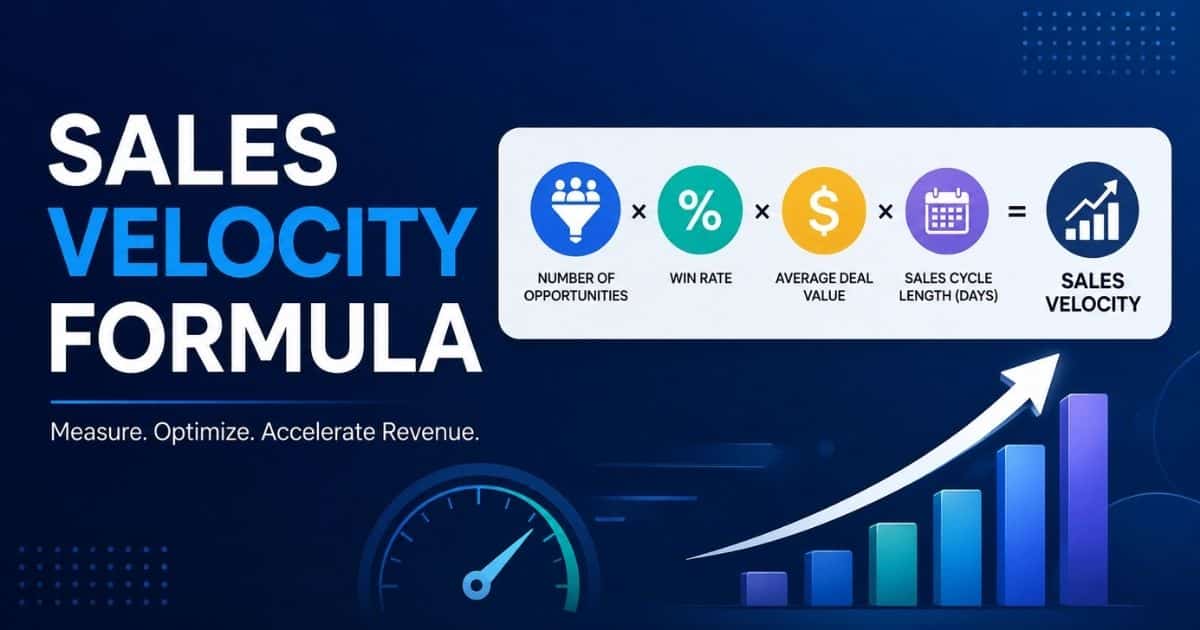
TL;DR: SaaS sales teams should track pipeline metrics, productivity metrics, and revenue-expansion metrics together — not just top-line bookings. This guide breaks down the core metrics by category and how CRM systems help track them automatically.
SaaS companies live and die by their ability to measure what matters. Sales performance metrics give revenue teams the visibility they need to understand how effectively their sales process converts opportunities into recurring revenue. Without reliable metrics, sales managers are left guessing about pipeline health, team performance, and future revenue potential.
The best performing SaaS sales teams consistently track their key sales metrics and use that data to refine their sales strategies. As a directional rule of thumb, top-performing B2B teams tend to run 80-90% quota attainment with win rates above 25-30% — treat these as a general benchmark rather than a hard target specific to your business. Getting there requires tracking sales performance metrics across every stage of the sales funnel and using those insights to coach sales reps and optimize the entire sales process.
What Are Sales Performance Metrics In SaaS
Sales performance metrics are the quantitative measures that show how well your sales team turns leads into paying customers over a specific period. In SaaS businesses, these metrics track everything from raw activity levels to the efficiency and repeatability of your revenue engine. They help answer questions like how quickly deals move through your pipeline, how much it costs to acquire new customers, and whether your existing customers are expanding their contracts.
These metrics typically combine leading and lagging indicators. Leading indicators like qualified leads created, demos scheduled, and pipeline value give you early signals about future success. Lagging indicators such as total revenue, quota attainment, and churn rate confirm what actually happened. For SaaS teams, the most important sales metrics span subscription revenue, customer acquisition, retention, and expansion because they all contribute to predictable recurring revenue growth.
Why Sales Performance Metrics Matter For SaaS Revenue Teams
According to industry benchmarks, companies that improve pipeline velocity by 10 to 15 percent often see corresponding revenue growth of around 20 percent. That kind of improvement comes from understanding exactly where deals slow down, where reps need coaching, and where the sales funnel leaks opportunities. Without metrics, sales leaders operate on assumptions rather than facts.
Impact On Revenue Forecasting Accuracy
Accurate revenue forecasting depends entirely on reliable sales data. When SaaS teams track their pipeline coverage ratio, stage conversion rates, and average deal size, they can predict quarterly revenue with much greater confidence. Studies show that companies with strong metrics practices improve forecast accuracy from around 60 percent to over 80 percent within two years.
Forecast accuracy matters for resource planning, cash management, and hitting revenue targets. Sales leaders who can confidently predict next quarter’s numbers can make better decisions about hiring, territory design, and marketing spend.
Connection Between Metrics And Sales Productivity
Sales productivity metrics reveal how efficiently your sales team converts time and effort into revenue generated. By tracking metrics like revenue per sales representative, calls made, meetings held, and deals closed, managers can identify which activities actually move the needle. This connection helps sales organizations avoid “activity for activity’s sake” and focus on high impact behaviors.
Teams that measure sales productivity can also benchmark performance across reps and identify best practices worth replicating. When one rep consistently closes deals 20 days faster than the team average, that becomes a coaching opportunity for the entire group.
Role In Pipeline Visibility And Decision Making
Pipeline visibility drives better decision making at every level of the sales organization. When sales managers can see exactly how many opportunities exist at each stage, what the average sales cycle time looks like, and where deals get stuck, they can intervene before problems become crises.
Real time pipeline insights help teams prioritize their efforts. Instead of treating all opportunities equally, reps can focus on deals that are progressing well and managers can allocate resources to unstick deals that matter most.
Influence On Customer Acquisition And Retention
Sales performance metrics directly impact both customer acquisition and retention strategies. By tracking customer acquisition cost cac alongside customer lifetime value clv, SaaS teams can determine whether their growth engine is sustainable. A commonly cited rule of thumb is a CLV:CAC ratio of at least 3:1 — below that, growth tends to cost more than it returns; well above it (say 5:1+) can actually signal under-investment in acquisition. Treat this as a directional guide rather than a hard target specific to your business.
For retention, metrics like renewal rate, churn rate, and net revenue retention show whether customers are staying and expanding. Teams that track these performance metrics can identify at risk accounts early and take action before customers leave.
Core Sales Performance Metrics Every SaaS Team Should Track
Every SaaS sales team needs a foundation of core metrics before expanding into more advanced analytics. These key metrics provide visibility into revenue health, customer economics, pipeline strength, and growth trajectory. Without these fundamentals in place, more sophisticated analysis becomes unreliable.
The most important sales metrics for SaaS teams fall into a few essential categories. Revenue metrics like MRR and ARR show current subscription value. Customer economics metrics like CAC and CLV reveal whether growth is sustainable. Pipeline metrics track deal flow and conversion. And retention metrics measure whether customers stick around and expand over time.
Monthly Recurring Revenue And Annual Recurring Revenue
Monthly recurring revenue mrr represents the total predictable subscription revenue from active customers in a given month. Annual recurring revenue captures the same concept on a yearly basis. These metrics form the heartbeat of any SaaS business because they show how much revenue the company can count on going forward.
Smart teams decompose MRR into subcategories: new MRR from new customers, expansion MRR from upsells and cross sells, contraction MRR from downgrades, and churned MRR from lost customers. This breakdown reveals whether growth comes from acquiring new customers or expanding existing relationships.
Customer Acquisition Cost And Lifetime Value
Customer acquisition cost measures total sales and marketing costs divided by the number of new customers acquired in a period. For example, if a SaaS company spends 150,000 dollars on sales and marketing in Q2 and acquires 50 new customers, the CAC equals 3,000 dollars.
Customer lifetime value clv estimates the total revenue a customer generates over their entire relationship with the company. The CLV to CAC ratio tells you whether the business model works. A ratio of 3:1 is typically considered healthy for SaaS companies, meaning each customer generates three times more value than it costs to acquire them.
Conversion Rate Across Sales Funnel
Conversion rate metrics track how effectively opportunities move from one stage to the next throughout the sales funnel. Common conversion points include lead to qualified opportunity, qualified opportunity to demo, demo to proposal, and proposal to closed deal.
By measuring conversion at each stage, sales managers can pinpoint exactly where the funnel leaks. If demo to proposal conversion drops significantly, that might signal problems with product positioning or competitive pressure that needs attention.
Lead Velocity Rate And Pipeline Growth
Lead velocity rate measures the month over month growth rate of qualified leads entering the pipeline. This leading indicator predicts future revenue better than many lagging metrics because it shows whether the top of the funnel is healthy.
Pipeline growth tracking ensures that sufficient opportunities exist to hit future revenue targets. Most B2B SaaS teams aim for pipeline coverage of 3x to 4x their quota, meaning they need three to four times their target in pipeline value to account for expected losses along the way.
Customer Churn And Retention Rate
Churn rate measures the percentage of customers who cancel their subscriptions over a given period. For SaaS businesses, keeping churn below 5 to 7 percent annually is typically considered good performance, though ideal rates vary by segment.
Customer retention rate shows the inverse: what percentage of customers renew. High retention indicates product market fit and effective customer relationships. Both metrics connect directly to revenue growth because retained customers continue generating recurring revenue without additional acquisition costs.
Pipeline Performance Metrics For SaaS Sales Teams
Pipeline metrics give sales leaders visibility into deal flow, helping them understand how opportunities progress from initial contact to closed deals. These metrics reveal bottlenecks, predict revenue, and guide resource allocation decisions. Without strong pipeline tracking, forecasting becomes guesswork.
Effective pipeline management requires tracking metrics at multiple levels. Sales organizations need to understand both volume metrics like total pipeline value and efficiency metrics like stage conversion rates and velocity. Together, these data points paint a complete picture of pipeline health.

Lead To Opportunity Conversion Rate
Lead to opportunity conversion measures how effectively your team qualifies incoming leads into legitimate sales opportunities. This metric matters because it sits at the top of the revenue funnel and influences everything downstream.
Teams typically see conversion rates between 10 and 25 percent depending on lead source quality and qualification criteria. Inbound leads often convert at higher rates than outbound because they already demonstrate interest. Tracking this metric by source helps sales managers understand which channels produce the most valuable pipeline.
Opportunity To Close Rate
Opportunity to close rate, often called win rate, measures the percentage of opportunities that result in closed deals. This is one of the most important sales metrics because it shows closing effectiveness. B2B SaaS teams typically see win rates between 20 and 30 percent on qualified opportunities, though enterprise deals often close at lower rates of 15 to 20 percent due to complexity.
Segmenting win rate by rep, product, deal size, or industry reveals patterns that inform coaching and strategy. A team might discover that win rates on deals over 50,000 dollars drop significantly, suggesting a need for executive selling training or different competitive positioning.
Average Deal Size And Sales Cycle Length
Average deal size equals total revenue divided by number of deals closed in a period. This metric helps with revenue forecasting and indicates whether teams are targeting the right customer segments. Tracking average deal size over time shows whether pricing strategies and market positioning are working.
Sales cycle length metric tracks the average sales cycle time from initial contact to closed deal. Shorter cycles improve cash flow and allow reps to work more opportunities. Most B2B SaaS companies see average sales cycle length between 30 and 90 days, with enterprise deals often taking longer. Reducing cycle length by even 20 percent can significantly boost revenue by allowing reps to close more deals per quarter.
Pipeline Coverage Ratio
Pipeline coverage ratio compares total pipeline value against the revenue target for a period. The formula divides total pipeline by target. For example, if your team needs to close 500,000 dollars this quarter and has 1.5 million in pipeline, coverage equals 3x.
Most sales leaders aim for 3x to 4x coverage on a rolling basis. Lower coverage signals potential revenue misses ahead, while significantly higher coverage might indicate qualification problems or pipeline bloat.
Win Rate And Loss Analysis
Beyond just tracking win rate, understanding why deals are won or lost provides actionable insights. Loss analysis reveals competitive weaknesses, pricing issues, or product gaps that need attention.
Top performing teams conduct win loss analysis on a regular cadence, interviewing customers and lost prospects to understand decision drivers. This qualitative data combined with quantitative win rate tracking informs product development, messaging, and sales training priorities.
Productivity Metrics For SaaS Sales Representatives
Sales productivity metrics help managers understand how efficiently individual reps convert their time and activities into revenue. These metrics matter because they separate high performers from those who need coaching and reveal which behaviors drive results. Tracking productivity also helps set realistic expectations for new hire ramp times.
Individual metrics allow for fair comparisons between reps and create a foundation for performance based compensation. The goal is not to micromanage but to understand what excellent performance looks like and replicate it across the team.
Sales Activity Volume And Quality
Activity metrics track the raw volume of sales behaviors like calls made, emails sent, meetings held, and proposals submitted. These leading indicators show effort levels and help managers spot potential issues before they impact revenue.
However, activity alone does not equal success. Smart managers pair volume metrics with quality indicators. A rep sending fewer emails but booking more meetings likely uses better personalization and targeting. Teams should track activity to conversion ratios to ensure effort translates into pipeline movement.
Average Response Time To Leads
Speed to lead measures how quickly reps respond to inbound inquiries. Research consistently shows that faster response times correlate with higher conversion rates. Leads contacted within five minutes are significantly more likely to convert than those contacted hours later.
Tracking average response time helps ensure that expensive marketing leads do not go to waste. Sales tools that automatically assign and alert reps can dramatically improve this metric and boost overall conversion.
Sales Quota Attainment Rate
Quota attainment remains the primary individual performance metric for sales reps. It measures the percentage of assigned sales targets achieved in a given period. Tracking quota attainment monthly and quarterly helps identify pacing issues early.
Top performing teams see quota attainment rates above 80 percent across their sales force. Consistently low attainment might indicate unrealistic quota setting, poor lead quality, or coaching needs. Comparing attainment across reps reveals who needs support and who might serve as a mentor.
Revenue Per Sales Representative
Revenue per rep measures total revenue generated divided by number of reps over a period. This metric helps leaders understand overall team productivity and plan for scaling. Higher revenue per rep means the organization extracts more value from existing headcount.
Tracking this metric over time shows whether investments in enablement, tooling, and training are paying off. Teams often see revenue per rep increase after implementing better sales tools or refining their sales process.
Time Spent In Each Sales Stage
Stage duration metrics track how long opportunities spend in each pipeline stage before moving forward or falling out. Deals that linger too long in early stages often signal qualification problems. Deals stuck in late stages might indicate negotiation or procurement issues.
By monitoring stage duration, sales managers can intervene on stuck deals before they die. Setting benchmarks for normal stage duration helps reps understand expectations and prioritize their efforts on opportunities that are progressing well.
Customer Success And Revenue Expansion Metrics
For SaaS businesses, sales performance extends beyond new customer acquisition. Expansion revenue from existing customers often represents the most efficient growth engine because acquisition costs are already paid. Customer success metrics connect initial sales performance to long term revenue outcomes.
These metrics help sales teams understand whether they are acquiring the right customers and whether those customers find sufficient value to renew and expand. The connection between sales activities and post sale outcomes informs everything from qualification criteria to pricing strategies.
Net Revenue Retention Rate
Net revenue retention measures the revenue retained from existing customers over a period, including expansions and upsells minus contractions and churn. A net revenue retention rate above 100 percent means the business grows even without adding new customers.
Top performing SaaS companies achieve net revenue retention rates of 110 to 130 percent. This metric shows that existing customers expand their usage faster than others contract or leave. It signals strong product market fit and effective account management.
Expansion Revenue And Upsell Performance
Expansion revenue tracks additional revenue generated from existing customers through upsells, cross sells, and usage growth. Many mature SaaS businesses generate more expansion revenue than new customer revenue.
Tracking upsell rates by segment, product, and account manager reveals which expansion motions work best. Teams with upsell rates between 20 and 30 percent are generally performing well. This metric informs territory design, comp plans, and account management strategies.
Customer Engagement And Product Adoption
Product usage metrics like login frequency, feature adoption, and active user growth predict renewal likelihood. Customers who deeply engage with the product rarely churn, while usage declines often precede cancellation.
Sales teams benefit from visibility into engagement data because it helps them prioritize accounts and target expansion conversations. Accounts with high adoption are prime candidates for upsell discussions, while declining engagement signals a need for intervention.
Renewal Rate And Contract Value Growth
Renewal rate measures the percentage of customers who renew their contracts when the subscription period ends. High renewal rates indicate customer satisfaction and product value. Most SaaS companies target renewal rates above 90 percent.
Contract value growth tracks whether customers increase their commitment at renewal. Growing contract values show that customers see increasing value from the product over time, which reflects positively on both sales and customer success efforts.
Customer Health Score Tracking
Customer health scores combine multiple indicators like product usage, support ticket volume, net promoter score nps, and engagement metrics into a single measure of account health. These composite scores help prioritize customer success efforts and predict churn risk.
Sales teams use health scores to identify expansion opportunities and avoid churn. Accounts with high health scores are prime candidates for upsell conversations, while low scores trigger proactive outreach to address potential issues.
Challenges SaaS Teams Face In Tracking Sales Performance Metrics
Even teams that understand the importance of tracking sales metrics struggle with implementation. Common challenges include fragmented data, inconsistent definitions, manual processes, and lack of real time visibility. Solving these problems requires both process improvements and the right sales tools.
Most sales organizations collect enormous amounts of sales data but struggle to turn it into actionable insights. The gap between data collection and useful analytics often comes down to system fragmentation and inconsistent practices.
Fragmented Sales Data Across Tools
Many SaaS teams use separate tools for CRM, email, calling, and analytics. When data lives in silos, creating a unified view of sales performance becomes extremely difficult. Reps waste time switching between systems, and managers struggle to get accurate reports.
Consolidating sales data into a central system dramatically improves reporting accuracy and reduces administrative burden. Teams that unify their sales pipeline data can generate consistent metrics without manual data gathering.
Lack Of Real Time Reporting Visibility
Waiting for end of month reports to understand performance leaves managers unable to course correct mid quarter. By the time problems surface in monthly reports, opportunities to fix them have passed.
Real time dashboards allow sales leaders to spot trends as they develop. A sudden drop in meeting bookings or stage conversions becomes visible immediately, enabling quick intervention rather than retrospective analysis.
Inconsistent Metric Definitions
When different teams define metrics differently, comparison becomes impossible. If one team counts a deal as “won” at verbal agreement while another requires signed contract, win rate comparisons are meaningless.
Establishing a shared metrics glossary with clear definitions and data sources prevents confusion. Every metric needs documented criteria for how it is calculated and where the data comes from.
Difficulty In Forecast Accuracy
Accurate forecasting requires consistent CRM usage and clear stage definitions. When reps update deals inconsistently or stages lack clear criteria, forecast accuracy suffers. Many teams struggle to predict quarterly revenue within 20 percent.
Improving forecast accuracy requires better process discipline, clearer stage definitions, and ideally, analytics that surface risk signals on individual deals. Teams that invest in forecast discipline see significant improvements over time.
Manual Reporting Errors
Manual data entry and spreadsheet based reporting introduce errors and waste time. Sales reps spend hours on administrative tasks instead of selling. Reports generated manually often contain mistakes that undermine trust in the data.
Automation reduces errors and frees reps to focus on revenue generating activities. Automatic activity logging, pipeline updates, and report generation improve both data quality and sales productivity.
How CRM Systems Help Track Sales Performance Metrics
CRM systems form the foundation of effective sales performance tracking. They centralize customer and deal information, automate reporting, and provide the consistent data structure needed for reliable analytics. Without a solid CRM foundation, metrics tracking becomes inconsistent and error prone.
Modern CRM platforms do more than store contact information. They serve as the system of record for the entire sales process, capturing activities, tracking pipeline stages, and enabling the reporting that drives sales strategies.
Centralized Sales Data Management
A CRM brings all customer relationships, deals, and activities into one place. Instead of scattered spreadsheets and email threads, sales teams have a single source of truth for pipeline and customer information.
Centralization enables consistent tracking across the entire sales team. Every rep logs activities the same way, every deal follows the same stage progression, and every report draws from the same underlying data.
Automated Reporting And Dashboards
Manual reporting wastes time and introduces errors. CRM systems automate report generation, pulling data directly from deal records and activity logs to create accurate sales metrics dashboard views.
Automation means reports update continuously rather than waiting for someone to compile data. Sales managers can check pipeline status, conversion rates, and activity levels at any time without requesting special reports.
Real Time Pipeline Insights
CRM platforms provide instant visibility into pipeline health. Managers can see total pipeline value, stage distribution, and deal aging at a glance. This real time view enables faster decision making and earlier intervention on stuck deals.
Pipeline visualization helps teams understand where opportunities cluster and where bottlenecks occur. Visual sales pipelines make it easy to spot patterns that might be hidden in spreadsheet data.
Performance Benchmarking Tools
CRM systems enable performance comparison across reps, teams, and time periods. Benchmarking tools show how individual reps perform against team averages and how current performance compares to historical results.
These comparisons help identify top performers whose practices should be replicated and underperformers who need additional coaching. Benchmarking creates accountability and healthy competition within sales teams.
Forecasting And Predictive Analytics
Advanced CRM systems include forecasting capabilities that predict future revenue based on pipeline data and historical patterns. These tools analyze stage conversion rates, deal aging, and other factors to estimate close likelihood.
Predictive analytics help sales leaders plan more accurately and allocate resources more effectively. Better forecasting improves everything from hiring decisions to cash planning.
How Gain.io Helps SaaS Teams Improve Sales Performance Metrics
Gain.io provides SaaS sales teams with a modern CRM built specifically for managing relationships, tracking opportunities, and closing deals faster. The platform centralizes sales data and provides the visibility needed to track sales performance effectively.
For teams struggling with fragmented tools and inconsistent data, Gain.io offers a unified approach to pipeline management and sales analytics. The platform focuses on what matters most: helping sales teams stay organized and close more deals.
Unified CRM For Sales Visibility
Gain.io brings contact management, deal tracking, and sales activities into a single platform. Sales teams get complete visibility into their sales pipeline without switching between multiple tools.
The unified approach ensures that all team members work from the same data. Sales managers can see exactly what reps are working on, and reps have full context on every customer relationship.
Automated Pipeline Tracking Features
Visual sales pipelines in Gain.io make it easy to track deals from lead to close. The platform automatically captures deal progression, stage duration, and conversion metrics without requiring manual data entry.
Automation reduces administrative burden on sales reps and improves data accuracy. Better data means more reliable metrics and more accurate forecasting.
Performance Analytics Dashboard
Gain.io includes analytics dashboards that surface key sales metrics in real time. Sales managers can monitor team performance, pipeline health, and individual rep metrics without building custom reports.
Dashboard views make it easy to spot trends and identify areas needing attention. Rather than digging through spreadsheets, managers get instant visibility into the metrics that matter most.
Workflow Automation For Sales Teams
Task management and workflow automation in Gain.io help sales teams stay on top of follow ups and deal related actions. Automated reminders ensure that important activities do not fall through the cracks.
Better task management improves sales productivity by ensuring reps focus on high priority activities. The result is faster deal progression and better use of selling time.
Real Time Revenue Insights
Gain.io connects pipeline activity to revenue outcomes, giving sales leaders insight into how current efforts translate into future results. Real time visibility into pipeline value, stage progression, and close likelihood improves forecasting accuracy.
These insights help teams make better decisions about where to focus effort and how to allocate resources. When sales data connects directly to revenue insights, the entire sales process becomes more predictable.
Frequently Asked Questions
Which Sales Performance Metrics Matter Most For SaaS Companies?
The most important sales performance metrics for SaaS companies include monthly recurring revenue, customer acquisition cost, customer lifetime value, churn rate, and net revenue retention because they show sustainable revenue growth. Pipeline related sales metrics such as average deal size, sales cycle length, and conversion rates help sales managers evaluate sales team performance, understand sales effectiveness, and improve sales revenue predictability.
How Often Should SaaS Teams Review Sales Performance Metrics?
High performing sales teams review sales metrics frequently based on their purpose. Daily monitoring focuses on sales activities and sales data, while weekly reviews track sales pipeline metrics, average sales cycle, and sales cycle length metric. Monthly reviews help sales leaders measure team performance, monitor recurring revenue, and align revenue targets using both leading indicators and lagging indicators.
What Tools Help Track Sales Performance Metrics Accurately?
Modern CRM platforms help sales organizations track sales performance metrics by centralizing sales data and providing real time sales analytics. Tools like Gain.io allow sales managers to monitor sales rep performance metrics, track number of deals, measure revenue generated, calculate customer acquisition cost CAC, and visualize insights through a sales metrics dashboard.
How Do Sales Performance Metrics Improve Revenue Forecasting?
Accurate forecasting improves when companies track sales performance using reliable key performance indicators such as pipeline coverage, average sales cycle time, and historical close rates. Monitoring sales pipeline, total revenue, and consistent performance metrics helps teams predict outcomes more accurately and align sales strategies with long term business goals.
What Mistakes Do SaaS Teams Make When Tracking Sales Metrics?
Common mistakes include tracking too many sales metrics, ignoring key sales metrics, and failing to define clear sales KPIs. Many teams also struggle with poor sales operations, inconsistent data practices, and weak focus on customer satisfaction metrics, customer loyalty, and customer relationships, which ultimately reduces the impact of a successful sales strategy.