Growing a sales organization creates pressure on every part of your workflow. What works for closing deals with 20 opportunities per month often breaks down when you reach 100 or 200. Missed follow-up calls, inconsistent lead qualification, and unreliable forecasts become the norm rather than the exception.
A scalable sales process solves this problem by creating a repeatable process that maintains performance regardless of pipeline volume. According to Harvard Business Review findings, companies with well-defined sales processes achieve 18% higher revenue growth than those without structured approaches. This happens because a scalable process enables faster onboarding of new hires, reliable forecasting, and reduced time spent chasing unqualified leads. For SaaS companies and B2B organizations focused on long-term success, building a scalable sales framework is not optional. It is the difference between controlled growth and operational chaos.
What Is A Scalable Sales Process
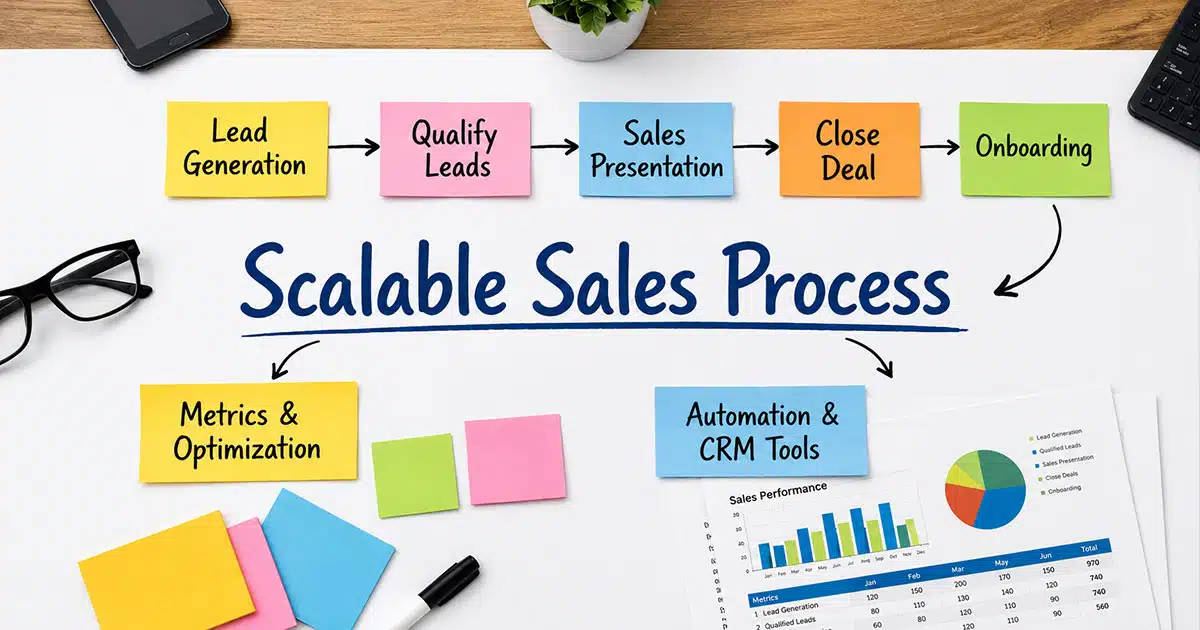
A scalable sales process is a structured, repeatable sales framework that guides every potential customer from initial awareness through to closed deals. Unlike informal selling methods that depend on individual rep intuition, a scalable process emphasizes clear stages, documented exit criteria, and consistent execution across your entire sales team.
The key distinction lies in repeatability. When your sales efforts follow standardized stages, any team member can step into a deal and understand exactly where it stands. This consistency becomes critical as your sales organization expands. Research indicates that businesses mapping their sales processes report up to 28% higher sales team performance because training becomes efficient and expectations become clear.
Why Scalable Sales Process Essential For Revenue Growth
Building a scalable sales process directly impacts your ability to drive revenue without proportionally increasing costs or complexity. When your sales strategy lacks structure, growth creates friction instead of momentum. Here is why scalability matters for every sales leader focused on overall business objectives.
Faster Deal Movement Across The Pipeline
A structured sales pipeline with distinct stages accelerates deal velocity. When sales reps know exactly what actions to take at each stage, deals move faster from lead generation to close. Optimized pipelines boost deal velocity by 20 to 30 percent according to industry data. This speed comes from eliminating confusion about next steps, reducing time spent in proposal or negotiation stages, and ensuring timely follow up with high value prospects. Faster movement means more revenue per quarter without adding headcount.
Consistent Customer Experience At Scale
Your target audience expects a reliable experience whether they are your tenth customer or your thousandth. A repeatable process ensures that every sales conversation, demo, and proposal follows similar quality standards. Customer satisfaction scores above 80% correlate with 2.5 times higher repeat business rates. This consistency builds trust and supports customer success outcomes, making post sale follow up and contract management smoother. When customers know what to expect, retention improves.
Higher Productivity Without Larger Teams
Scalable growth means your existing sales team handles more opportunities without burning out. Research shows that inefficient processes waste up to 30% of rep time on low-value activities like manual data entry or chasing down information. When you implement automation for repetitive tasks and standardize workflows, sales professionals spend more time on high potential prospects and less time on administrative work. This productivity gain allows you to scale effectively without doubling your team.
Stronger Forecast Accuracy And Planning
Accurate forecasting depends on clean data and consistent stage definitions. When every deal follows the same qualification criteria and moves through standardized stages, your sales leaders gain visibility into what will close and when. Data driven teams outperform peers by 19% in quota attainment because they can make reliable predictions. This forecast accuracy supports better resource allocation, quota setting, and planning for industry events or seasonal shifts.
Better Alignment Between Sales And Marketing
Scalability requires alignment across functions. When your sales process integrates with marketing efforts and customer success, everyone works from shared data and common goals. A scalable process defines clear handoffs from marketing qualified leads to sales qualified opportunities. This alignment ensures that lead scoring criteria match across teams, reducing friction and ensuring that only qualified leads enter your sales funnel. Teams that stay team aligned around shared KPIs avoid the silos that slow growth.
Key Elements Of A Scalable Sales Process
Every scalable sales process shares certain key components that enable repeatable success. These elements form the structure that allows your sales operations to handle increased volume without quality degradation.
Clear And Documented Sales Stages
Vague pipeline stages like “Working” or “Follow-up” break down as volume increases. A scalable process requires clear stages with documented entry and exit criteria. A typical B2B model includes stages such as New Lead, Qualified, Discovery, Demo, Proposal, Negotiation, and Closed. Each stage has specific requirements. For example, Discovery is complete only when the business problem, budget range, and decision criteria are logged in CRM fields. This clarity enables accurate forecasting, with some teams predicting quarterly revenue within 5 to 10 percent accuracy.
Standardized Qualification Criteria
Inconsistent lead qualification wastes significant sales efforts. A standardized approach using frameworks like Budget, Authority, Need, and Timeline (BANT) ensures that every rep evaluates leads the same way. These criteria become required fields in your CRM, making it impossible to advance deals without proper qualification. This prevents unqualified opportunities from clogging your pipeline and helps sales reps focus on high value prospects with genuine buying intent.
Automated Workflow And Task Management
Repetitive tasks drain productivity. Automation tools handle lead assignment by region, follow up sequences for no-shows, and renewal reminders before contract end dates. When deals sit in one stage for too long, automated alerts notify managers. This automation removes copy-paste work while preserving human judgment for discovery, negotiation, and strategy. Teams that implement automation in phases, starting with lead routing and expanding to scoring and playbooks, see the smoothest adoption.
Data Driven Decision Framework
A scalable process relies on data, not intuition. This means tracking key metrics like sales cycle length, conversion rates by stage, and win rates. Weekly pipeline reviews maintain hygiene and identify areas where deals stall. When data shows that deals involving legal review run 20 days longer, you can adjust playbooks and involvement timing. This continuous optimization keeps your process effective as conditions change.
Integrated Communication Channels
Scattered tools create data silos. A scalable process integrates email, calendar, and calling tools with your CRM so that every interaction is captured automatically. This integration eliminates duplicate data entry and ensures that anyone reviewing a deal sees the complete communication history. Sales professionals save time while leadership gains visibility into sales efforts across the entire process.
Steps To Build A Scalable Sales Process
Creating a scalable sales process follows a logical sequence. Each step builds on the previous one, creating a solid foundation for sustainable growth.
Audit Current Sales Workflow First
Before adding new tools or stages, document your existing process from first touch to closed deal and onboarding. Map every step: inbound form submission, SDR qualification call, discovery call, product demo, proposal review, legal and security review, verbal commitment, signature, and handoff to customer success. Identify who owns each step, typical time taken in days, and tools currently used. This audit reveals friction points like leads waiting more than 24 hours for first response or deals stuck in proposal stage for over 14 days. Gather feedback from your sales team about where they experience pain points and where the entire process feels broken.
Define Ideal Customer Profile Clearly
A scalable process prioritizes the right opportunities. Define your ideal customer profile (ICP) based on company size, industry, budget, and buying behavior. Research suggests that 70% of revenue comes from 30% of prospects, meaning that targeting the wrong leads wastes enormous resources. Your ICP becomes the filter for lead scoring and qualification. Every opportunity entering your pipeline should match these criteria, ensuring that sales reps spend time on prospects with genuine potential for long term success.
Create Repeatable Sales Playbooks
Playbooks codify your best practices into documented guidance. Include stage definitions, qualification checklists, discovery questions, objection handling scripts, and standard templates for emails and proposals. A concrete 30-60-90 day onboarding plan helps new hires ramp quickly: shadowing calls in week one, running supervised calls by week three, owning a small pipeline by day sixty. Reps with ongoing development close 15% more deals according to industry reports. Your playbook ensures that every team member follows the same sales framework regardless of when they joined.
Implement Automation And CRM Tools
Technology removes manual work and maintains data quality. Your CRM becomes the single source of truth, integrated with email and calendar for automatic activity capture. Configure automation for lead assignment, follow up reminders, and stage progression alerts. Start with basic automation and expand over three to six months to include scoring and renewal workflows. The goal is to reduce friction and save time while keeping sales reps focused on relationship building and closing deals rather than data entry.
Track Performance And Optimize Regularly
A scalable process is never finished. Establish a review rhythm: monthly revenue operations reviews, quarterly process audits, and annual resets of stage definitions if needed. Track lead response time, conversion rate across stages, average sales cycle length, average deal size, win rate, and forecast accuracy. Use this data to identify bottlenecks and make data driven adjustments. When you spot patterns like low conversion at the negotiation stage, introduce standardized proposal templates or objection handling training. This ongoing refinement keeps your process remains effective through new product launches, new market segments, and headcount changes.
Common Challenges That Block Sales Scalability
Even well-intentioned sales organizations face obstacles when scaling. Recognizing these challenges early helps you address them before they derail growth.
Lack Of Process Standardization
When every sales rep uses their own methods, scaling becomes impossible. Inconsistent approaches lead to unpredictable results and make it difficult to identify what works. New hires cannot learn from established best practices because none exist in documented form. Without standardized stages and exit criteria, pipeline reports become unreliable, and forecasting suffers. The solution is to document your process thoroughly and enforce compliance through CRM requirements and regular coaching.
Over Reliance On Manual Work
Manual data entry, spreadsheet tracking, and informal handoffs consume time that should go toward selling. When reps spend 30% of their time on administrative tasks, productivity suffers and burnout increases. As volume grows, manual processes simply cannot keep up. Implement automation for repetitive tasks like lead assignment, follow up scheduling, and activity logging. Free your sales team to focus on discovery calls, relationship building, and closing deals instead of copying information between systems.
Poor Data Visibility Across Teams
When sales, marketing, and customer success operate from different data sources, alignment breaks down. Sales reps may pursue leads that marketing flagged as unqualified, or customer success teams may lack context about what was promised during the sales cycle. This fragmentation creates friction and damages the customer experience. Centralized data in a single CRM, accessible to all relevant teams, solves this problem. Shared dashboards and KPIs keep everyone working toward common business objectives.
Weak Sales And Marketing Alignment
Lead generation efforts fail when marketing and sales define success differently. If marketing measures success by lead volume while sales measures it by closed revenue, conflict is inevitable. Leads may arrive without proper qualification, forcing sales reps to waste time on poor-fit opportunities. Address this by establishing shared definitions for MQL, SQL, and opportunity stages. Create service level agreements for lead response times and handoff procedures. Regular meetings between sales and marketing leaders maintain alignment as targets evolve.
Inconsistent Lead Qualification Methods
Without standardized qualification criteria, some reps accept any lead while others maintain rigid standards. This inconsistency creates pipeline quality issues that surface later as lost deals and wasted effort. Customer acquisition cost rises when reps pursue unqualified leads through lengthy sales cycles that end in closed-lost outcomes. Implement required qualification fields in your CRM and train all reps on consistent evaluation methods. Lead scoring based on ICP fit helps prioritize high potential prospects automatically.
Best Tools That Support A Scalable Sales Process
The right technology stack enables scalability by automating workflows, centralizing data, and providing visibility across your sales pipeline.
CRM Platforms For Pipeline Visibility
A CRM serves as the foundation for any scalable sales process. It centralizes contact information, deal data, and communication history in one accessible location. Visual pipelines show exactly where every opportunity stands, enabling sales leaders to prioritize coaching and intervention. Without a CRM, tracking deals at scale becomes impossible. Look for platforms that offer customizable stages, required fields for qualification criteria, and reporting dashboards that update in real time. The right CRM reduces friction and ensures that every team member works from the same information.
Automated Sales Collaboration
Collaboration tools integrated with your CRM enable teams to share context without lengthy meetings. Notes capture sales conversations, deal insights, and decision history so that anyone reviewing an opportunity understands its status. Task management features assign follow up actions with due dates, ensuring that nothing falls through the cracks. Calendar integration coordinates meetings and demos while automatically logging activities. These collaboration capabilities keep your sales organization aligned even as team size grows.
Sales Automation Tools For Workflow Efficiency
Automation platforms handle the repetitive tasks that consume rep time. Lead routing assigns new opportunities based on territory, company size, or industry. Email sequences automate follow up messages after demos or proposals, maintaining engagement without manual effort. Contract management workflows send renewal reminders 90 days before expiration. Alerts notify managers when deals stall beyond defined thresholds. These automation tools scale with your pipeline, handling increased volume without requiring proportional increases in headcount.
Analytics Tools For Performance Insights
Data driven decisions require analytics capabilities. Track conversion rates at each pipeline stage to identify where deals drop off. Monitor sales cycle length trends to spot process improvements or regressions. Measure customer acquisition cost to understand the true expense of winning business. Pipeline velocity metrics combine deal volume, size, and speed to reveal overall health. These analytics enable sales leaders to make informed decisions about resource allocation, training needs, and process adjustments.
Communication Tools For Team Coordination
Integrated communication tools ensure that every customer interaction is captured and accessible. Email integration logs correspondence automatically, eliminating manual entry. Calendar features coordinate sales meetings and demos while providing visibility into rep availability. Some platforms offer call recording for training and quality assurance. These communication capabilities support consistent customer experiences at scale while giving leadership insight into how reps engage with high value prospects throughout the sales funnel.
Metrics That Measure Sales Process Scalability
Tracking the right metrics reveals whether your sales process can support growth or if bottlenecks will emerge as volume increases.
Sales Cycle Length Trends
Sales cycle length measures the average time from first contact to closed deal. Shortening cycles indicates process efficiency and strong qualification. Lengthening cycles may signal market changes or process friction. Track this metric by segment, product line, and rep to identify patterns. SaaS companies often benchmark cycles by deal size, expecting enterprise deals to take longer than SMB transactions. Optimized processes can reduce cycle length by 20 to 30 percent through better qualification and stage management.
Conversion Rate Across Stages
Conversion rates reveal where deals stall or drop from your pipeline. Calculate the percentage of opportunities moving from each stage to the next. Low conversion at specific stages indicates training needs, process gaps, or qualification issues. For example, if only 40% of demos convert to proposals, examine your demo content and discovery process. Stage-by-stage visibility enables targeted interventions rather than broad process overhauls.
Customer Acquisition Cost Changes
Customer acquisition cost (CAC) measures the total expense of winning a new customer, including marketing, sales, and onboarding costs. As you scale effectively, CAC should remain stable or decrease due to efficiency gains. Rising CAC signals that growth is outpacing process optimization. Track CAC alongside customer lifetime value to ensure that acquisition investments generate appropriate returns. Scalable growth maintains healthy unit economics even as volume increases.
Pipeline Velocity Performance
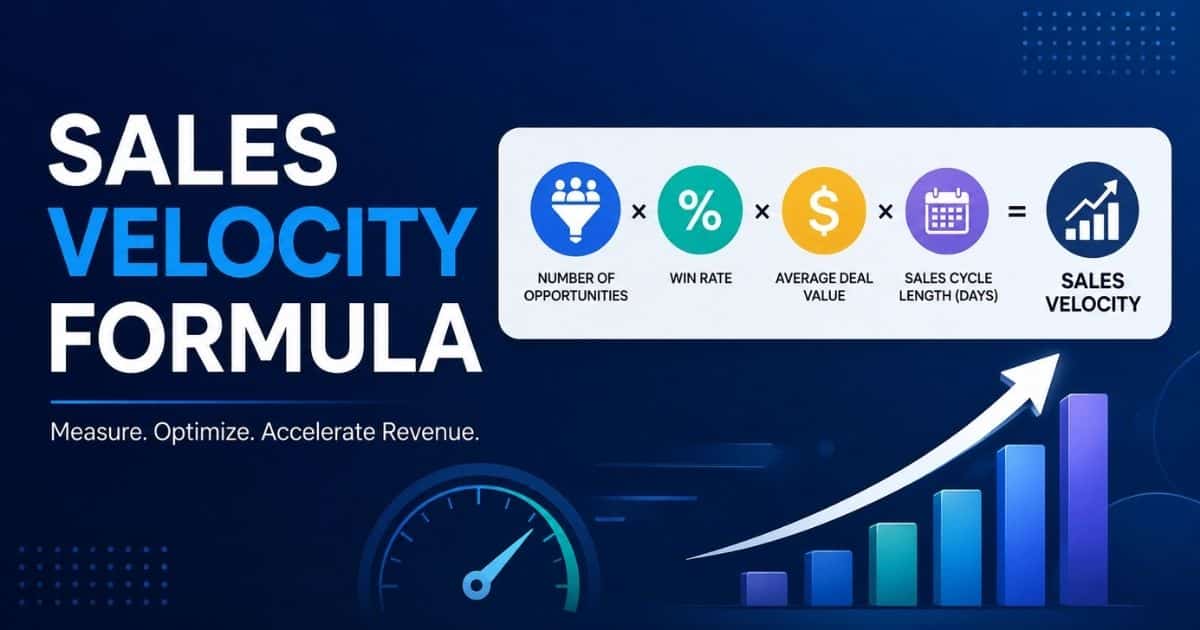
Pipeline velocity combines deal volume, average size, win rate, and cycle length into a single metric showing revenue movement through your funnel. Higher velocity indicates a healthier, more efficient process. Monitor velocity trends monthly to catch slowdowns early. Velocity improvements come from shortening cycles, increasing win rates, or growing average deal sizes. This metric provides a comprehensive view of process health beyond any single indicator.
Revenue Per Sales Representative
Revenue per rep measures productivity and scalability directly. As your process matures, each rep should handle more pipeline and generate more revenue without proportional effort increases. Flat or declining revenue per rep despite process investments signals adoption issues or overcomplicated workflows. Track this metric alongside activity levels to understand whether reps are working smarter or simply working harder. Scalable processes increase output per person.
How Gain.io Supports A Scalable Sales Process
Gain.io provides the CRM foundation that growing sales teams need to build a scalable sales process. With visual sales pipelines, contact management, and integrated task tracking, Gain.io gives your team complete visibility into every opportunity from lead to close. Email integration captures sales conversations automatically while calendar features coordinate demos and meetings. Notes preserve deal context and decision history, enabling seamless handoffs between team members. By centralizing data and reducing scattered tools, Gain.io helps sales organizations reduce friction, maintain clean pipelines, and focus on closing deals rather than chasing information across systems.
FAQs
What Is The Main Goal Of A Scalable Sales Process?
The main goal is to create a repeatable process that handles increased pipeline volume without requiring proportional increases in headcount or complexity. A scalable process maintains consistent performance, accurate forecasting, and reliable customer experiences as your sales organization grows. It enables you to drive revenue efficiently while keeping sales reps focused on high-value activities instead of administrative work.
How Does Sales Process Scalability Impact Customer Retention?
Consistent execution throughout the sales cycle sets accurate expectations for customers. When every prospect receives similar quality interactions, there are fewer surprises after the deal closes. This consistency supports customer success by ensuring that onboarding teams understand what was promised. Companies with CSAT scores above 80% see 2.5 times higher repeat business rates, demonstrating the connection between process consistency and retention outcomes.
When Should A Company Upgrade Its Sales Process For Scalability?
The right time is typically after you have at least 10 to 20 paying customers and a small but steady lead flow, usually when you have 5 to 10 sales hires. Warning signs that you should act include inconsistent forecasts, leads slipping through the cracks, or reps building their own individual workflows in spreadsheets. Addressing these issues early prevents larger problems as volume grows.
Which Role Does Data Play In Sales Scalability?
Data forms the foundation for continuous improvement. Clean, accurate data enables you to track key metrics like conversion rates, cycle length, and pipeline velocity. Data driven adjustments replace guesswork with evidence-based decisions. Without reliable data, you cannot identify bottlenecks, measure progress, or forecast accurately. Investing in data quality from day one pays dividends as your sales efforts scale.
Can Sales Scalability Improve Forecast Accuracy?
Yes. Standardized stages with clear exit criteria mean that every deal in your pipeline is categorized consistently. When reps follow the same qualification standards and update CRM fields reliably, sales leaders can predict revenue outcomes with greater precision. Data driven teams outperform peers by 19% in quota attainment largely because their forecasts reflect reality rather than optimism. Better forecasting enables smarter resource allocation and planning.