Account-based selling helps B2B sales teams focus on the accounts that matter most. Instead of chasing many leads, the sales team targets specific high-value accounts with strong revenue potential. Sales and marketing teams work together to identify a target account list and build a unified strategy around those companies.
A strong account-based selling strategy aligns marketing efforts, sales outreach, and account management. Sales reps engage key stakeholders and multiple decision makers with personalized messaging and tailored solutions. This targeted approach improves account engagement, increases average deal size, and builds stronger customer relationships.
A clear account-based sales process helps sales organizations win key accounts and drive sustainable revenue growth.
What Is Account-Based Selling
Account-based selling is a targeted B2B sales strategy that focuses on specific high-value accounts instead of a wide pool of potential customers. A sales team works closely with marketing teams to identify high-value accounts and create a target account list. The account-based selling model aligns sales and marketing efforts, so both teams pursue the same target company. Each outreach uses personalized messaging built around buyer personas, pain points, and the needs of key decision makers.
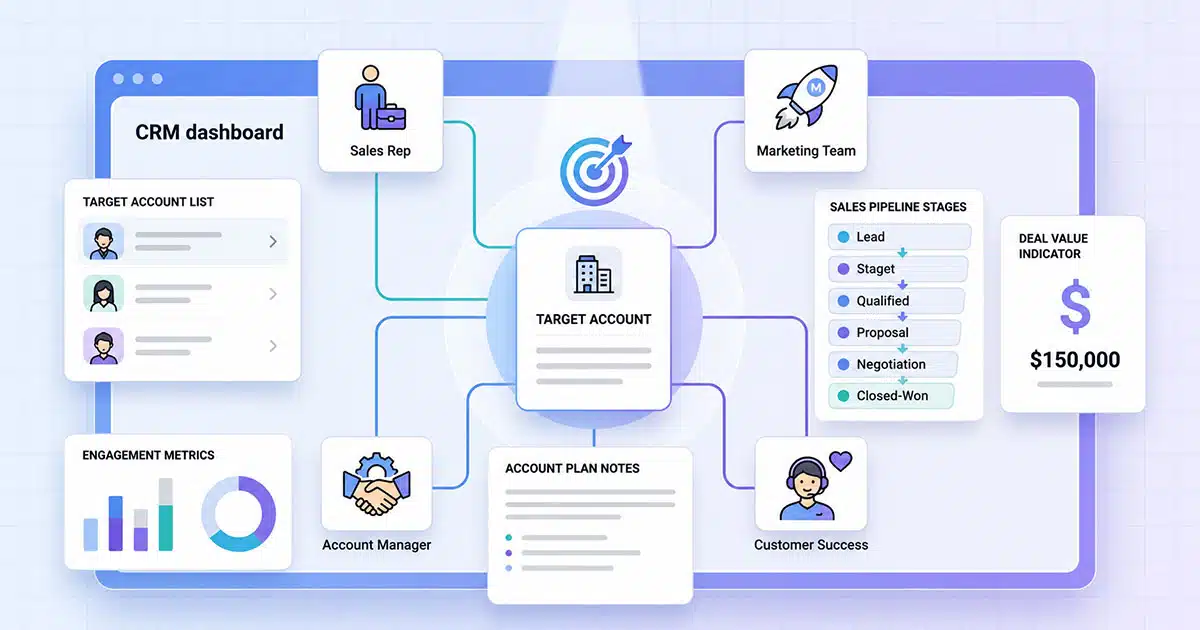
An account-based selling strategy treats a target account as a market of its own. Sales reps, account managers, and marketing and sales teams collaborate through the entire sales process. The account-based sales process often involves multiple stakeholders and longer sales cycles. A unified strategy helps teams build account plans, support the buying process, and win key accounts with tailored solutions.
Account-based selling requires close coordination across the entire team, including customer success teams and account executives. Sales organizations use customer relationship management tools or an account-based selling platform to track account engagement and key metrics. A strong account-based approach increases average deal size, improves customer lifetime value, reduces customer acquisition costs, and builds long term relationships that support sustainable revenue growth.
How to Identify High-Value Target Accounts
High-value target accounts form the foundation of a successful account-based selling strategy. A clear process helps sales and marketing teams focus on companies with the highest revenue potential. Careful selection improves deal size, shortens sales cycles, and builds stronger customer relationships.
Ideal Customer Profile
An ideal customer profile helps the sales team focus on the right target company. The profile defines firmographic data such as company size, industry, revenue, and geographic market. Sales organizations also review buying capacity and technology stack. This step helps identify high-value accounts that match long-term revenue goals.
Research from HubSpot shows that companies with a defined ideal customer profile can increase conversion rates by more than 20%. Sales reps use the profile to build a strong target account list. A clear ICP also helps marketing teams develop better marketing campaigns and personalized messaging for key stakeholders.
Revenue And Deal Size Potential
High-value target accounts often show strong revenue potential. Sales teams analyze average revenue, expected deal size, and long-term customer lifetime value. Large organizations or fast-growing companies usually offer higher contract values.
According to Forrester, account-based sales strategies often increase average deal size by about 35%. Sales reps focus on accounts where the buying process involves multiple decision makers and larger budgets. A targeted approach allows the account team to prioritize companies that can generate sustainable revenue growth.
Strategic Industry Fit
Industry fit plays a major role in account-based selling. Sales organizations should focus on industries where their product solves clear pain points. Strong industry alignment helps marketing and sales teams create tailored solutions and relevant sales collateral.
A study from ITSMA reports that 87% of marketers say account-based marketing delivers higher ROI than traditional marketing efforts. Marketing teams and sales reps collaborate to analyze market demand, industry trends, and competitive landscape, often supported by a CRM that helps sales teams manage and prioritize leads. A unified strategy helps both teams target high-value accounts with a higher probability of success.
Account Engagement Signals
Account engagement shows how interested a target account may be. Sales teams review website visits, content downloads, demo requests, and responses to marketing campaigns. Customer relationship management tools and sales activity tracking software and an account-based selling platform help track these signals.
Research from Demandbase shows that companies with strong account engagement are 2.5 times more likely to move forward in the buying process. Account managers and sales reps use this data to identify potential customers with real buying intent. A higher engagement level often means shorter sales cycle length.
Stakeholder And Buying Power
Many enterprise deals involve multiple stakeholders and key decision makers. High-value accounts usually have a structured buying process and defined budget owners. Sales teams must evaluate who controls the purchase and how many departments participate.
A Gartner study shows that an average B2B buying group involves six to ten decision makers. Account-based selling requires a clear mapping of key stakeholders within the target account. Sales reps and account executives build relationships with those contacts. Strong engagement across decision makers increases win rates and helps sales teams win key accounts.
Account-Based Selling Strategy Framework
A clear framework helps teams execute an effective account-based selling strategy. Sales and marketing teams align their efforts around high-value accounts and specific accounts. A structured model keeps the entire sales process organized and focused on the right opportunities.
Target Account List
A strong account-based selling strategy begins with a clear target account list. Sales and marketing teams identify high-value target accounts that match the ideal customer profile. The focus stays on companies that show strong revenue potential and strategic fit.
Sales reps and account managers review firmographic data, industry alignment, and company growth signals. The goal is to identify high-value accounts that justify deeper attention, then manage them through a visual sales pipeline for better deal clarity. A focused list helps sales organizations move away from traditional sales methods and toward a targeted approach that prioritizes specific high-value accounts.
Account Research
Account research helps the sales team understand a target company before outreach begins. Sales reps review company goals, industry challenges, and possible pain points. The process also includes identifying key stakeholders, key decision makers, and multiple stakeholders involved in the buying process.
A deeper view of the organization supports strategic account management. Sales teams map the structure of the company and the roles of decision makers, then align them to custom sales stages and scalable pipelines. This insight allows the account team to prepare relevant sales collateral and tailored solutions that fit the needs of the target account.
Personalized Outreach
Personalized messaging plays a major role in the account-based selling approach. Marketing teams and sales reps create communication that speaks directly to the needs of specific accounts. The goal is to connect marketing efforts with the sales process.
Account-based sales rely on messages that address pain points and priorities. Sales reps often reach out to multiple decision makers with tailored solutions. Personalized outreach helps build trust with key stakeholders and improves account engagement throughout the buying process.
Sales And Marketing Alignment
Account-based selling requires close collaboration between marketing and sales teams. Both groups align sales strategies and marketing campaigns around shared target accounts. A unified strategy ensures that marketing efforts support the sales team at every stage.
Marketing teams create targeted campaigns and content for high-value accounts. Sales reps and account executives use those materials during conversations with potential customers. Alignment between marketing and sales teams helps sales organizations maintain consistent messaging and improve the account-based sales process.
Account Management And Expansion
Account management remains important after a deal closes. Account managers and customer success teams continue to build relationships with existing customers. The focus shifts toward long-term relationships and higher customer lifetime value.
Customer success teams support account engagement and identify new opportunities within key accounts by leveraging sales task automation to stay organized. Account plans help guide expansion across departments or business units. A strong account-based sales strategy supports growth through larger deal size, stronger customer relationships, and sustainable revenue from key accounts.
How To Execute Your Account-Based Prospecting Plan
A strong prospecting plan turns an account-based selling strategy into real opportunities. Sales and marketing teams focus on specific accounts and coordinate outreach. A clear plan helps sales reps engage key stakeholders, build relationships, and move target accounts through the sales process.
Target Account Research
A successful account-based prospecting plan starts with detailed research. Sales reps study the target company, industry challenges, and business priorities. The goal is to understand pain points and identify opportunities where tailored solutions can create value.
Sales teams also map key stakeholders and key decision makers inside the account using lead management software to track and convert prospects. Many enterprise deals involve multiple stakeholders across departments. Clear insight helps the account team prepare personalized messaging and relevant sales collateral before outreach begins.
Prospect Mapping
Prospect mapping helps the sales team understand who influences the buying process. A target account often includes several decision makers, technical evaluators, and budget owners. Sales reps and account executives must identify each role within the organization.
Customer relationship management tools for contact management help track contacts and relationships within specific accounts. Account managers and sales reps review organizational structures and communication paths. This step ensures the account-based sales process reaches the right people at the right time.
Personalized Outreach
Personalized outreach sits at the center of the account-based selling approach. Sales reps craft messages for specific accounts instead of broad prospect lists. Outreach highlights pain points, business goals, and opportunities that matter to the target company, reinforced by a CRM with email integration that streamlines sales communication.
Marketing teams support outreach with targeted marketing campaigns and relevant sales collateral. Personalized messaging often includes insights about the industry or challenges the account faces. A tailored message builds trust and helps sales reps start meaningful conversations with potential customers.
Multi-Channel Engagement
An effective prospecting plan uses several communication channels. Sales reps connect with decision makers through email, phone, professional networks, and events. Each channel supports account engagement and strengthens relationships with key stakeholders.
Marketing efforts also support outreach through targeted campaigns and helpful content. Marketing and sales teams work together to keep communication consistent. A coordinated approach increases visibility within high-value accounts and improves the chances of winning key accounts.
Pipeline Progress Tracking
Pipeline tracking helps the entire team understand how target accounts move through the sales cycle. Sales organizations track account engagement, deal size, and the progress of each opportunity. Customer relationship management systems that track deals from lead to close help monitor activity within the account-based sales process.
Account managers and sales reps review key metrics to evaluate progress. Teams adjust the sales strategy when engagement slows or decision makers change priorities. Clear tracking helps maintain momentum and ensures the account-based prospecting plan supports sustainable revenue growth.
Content Strategy For High Value Account Engagement
Content plays a pivotal role when you want to engage prospects and deliver customized value in account-based selling, especially when supported by a simpler, CRM-driven sales workflow. You need to understand their needs, business challenges, and goals to tailor your content for each prospect. Perform research on target accounts to uncover key decision makers, personas, and pain points within each target account. This information is the foundation for building customized content strategies that strike a chord with each stakeholder.
Customize Content For Different Buyer Personas
Craft unique messaging that speaks to the specific challenges and needs of each account. About 90% of sales come from just three or four customer types. You need only three to four buyer personas to get started. Create persona-specific content tailored to the interests, needs, and behaviors of particular buyer personas. CFOs prioritize ROI and financial metrics. Technical evaluators assess integration capabilities. Operations teams focus on workflow improvements and implementation ease. Therefore, your sales and marketing teams must develop separate content tracks that address each stakeholder's distinct priorities. Content mapping ensures you place the right content in front of the right people.
Use Case Studies And Proof Points For Enterprise Sales
Proof points help move individual opportunities forward and gain the attention of prospects while mitigating purchasing risk. Case studies demonstrate the value and differentiation of your solutions. Develop a proof point database that tags proof points by qualifying characteristics like value driver, differentiator, buyer type, and product.
Create detailed case studies that highlight successful implementations with quantitative and qualitative data. Use testimonials from satisfied customers as powerful tools to build credibility. Make sure proof points line up with prospect requirements and positive business outcomes. Map proof points to buyer factors your salespeople uncover.
Deliver Value At Every Touchpoint
Share content at critical moments in the buyer's experience to build interest and engagement. Distribute content across multiple channels like email, social media, direct mail, and webinars. Track how target accounts interact with your content to refine future strategies. Monitor key metrics like click-through rates, open rates, and conversion rates to identify what strikes a chord best.
How To Optimize Your Targeted Account Selling Results
Metrics show whether an account-based selling strategy produces real results. Sales organizations rely on clear key performance indicators to evaluate sales and marketing efforts. Accurate data helps the entire team refine the account-based sales strategy and focus on high-value accounts.
Account Engagement And Pipeline Velocity
Account engagement reveals how well marketing and sales teams connect with target accounts. Sales reps track interaction across key stakeholders and multiple decision makers within a target company, using sales activity metrics as leading indicators of pipeline health. Strong account engagement often includes communication with five or more contacts from the buying group.
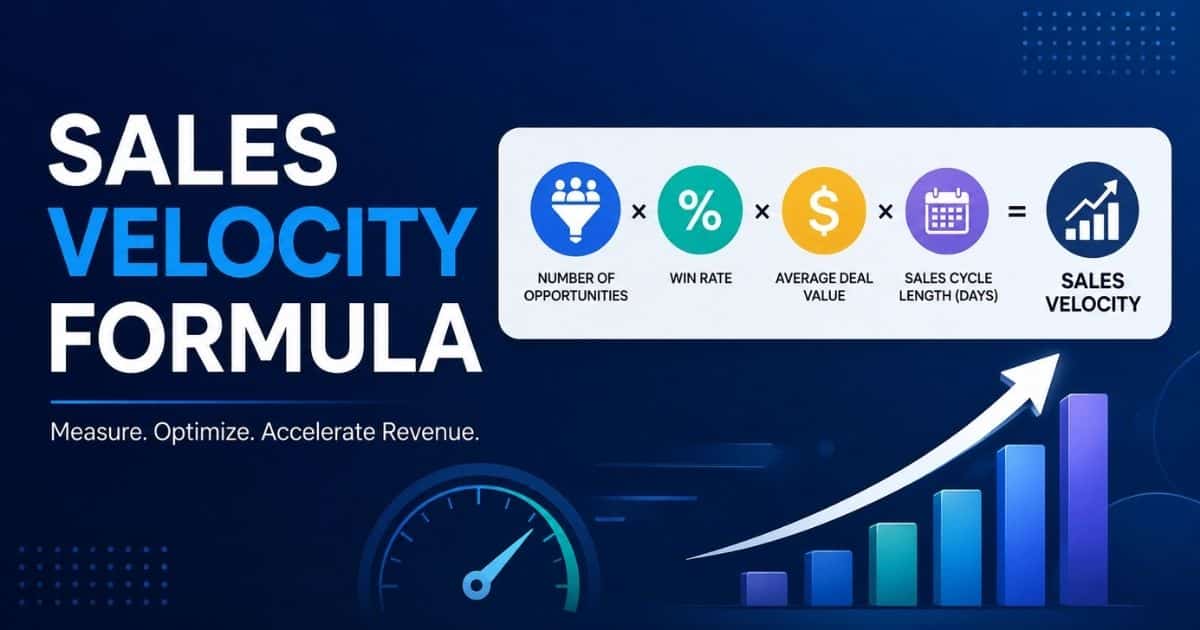
Pipeline velocity measures how quickly opportunities move through the sales process. Sales organizations review deal size, win rates, and sales cycle length to evaluate performance, similar to how a B2B SaaS startup used Gain.io to close deals faster and improve pipeline velocity. Faster movement through the pipeline often signals strong alignment between marketing teams, sales teams, and the account-based selling approach.
Deal Size And Conversion Rates
Deal size remains an important metric in account-based sales. High-value accounts usually produce larger contracts and higher average revenue. Sales teams compare deal size from account-based approaches with results from traditional sales methods.
Conversion rates also show how effective the account-based sales process is. Sales reps track movement between stages of the buying process. Low conversion often signals gaps in personalized messaging, sales collateral, or account engagement with key stakeholders.
Customer Lifetime Value
Customer lifetime value measures long term revenue from a single account. Sales teams calculate the average revenue generated during the entire customer lifetime. Strong account based selling often increases value because it focuses on long term relationships with key accounts.
Customer success teams and account managers support retention and expansion with integrated contact management that strengthens relationships. Strong collaboration between marketing and sales teams improves account engagement after the initial deal. Growth within existing customers often leads to larger deal sizes and stronger account management outcomes.
Return On Investment
Return on investment helps evaluate the financial impact of account based sales strategy. Sales organizations compare revenue from new customers and existing customers against the cost of marketing campaigns and sales efforts, often relying on a sales pipeline CRM to improve visibility and forecasting.
Account-based selling usually focuses on specific high-value accounts. A targeted approach often reduces customer acquisition costs and increases average deal size by improving sales visibility into pipeline performance. Sales leaders review ROI to ensure the account-based selling platform, sales strategy, and marketing efforts generate sustainable revenue growth.
Strategy Optimization
Performance data helps refine the account-based selling strategy. Sales organizations analyze key metrics such as account engagement, sales cycle length, and conversion rates across target accounts. Insights from data highlight which industries or segments produce the strongest results.
Sales reps and account managers use those insights to improve account plans and target account lists. Marketing teams adjust marketing campaigns and personalized messaging for better engagement. Continuous adjustments across the entire team help sales organizations win key accounts and strengthen long-term relationships.
How Gain.io Supports Account-Based Selling Success
Gain.io supports a structured account-based selling approach by giving sales and marketing teams a clear view of target accounts. Sales reps and account managers can organize contacts, track deals, and monitor account engagement in one platform. The system helps teams build a focused target account list and manage relationships with key stakeholders and multiple decision makers inside a target company.
The platform also supports the entire sales process with pipeline tracking and customer relationship management tools. Sales teams can monitor deal size, sales cycle length, and key performance indicators for high-value accounts. Marketing teams align marketing efforts with the sales strategy and deliver personalized messaging for specific accounts.
A unified workspace with smart CRM tools for sales teams helps the entire team manage account plans, sales collateral, and outreach across the account-based sales process. Better visibility helps sales organizations identify high-value target accounts, strengthen customer relationships, and drive sustainable revenue growth through account-based sales.
FAQs
Can Account-Based Selling Work For Small Sales Teams?
Yes. Account-based selling can work well for small sales teams. A focused account-based sales strategy allows teams to prioritize specific high-value accounts instead of chasing many leads, especially when paired with a CRM built for startups and small sales teams. Sales reps can build stronger customer relationships and improve deal size through a targeted approach.
Does Account-Based Selling Require A Dedicated Platform?
No. Account-based selling does not always require a dedicated account-based selling platform. Sales organizations can start with a customer relationship management system to track target accounts, account engagement, and key stakeholders.
Is Account-Based Selling Better Than Traditional Sales Methods?
Yes. Account-based selling often performs better than traditional sales methods for complex B2B deals. The account-based approach focuses on specific high-value accounts, multiple decision makers, and personalized messaging. This sales strategy often leads to higher deal size and stronger customer lifetime value.
Can Account-Based Selling Improve Customer Retention?
Yes. Account-based sales strategies often strengthen long-term relationships with existing customers. Account managers and customer success teams stay engaged with key accounts and key stakeholders. Strong account management and tailored solutions help increase customer lifetime and expansion revenue.
What Challenges Do Sales Teams Face In Account-Based Selling?
Sales teams often face challenges with sales and marketing alignment and account research. Multiple stakeholders and complex buying processes can slow sales cycles. A clear target account list, strong account plans, and a unified strategy help sales organizations manage high-value target accounts effectively.