Sales workflow optimization has become the difference between sales teams that hit their numbers and those that struggle to keep up. The reality is that most sales teams operate with processes that were built for a different era. Buying committees are larger now. Decision timelines stretch longer. And yet, many organizations still rely on the same fragmented approaches that worked five years ago.
The good news? You do not need to overhaul everything at once. Small, targeted improvements to your sales workflow can shorten your sales cycle, improve forecast accuracy, and create a better experience for potential customers. This guide walks through what a modern sales workflow looks like, how to find and fix the friction points in your current sales process, and practical methods for continuous improvement that do not overwhelm your entire team.
What Is A Sales Workflow In Modern B2B Teams
A sales workflow is the real sequence your sales reps follow from initial contact through renewal. It is not just a pretty pipeline diagram sitting in a presentation deck. It is the day-to-day reality of how leads move through your system, who touches them at each stage, and what happens before a deal advances.
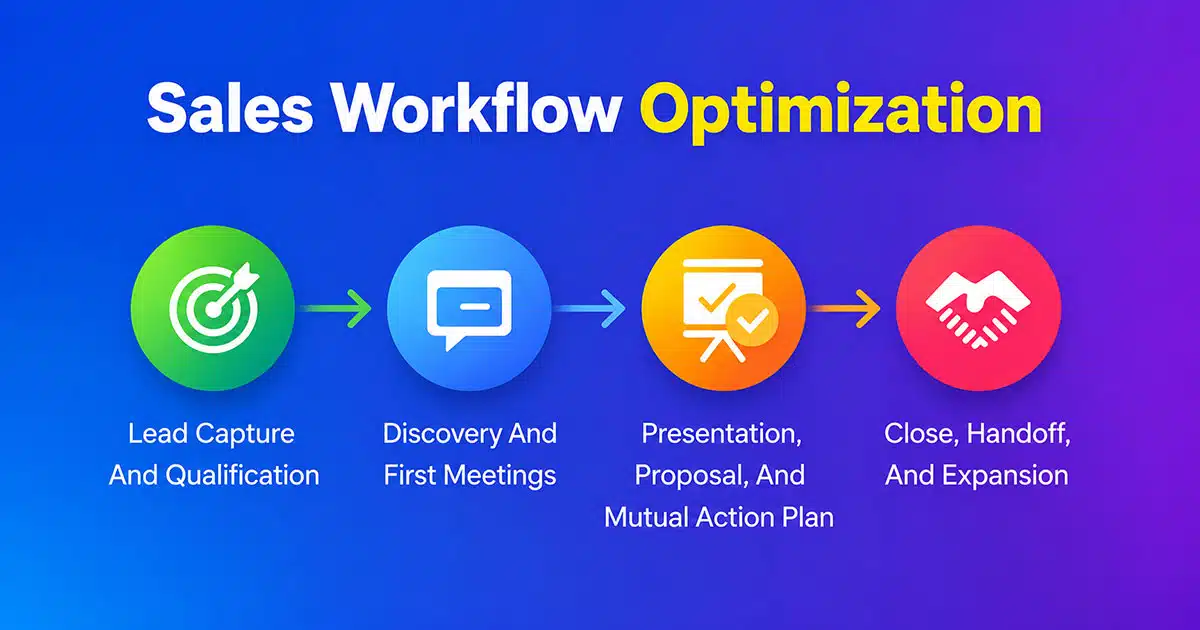
In practical terms, your sales workflow covers concrete stages like lead capture, first meeting, discovery, proposal, negotiation, close, and post-sale expansion. Each stage has specific activities, owners, and exit criteria that determine when an opportunity moves forward. Sales leaders use the workflow as a shared map for coaching conversations, pipeline reviews, and training new hires. When a new sales representative joins the team, the workflow tells them exactly what good looks like at every step.
The buying process in 2026 involves larger committees and more stakeholders. Your workflow needs to include stakeholder mapping, mutual action plans, and clear next steps at each stage. This is not about adding complexity for the sake of process. It is about making each step faster, clearer, and more predictable. Sales process optimization means removing friction, not creating more hoops for your sales reps to jump through.
The typical sales process breaks into seven core stages: Lead Generation, Qualification, Needs Discovery, Demo or Proposal, Negotiation, Closed Won/Lost, and Post-Sale Follow-Up. Each step should have clear goals and aligned actions that match the customer journey. When your team speaks the same language about these stages, pipeline reviews become more productive and forecasting gets more accurate.
Core Benefits Of A Structured Sales Workflow
Teams with a documented workflow ramp new reps faster, miss fewer follow ups, and create a more consistent buyer experience. This is not theory. It is the difference between hoping your sales strategy works and knowing it does.
A standardized sales process helps new account executives and BDRs reach full productivity in weeks instead of months. They have a proven path to follow rather than figuring things out through trial and error. When the sales playbook is clear, new hires can focus on learning the product or service and building customer relationships instead of guessing what their next step should be.
Structured workflows also reduce internal confusion during handoffs. When a lead moves from BDR to AE to customer success, everyone knows what information transfers and who owns the next step. This protects trust with the customer because they do not have to repeat themselves or deal with dropped balls. The customer experience stays consistent regardless of who they talk to.
Consistent definitions across deal stages make pipeline reviews, quarterly planning, and capacity modeling far more accurate. When everyone agrees on what “qualified” means, your sales funnel becomes a reliable forecasting tool rather than a collection of opinions. Sales managers can look at the data and make confident decisions about future revenue.
A structured workflow also makes experimentation safer. When you want to test a new discovery framework or try a different approach to negotiation, you can change one step at a time and measure the impact. This kind of controlled testing is impossible when every rep does things their own way.
Key Stages In An Optimized Sales Workflow
Understanding the main stages of a B2B sales workflow gives you a practical framework for optimization. This section walks through what each stage should look like, typical timeframes, and the key metrics that indicate whether things are working.
The emphasis here is on handoff quality and clarity of next steps. Most deals stall not because of pricing or product fit, but because the next step was unclear or the handoff between stages dropped critical information.
Lead Capture And Qualification
New leads arrive from multiple channels: paid campaigns, events, partner referrals, inbound content, and product signups. The first requirement is that all these leads flow into a single CRM view. Scattered lead data across multiple tools creates chaos and lets high quality leads slip through the cracks.
Lead qualification requires a clear ideal customer profile and a qualification framework. Frameworks like BANT, MEDDIC, or CHAMP help your sales team focus on leads that match your target audience. These models ensure consistent evaluation across your team so you do not waste time on poor-fit opportunities. Lead quality matters more than lead volume.
Operational details matter here. Set targets for first response time within 30 to 60 minutes during business hours. Speed to lead directly impacts conversion rates. Lead routing rules can automatically assign new leads based on territory, account size, or product interest. This kind of workflow automation removes manual assignment delays and ensures interested buyers get attention fast.
Discovery And First Meetings
Discovery is where your sales reps confirm pain, budget, timeline, and stakeholders before rushing into a demo. The temptation to skip straight to presenting your product or service is strong, but it usually backfires. Deals that skip proper discovery tend to stall later or close at lower values.
Standard question sets and call structures make discovery more consistent across the team. When reps answer questions the same way, you can compare results and identify trends. Note-taking habits also matter because they make follow ups and internal debriefs easier. The customer data captured during discovery shapes everything that comes after.
Teams should align on a simple exit criteria checklist to decide when an opportunity leaves discovery and moves forward. This might include confirmed budget range, identified decision-makers, and clear timeline. When everyone uses the same criteria, your sales pipeline becomes more predictable.
Presentation, Proposal, And Mutual Action Plan
Optimized workflows use tailored presentations and proposals that map directly to problems uncovered in discovery. Generic decks and one-size-fits-all proposals rarely win. The buyer needs to see how your solution addresses their specific situation.
Mutual action plans with concrete dates, owners, and milestones keep both the buyer and seller aligned. This is especially important when procurement or security reviews are involved. A typical B2B deal might take six to twelve weeks from first demo to signature, depending on company size and deal complexity. When both sides have visibility into the timeline, deals move faster because surprises are minimized.
These plans also help identify trends in where deals slow down. If proposals consistently sit unsigned for weeks, you know procurement is a bottleneck worth addressing.
Close, Handoff, And Expansion
The sales journey does not stop at signature. Optimized workflows include structured handoff to customer success, onboarding milestones, and the first 90-day check-in. This protects customer satisfaction and sets the foundation for contract renewals and expansion.
The handoff should always include goals, risks, success criteria, and stakeholder mapping. When customer success teams inherit context, they can nurture customers effectively from day one. This reduces churn and creates opportunities for upsells.
High-performing teams build expansion and renewal triggers into the workflow based on product usage data and executive reviews. Revenue growth comes from both closing deals and growing existing accounts.
Practical Methods To Optimize Your Sales Workflow
Optimizing your sales workflow is not a one-time project. It is an ongoing habit that compounds over time. The goal is to make concrete improvements over the next quarter rather than planning a massive overhaul that never gets implemented.
Start by mapping your current sales process visually. Document every stage, the actions that occur, who owns each task, and how handoffs happen. Include your sales team members in this process because frontline reps often see reality more clearly than what is written in official documentation. The disconnect between documented process and daily practice is where most teams discover their biggest problems.
Once you have the current state mapped, identify two or three bottlenecks and run small experiments to fix them. Reviewing data weekly on conversion between stages, average days in stage, and response times surfaces patterns you can act on. Cross-functional reviews with marketing, sales operations, and customer success help align definitions and remove duplicate steps.
Document new plays, update the sales playbook, and train reps so improvements stick. Changes that only live in meeting notes fade after a few weeks. Changes that get embedded in onboarding materials and coaching sessions become permanent.
Finding Bottlenecks And Friction Points
Use CRM reports to spot stages with unusually long durations or low conversion rates. Common trouble spots include discovery to proposal and proposal to commit. When deals pile up at a specific stage, something is creating friction.
Pair data with rep interviews to learn the practical reasons for delays. Common culprits include missing marketing materials, slow approval processes, confusing pricing options, or gaps in training. Qualitative insights give context to the numbers.
Choose one bottleneck per month to fix so the team can focus and see measurable progress. Trying to fix everything at once usually means nothing gets fixed properly.
Standardizing Playbooks While Leaving Room For Personal Style
A strong sales playbook documents required steps, core messages, and qualification criteria while still allowing reps to use their own voice. The goal is operational efficiency without making customer interactions feel robotic.
Keep the playbook current with real call recordings, winning emails, and live examples. Static slides from past years lose relevance quickly. Sales professionals learn better from recent wins than from theoretical frameworks.
Recommend a quarterly review cadence based on win/loss analysis. When you understand why deals close or fall apart, you can update plays to reflect what works today rather than what worked last year.
Using Automation And Tools Without Losing The Human Touch
Sales automation should handle repetitive work like data entry, lead routing, and basic follow ups so reps can focus on conversations. The goal is not to automate the selling, but to automate the administrative tasks that pull reps away from selling.
CRM software, sales engagement platforms, and analytics tools fit together to support the workflow rather than replace it. Start with a few high-impact automations: lead assignment rules, task triggers after key buyer actions, and standardized post-meeting summaries. These save hours each week without changing the customer experience.
The risk of over-automating is real. Generic sequences that make buyers feel like a number hurt more than they help. Build in manual review points so reps can personalize outreach when it matters. Automation workflows should enhance human connection, not replace it.
Automation should also give managers clean data for coaching sessions. When data entry happens automatically, sales managers can spend time on development instead of chasing down pipeline updates. Sales productivity increases when reporting becomes effortless.
Examples Of High Impact Workflow Automation
Practical automation scenarios include creating follow-up tasks automatically after meetings, updating deal stages based on calendar events, and triggering content shares after webinars or trial signups. Each of these removes manual steps that slow things down.
Track metrics like hours saved per rep per week and increase in meetings set to demonstrate value. When you can quantify the impact, you build support for expanding automation over time.
Periodic audits of sequences and triggers help remove redundant or outdated flows. What made sense six months ago might be creating friction for buyers today. Keeping automations tools current is part of continuous improvement.
Data, Analytics, And Continuous Improvement
Optimizing a sales workflow is an ongoing habit, not a one-time project. Data keeps the team honest and surfaces issues before they impact the quarter.
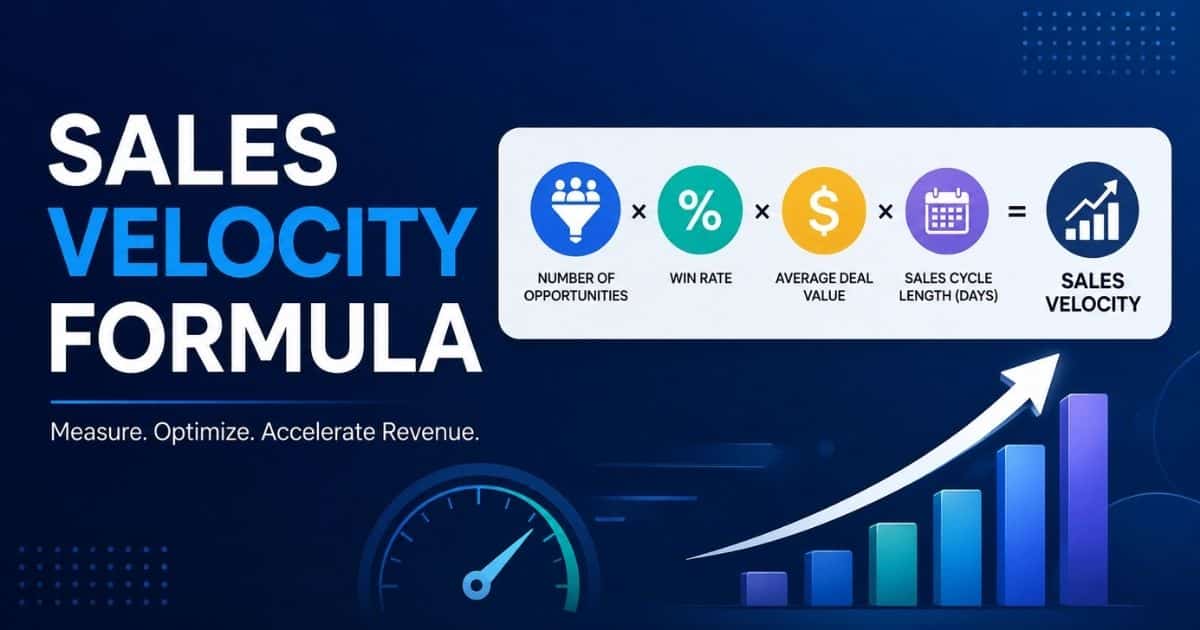
The key metrics that matter most for workflow optimization include stage conversion rates, average sales cycle length, win rate by segment, and activity-to-outcome ratios. These tell you whether your changes are working and where to focus next.
Weekly or biweekly reviews of these metrics help sales leaders spot emerging issues early. If discovery-to-proposal conversion drops for two weeks in a row, you want to investigate before it becomes a pattern.
Share simple dashboards with reps so they can see their own patterns. When reps have visibility into their team’s performance, they often suggest improvements from the front lines. The best ideas for process optimization frequently come from people doing the work every day.
Capture qualitative insights from closed-won and closed-lost reviews to refine messaging and qualification criteria. Customer behavior and competitive dynamics shift over time. Your workflow needs to evolve with them.
Running Small Experiments Safely
Design low-risk experiments like testing a new discovery framework on a portion of opportunities for one month. Keep experiments time-bound with clear success criteria so leaders can decide whether to roll changes out broadly.
Document results and feed them back into the playbook and training materials. When an experiment works, it should become standard practice. When it fails, the team learns and moves on without wasting more time.
This experimental approach is how most teams build momentum over time. Small wins compound into significant performance improvements across a full sales funnel.
How Gain.io Supports Sales Workflow Optimization
Gain.io is built for sales teams that want to streamline their workflows without juggling scattered tools. As a sales CRM focused specifically on revenue activities, Gain.io gives your team full visibility into the sales pipeline while eliminating the friction that slows deals down.
Contact management in Gain.io keeps your leads, prospects, and customers organized throughout the entire sales lifecycle. Instead of hunting through multiple tools for customer interactions and deal history, reps have everything in one place. This reduces human error and makes handoffs between team members seamless.
Sales task management keeps follow ups and deal-related actions on track. Reps never miss the next step because tasks are tied directly to opportunities and contacts. Calendar integration supports sales meetings, demos, and phone calls without requiring separate scheduling tools.
Email integration connects your sales conversations to the right contacts and deals. You can track outreach and engagement without manual logging. Notes capture sales conversations, decision history, and the insights that matter for closing deals and nurturing customers long-term.
For teams focused on hold teams accountable and driving more deals through consistent execution, Gain.io provides the infrastructure to make workflow optimization practical. Rather than fighting your tools, you can focus on what matters: building customer relationships and closing deals faster.
Frequently Asked Questions
How Often Should We Review And Update Our Sales Workflow
Run a light review monthly to check for bottlenecks and track team’s performance against key metrics. A deeper review should happen quarterly to update stages, exit criteria, and playbooks. Triggered reviews are also appropriate after major changes like entering a new market, launching a new product line, or shifting target audience.
What Is A Realistic Timeline To See Results From Workflow Changes
Small fixes like better lead routing or clearer follow-up rules can show impact within one to two months. You might see improvements in first response time or stage conversion rates relatively quickly. Larger changes to stages, messaging, or qualification criteria often take a full quarter to measure accurately across the sales pipeline since deals need time to work through the updated process.
How Can Smaller Teams Optimize Workflows Without A Dedicated Operations Role
Start with simplified stages, clear definitions, and one source of truth in your customer relationship management system. You do not need complex tool stacks to see improvement. Set aside a few hours each month where the founder or sales lead reviews data, talks with reps, and adjusts the workflow incrementally. Small teams can often move faster because they have fewer stakeholders to align.
How Do We Keep Reps From Feeling Boxed In By A Strict Workflow
Present the workflow as a safety net that covers the essentials while allowing personal style in conversations and messaging. Involving top-performing reps in designing and updating the workflow helps because it reflects real-world selling rather than only management theory. When reps see the workflow as support rather than surveillance, adoption improves significantly.
What Is The Best Way To Align Marketing With Our Sales Workflow
Map content, campaigns, and buyer personas to specific workflow stages so marketing knows exactly where their work fits in the buyer’s journey. Regular joint sessions where both teams review pipeline data, share buyer insights, and adjust plays together create alignment. Using a shared platform helps both sides see the same information and coordinate on lead generation, lead qualification, and messaging throughout the customer journey.