CRM data migration creates real pressure for SaaS teams. Many data migration projects exceed budgets or timelines. Still, CRM software drives customer relationship management and sales performance. A clear migration strategy protects valuable customer data and reduces data loss. Poor planning causes data quality issues and disrupts business processes.
Every CRM migration project needs a structured data migration plan. The crm data migration process includes data extraction, data mapping, data transformation, and data validation. Clean source data, accurate data fields, and secure data backup protect data integrity in the new CRM system. Reliable data migration tools and a proven migration tool minimize manual data entry and improve data accuracy.
A successful CRM migration also requires user training and ongoing support. A strong crm data migration checklist ensures a smooth transition, solid user adoption, and long-term data management success.
What Is CRM Data Migration
CRM data migration is the process of transferring data from one CRM system to another. It moves customer data, historical data, and other relevant data from a source system to a target system. Many companies start a CRM migration when the existing CRM system no longer supports growth, integration capabilities, or data accessibility. A clear data migration plan helps reduce risk and protect valuable customer data.
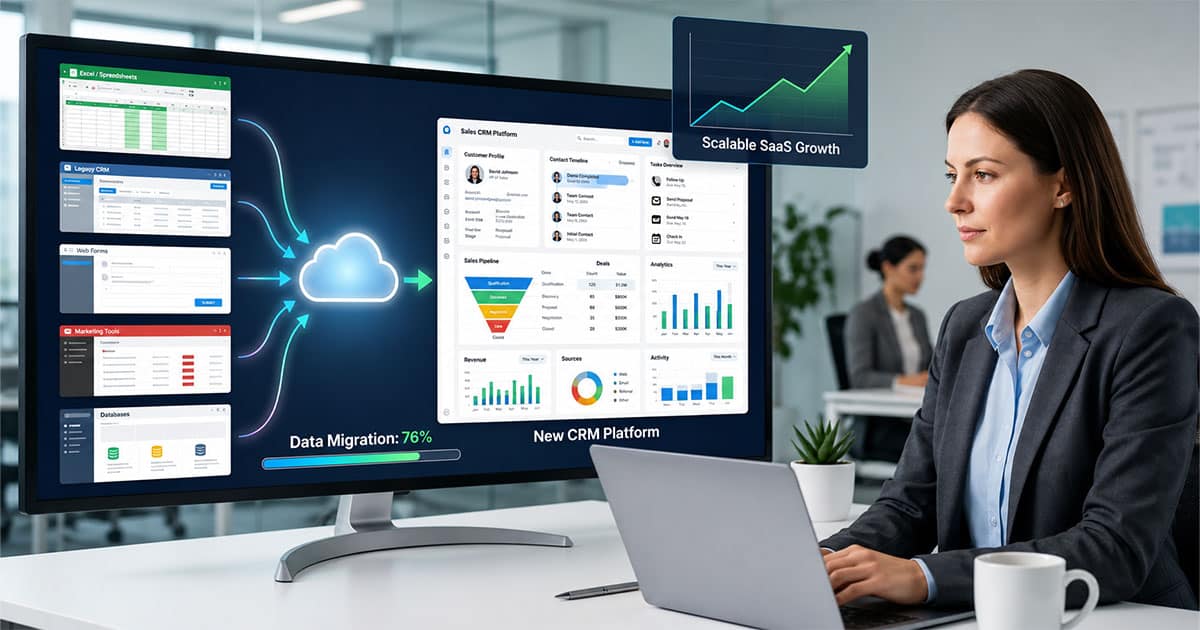
The CRM data migration process includes data extraction, data mapping, data transformation, and data validation. Teams review data fields, data values, and data structures before data import into the new CRM system. Strong data migration tools and a reliable migration tool help maintain data integrity and data security. Data migration is a strategic, complex, and high-stakes technical procedure designed to ensure business continuity, data integrity, and improved operational efficiency.
A successful migration improves data quality, supports better sales performance, and ensures a smooth transition with minimal disruption to business processes.
Complete Process Of CRM Data Migration
CRM data migration refers to the transition of customer data from one CRM system to another. A structured CRM data migration process reduces risk and protects data integrity. Clear planning, testing, and collaboration connect directly to successful CRM implementation and ensure a smooth transition to the new CRM system without disrupting business processes.
Define Strategy And Migration Plan
A successful CRM migration starts with a detailed data migration plan. The plan should outline timelines, resources, risks, and migration objectives. Many data migration projects fail due to poor planning and unclear ownership.
Engage stakeholders early. Sales, marketing, and support teams rely on accurate CRM data. Clear communication improves collaboration and user adoption. Strong alignment reduces resistance and supports a successful CRM migration project.
Audit And Clean Source Data
Data quality shapes the outcome of the migration process. Poor source data leads to errors in the target system. Gartner estimates bad data costs companies millions every year.
Audit existing data inside the legacy CRM system. Remove duplicates and outdated records. Clean data fields and verify historical data before data extraction so your CRM choice truly fits your team’s workflow. Data cleansing protects data accuracy and strengthens the new CRM system from day one.
Map And Transform Data
Data mapping connects old data fields to new data structures. The mapping process ensures customer data fits the format of the new CRM system. Without clear mapping, data values may appear in the wrong place.
Data transformation adapts extracted data to match the target system. Complex data from SQL Server or other data sources often needs adjustment, especially when moving into modern cloud CRM software. Accurate data mapping and transformation protect data integrity and reduce migration errors.
Execute Trial Migration And Validation
A trial migration reduces risk before final migration. Testing helps teams detect corrupted data, missing data points, or formatting issues, especially when adopting CRM tools that help startups grow smarter. Many experts recommend at least one test cycle before full data import.
Run data validation checks after initial migration. Compare migrated data with source data. Backup data before execution. Testing and validation ensure a smooth migration and prevent costly data loss.
Complete Migration And Post Support
Final migration moves all approved data into the new CRM system. After data import, monitor performance and confirm data accessibility. Strong performance monitoring with a sales pipeline CRM supports sales performance and business continuity.
Post migration support remains critical. Regular audits prevent dirty data from returning. Provide user training and ongoing support to strengthen adoption. A well-executed CRM data migration unifies systems, improves workflows, and boosts long-term efficiency.
Benefits Of CRM Data Migration
CRM data migration does more than move data from one system to another. A well-planned CRM migration improves data quality, boosts efficiency, and supports stronger customer relationships. The right migration strategy turns your new CRM system into a growth engine, not just a database.
Higher Data Quality And Accuracy
A CRM data migration project gives teams a chance to fix messy records. Many companies struggle with duplicates, outdated contacts, and inconsistent data values. Gartner reports poor data quality costs organizations an average of $12.9 million per year. Clean source data protects sales performance and customer trust.
The CRM data migration process includes data validation, data mapping, and data transformation. That structure improves data accuracy and ensures data integrity inside the new CRM system. A clean, migrated database becomes a single source of truth. Sales and service teams rely on relevant data instead of guessing.
Stronger Productivity And Efficiency
Scattered data slows teams down. Manual data entry increases errors and wastes time. After CRM migration, all customer data sits inside one CRM solution. That shift improves data accessibility and reduces confusion across departments.
McKinsey found companies that use automation can boost productivity by up to 20–30 percent. Modern CRM software offers workflow automation, better data management, and smart integration capabilities, especially when you adopt a sales automation CRM. A smooth transition to a unified platform helps teams close deals faster and focus on high-value tasks.
Better Customer Service And Engagement
A new CRM system provides a unified view of customer data. Support teams see historical data, past conversations, and purchase records in one place. That visibility leads to faster responses and more personalized service.
Salesforce research shows 88 percent of customers say experience matters as much as products. A successful CRM migration strengthens CRM adoption in modern sales teams. Clean data fields and organized data structures allow teams to engage members and clients with relevant offers and timely follow-ups.
Lower Costs And Higher ROI
Legacy systems often require high maintenance costs and heavy IT support. An outdated CRM system also limits integration capabilities. Moving data to a modern CRM solution reduces overhead and improves scalability.
Nucleus Research reports CRM delivers an average return of $8.71 for every dollar spent. A well-executed CRM migration project accelerates returns by improving data quality and performance monitoring, especially for startups and small sales teams using CRM. Better tools and robust data migration tools reduce long-term operational expenses.
Advanced Features And Integration Capabilities
Modern CRM software offers advanced segmentation, marketing automation, and analytics tools. A new system connects with finance platforms, email tools, and even SQL Server databases. Strong CRM email integration capabilities support smarter business processes.
A structured data migration plan ensures extracted data and transformed data fit the target system. After final migration, teams benefit from enhanced reporting and deeper insights. A successful migration helps organizations use modern features to maintain customer relationships and get more from their CRM with a simpler sales workflow to drive sustainable growth.
Common Challenges In CRM Data Migration
CRM data migration looks simple on paper. In reality, many CRM migration projects face delays, budget overruns, and data issues. Industry reports show most data migration projects take 8–12 weeks or longer. A weak migration strategy increases risk and disrupts business processes.
Poor Data Quality
Data quality issues are one of the biggest risks in a CRM data migration project. Duplicate records, incomplete data fields, and missing historical data often exist in the existing CRM system. Poor data quality leads to migration failures and weak data accuracy in the new CRM system.
Solutions:
- Audit source data before data extraction
- Remove duplicate and outdated records
- Run data validation before final migration
- Use a clear CRM data migration checklist
Underestimated Time And Resources
Many teams underestimate the effort required for a CRM migration project. Most migrations take 8–12 weeks depending on data volume and complexity. Poor resource planning leads to delays and cost overruns.
Solutions:
- Create a detailed data migration plan
- Define migration objectives early
- Assign clear stakeholder roles
- Use robust data migration tools and automate key sales tasks
Technical Complexity And Data Integrity Risks
Complex data structures and multiple data sources create technical challenges. Incorrect data mapping or flawed data transformation can cause corrupted data or data loss. Even short system downtime affects sales performance and customer service.
Solutions:
- Review data fields and data values carefully
- Test the CRM data migration process in phases
- Back up data before initial migration
- Monitor data integrity in the target system
Large Volumes Of Complex Data
Large datasets and legacy data from SQL Server or other systems add pressure. Moving data in one step increases risk. Complex data often requires phased execution.
Solutions:
- Break the migration process into stages
- Run an initial migration with sample data
- Validate migrated data before full data import
- Track performance monitoring metrics
Weak Collaboration And User Resistance
A CRM migration affects sales, marketing, and support teams. Lack of collaboration slows decisions. User resistance also reduces adoption of the new CRM system. Research shows change resistance impacts over 40 percent of digital transformation projects.
Solutions:
- Communicate the migration strategy clearly and align it with CRM adoption best practices
- Offer structured user training
- Set up post migration support and ongoing support
- Apply validation rules to prevent dirty data re-entry
Best Practices for CRM Data Migration Tool Selection
The right migration tool shapes the outcome of your CRM data migration project. A poor choice increases risk, cost, and data loss. A smart selection improves data quality, ensures data integrity, and supports a smooth transition to a new CRM system.
Prioritize Data Quality And Validation Features
Data quality should lead your decision. Many CRM migration failures trace back to weak validation. Gartner estimates poor data quality costs organizations millions each year. A reliable migration tool must support data validation, duplicate detection, and automated checks.
The CRM data migration process includes data extraction, data mapping, and data transformation. Your tool should validate data fields and data values before data import into the target system. Strong validation rules protect historical data and prevent corrupted data inside the new CRM system.
Evaluate Integration Capabilities
Modern CRM software connects with marketing tools, finance platforms, and databases like SQL Server. Your migration tool must support multiple data sources and complex data structures. Limited integration capabilities slow down the migration process and create manual work.
Nucleus Research reports CRM delivers high ROI when systems connect well. A good CRM with email integration supports seamless data import and transformed data flow. Smooth integration improves business processes and strengthens customer relationship management across teams.
Assess Scalability And Data Volume Support
Large CRM data migration projects often involve millions of data points. Complex data and legacy data increase pressure on systems. A weak tool may struggle with performance monitoring and large data sets.
Your data migration plan should include load testing and phased execution. The right migration tool handles initial migration and final migration without system downtime. Strong scalability reduces risk and supports long-term growth after successful CRM migration.
Review Security And Backup Controls
Data security remains critical during CRM migration. IBM reports the average cost of a data breach exceeds $4 million. A migration tool must offer secure data transfer, encryption, and reliable data backup options.
Protecting valuable customer data requires strict access control. The CRM data migration checklist should include backup before moving data. Clear audit trails and validation steps ensure data integrity throughout the migration process.
Confirm Vendor Support And User Experience
A complex CRM migration project needs more than software. It requires guidance and post-migration support. Many data migration projects fail due to poor user training and limited documentation.
Strong vendor support shortens timelines and reduces user resistance. A user-friendly interface also improves data management during the mapping process. Clear dashboards, reporting tools, and ongoing support help teams achieve a successful migration and better sales performance in the new system.
Key Success Metrics After Data Migration To CRM
A CRM data migration project does not end at final migration. Results matter more than completion. Clear metrics show whether your CRM migration improved data quality, sales performance, and business processes. Strong performance monitoring ensures long-term value from your new CRM system.
Data Accuracy And Integrity Rate
Data accuracy is the first metric to review. Errors in data fields or data values reduce trust in the new CRM system. Gartner reports poor data quality costs companies an average of $12.9 million per year. High data integrity protects revenue and decision-making.
Audit migrated data against source data after data import. Validate historical data and complex data structures in the target system. A strong CRM data migration process should deliver near-zero data loss and consistent data validation results.
User Adoption And System Usage
User adoption reflects the success of your CRM migration project. Low usage signals resistance or poor user training. Research from Prosci shows projects with strong change management are six times more likely to meet objectives.
Track login frequency, feature usage, and data entry activity. Compare usage before and after initial migration. A successful CRM migration leads to confident teams, better lead management with CRM, and full use of CRM software features.
Sales Performance Improvement
Sales performance offers a direct business metric. A unified CRM solution with clean customer data supports better targeting and faster follow-ups. Nucleus Research reports CRM delivers an average return of $8.71 for every dollar spent.
Review lead conversion rates, deal velocity, and revenue growth after CRM data migration. Strong data accessibility and improved data quality, as seen in sales acceleration case studies using Gain.io, often translate into higher close rates and more predictable forecasting.
Operational Efficiency Gains
Efficiency improves when manual data entry decreases. Consolidated data sources reduce duplicate work. McKinsey estimates automation can boost productivity by up to 30 percent.
Measure time spent on reporting, data extraction, and administrative tasks before and after migration. A smooth transition to a new system with smart CRM tools for sales teams should reduce friction in business processes and support faster decision-making.
Data Quality And Error Reduction
Error reduction confirms long-term success. Track duplicate records, missing data points, and validation failures over time. Ongoing audits prevent the return of dirty data into the CRM system.
Set clear benchmarks in your CRM data migration checklist. Strong data governance, regular data backup, and clear validation rules protect valuable customer data. Consistent improvement in data quality ensures your CRM data migration project delivers sustainable results.
How Gain.io Simplifies CRM Data Migration And Revenue Operations
CRM data migration often feels complex for SaaS teams. Gain.io brings structure to the CRM data migration process and reduces risk. It centralizes CRM data, aligns data sources, and improves data accessibility across sales and marketing. A clear migration strategy protects valuable customer data and supports better customer relationship management.
During a CRM migration project, clean data and accurate data fields matter. Gain.io strengthens data management by improving data quality and visibility before and after data import. Its integration capabilities connect your new CRM system with the rest of your tech stack. That alignment reduces manual data entry and protects data integrity.
After final migration, teams gain stronger performance monitoring and clearer revenue insights. The result is a smooth transition, better sales performance, and scalable growth for SaaS and retail teams using CRM tools. You can enjoy Gain.io at a suitable price.
FAQs
Can CRM Data Migration Affect Ongoing Sales Operations During The Switch?
Yes, CRM data migration can affect daily sales operations if the migration process lacks planning. Poor scheduling may cause temporary data accessibility issues or system downtime. A phased data import and clear migration strategy help minimize disruption and protect sales performance.
Is It Possible To Migrate CRM Data Without Losing Historical Records?
Yes, historical data can move safely with the right data migration plan. Strong data mapping, data validation, and secure data backup reduce the risk of data loss. A structured CRM data migration process ensures accurate data transformation into the target system.
Do Small SaaS Companies Need Dedicated Data Migration Tools?
Yes, even small SaaS teams benefit from reliable data migration tools. Manual data entry increases errors and reduces data accuracy. A proven migration tool improves data integrity, supports data security, and simplifies complex data transfer from the existing CRM system.
Can Legacy Data From Multiple Data Sources Be Consolidated Into One CRM System?
Yes, legacy data from SQL Server, spreadsheets, and other data sources can merge into one CRM solution. The mapping process aligns data fields and data structures. Careful data transformation ensures relevant data fits the new CRM system without corruption.
What Factors Influence The Cost Of A CRM Data Migration Project?
Project cost varies based on data volume, complex data structures, integration capabilities, and resource allocation. The scope of the CRM migration project, tool selection, and post migration support also impact overall investment and long-term ROI, especially for real estate teams using CRM tools.