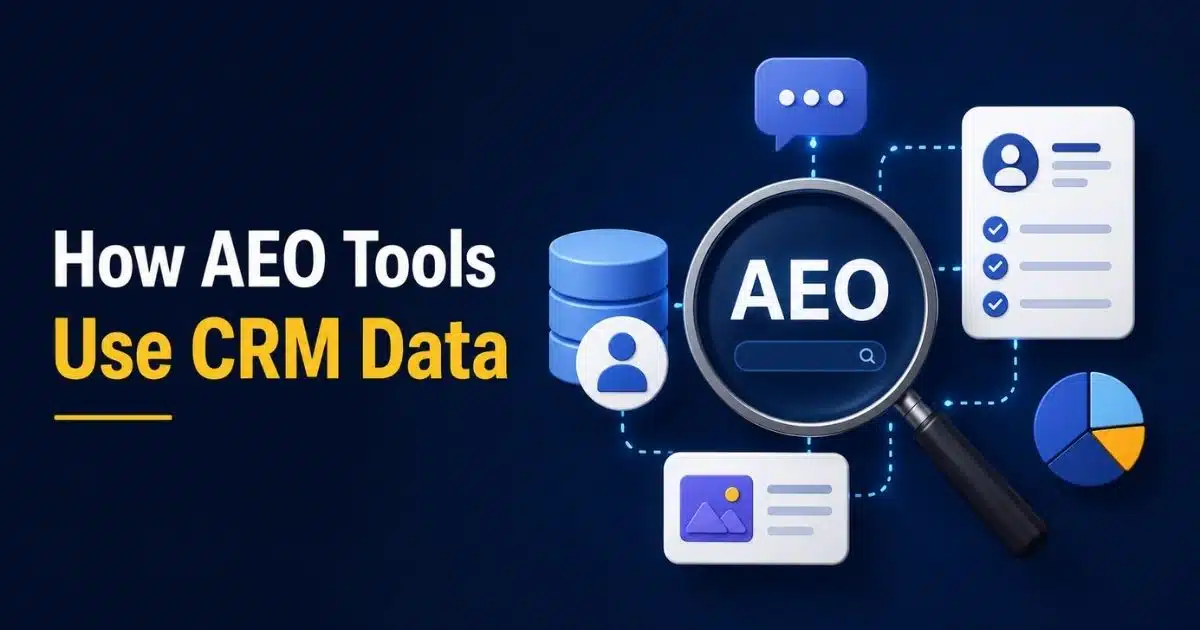
Customers used to click through ten blue links. Now they just ask and get an answer. Google AI Overviews, ChatGPT, and Perplexity are rewriting how people find businesses like yours, which is exactly why answer engine optimization matters right now. Answer engine optimization AEO is the practice of getting your brand cited when AI engines build their answers, instead of just ranking on a results page.
Here's what most guides miss. The questions customers already ask your sales and support team are the same questions they ask AI answer tools. Your CRM holds that data. This guide breaks down the best AEO tools available today and shows you how to turn CRM conversations into content that answer engines actually pull from.
What Are AEO Tools?
AEO tools are software built to track and improve how your brand shows up across AI platforms. They monitor AI responses from ChatGPT, Gemini, and Perplexity, then show you where your brand gets cited and where it gets missed.
Most platforms generate an AI visibility score, so you can measure progress instead of guessing. AI visibility tracking also flags competitor mentions, giving you a clear benchmark. The best answer engine optimization tools go further, turning that tracking data into specific content fixes.
Why AI Search Depends On Customer Intent
AI models don't rank pages; they answer questions. That shift means marketing teams need to understand what someone actually wants to know, not just which keywords they typed, before AI engines will cite a page at all.
Search Beyond Keywords
Traditional SEO trained us to think in keywords. Find the term, target the volume, rank the page. AI models don't work that way. Google AI and other AI platforms read intent first, keywords second. They're trying to understand what someone actually wants to know, not just match a string of words on a page.
This shift changes what marketing teams need to optimize for. A page stuffed with keywords but light on real answers won't get picked up in AI-generated answers. A page that clearly resolves a question will do so even without heavy keyword density.
Understand User Questions
Every AI model is built to answer a question, not rank a page. That means the format of the question matters as much as the topic. Someone asking Google AI Mode "what's the difference between a CRM and a CDP" wants a direct comparison, not a broad overview of customer data platforms.
Answer engine optimization tools help here by surfacing the exact phrasing people use when they prompt AI engines. That phrasing often looks nothing like a typical SEO keyword list. It reads like a real conversation because it is one.
Match Search Context
Context decides which source gets cited. AI search tracking shows that the same question can pull different answers depending on who's asking and what they've asked before. A prompt about "CRM security" from someone researching compliance gets a different answer than the same prompt from someone comparing vendors.
This is where brand visibility gets harder to control than in traditional SEO. You're not just competing for a spot on a results page. You're competing to be the source an AI model trusts enough to reference across ChatGPT, Gemini, and other AI platforms at once.
Deliver Direct Answers
AI engines reward content that gets to the point. If your page opens with three paragraphs of background before answering the actual question, most AI models will skip it in favor of a source that answers in the first sentence.
This doesn't mean stripping out useful detail. It means restructuring so the direct answer comes first, with supporting detail underneath. That structure is what makes a page easy for AI-generated answers to lift and cite.
Build Content Relevance
Relevance in AI search isn't just about topic match anymore. It's about whether your content actually resolves the question a real person asked, in language that mirrors how they asked it.
This is why customer intent, not keyword volume, now decides whether a brand shows up in Google AI, Perplexity, or any other AI platform building an answer.
How CRM Data Powers AEO Tools
Your CRM already holds the raw material for generative engine optimization, especially when you use a platform built around simpler, sales-focused workflows. Every support ticket, sales call, and chat log captures real customer language, the same language people use when they turn to AI assistants for answers.
Capture Customer Questions
Sales calls and support tickets are full of real questions, asked in real words. A prospect asking your rep "how is this different from a basic contact list" is asking the same question they'll type into an AI assistant later.
Most teams let this data sit unused. Pulling it out and organizing it by topic gives you a direct feed for content that AI assistants can actually cite, instead of guessing at what customers want to know.
Analyze Buyer Behavior
Buyer behavior inside your CRM shows more than what people ask. It shows when they ask it, what stage of the deal they're in, and what convinces them to move forward. That pattern matters for generative engine optimization because AI-generated search results favor content that matches real decision-making moments, not generic overviews.
Deal notes and call summaries reveal the exact objections buyers raise before they convert, which is exactly the kind of specific, resolved question an AI model looks for and the kind of detail strong sales deal tracking practices are built around.
Identify Search Intent
Search intent isn't only tracked through a search engine's dashboard. Your CRM shows intent before it ever reaches Google Search Console because it captures the question at the moment a real buyer asks it.
Cross-referencing CRM questions with what's ranking on search engines today tells you where a gap exists between what customers ask and what your content currently answers.
Track Customer Interests
Customer interests shift over time, and your CRM tracks that shift automatically through deal stages, support topics, and repeat questions. An SEO platform can tell you what's trending in search, but it can't tell you what your actual customers care about right now, whether you're selling SaaS or relying on CRM tools tailored for real estate agents to track fast-moving client needs.
Tracking AI visibility alongside these interest patterns connects AI visibility data to real account activity, not just anonymous search traffic.
Uncover Content Gaps
Content gaps show up clearly once you compare CRM questions against your published pages. If customers keep asking your team something your website never answers directly, that's a gap AI models will notice too.
This is where connecting AI visibility data becomes useful. Matching your CRM's recurring questions against your AI visibility metrics shows exactly which gaps are costing you citations and which topics to fix first, making sales visibility across deals and activities a core part of your optimization loop.
Customer Insights Every AEO Strategy Needs
Not every insight your CRM holds carries equal weight for AEO. Some customer data directly shapes what AI search platforms cite, while other data just adds context. Here are the five insights worth pulling first.
Common Customer Questions
The questions customers ask most often are the same ones AI models and other AI-powered search engines get asked daily. If five prospects this month asked your team, "Does this integrate with our email?" that question belongs on your site, answered directly.
Traditional SEO tools won't surface this. They show you what people search for on Google, not what your specific buyers actually ask before they decide. Your CRM already has the answer sitting in call notes and chat transcripts.
Purchase Decision Factors
What makes someone choose your product over a competitor's rarely shows up in keyword research. It shows up in sales conversations, objection logs, and closed-lost notes.
AEO tracking software can tell you if you're cited when someone asks AI search platforms to compare CRM options. But it can't tell you which specific factor tips that decision. Your CRM can, because your reps hear it every week.
Pain Points And Challenges
Support tickets are a direct line to real pain points, described in the customer's own words, not filtered through SEO phrasing. These raw complaints and questions are exactly the kind of specific, resolved problems AI models look for when building an answer.
A recurring support issue that never gets addressed on your website is a content gap and a missed citation opportunity at the same time, as well as a sign your contact management and relationship tracking need to surface those themes more clearly.
Popular Product Interests
Deal data shows which features get asked about again and again, which tells you where buyer interest is actually concentrated. Tools like the Semrush AI Visibility Toolkit show you how you're performing in AI-generated results, but your CRM shows you why certain features drive that interest in the first place, especially when paired with an AI sales assistant for pipeline efficiency that surfaces those patterns in real time.
Matching the two gives you a clearer content priority list than AI visibility monitoring alone.
Customer Feedback Trends
Feedback trends across reviews, renewal calls, and support threads shift over time, and those shifts often predict what people will start asking AI search platforms next.
Watching these trends inside your CRM gives you a head start on content that answer engines will need before the demand fully shows up in traditional SEO tools.
How Sales Conversations Improve AI-Ready Content
Sales calls capture the exact language buyers use before they ever type a question into an AI assistant. That raw conversation data is one of the fastest ways to build content that strengthens your ai search presence.
Discover Real Questions
Every sales call includes questions your prospects couldn't find answered on your website. That's why they asked a human instead of Google.
Pulling these questions from call recordings and CRM notes gives you a direct list of what to publish next. Tools like SE Ranking and Peec AI can confirm whether your brand appears when someone asks an AI engine the same thing, but the question itself comes from your sales team first and should feed directly into your broader AI sales automation strategy.
Address Customer Objections
Objections are pain points wearing a different name. When a prospect pushes back on price, integration limits, or setup time, that's a signal AI-generated responses will need addressing too.
AI crawler analytics can show you which competitor pages get cited when a buyer asks about pricing comparisons. Your sales team's objection log tells you exactly what argument needs to be on your page to win that citation.
Understand Buying Language
Buyers don't talk like SEO keyword lists. They talk in specific, sometimes messy phrasing, and that's exactly the phrasing AI models are trained to match against real questions.
Recording how your prospects actually phrase their needs, not how a keyword tool suggests they might, keeps your content aligned with real buying language instead of guesswork and gives AI lead scoring models the behavioral signals they need to prioritize the right opportunities.
Create Helpful Content
Content built from real sales conversations tends to resolve the actual question instead of circling it. That directness is what earns brand mentions in AI-generated responses.
Start with the objections and questions your reps hear weekly, then write the direct answer first, with supporting detail underneath, and use automated sales task workflows to make sure follow-ups and content updates actually happen.
Refine Content Topics
Sales conversations shift over time, and so should your content priorities. A topic that dominated calls last quarter might fade, while a new integration question starts showing up weekly.
Reviewing call data regularly keeps your topic list current, so your content strategy tracks what buyers care about now, not what they cared about when the page was first written, and structured task management for sales teams helps you turn those insights into concrete content updates.
Where Your CRM Fits Into An AEO Strategy
Your CRM isn't an AI content generator, and it isn't one of the answer engine optimization platforms tracking your citations. It's the source data both of those tools depend on to work well.
Collect Customer Insights
Customers stopped clicking through pages of blue links a while back. Now they ask an AI agent and expect a direct answer, which means the questions they ask your sales and support teams matter more than ever and should feed straight into your automated sales task workflows so they actually get turned into content.
Your CRM collects these questions automatically through tickets, calls, and chat logs. That's raw material no answer engine optimization platform can generate on its own, because it doesn't have access to your actual customer conversations.
Organize Audience Segments
Not every customer question deserves the same content treatment. Segmenting CRM data by deal stage, industry, or company size shows you which questions come from serious buyers versus early browsers.
This matters because major AI platforms serve different answers depending on context. Organizing your audience this way helps you prioritize which segment's questions to turn into content first and align them with your sales pipeline management so content supports every stage.
Support Content Planning
Content creation without a real question behind it tends to miss the mark. Your CRM gives content planning a starting point grounded in what customers actually ask, not what a keyword tool guesses they might ask.
Tools like Surfer AI Tracker help you see how existing content performs across AI systems, but the CRM is where the next content topic should come from, especially when your notes and interactions live in centralized activity tracking software.
Measure Content Performance
Visibility tracking tells you whether a piece of content is getting cited in AI overviews or ignored. Prompt tracking goes further, showing exactly which phrasing triggers a citation and which doesn't.
Pairing this data with your CRM closes the loop. If a topic keeps showing up in sales calls but never appears in your visibility tracking reports, that's a page that needs rework, not a new topic.
Improve AI Search Visibility
AI engines cite sources that resolve a question clearly and match how people actually ask it. Your CRM keeps feeding you that real language, quarter after quarter, so your content doesn't drift toward generic phrasing over time.
This is the real advantage of connecting CRM data to your AEO strategy. It's not a one-time content refresh. It's a constant, first-hand source of what to write next.
The Best AEO Tools For SMBs And Agencies
Picking the right AEO tool depends on budget, team size, and whether you need a standalone platform or a feature bolted onto software you already use. Here's how five popular options compare for smaller teams.
HubSpot
HubSpot builds AEO tracking directly into Marketing Hub, so if you're already using it for keyword research and content optimization, AI tracking comes as an extension rather than a new tool to learn.
Best for: Teams already running on HubSpot who want AI visibility folded into their existing dashboard instead of managing a separate login.
Semrush AI Visibility
Semrush AI Visibility extends a platform most SEO teams already know, pairing traditional competitor analysis with tracking for AI-powered search results. That overlap makes it an easier entry point than a brand-new AI-only tool.
Best for: Agencies managing multiple client accounts that need AI visibility and standard SEO data in one place.
Ahrefs
Ahrefs brings its crawl data into AEO tracking, showing how pages already ranking in AI search results are performing. If your team relies on Ahrefs for backlinks and keyword research, this adds AI visibility without switching tools.
Best for: Teams who want a lightweight way to monitor AI search results without replacing their core SEO tool.
Scrunch
Scrunch is built specifically for AEO, covering monitoring, auditing, and content recommendations across multiple AI engines in one platform. It's more complete than most bolt-on options, but it's a dedicated tool, not an extension of something you already use.
Best for: SMBs and agencies ready to commit to a standalone platform instead of piecing together AI tracking from existing tools, particularly those comparing Gain.io vs Zoho CRM and deciding how AEO data should plug into their core system.
Otterly
Otterly focuses on prompt-level tracking, showing exactly which prompts trigger a citation and closing visibility gaps others miss. It's lighter than Scrunch, with less setup, which suits teams testing AEO before committing to a bigger platform.
Best for: Smaller teams who want to see how AI models describe their brand before investing in a full AEO suite and who rely on a CRM with deep email integration to keep brand messaging and outreach consistent.
How To Connect Lead Journey Data With AI Search Optimization
How To Connect Lead Journey Data With AI Search Optimization
Lead journey data shows what a buyer asks at every stage, from first contact to closed deal. Mapping that journey against AI search optimization tools shows exactly where your content needs to meet buyers, not just where it currently sits, especially when your CRM combines streamlined sales workflows with dynamic contact management that tracks every interaction.
Map Questions Across The Buyer Journey
Early-stage leads ask broad questions. Late-stage leads ask specific, comparison-heavy ones. Your CRM already separates these by deal stage, which means you can map real questions to each part of the funnel instead of guessing where a topic belongs.
This mapping matters because a good AEO tracking tool measures whether you're cited, but it can't tell you which funnel stage a missed citation is costing you. Only your lead data can.
Identify High-Intent Content Opportunities
High-intent questions cluster near the end of the buyer journey, right before a deal closes or stalls. These are the questions worth prioritizing first, since they're closest to a purchase decision.
Cross-referencing this data with the best AEO tracking software option shows which high-intent questions already have visibility gaps. Ahrefs Brand Radar and similar multi-engine tracking tools reveal where competitors are winning these late-stage prompts instead of you.
Personalize Answers For Every Funnel Stage
Not every visitor needs the same answer to the same underlying question. A first-time visitor asking about CRM security wants a definition. A late-stage lead wants specifics on compliance certifications.
Structuring content by funnel stage means AI bots interact with the right depth of answer for the right intent, instead of serving one generic page to every stage at once.
Use Lead Behavior To Refine Content
Lead behavior shifts over time, and stale content stops matching how people currently ask. Reviewing lead data on a regular schedule keeps your content aligned with real, current buying language rather than last year's assumptions.
An AEO tracking tool can confirm whether a refreshed page starts earning citations again. The lead behavior data is what tells you which page needed the refresh in the first place.
Measure AI Search Performance With CRM Data
Pairing CRM lead data with an AI readiness score gives you a clearer performance picture than tracking data alone. Brand Radar and other multi-engine tracking tools show visibility across engines, but layering in CRM data shows whether that visibility is actually reaching the leads who matter, much like teams that used Gain.io in a sales acceleration case study to tighten feedback loops between pipeline data and performance.
This combination turns optimization tools from a monitoring dashboard into a working part of your sales pipeline, not a separate report nobody checks.
How Gain.io Helps You Build A Smarter AEO Strategy
Gain.io keeps every customer conversation in one place. Notes, emails, and deal activity stay tied to each contact, searchable and organized instead of scattered across inboxes and call recordings. That all-in-one Gain.io feature set combines email, calendar, and contact integration so the real questions your customers ask live inside those notes and email threads instead of separate tools.
With email sync tracking opens and replies, and tasks linked directly to deals and contacts, your team captures buyer language as it happens, not after the fact. Gain.io gives you the clean, organized customer data your AEO strategy runs on, so you always know what to write next.
Frequently Asked Questions
How Do AEO Tools Use Customer Data?
AEO tools track how often your brand gets cited in AI-generated answers, but most don't pull from your CRM directly. The connection happens on your end: you use CRM data like support tickets and sales calls to write content, then AEO tools measure whether that content gets cited.
Can A CRM Improve AI Search Visibility?
Yes. A CRM doesn't track AI visibility itself, but it holds the real customer questions that shape content AI engines are likely to cite. Structured, searchable CRM data makes it easier to spot recurring questions and turn them into answer-first pages.
What CRM Data Is Most Valuable For AEO?
Support tickets, sales call notes, and email threads carry the most value. They capture real customer language and specific objections, which match how people phrase questions to AI assistants far better than keyword research alone.
How Often Should You Update CRM Data For AEO?
Review CRM data monthly at a minimum. Customer questions shift as products, pricing, and competitors change, so content built on stale data drifts out of sync with what buyers actually ask AI engines today.
Do Small Businesses Need AEO Tools And A CRM?
Not always both at once. A CRM alone can surface enough customer questions to start writing answer-first content. Adding a dedicated AEO tool makes sense once you need to track citations and visibility across multiple AI engines.