Sales teams collect huge amounts of data every day. But raw numbers alone do not help businesses grow. Many companies still struggle to understand why deals close, why leads drop, or where revenue leaks happen. That is where sales analytics becomes valuable.
Sales analytics helps businesses turn sales data into clear insights. It shows what works, what needs improvement, and where new opportunities exist. Teams can track performance, improve forecasting, and make faster decisions with confidence.
Modern businesses no longer rely only on guesswork or instincts. Strong sales strategies now depend on accurate data and measurable results. From small businesses to large enterprises, sales analytics helps teams sell smarter, improve customer relationships, and increase long-term revenue growth.
What Is Sales Analytics
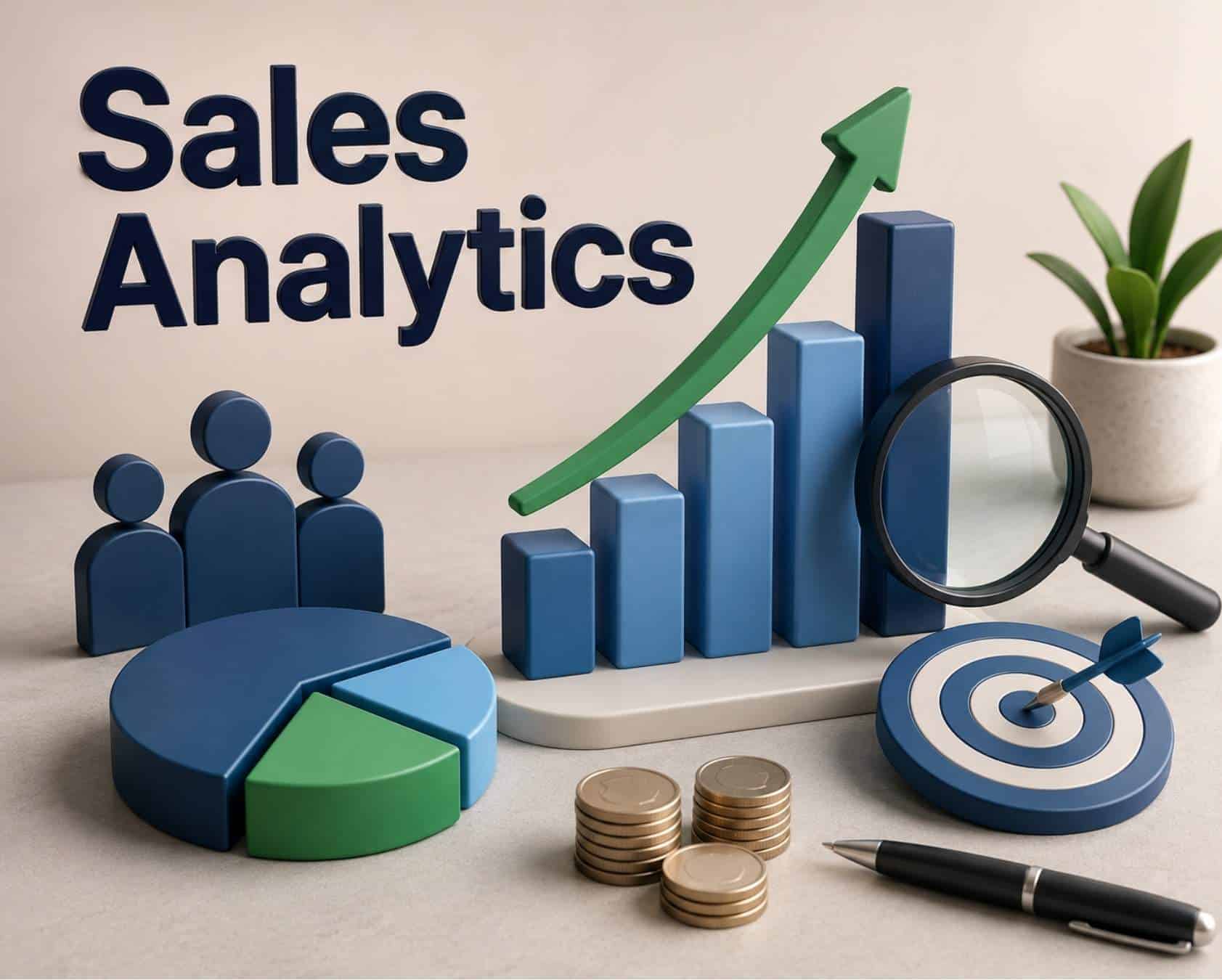
Sales analytics is the process of analyzing sales data to understand performance, customer behavior, and revenue patterns. It helps businesses track important sales metrics like total sales revenue, average deal size, sales per rep, and sales cycle length. Sales analytics involves collecting sales data, customer data, and historical sales data from different sources. Teams then use sales analytics tools and sales analytics software to turn raw data points into actionable insights.
Modern sales analytics platforms help sales managers, sales analysts, and sales leaders identify trends and improve the sales process. Businesses can forecast future sales, track sales growth, and improve resource allocation with better data analytics. Predictive analytics and prescriptive analytics also help companies predict future outcomes and market trends.
Strong sales analysis supports sales forecasting, lead generation, sales pipeline management, and revenue growth. It also helps sales representatives hit every sales target with more confidence.
Key Sales Analytics Metrics Every Team Should Track
Strong sales analytics depends on the right numbers. Many teams collect huge amounts of sales data but fail to track what truly matters. Clear metrics help sales leaders measure team performance, improve sales forecasting, and find better sales opportunities before revenue drops.
Sales Conversion Rate
Sales conversion rate shows how many leads become paying customers. It is one of the most important sales metrics in every sales analytics process. A low conversion rate often points to problems in the sales funnel, lead generation, or sales strategy.
Recent reports show the average conversion rate across industries is around 2.9%. Some B2B companies perform below that because of longer sales cycles.
Sales analytics tools help sales managers compare conversion rates across channels, campaigns, and sales reps. Better sales analysis also helps teams identify trends and improve future sales outcomes with accurate sales forecasts.
Average Deal Size
Average deal size measures how much revenue comes from each closed deal. This metric helps sales leaders understand customer value and forecast future sales more accurately. It also supports smarter resource allocation across the sales pipeline.
A higher average purchase value usually means stronger sales growth and better sales performance. Businesses often use sales dashboards and analytics tools to compare deal size across products, regions, and sales representatives.
Historical sales data also helps sales analysts spot patterns in customer behavior. Teams can use predictive analytics to predict future outcomes and focus on deals with higher revenue potential. Strong sales deal tracking can directly drive revenue growth over time.
Sales Cycle Length
Sales cycle length measures how long it takes to close a deal. A shorter sales cycle usually means better sales operations and stronger team efficiency. Long cycles often slow revenue growth and affect future sales forecasting.
Research shows B2B sales cycles have increased by 22% since 2022 because buying decisions now involve more stakeholders.
Sales analytics software helps teams track each stage of the sales process. Sales managers can use sales performance data and historical data to find delays inside the longer sales cycles often seen in B2B deals. Better sales analytics platforms also help sales reps respond faster and improve customer communication.
Sales Per Rep
Sales per rep tracks how much revenue each salesperson generates within a specific period. This metric helps sales leaders measure team performance and identify top performers. It also reveals gaps in coaching, sales strategy, and workload balance.
Many businesses now use sales analytics software and sales dashboards to compare sales metrics across departments. Companies with strong CRM and analytics systems often see sales productivity increase by 34%.
Sales analysis also helps managers understand how marketing efforts, lead quality, and customer data affect results. Clear performance tracking supports better hiring decisions and stronger sales growth over time.
Forecast Accuracy
Forecast accuracy measures how close predicted revenue matches actual results. Accurate sales forecasts help businesses plan budgets, manage supply chain decisions, and prepare for future sales with confidence.
Studies show CRM and sales analytics tools can improve sales forecasting accuracy by up to 42%.
Sales analytics can help businesses combine historical sales data, market trends, and important sales metrics into one system. Predictive sales analytics and data mining techniques also help teams predict sales trends before market conditions change.
Reliable forecasts improve sales operations, support smarter decisions, and reduce risks tied to poor data quality.
How Sales Analytics Improves Forecasting And Revenue Growth
Accurate forecasting is no longer based on guesswork alone. Modern businesses rely on sales analytics to understand customer behavior, track sales trends, and improve decision making. Better data helps sales teams reduce risks, improve planning, and create more stable revenue growth.
Better Sales Forecast Accuracy
Sales analytics software helps businesses create more accurate sales forecasts. Teams can study historical sales data, customer data, and sales performance data to predict future sales with fewer errors. Strong forecasting improves confidence across the entire sales process.
Recent studies show companies that use advanced analytics tools improve forecast accuracy by nearly 40%. Better forecasting also helps sales managers prepare for future sales outcomes and changing market trends.
Sales analytics platforms combine data collection, sales reports, and predictive analytics into one system. This helps sales leaders make faster decisions and reduce uncertainty in the sales pipeline.
Faster Revenue Growth
Revenue growth becomes easier when teams understand which sales strategies produce results. Sales analytics helps businesses track important sales metrics like average deal size, sales per rep, and sales cycle length. Clear insights help teams focus on profitable opportunities.
Research from McKinsey shows companies that use data analytics effectively can increase operating profits by up to 25%. Strong sales analysis also improves lead generation and customer targeting.
Sales analytics can help sales reps identify high-value customers and shorten the sales cycle. Strong CRM-based lead management supports these insights so better decisions often lead to stronger sales growth and more paying customers over time.
Smarter Resource Allocation
Sales leaders need clear data before making budget or staffing decisions. Sales pipeline CRM tools help businesses understand where time, money, and effort create the highest return. Teams can use sales dashboards to compare sales performance across departments and regions.
Historical data also helps companies identify trends inside the sales funnel. Managers can quickly spot weak areas in the sales process and adjust resources before problems grow larger.
Many companies now use predictive analytics and prescriptive analytics to predict future outcomes. Better resource allocation supports stronger sales operations and more stable future sales forecasting.
Stronger Customer Insights
Customer behavior changes quickly across modern markets. Sales analytics software helps businesses track customer data, average purchase value, and buying patterns in real time. Better visibility helps teams improve communication and sales strategy.
Recent reports show 73% of customers expect personalized experiences during the buying process. Businesses that fail to adapt often lose sales opportunities to competitors.
Sales analytics involves collecting data points from emails, CRM systems, and sales reports. Centralized contact management and customer data help sales analysts use data mining techniques to uncover actionable insights. Better customer insights often improve customer retention and long-term revenue growth.
Early Trend Detection
Market conditions rarely stay stable for long. Sales analytics platforms help businesses predict sales trends before major changes affect revenue. Early detection gives teams more time to adjust pricing, marketing efforts, and sales targets.
Data quality plays a major role here. Accurate sales data helps businesses forecast future sales and react faster to demand shifts. Poor data often creates weak forecasts and missed opportunities.
Sales analytics important for businesses that want long-term growth. Strong sales analysis helps teams identify trends, improve future outcomes, and protect revenue during uncertain market conditions.
Types Of Sales Analytics And Their Real Business Use Cases
Different types of sales analytics help businesses answer different questions. Some focus on past sales performance, while others predict future sales outcomes or improve decision-making. The right approach helps sales teams understand trends, reduce risks, and improve long-term revenue growth.
Descriptive Analytics
Descriptive analytics focuses on past sales and current sales performance data. It helps businesses understand what already happened inside the sales process. Teams often use sales dashboards, sales reports, and analytics tools to track key performance indicators like total sales revenue, average deal size, and sales per rep.
Most companies start their sales analytics process with descriptive analytics because it gives a clear performance overview. Historical sales data also helps sales managers identify trends and compare sales growth across periods.
Sales analytics platforms collect sales data points from CRM systems, customer data, and marketing efforts. This creates actionable insights that improve future planning and sales strategy.
Predictive Analytics
Predictive analytics helps businesses forecast future sales and customer behavior. It uses historical data, market trends, and data mining techniques to predict future outcomes with better accuracy. Many companies now depend on predictive analytics for sales forecasting and resource allocation.
Recent studies show businesses that use predictive analytics improve forecast accuracy by up to 35%. Better forecasting also reduces risks tied to poor sales operations and unstable demand.
Sales analytics software helps sales analysts study sales trends, average purchase value, and sales cycle patterns. Strong predictive models help sales leaders prepare for future sales opportunities before competitors react.
Prescriptive Analytics
Prescriptive analytics goes beyond predictions. It helps businesses decide what actions to take next. Sales analytics tools use customer data, sales performance, and data analytics to recommend better decisions for pricing, lead generation, and sales strategy.
This type of sales analysis is becoming more important as markets become harder to predict. Gartner reports companies that use advanced analytics often improve operational efficiency by over 20%.
Sales managers use prescriptive analytics to improve sales funnel performance and shorten the sales cycle, especially in long, complex B2B sales processes. Better recommendations help sales reps focus on high-value deals and improve revenue growth over time.
Diagnostic Analytics
Diagnostic analytics helps businesses understand why specific results happened. It looks deeper into sales performance data to uncover the reasons behind revenue drops, missed sales targets, or lower conversion rates.
Sales analytics involves collecting data from customer interactions, sales reports, and sales pipeline activity. Teams then compare data points to identify trends and weak areas inside the sales process.
Diagnostic analytics can help businesses improve team performance and customer retention. Sales leaders often use this method to study paying customers, average purchase behavior, and sales opportunities that failed during the buying journey.
Real Time Analytics
Real-time analytics gives businesses instant visibility into sales operations and customer activity. Companies can monitor sales trends, sales performance, and future outcomes without waiting for monthly reports. Fast insights help teams respond quickly to market changes.
Recent research shows real-time sales visibility adoption increased by over 60% among enterprise sales teams during the last three years. Faster access to sales data improves decision-making and sales forecasting accuracy.
Sales analytics platforms now connect customer data, supply chain updates, and sales dashboards in real time. This helps businesses predict sales trends faster and react before problems affect revenue growth.
How To Build A Data-Driven Sales Analytics Strategy
A strong sales analytics strategy helps businesses turn raw sales data into better decisions. Without a clear plan, teams often collect data but fail to use it effectively. Smart strategies improve forecasting, team performance, and long term revenue growth.
Set Clear Sales Goals
Every sales analytics process should start with clear business goals. Sales leaders need to define what success looks like before tracking sales metrics. Goals may include higher revenue growth, shorter sales cycles, or better lead generation performance.
Clear sales targets help sales teams focus on the right data points. Businesses can then measure sales performance, average deal size, and future sales outcomes more accurately.
Research shows companies with documented sales strategies are over 3 times more likely to achieve targets. Strong planning also improves resource allocation and decision making across sales operations.
Choose The Right Metrics
Not every metric matters equally. Businesses should focus on important sales metrics that directly affect sales growth and customer retention. Common examples include sales per rep, total sales revenue, sales cycle length, and sell-through rate.
Sales analytics tools help teams track key performance indicators through sales dashboards and automated reports. Better tracking helps sales managers identify trends and improve team performance faster.
Historical sales data also plays a major role here. Accurate sales forecasts depend on strong data quality and reliable customer data from the sales funnel and sales pipeline.
Use Modern Analytics Tools
Modern sales analytics software makes data analysis faster and more accurate. Manual spreadsheets often create errors and slow the sales process. Businesses now rely on sales analytics platforms for real time insights and predictive analytics.
Recent studies show companies that use advanced data analytics tools improve decision speed by nearly 30%. Better visibility also improves future sales forecasting and sales strategy planning.
Sales analytics involves collecting data from CRM systems, sales reports, customer interactions, and marketing efforts. Strong analytics tools with simpler, streamlined sales workflows organize that information into actionable insights that help sales reps close deals faster.
Improve Data Quality
Poor data creates weak forecasts and unreliable sales analysis. Many businesses struggle because customer data, sales performance data, and historical data remain incomplete or outdated.
Sales analysts should review data collection methods regularly. Clean data helps businesses identify trends, forecast future sales, and predict future outcomes with greater confidence.
Sales analytics can help companies uncover sales opportunities only when data points remain accurate. Reliable information, supported by sales automation software that reduces manual data entry, also improves prescriptive analytics, sales forecasting, and supply chain planning across departments.
Review And Adjust Regularly
Sales trends change quickly. A strategy that worked last year may fail under new market trends or customer behavior shifts. Regular reviews help sales leaders react before performance drops.
Sales managers should compare past sales performance with current sales metrics through sales dashboards and sales reports. Frequent reviews improve forecasting accuracy and help businesses stay competitive.
Strong sales analytics platforms also support predictive analytics and data mining techniques for long-term planning. Businesses that review performance consistently often improve revenue growth and future sales outcomes faster than competitors.
Common Sales Analytics Challenges And How To Solve Them
Sales analytics can improve forecasting, revenue growth, and decision-making. But many businesses still struggle to get reliable results. Problems with data quality, tools, and team adoption often limit the real value of sales analytics platforms and analytics tools.
Poor Data Quality
Poor data quality is one of the biggest problems in sales analytics. Incomplete customer data, duplicate records, and outdated sales data points often create weak sales analysis and inaccurate sales forecasts.
Research shows poor data quality costs businesses an average of $12.9 million every year. Wrong information also affects sales forecasting, predictive analytics, and future sales planning.
Sales leaders should create clear data collection rules and regular audits. Sales analytics software with automated validation can help teams clean historical sales data faster. Better data quality improves sales performance data, customer insights, and future outcomes.
Disconnected Data Sources
Many businesses store sales data across different systems. CRM platforms, marketing tools, spreadsheets, and sales reports often fail to connect properly. This creates gaps inside the sales analytics process.
Disconnected systems make it harder for sales managers to track sales metrics and identify trends. Teams also struggle to compare past sales performance across channels and regions, which is why a structured B2B sales CRM becomes essential.
Modern sales analytics platforms solve this problem through integrations and centralized sales dashboards. Unified systems help sales analysts combine customer data, market trends, and sales pipeline activity into one clear view for smarter decisions.
Weak Team Adoption
Some sales reps avoid analytics tools because they feel complex or time-consuming. Low adoption rates reduce the benefits of sales analytics and limit visibility across sales operations.
Recent studies show nearly 40% of employees resist new workplace technology without proper training. Weak adoption also affects sales forecasting accuracy and sales strategy execution.
Sales leaders should focus on simple dashboards and practical training sessions. User-friendly sales analytics software and automated sales task workflows help teams track important sales metrics without technical barriers. Clear reporting often improves team performance and sales growth faster.
Inaccurate Forecasting
Forecasting errors can damage budgets, staffing plans, and revenue expectations. Weak forecasting often comes from unreliable historical data, poor sales analysis, or changing market trends.
Sales analytics involves collecting large amounts of sales performance data and customer behavior insights. Without proper analysis or an AI sales assistant for pipeline efficiency, businesses struggle to forecast future sales accurately.
Predictive analytics and data mining techniques help businesses predict future outcomes with greater confidence. Sales analytics can help teams improve accurate sales forecasts by combining historical sales data with real-time sales trends and customer activity.
Lack Of Actionable Insights
Many businesses collect huge amounts of sales data but fail to turn it into clear actions. Reports become difficult to understand, and teams miss valuable sales opportunities inside the sales funnel.
Complex sales dashboards often overwhelm sales managers and sales representatives. Too many data points can slow decisions instead of improving them.
Businesses should focus on key performance indicators that directly affect revenue growth and sales targets. Strong sales analytics tools simplify reports and highlight actionable insights automatically. Better clarity helps teams improve sales cycle performance, lead generation, and future sales outcomes.
Future Trends In Sales Analytics And AI-Powered Insights
Sales analytics is changing faster than ever. Businesses now expect faster insights, smarter forecasting, and real-time decision making. AI-powered analytics tools are helping sales teams automate tasks, predict customer behavior, and improve revenue growth with greater accuracy.
AI-Powered Forecasting
AI-powered forecasting is becoming a major part of modern sales analytics. Businesses now use predictive analytics and machine learning to forecast future sales more accurately. AI studies historical sales data, customer data, and market trends much faster than manual systems. Recent reports show 81% of sales teams already use or test AI tools inside their sales process.
Sales analytics platforms now combine sales performance data, sales pipeline activity, and customer behavior into one forecasting model. In practice, companies using Gain.io have closed deals faster and improved forecast accuracy, showing how better predictions help sales leaders improve resource allocation and prepare for future sales outcomes with fewer risks.
Real Time Sales Insights
Real-time analytics is becoming essential for modern sales operations. Businesses no longer want to wait for weekly or monthly sales reports before making decisions. Faster access to sales data helps teams respond quickly to market changes and customer behavior.
Modern sales pipeline CRM dashboards now update important sales metrics instantly. Sales managers can track sales growth, sales targets, and sales opportunities as they happen.
AI-powered analytics tools also improve sales forecasting and lead generation in real time. Businesses that react faster often improve sales performance and customer retention before competitors adjust their sales strategy.
Natural Language Analytics
Natural language analytics is changing how teams use sales analytics software. Sales reps and managers can now ask questions in plain language instead of creating complex reports manually.
Industry research predicts nearly 40% of analytics searches will happen through natural language systems by 2026, often embedded inside AI sales assistant platforms.
This shift makes data analytics easier for non-technical teams. Sales analysts can access actionable insights faster without deep technical skills. Better accessibility also improves team adoption and helps businesses identify trends across sales performance data, customer interactions, and marketing efforts more efficiently.
AI Assisted Sales Coaching
AI is also improving sales coaching and team performance. Modern sales analytics tools now study customer calls, emails, and sales cycle behavior automatically. Businesses can uncover weak areas in the sales process without manual reviews.
AI-powered coaching systems help sales representatives improve communication, negotiation, and lead conversion. Some platforms even provide real-time suggestions during customer conversations.
Sales leaders use sales analytics can help identify training gaps through sales metrics like average deal size, sales per rep, and close rates. Better coaching often leads to stronger sales growth and higher revenue growth.
Smarter Automation Systems
Automation is becoming more advanced inside sales analytics platforms. Businesses now automate repetitive tasks like data collection, sales reports, customer follow-ups, and pipeline updates. AI sales automation gives sales teams more time to focus on high-value sales opportunities. Recent trends show AI-driven automation is becoming a core part of sales strategy and sales operations.
Sales analytics involves collecting large amounts of data points from multiple systems. AI automation and dedicated sales task automation tools improve data quality, reduce manual errors, and support accurate sales forecasts. Strong automation also helps businesses predict future outcomes and scale future sales faster.
How Gain.io Helps Businesses Improve Sales Analytics And Revenue Growth
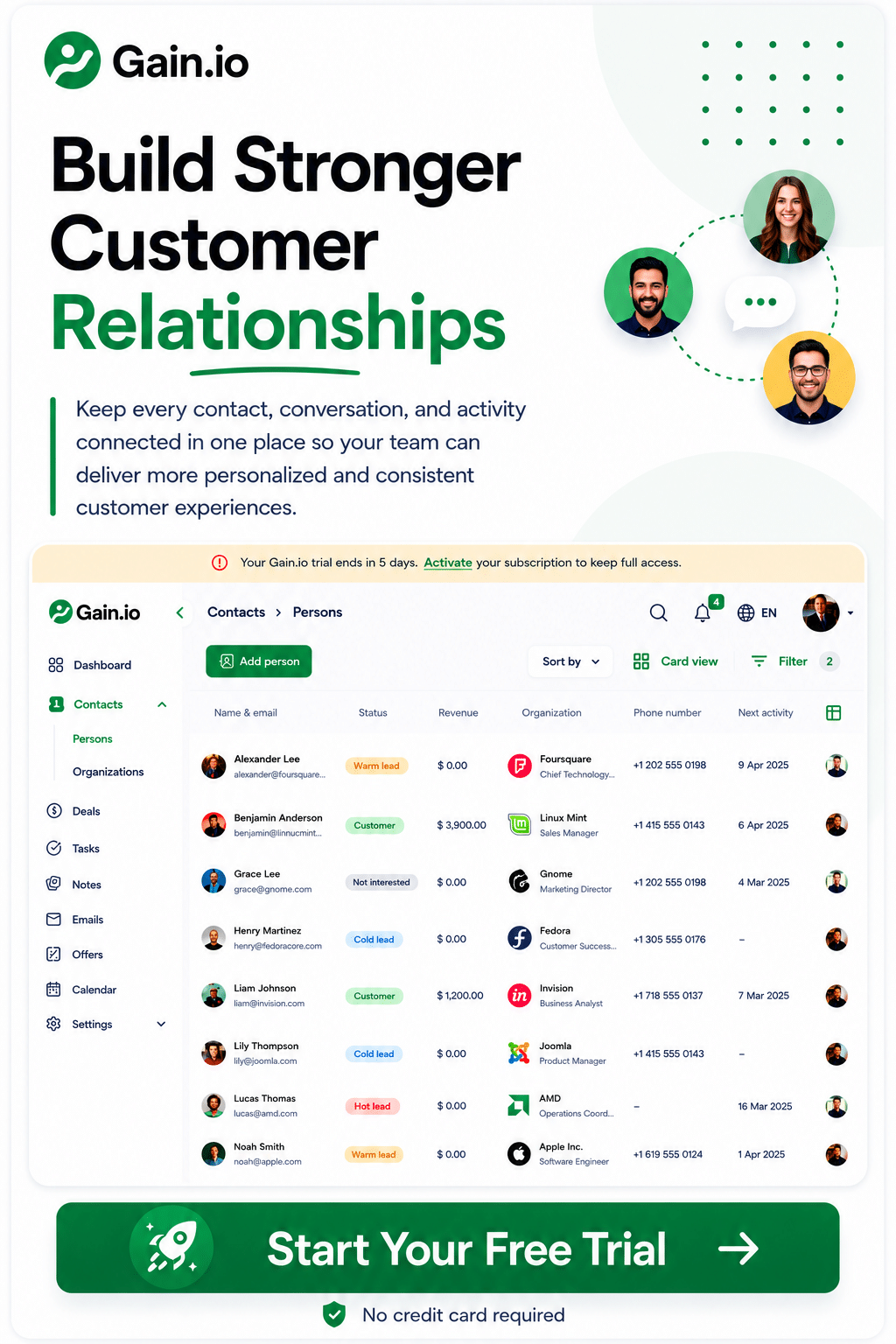
Gain.io is an all-in-one CRM that helps businesses manage sales data, customer interactions, and sales performance from one centralized platform. Sales teams can track deals, monitor sales pipeline activity, and improve sales forecasting with real-time visibility. The platform also supports automation, task tracking, and sales dashboards that simplify daily sales operations.
Gain.io combines smart CRM tools for sales teams, sales analytics tools, predictive analytics, and customer data management to help businesses identify trends and improve future sales outcomes. Sales reps can manage follow-ups, track sales metrics, and improve team performance without switching between multiple systems. The platform also supports actionable insights through visual pipelines, automated workflows, and accurate sales reports. Businesses can forecast future sales, improve lead generation, and drive revenue growth with stronger data analytics and smarter sales strategy decisions.
FAQs
What Is The Difference Between Sales Analytics And Sales Reporting?
Sales reporting mainly shows raw sales data and performance numbers. Sales analytics goes deeper and explains why results happen. It helps businesses identify trends, forecast future sales, and create actionable insights from customer data and historical sales data.
Can Small Businesses Use Sales Analytics Effectively?
Yes, small businesses can use sales analytics tools to improve sales forecasting, lead generation, and revenue growth. Modern sales analytics platforms now offer affordable solutions with sales dashboards, predictive analytics, and automated sales reports for growing teams.
How Often Should Businesses Review Sales Analytics Data?
Most sales leaders review important sales metrics weekly or monthly. Fast-growing companies often monitor sales performance data and sales pipeline activity in real time to improve future sales outcomes and react faster to market trends.
Does AI Improve Sales Forecasting Accuracy?
Yes, AI-powered predictive sales analytics helps businesses forecast future sales more accurately. AI studies historical sales data, customer behavior, and sales trends faster than manual analysis. This improves accurate sales forecasts and supports smarter resource allocation decisions.
Which Teams Benefit Most From Sales Analytics?
Sales teams, marketing teams, sales managers, and sales analysts all benefit from sales analytics software. Organizations comparing platforms like Gain.io vs Salesforce CRM often discover that better sales analysis improves team performance, customer targeting, sales strategy planning, and future revenue growth across the entire sales process.