TL;DR: What counts as a "long" sales cycle depends entirely on deal size — a $5k deal closing in 2 months is slow, while a $200k enterprise deal closing in 6 months is fast. This guide covers what drives cycle length, its impact on forecasting, and proven strategies to shorten it.
Long sales cycle can slow down growth and create uncertainty in revenue. Deals take longer to close, and teams often struggle to keep prospects engaged. Many B2B and enterprise companies face this challenge every day.
Enterprise deals with multiple stakeholders add their own complexity on top of a long sales cycle — see our guide to enterprise sales cycle stages for a stage-by-stage breakdown.
Understanding why a sales cycle becomes long is the first step. It helps you see where deals get stuck and why buyers hesitate. With the right insights, you can fix delays and improve deal flow.
This guide breaks down each part of the process. You will learn what causes delays and how to speed things up without hurting deal quality.
What Is A Long Sales Cycle
A long sales cycle is a sales process that takes an extensive amount of time to close deals. It often lasts a few months or even several years. Unlike short sales cycles in retail businesses, long sales involves complex decision-making processes and multiple stakeholders. Sales teams must guide potential buyers through a detailed buying process. Sales representatives need to keep customers engaged so they do not lose interest.
Deal size is a much stronger predictor of cycle length than industry. As a general guide:
Deal Size | Typical Cycle Length | Usual Bottleneck |
|---|---|---|
Under $5,000 (transactional/SMB) | 2 to 4 weeks | Lead response time |
$5,000 to $25,000 (mid-market) | 1 to 3 months | Multi-threading across stakeholders |
$25,000 to $75,000 | 3 to 5 months | Security and legal review |
$75,000 to $250,000 (enterprise) | 6 to 9 months | Procurement cycles |
$250,000+ (strategic/complex) | 9 to 12+ months | Committee consensus across 6-10 decision-makers |
Treat these as directional ranges, not a strict benchmark — a well-run process at any deal size will consistently beat these numbers, and a broken one will consistently miss them.
In many industries, a long sales cycle requires a strategic approach. Key decision makers and other stakeholders are involved before a purchase happens. Salespeople focus on building trust, sharing value, and helping potential clients make informed decisions. The sales funnel becomes more layered, and each step feels time-consuming but crucial.
A strong and repeatable sales process helps companies manage this challenge. With the right strategies, teams can shorten sales cycles, close more deals, and build lasting relationships with customers.
Key Factors That Extend Sales Cycles In B2B And Enterprise Deals
Long sales cycle often comes from deeper complexity in B2B and enterprise sales. Deals involve more people, longer review steps, and higher risk. Each stage in the sales process demands clarity, trust, and time, which slows down deal velocity.
Multiple Stakeholders Involved
A long sales cycle usually includes multiple stakeholders and key decision makers. Each person has a different goal and concern. Sales team must align everyone before they can close deals. This takes time and effort.
Research from Gartner shows that a typical B2B buying group includes 6 to 10 decision makers. Each one needs information to make informed decisions. Sales representatives must build trust with every stakeholder. One delay from a single person can slow the entire sales funnel.
Complex Decision-Making Process
Complex decision-making processes extend the sales cycle in many industries. Buyers need to compare solutions, check value, and review pricing. They also look for feedback from internal teams.
According to McKinsey, 70% of B2B buyers prefer a mix of digital and human interaction during the buying process. This adds more steps. Salespeople must provide clear data and value at each stage. A lack of clarity can make potential clients lose interest or delay the purchase.
Long Evaluation And Approval Stages
Enterprise deals often go through several approval layers. Finance, legal, and operations teams all get involved. Each stage in the process adds weeks or even months.
A report from Forrester states that 60% of enterprise deals require more than three internal approvals. This makes the process time-consuming. Sales team must stay connected with prospects and keep customers engaged. Without follow-ups, deals can stall and revenue gets delayed.
High Deal Value And Risk Factor
High-value deals increase pressure on decision makers. Companies do not want to make costly mistakes. They take more time to evaluate every detail before they sell or purchase a solution.
HubSpot data shows that larger deals can take 2 to 3 times longer than smaller ones. Buyers look for proof of value, case studies, and strong ROI. Sales representatives must show clear benefits. A strong strategic approach helps reduce hesitation and move deals forward.
Lack Of A Repeatable Sales Process
A weak or unclear sales process makes it harder to manage a long sales cycle. Without a repeatable sales process, salespeople rely on guesswork. This creates inconsistency and delays.
Harvard Business Review found that companies with a defined sales process see up to 28% higher revenue growth. A structured approach helps teams focus on the right prospects. It also improves communication with potential buyers. Clear steps help shorten sales cycles and close more deals effectively.
Impact Of Extended Sales Cycles On Pipeline And Forecast Accuracy
Long sales cycle creates gaps in visibility and makes planning harder for any sales team. Deals stay open for longer periods. That makes it difficult to predict revenue, manage the sales funnel, and align business decisions with actual performance.
Pipeline Visibility Challenges
A long sales cycle reduces clear visibility into the sales funnel. Deals remain in stages for weeks or months. Sales representatives often struggle to understand real progress. This creates confusion across the team.
According to Salesforce, 57% of sales leaders say pipeline visibility is their top challenge. When potential buyers move slowly, it becomes harder to track deal health. Sales teams may overestimate progress. This affects planning and reduces confidence in the sales process.
Forecast Accuracy Drops
Extended sales cycles directly affect forecast accuracy. Deals may look close but take longer due to multiple stakeholders and approvals. Salespeople often rely on outdated signals.
Gartner reports that only 45% of sales organizations have high forecast accuracy. Long sales cycles create uncertainty in revenue predictions. Decision makers depend on these forecasts for planning. Inaccurate numbers can lead to poor business decisions and missed targets.
Revenue Delays And Cash Flow Pressure
A long sales cycle delays revenue recognition. Deals take time to close, even after strong interest from prospects. This affects cash flow and limits growth.
McKinsey data shows that delayed deals can reduce quarterly revenue predictability by up to 30%. Companies must wait longer to see results. Sales teams need to keep customers engaged during the waiting period. Without consistent follow-up, potential clients may lose interest.
Higher Risk Of Deal Slippage
Long sales cycles increase the risk of deal slippage. Deals often move from one quarter to another. This creates gaps in planning and impacts team performance.
HubSpot research shows that 63% of sales leaders report frequent deal slippage in complex sales. When key stakeholders delay decisions, timelines shift. Sales representatives must manage expectations carefully. A lack of urgency can push deals further down the pipeline.
Difficulty In Pipeline Management
Managing a sales funnel becomes harder with extended cycles. Sales teams handle many deals at different stages. Some deals may stay inactive but still appear active.
Forrester states that poor pipeline management can reduce sales productivity by 14%. Salespeople must review deals regularly. Clear tracking helps identify which prospects need attention. Without structure, teams waste effort on low-value opportunities.
Misalignment Between Sales And Business Goals
Long sales cycles create a gap between sales performance and business expectations. Leaders plan based on forecasted revenue. Delays can disrupt these plans.
According to Harvard Business Review, companies with misaligned sales forecasts see up to 20% lower revenue growth. Decision makers rely on accurate data to allocate resources. A strong and repeatable sales process helps teams stay aligned. It also improves confidence across the organization.
Proven Strategies To Shorten Sales Cycles
Long sales cycle does not have to stay slow and unpredictable. With the right strategies, sales teams can reduce delays and move deals faster. Clear steps, a well-defined sales process, better communication, and strong alignment help shorten sales cycles without losing value.
Clear Sales Process Structure
A defined sales process helps sales teams move deals with more control. Each stage in the sales funnel should have clear actions and outcomes. Sales representatives know what to do next and how to guide potential buyers.
Harvard Business Review reports that companies with a structured and repeatable sales process see up to 28% higher revenue growth. Clear steps reduce confusion and improve efficiency. Salespeople can focus on high-quality prospects and close deals faster. Short sales cycles typically involve repeat customers who already have an understanding of your employer's company.
Early Stakeholder Alignment
Multiple stakeholders often slow down the buying process. Sales team should identify key decision makers early. This helps avoid delays later in the sales cycle.
Gartner states that B2B deals involve 6 to 10 stakeholders on average. Early alignment reduces back-and-forth communication. Sales representatives can address concerns upfront. This keeps customers engaged and speeds up decision-making processes.
Stronger Qualification Of Prospects
Not every lead is ready to move forward. A strong qualification process and automated sales workflows help salespeople focus on the right prospects. This reduces wasted effort and shortens the sales cycle.
According to HubSpot, sales teams that use clear qualification frameworks see up to 50% higher close rates. Sales representatives should evaluate budget, authority, and need early. This ensures that potential clients have real interest and the ability to purchase.
Consistent Follow-Up And Engagement
Regular follow-up keeps potential buyers engaged throughout the sales process. Long gaps in communication can cause prospects to lose interest. Sales task automation tools help the sales team stay active and responsive.
Research shows that 80% of deals require at least five follow-ups before closing. Timely email-integrated CRM campaigns and calls help maintain momentum. Salespeople should share value at each step. This builds trust and moves deals forward without unnecessary waiting.
Use Of Data And Sales Tools
CRM software for modern sales teams and sales tools help teams manage long sales cycles more effectively. CRM systems track every interaction and highlight key actions. This improves visibility across the sales funnel.
Salesforce reports that high-performing sales teams are 2.3 times more likely to use data-driven insights. Simpler CRM-driven sales workflows help sales representatives identify bottlenecks and adjust strategies. Data helps teams shorten sales cycles and improve overall success rates.
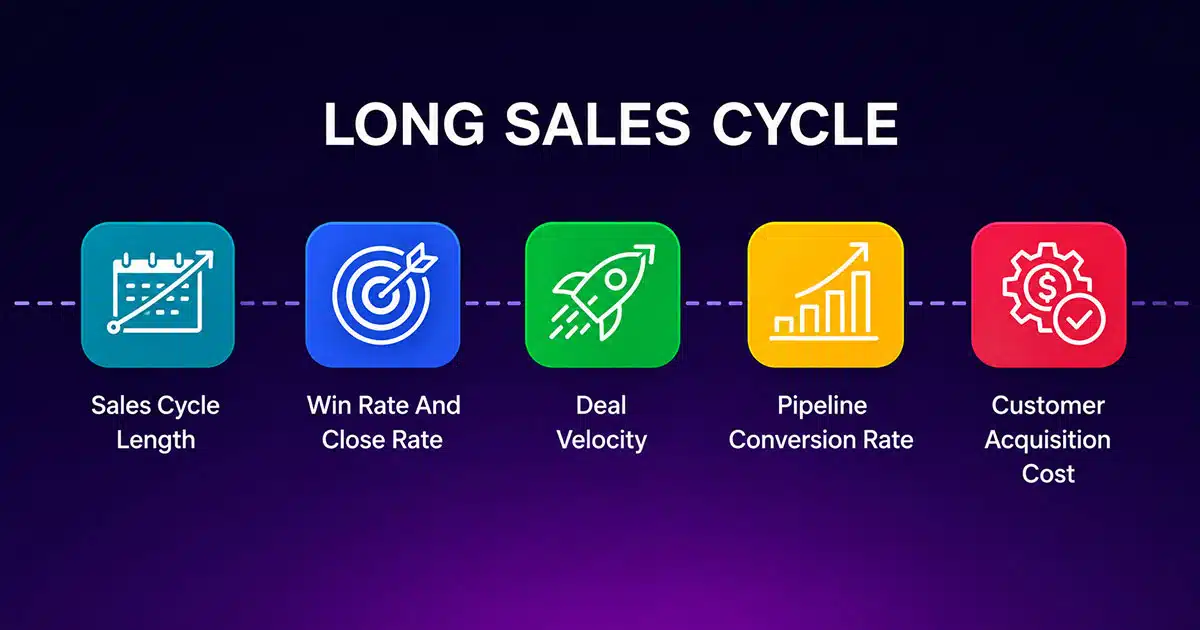
Essential Metrics Of An Efficient Sales Cycle
An efficient sales cycle depends on the right data, not guesswork. Metrics help sales teams understand performance, spot delays, and improve outcomes. Case studies on closing deals faster show how clear numbers bring structure to the sales process and support better decision-making.
Sales Cycle Length
Sales cycle length shows how long it takes to close deals. It measures the time from first contact to final purchase. A shorter cycle often means a more efficient sales process.
HubSpot reports that top-performing sales teams reduce cycle length by up to 18% compared to average teams. Long sales cycle can signal delays or poor alignment. Sales representatives should track this metric to find bottlenecks and shorten sales cycles effectively.
Win Rate And Close Rate
Win rate shows how many deals turn into actual revenue. It reflects how well salespeople move prospects through the sales funnel. A higher close rate means better performance.
According to Salesforce, the average B2B win rate is around 21%. Strong sales teams improve this by focusing on qualified potential buyers. Sales team must build trust and deliver clear value. Better alignment with decision makers leads to more deals and higher success.
Deal Velocity
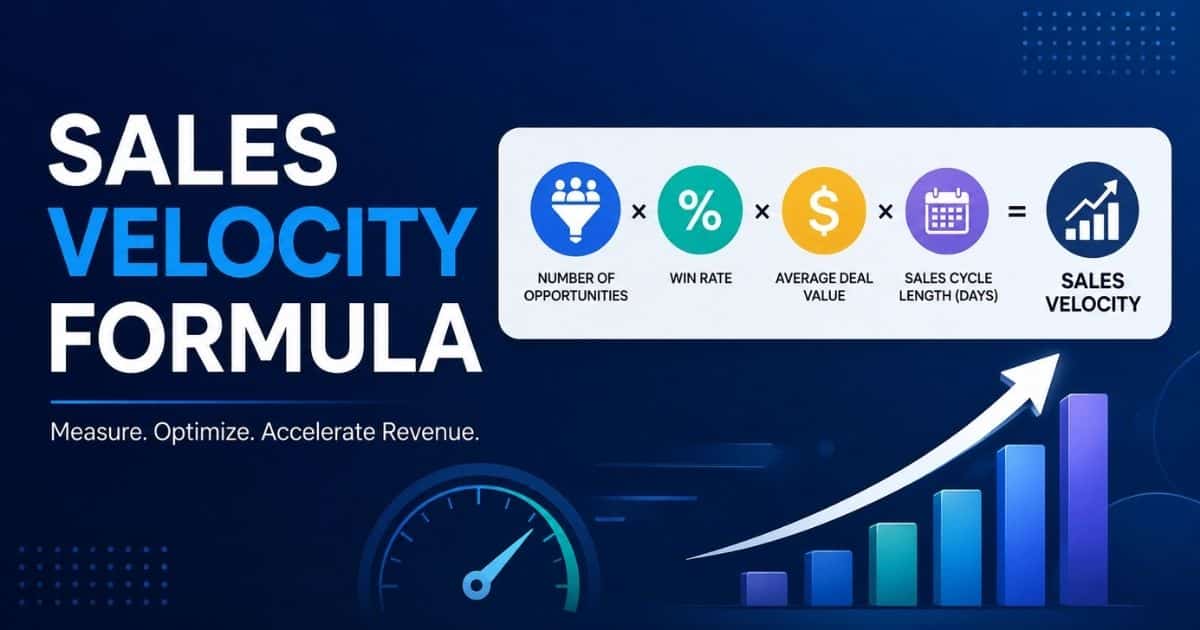
Deal velocity measures how fast deals move through the sales process. It combines deal size, win rate, and sales cycle length. Faster velocity means quicker revenue generation.
Research from InsightSquared shows that companies with high deal velocity grow revenue 28% faster. Sales representatives should track each stage in the buying process. Delays at any step can slow the entire pipeline. A strong strategy helps maintain steady progress.
Pipeline Conversion Rate
Pipeline conversion rate tracks how many prospects move from one stage to another. It shows the effectiveness of the sales funnel. Low conversion rates can signal weak messaging or poor qualification.
Forrester data suggests that optimized pipelines can improve conversion rates by up to 20%. Salespeople should monitor where prospects drop off. Clear communication and value-driven messaging help keep potential clients engaged and moving forward.
Customer Acquisition Cost
Customer acquisition cost measures the total effort and expense to acquire a new customer. It includes marketing, sales team effort, and tools. Lower cost with higher returns signals efficiency.
According to ProfitWell, companies with efficient sales cycles reduce acquisition costs by up to 30%. A long sales cycle increases expenses and delays revenue. Sales teams should focus on qualified leads and repeatable sales process. This improves ROI and overall business growth.
Tools And Systems That Help Accelerate Complex Sales Deals
A long sales cycle needs strong support from the right tools and systems. Technology helps sales teams manage the sales process, track prospects, and reduce delays. The right setup improves visibility and helps close deals faster.
CRM Platforms For Pipeline Control
CRM systems for B2B sales help sales teams manage the entire sales funnel. They track every interaction with potential buyers. Sales representatives get a clear view of deal progress and next steps.
Salesforce reports that companies using CRM systems see up to 29% higher sales. CRM tools help sales teams manage leads and multiple stakeholders while keeping data organized. Salespeople can focus on high-value prospects. This reduces confusion and helps shorten sales cycles.
Sales Automation Tools
Sales automation software reduces manual work in the sales process. Tasks like follow-ups, email campaigns, and reminders become easier to manage. This saves time for the sales team.
HubSpot data shows that sales automation benefits can increase productivity by 14.5%. Sales representatives can stay consistent with prospects. Regular communication keeps customers engaged. This reduces waiting time and improves chances to close deals faster.
Sales Enablement Platforms
Sales enablement tools provide content and insights for better conversations. Sales automation CRM gives salespeople access to case studies, pricing details, and product information. This helps them guide potential clients more effectively.
According to Gartner, companies with strong sales enablement see a 15% increase in win rates. Sales teams can deliver the right message at the right time. This builds trust with decision makers and supports informed decisions.
Data Analytics And Forecasting Tools
Data tools help sales teams understand performance and trends. They highlight delays in the sales cycle and show where deals get stuck. Sales visibility into real-time performance improves planning and forecasting.
McKinsey reports that data-driven sales organizations achieve 5% to 10% higher revenue growth. Visual sales pipelines for better deal clarity help sales representatives adjust strategies based on real insights. Better data leads to better decisions and faster deal movement.
Communication And Collaboration Tools
Sales communication tools for modern teams help sales teams connect with prospects and internal teams. Quick updates reduce delays in the buying process. Collaboration becomes easier across departments.
Research shows that effective communication tools can improve team efficiency by up to 25%. Effective sales team collaboration techniques help salespeople stay aligned with key stakeholders and decision makers. Faster communication helps maintain interest and move deals forward in a long sales cycle.
How Gain.io Helps Shorten A Long Sales Cycle
Gain.io helps sales teams manage a long sales cycle with better data and smarter targeting. Gain.io’s all-in-one CRM gives sales representatives tools to find the right potential buyers and key decision makers early. This reduces time wasted on unqualified prospects. The sales process becomes more focused and efficient. Teams can move faster through the sales funnel and keep customers engaged using Gain.io’s smart CRM features.
Gain.io also improves outreach with verified contacts and insights. Better contact management and dynamic relationship tracking help salespeople run effective email campaigns and connect with multiple stakeholders without delays. This supports a more repeatable sales process and helps shorten sales cycles.
With better data and a clear strategy, sales teams can close deals faster, build trust, and drive more revenue in complex B2B industries.
FAQs
Does Multi-Threaded Outreach Reduce A Long Sales Cycle?
Yes, multi-threaded outreach helps reduce a long sales cycle. The sales team connects with multiple stakeholders early. This avoids delays from key decision makers and improves deal movement across the sales funnel.
What Role Does Buyer Enablement Play In Sales Cycles?
Buyer enablement helps potential buyers make informed decisions faster. It supports complex decision-making processes. Sales representatives can guide prospects with clear value and keep customers engaged throughout the sales process.
Can MEDDIC Shorten Sales Cycles In B2B?
Yes, MEDDIC helps shorten sales cycles. Salespeople qualify prospects based on clear criteria. This improves focus on high-value deals and increases chances to close deals faster.
How Do Internal Champions Affect Long Sales Cycles?
Internal champions influence decision makers and key stakeholders. They support the solution inside the company. Sales team gets faster feedback and reduces friction in the buying process.
Does Predictive Analytics Improve Sales Forecast Accuracy?
Yes, predictive analytics improves forecast accuracy. It uses sales data and past deals. Sales representatives can identify risks early and manage the sales cycle more effectively.
Long, multi-stakeholder deals like these are a direct result of how the modern B2B buying journey has changed, with most research now happening before a rep is ever contacted.