Leads can come from everywhere. Your website, ads, emails, social media, referrals, and even live chats. But without a clear system, valuable leads quickly get lost, ignored, or passed to the wrong sales rep. That is where a strong lead management process makes a real difference.
A well-structured process helps businesses capture, track, qualify, score, and route leads at the right time. Sales teams know who to contact first. Marketing teams understand which campaigns bring better prospects. Every step becomes more organized and measurable.
Modern businesses do not just need more leads. They need better lead handling. From lead scoring models to lead routing and MQL vs SQL tracking, every stage affects conversion rates and revenue growth. A smarter process helps teams close deals faster and build stronger customer relationships.
What Is A Lead Management Process
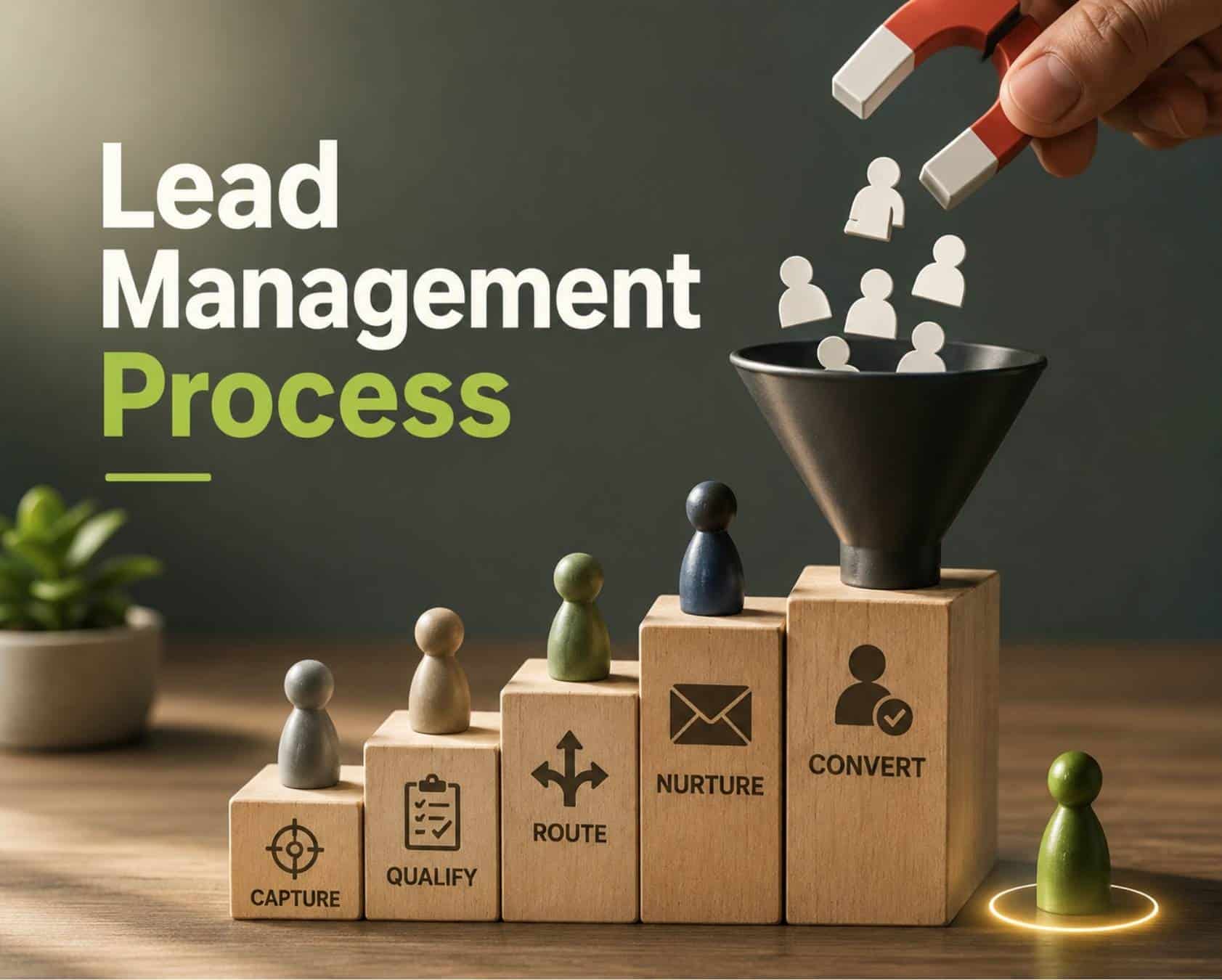
A lead management process is the system businesses use to capture, track, qualify, nurture, and convert leads into paying customers. The lead management process begins when potential customers show interest through a lead magnet, website form, ad, or other lead sources. Marketing and sales teams then use lead tracking, lead scoring, and lead qualification to identify high-quality leads, warm leads, and hot leads. Not all leads are ready to buy, so a successful lead management process helps sales team members focus on the most promising leads.
An effective lead management strategy also supports lead nurturing, lead routing, follow-ups, and lead distribution across the sales funnel. With lead management software for sales teams and customer relationship management tools, sales representatives can manage leads effectively, track key metrics, and automatically assign leads to the right sales rep. Effective lead management improves conversion rates, shortens the sales cycle, and helps businesses close deals faster while creating satisfied customers.
Key Stages In A Successful Lead Management Workflow
Every successful lead management process follows a clear workflow. Each stage helps marketing and sales teams move potential leads closer to conversion. A structured system improves lead tracking, lead nurturing, and lead conversion. Choosing from the best lead management software options in 2026 also helps sales representatives focus on high-quality leads instead of wasting time on cold leads.
Lead Capture
Lead capture is the first step in the lead management workflow. Businesses collect lead data through website forms, landing pages, social media, webinars, and lead magnets. Good lead generation strategies help attract interested prospects from different lead sources.
HubSpot reports that companies with optimized lead capture forms can improve conversion rates by up to 50%. A strong lead management system stores incoming leads automatically and keeps customer relationship management records organized. Marketing teams can also track how leads enter the sales funnel and which channels generate more leads.
Lead Qualification
Not every prospect becomes a customer. Lead qualification helps sales and marketing teams identify qualified leads based on budget, interest, company size, or buying intent. This process separates warm leads and hot leads from low-intent contacts.
Research from MarketingSherpa shows that nearly 79% of marketing-qualified leads never convert without proper qualification. A successful lead management process uses lead scoring and sales data to measure lead engagement. Sales managers can then pass sales-qualified leads to the right sales rep for faster follow-ups and better sales cycle management.
Lead Distribution
Lead distribution ensures valuable leads reach the correct sales team members quickly. Delayed responses often reduce lead conversion rates. Fast lead routing improves the customer experience and increases the chances of closing deals.
Studies from InsideSales show that responding within five minutes makes businesses 21 times more likely to qualify a lead. Many companies now use lead management software and marketing automation software to automatically assign leads based on territory, product interest, or sales rep availability. This creates a smoother sales process and reduces manual work for sales representatives.
Lead Nurturing
Most prospective customers do not buy after the first interaction. Lead nurturing keeps communication active until leads are ready to make a decision. Businesses use email campaigns, personalized content, demos, and follow-ups to build trust with potential customers.
According to DemandGen, nurtured leads produce 47% larger purchases compared to non-nurtured leads. An effective lead nurturing strategy for B2B growth focuses on consistent communication across the buying process. Marketing and sales teams can also use CRM follow-up automation to monitor lead engagement and send relevant content at the right stage of the sales funnel.
Lead Conversion
Lead conversion happens when qualified leads become paying customers. This stage depends on timing, communication, and a smooth customer journey. Strong lead management helps sales teams close deals faster and improve customer satisfaction.
Salesforce reports that companies with effective lead management processes achieve higher revenue growth and stronger customer retention. Sales representatives can track key metrics like response time, conversion rates, and deal progress through deal tracking from lead to close using management software. As shown in a sales acceleration case study on closing deals faster with Gain.io, a well-planned lead process also creates more satisfied customers and supports long-term business success.
How A Lead Qualification Framework Improves Sales Readiness
A lead qualification framework helps businesses identify which prospects are most likely to become customers. It gives sales and marketing teams a clear way to evaluate lead quality before outreach begins. A structured lead qualification process for sales teams improves lead scoring, shortens the sales cycle, and helps sales representatives focus on high-value leads.
Clear Lead Criteria
A strong framework starts with clear qualification criteria. Sales teams need to know what makes a lead valuable. Common factors include budget, authority, business size, pain points, and purchase timeline. This helps marketing and sales teams filter out cold leads early.
According to HubSpot, sales reps spend nearly 40% of their time searching for the right prospects. Clear lead qualification reduces wasted effort and improves lead prioritization. It also helps sales managers build a more effective lead management strategy focused on quality leads instead of chasing every incoming lead.
Better Lead Scoring
Lead scoring helps businesses rank leads based on interest and buying intent. A lead management system tracks actions like website visits, email clicks, demo requests, and content downloads. Leads with stronger engagement receive higher scores.
Research from MarketingSherpa shows companies using lead scoring generate 77% higher ROI from lead generation efforts. Sales representatives can quickly identify hot leads and sales-qualified leads without reviewing every contact manually. Better scoring also supports lead routing and lead distribution, which helps sales team members respond faster to promising leads.
Faster Sales Response
Quick responses improve lead conversion rates. A lead qualification framework helps automatically assign leads to the right sales rep based on lead data, territory, or product interest, especially when supported by sales workflow automation strategies. This reduces delays inside the sales funnel.
Chili Piper reports that businesses responding within five minutes are much more likely to convert leads. Fast outreach keeps interested prospects engaged during the buying process. Sales automation for higher conversion rates with marketing automation software and lead management software also helps sales representatives manage leads effectively while handling large numbers of inbound leads and potential customers.
Stronger Team Alignment
Sales and marketing alignment plays a major role in successful lead management. Without shared qualification rules, marketing teams may pass low-quality leads while sales teams ignore marketing-qualified leads. A structured framework solves that problem.
LinkedIn research shows aligned sales and marketing teams can improve revenue growth by over 20%. Shared lead qualification standards help both teams track key metrics and understand how leads move through the sales process. Better collaboration supported by CRM automation for sales and growth also improves lead nurturing, follow-ups, and customer relationship management across the entire lead process.
Higher Conversion Rates
A good qualification process improves sales readiness because teams spend more time on high-quality leads. Businesses can focus on prospects who already showed interest instead of wasting time on unqualified contacts. This creates a more efficient sales cycle.
Salesforce data shows companies with effective lead management processes achieve higher conversion rates and stronger customer retention. A successful lead management process also supports better lead engagement and smoother lead conversion. Over time, businesses close deals faster, create satisfied customers, and improve long-term business success through smarter lead generation strategies.
Lead Scoring Model Strategies For Better Conversion Rates
A lead scoring model helps businesses identify which leads deserve immediate attention. It ranks prospects based on behavior, interest, and buying intent. Sales and marketing teams can then focus on high-quality leads instead of wasting time on cold leads. A smart scoring strategy improves lead conversion, shortens the sales cycle, and helps sales representatives close deals faster.
Behavior-Based Scoring
Behavioral scoring tracks how leads interact with your business. Actions like email clicks, webinar sign-ups, demo requests, and pricing page visits show lead engagement. Prospects who take stronger actions receive higher scores inside the lead management system.
HubSpot reports that businesses using behavioral lead scoring improve conversion rates by nearly 20%. Marketing automation software helps sales teams track lead data in real time. This also supports lead nurturing because sales representatives can contact interested prospects at the right stage of the buying process.
Demographic Lead Scoring
Demographic scoring focuses on who the prospect is. Factors like industry, company size, job title, and location help sales and marketing teams identify qualified leads. A business owner or senior manager often receives a higher score than a general contact.
According to Salesforce, 66% of high-performing sales teams use data-driven lead qualification methods. Demographic scoring helps sales managers prioritize high-value leads and promising leads more accurately. A dedicated sales pipeline CRM for better visibility also improves lead routing because the right sales rep receives leads that match their expertise and sales territory.
Engagement Score Tracking
Engagement scores measure how actively prospects interact with your brand over time. Frequent website visits, content downloads, and follow ups usually indicate strong buying intent. Low engagement may signal cold leads that need more lead nurturing.
Research from Demand Gen Report shows nurtured leads create 20% more sales opportunities than non-nurtured leads. A purpose-built B2B sales CRM for revenue teams makes it easier to monitor engagement patterns across different lead sources. Sales team members can then focus on warm leads and hot leads that move faster through the sales funnel.
Predictive Lead Scoring
Predictive lead scoring uses AI lead scoring and historical lead data to identify likely buyers. The system analyzes patterns from previous customers and compares them with current incoming leads. This helps businesses spot potential customers earlier in the sales process.
Gartner research shows AI-driven lead scoring can improve sales productivity by more than 15%. Modern AI sales automation tools and customer relationship management platforms now include predictive scoring features. An AI sales assistant for pipeline efficiency helps sales representatives manage leads effectively while reducing manual work and improving lead prioritization across large lead generation efforts.
Regular Score Updates
Lead behavior changes over time. A prospect who showed interest last month may become inactive later. Regular score updates help businesses keep lead qualification accurate and relevant. This creates a more effective lead management process.
Forrester reports that companies updating lead scoring models regularly see better lead conversion and stronger sales readiness. Marketing and sales teams should review scoring rules often and track key metrics like response rates and close rates. A flexible lead management strategy helps businesses convert leads faster and maintain higher conversion rates throughout the customer journey.
MQL Vs SQL And Their Role In The Sales Funnel
Marketing qualified leads (MQLs) and sales qualified leads (SQLs) play different roles inside the sales funnel. MQLs show early interest through lead engagement, while SQLs are ready for direct sales conversations. A dedicated MQL vs SQL guide with clear qualifications helps marketing and sales teams improve lead conversion, lead routing, and overall sales readiness.
Factor | MQL (Marketing Qualified Lead) | SQL (Sales Qualified Lead) |
|---|---|---|
Definition | A lead that showed interest through marketing activities | A lead ready for direct sales outreach |
Funnel Stage | Top or middle of the sales funnel | Bottom of the sales funnel |
Lead Intent | Early interest or research phase | Strong buying intent |
Common Actions | Ebook downloads, webinar sign-ups, email clicks | Demo requests, pricing inquiries, consultation bookings |
Team Responsibility | Marketing teams manage and nurture MQLs | Sales team handles SQLs |
Lead Scoring | Medium lead score | High lead score |
Lead Qualification | Based on engagement and behavior | Based on budget, authority, and readiness |
Goal | Build lead engagement and nurture prospects | Convert leads into paying customers |
Follow Up Style | Automated emails and lead nurturing campaigns | Direct calls, meetings, and personalized outreach |
Conversion Potential | Potential leads with future opportunities | High-quality leads with immediate sales potential |
CRM Status | Early-stage lead inside the lead management system | Sales-ready lead assigned to a sales rep |
Sales Cycle Impact | Helps move leads through awareness stages | Helps shorten the sales cycle and close deals faster |
Lead Prioritization Methods For High-Intent Prospects
Lead prioritization helps sales and marketing teams focus on prospects most likely to convert. Without a clear system, valuable leads often get delayed or ignored. A structured approach improves lead management, increases conversion rates, and helps sales representatives spend time on high-quality leads with real buying intent.
Lead Score Analysis
Lead scoring is one of the most effective prioritization methods. A lead scoring model for high conversion sales funnels assigns points based on actions, engagement, and lead data. Prospects who request demos, visit pricing pages, or respond to follow-ups usually receive higher scores.
HubSpot reports that companies using lead scoring generate 77% higher lead generation ROI. Sales teams can quickly identify hot leads and sales-qualified leads without manually reviewing every contact. This also helps sales managers improve lead routing and shorten the sales cycle across the entire sales funnel.
Buyer Intent Signals
Buyer intent signals show how serious a prospect is about making a purchase. Frequent website visits, comparison page views, and repeated product research often indicate strong interest. Marketing and sales teams can use this behavior to prioritize promising leads.
According to Gartner, businesses that use intent data improve lead conversion rates by nearly 20%. Marketing automation software tracks lead engagement across multiple lead sources in real time. Sales representatives can then contact interested prospects before competitors reach them, which increases the chances of closing deals faster.
Demographic Fit
Not all leads match the ideal customer profile. Demographic prioritization helps businesses focus on qualified leads based on industry, company size, revenue, or job role. A senior decision-maker usually becomes a higher priority than a low-level contact.
Salesforce research shows 66% of top-performing sales teams rely heavily on data-driven qualification. This method supports an effective lead management strategy because sales team members focus on high-value leads with stronger purchase potential. It also improves lead distribution by automatically assigning leads to the right sales rep.
Lead Engagement History
Past engagement often predicts future conversion. Prospects who open emails, download resources, or attend webinars usually move faster through the buying process. Strong engagement also helps businesses separate warm leads from cold leads.
Demand Gen Report found that nurtured leads produce 47% larger purchases compared to non-nurtured leads. Lead management software helps marketing teams monitor engagement activity across the lead process. Sales and marketing alignment becomes easier because both teams can track key metrics and identify valuable leads more accurately.
Response Time Priority
Fast follow-ups can dramatically improve lead conversion. High-intent prospects often choose the first business that responds. Delayed outreach may cause businesses to lose potential customers to competitors.
Research from InsideSales shows contacting incoming leads within five minutes makes qualification far more likely. Many businesses now use management software and customer relationship management systems to automatically assign leads instantly. Faster response times help sales representatives manage leads effectively while improving customer experience and creating more satisfied customers.
Lead Routing Techniques That Reduce Response Time
Lead routing helps businesses send incoming leads to the right sales rep without delays. A fast response often decides whether a prospect converts or leaves. Smart routing methods and clear guidelines on how to organize sales leads effectively improve lead management, support better lead distribution, and help sales teams respond to high-intent prospects much faster.
Round Robin Assignment
Round robin routing distributes leads evenly across sales team members. Each sales representative receives incoming leads one after another. This method prevents workload imbalance and ensures no lead stays unattended for too long.
According to Salesforce, businesses with fast lead response systems improve conversion rates significantly. Round robin lead distribution also helps sales managers monitor sales performance more accurately. Lead management software can automatically assign leads in real time, which improves response speed and supports a smoother sales process.
Territory-Based Routing
Territory routing assigns leads based on region, country, or sales area. This method helps businesses connect prospects with sales reps who understand local markets and customer behavior. Faster communication often improves lead engagement and trust.
HubSpot reports that personalized sales outreach increases reply rates by nearly 30%. Customer relationship management systems make territory-based lead routing easier through automation rules. Marketing and sales teams can also track key metrics by region and identify lead generation strategies that produce more qualified leads in specific markets.
Skill-Based Routing
Some leads require specialized knowledge. Skill-based routing sends prospects to sales representatives with experience in a specific product, industry, or customer type. This improves conversation quality and shortens the sales cycle.
Research from Gartner shows customers prefer sales reps who understand their business challenges. A lead management system can use lead data, company size, or product interest to route valuable leads correctly. Better lead qualification and lead prioritization also help businesses close deals faster and create more satisfied customers.
Lead Score Routing
Lead score routing prioritizes prospects based on buying intent and lead engagement. High-scoring leads go directly to experienced sales reps for immediate follow-ups. Lower-scoring leads may enter lead nurturing campaigns first.
InsideSales research shows responding quickly to hot leads increases qualification chances dramatically. Marketing automation software and lead management software can track actions like demo requests, pricing visits, and email clicks automatically. This helps sales team members focus on high-quality leads instead of wasting time on cold leads or inactive contacts.
Automated Workflow Routing
Automated routing removes manual lead assignment from the sales workflow. Businesses use management software to route leads instantly based on predefined rules. This reduces delays and human errors inside the lead process.
According to Forrester, automation can improve sales productivity by more than 14%. Automated lead routing also helps marketing and sales alignment because both teams follow the same qualification rules. Sales managers gain better visibility into lead tracking, response time, and lead conversion performance across the entire sales funnel.
How Lead Distribution Software Automates Sales Assignment
Lead distribution software helps businesses assign incoming leads quickly and accurately. Manual assignment often causes delays, missed follow-ups, and uneven workloads. Automated systems improve lead routing, support faster response times, and help sales teams focus on qualified leads with stronger conversion potential.
Automatic Lead Assignment
Lead distribution software can automatically assign leads based on predefined rules. Businesses route leads by territory, product interest, company size, or sales rep availability. This reduces manual work for sales managers and speeds up the sales process.
Salesforce reports that high-performing sales teams are nearly three times more likely to use automation tools. Automating sales admin tasks in 2026 within a strong lead management system helps sales representatives respond faster to interested prospects. Quick assignment also improves lead engagement and increases the chances of converting high-quality leads into paying customers.
Balanced Sales Workloads
Uneven lead distribution often creates performance issues inside sales teams. Some sales representatives receive too many leads while others wait for new opportunities. Automated distribution keeps workloads balanced across the team.
HubSpot research shows balanced lead allocation improves response consistency and customer experience. Lead management software tracks lead volume and sales rep activity in real time. Businesses can manage leads effectively without overloading top performers or ignoring valuable leads during busy lead generation campaigns.
Faster Lead Response
Speed matters in lead management. Prospects usually contact multiple businesses before making a decision. Delayed follow-ups can reduce lead conversion and hurt sales readiness. Automated lead routing solves this problem by assigning leads instantly.
InsideSales found that responding within five minutes increases qualification chances dramatically. Marketing automation software and customer relationship management platforms help sales team members contact incoming leads much faster. This creates a smoother buying process and helps businesses close deals before competitors respond.
Smarter Lead Prioritization
Modern lead distribution software uses lead scoring and lead data to prioritize promising leads. High-intent prospects move directly to experienced sales reps, while warm leads may enter lead nurturing workflows first. This creates a more effective lead management strategy.
Gartner reports that businesses using AI-powered lead prioritization improve sales productivity significantly. Sales and marketing teams can focus on hot leads and sales-qualified leads instead of spending time on cold leads. Better prioritization also improves lead tracking and overall conversion rates across the sales funnel.
Real Time Performance Tracking
Lead distribution tools provide detailed reporting and analytics. Sales managers can track key metrics like response time, lead conversion, lead sources, and sales rep performance. This helps businesses improve lead generation efforts and optimize the lead process continuously.
Forrester research shows that data-driven sales teams achieve higher revenue growth and stronger customer retention. Lead management software also improves collaboration between marketing and sales teams by centralizing lead data in one place. Better visibility supports successful lead management and helps create more satisfied customers over time.
CRM Integration And Automation In Lead Management
CRM integration and automation help businesses manage leads faster and with better accuracy. Manual workflows often create delays, missed follow-ups, and scattered lead data. A connected lead management system improves lead tracking, lead nurturing, and sales team coordination throughout the entire sales funnel.
Centralized Lead Data
CRM integration keeps all lead data in one place. Sales and marketing teams can view customer interactions, lead sources, follow-ups, and engagement history from a single dashboard. This creates a smoother lead management process and shows how CRM helps sales teams manage leads more effectively.
According to Salesforce, sales representatives spend nearly 70% of their time on non-selling tasks without proper automation tools. A centralized CRM that improves sales productivity helps sales reps manage leads effectively and identify qualified leads faster. Better visibility also improves lead qualification and lead prioritization across the sales cycle.
Automated Lead Capture
Automation tools collect inbound leads directly from websites, forms, ads, and social media channels. A CRM with email integration stores prospect details automatically inside the CRM without manual data entry. This reduces errors and speeds up lead routing.
HubSpot reports that businesses using automated lead capture generate more leads and improve conversion rates significantly. A broader view of what lead management is shows how marketing automation software also tracks how leads interact with content and lead magnets. Sales team members receive updated lead engagement data instantly, which helps them respond faster to interested prospects.
Smart Lead Routing
CRM automation improves lead distribution through rule-based lead routing. Businesses can automatically assign leads based on territory, industry, company size, or lead score. This reduces delays and supports faster sales response times.
Research from InsideSales shows quick follow-ups dramatically increase qualification success. Automated lead routing also prevents valuable leads from sitting unnoticed inside the sales funnel. Sales managers can monitor lead distribution performance and ensure high-quality leads reach the right sales representative without manual effort.
Better Lead Nurturing
Most potential customers need multiple touchpoints before making a purchase decision. CRM automation supports lead nurturing through scheduled emails, reminders, and personalized follow-ups. This helps businesses maintain communication during the buying process.
Demand Gen Report found nurtured leads create 47% larger purchases compared to non-nurtured leads. Lead management software can automatically trigger campaigns based on lead behavior and engagement history. Marketing and sales teams stay aligned while guiding warm leads and promising leads toward lead conversion more effectively.
Real Time Sales Insights
CRM systems provide real-time analytics that help businesses track key metrics and improve decision-making. Sales managers can monitor conversion rates, response times, lead sources, and sales rep performance through automated reporting tools.
Forrester research shows data-driven sales teams achieve higher revenue growth and stronger customer retention. Automation also improves successful lead management by reducing repetitive tasks for sales representatives. Businesses gain better control over lead generation efforts while creating a more effective lead management strategy for long-term business success.
Common Lead Management Challenges And How To Solve Them
Many businesses struggle with lead management because of slow follow-ups, poor lead tracking, and disconnected workflows. Small mistakes can reduce conversion rates and waste valuable leads. A structured lead management process helps sales and marketing teams solve these issues and improve overall sales performance.
Poor Lead Quality
Low-quality leads waste time for sales representatives and reduce sales productivity. Many businesses focus only on generating leads instead of attracting qualified leads with real buying intent. This often fills the sales funnel with cold leads that never convert.
HubSpot reports that 61% of marketers still consider lead generation their biggest challenge. Better lead qualification and lead scoring can solve this problem. Businesses should use clear qualification criteria, track lead engagement, and focus on lead generation strategies that attract high-quality leads and interested prospects.
Slow Response Time
Delayed follow-ups often cause businesses to lose promising leads. Potential customers usually contact several companies before making a decision. A slow response gives competitors the advantage during the buying process.
Research from InsideSales shows responding within five minutes can increase lead qualification chances dramatically. Lead management software and marketing automation software help businesses automatically assign leads to the right sales rep instantly. Faster lead routing improves customer experience and helps sales teams close deals more efficiently.
Weak Sales And Marketing Alignment
Sales and marketing teams often use different goals and lead qualification standards. Marketing teams may send marketing-qualified leads that sales teams do not consider valuable. This creates frustration and slows the sales process.
LinkedIn research shows aligned sales and marketing teams can improve revenue growth by more than 20%. A shared lead management strategy solves this issue. Both teams should agree on lead scoring rules, sales qualified leads criteria, and lead tracking metrics to improve successful lead management across the organization.
Scattered Lead Data
Disorganized lead data creates confusion and missed opportunities. Sales team members may lose track of follow-ups, customer interactions, or lead sources when information stays spread across different tools and spreadsheets.
Salesforce reports that poor data management reduces sales productivity significantly. A centralized customer relationship management system with dynamic contact management for smarter relationship tracking and centralized contact management for growing teams helps businesses manage leads effectively from one platform. Modern lead management software also improves lead distribution, lead nurturing, and sales visibility while helping sales managers track key metrics more accurately.
Weak Lead Nurturing
Not all leads become customers immediately. Many businesses stop communication too early and lose potential customers during the sales cycle. Weak lead nurturing reduces lead engagement and lowers conversion rates over time.
Demand Gen Report found nurtured leads produce larger purchases and better customer retention. Businesses should use personalized emails, follow-ups, and educational content to keep warm leads engaged. A strong lead management system supports automated nurturing workflows and helps businesses convert leads into satisfied customers more consistently.
Lead Management Metrics And KPIs Every Team Should Track
Lead management metrics help businesses understand how well their sales and marketing efforts perform. Without clear data, teams cannot identify weak areas inside the sales funnel. The right KPIs improve lead tracking, lead conversion, and overall decision-making across the entire lead management process.
Lead Conversion Rate
Lead conversion rate measures how many potential leads become paying customers. This KPI shows whether your lead management strategy and sales process are working effectively. Low conversion rates may signal poor lead qualification or weak follow-ups.
HubSpot reports that average landing page conversion rates range between 2% and 5% across industries. Businesses with effective lead management often achieve much higher results. Sales and marketing teams should monitor lead conversion regularly to improve lead nurturing, lead scoring, and customer engagement throughout the buying process.
Lead Response Time
Lead response time tracks how quickly sales representatives contact incoming leads after lead capture. Fast outreach improves lead engagement and increases the chance of converting interested prospects before competitors respond.
Research from InsideSales found that responding within five minutes makes lead qualification far more likely. Lead management software and marketing automation software help businesses automatically assign leads instantly. Faster lead routing also improves customer experience and helps sales team members close deals more efficiently across the sales cycle.
Cost Per Lead
Cost per lead measures how much businesses spend to generate each new prospect. This KPI helps marketing teams evaluate lead generation strategies and identify which lead sources produce the best results. Lower costs with higher quality leads often indicate a strong lead management process.
According to Gartner, companies waste large portions of their marketing budget on poor-quality leads. Customer relationship management systems help businesses track lead data and compare campaign performance accurately. Better tracking allows teams to focus on high-value leads and reduce unnecessary spending on weak lead generation efforts.
Lead Qualification Rate
Lead qualification rate shows how many incoming leads become marketing qualified leads or sales qualified leads. A low qualification rate often means businesses attract the wrong audience or use weak lead capture methods.
Salesforce reports that high-performing sales teams rely heavily on structured lead qualification frameworks. Businesses should track how leads move through the sales funnel and identify where prospects lose interest. Better lead scoring and lead prioritization help sales managers focus on promising leads with stronger conversion potential.
Customer Acquisition Time
Customer acquisition time measures how long it takes to convert leads into customers. A shorter sales cycle often means stronger lead nurturing, faster lead routing, and better sales readiness. Long sales cycles may indicate workflow issues inside the lead process.
Forrester research shows businesses with automated lead management systems improve sales productivity significantly. Lead management software helps sales and marketing teams track key metrics and identify delays quickly. Faster conversions not only improve revenue growth but also create more satisfied customers and stronger long-term business success.
Best Practices To Optimize Your Lead Management Process
A strong lead management process helps businesses convert more leads without wasting time or resources. Small improvements in lead tracking, follow-ups, and lead qualification can create better conversion rates. The right strategies also help sales and marketing teams manage high-quality leads more efficiently.
Use A Centralized CRM
A centralized customer relationship management system keeps all lead data organized in one place. Sales representatives can track interactions, follow-ups, lead sources, and customer activity without switching between tools. Better visibility improves lead tracking and lead engagement.
Salesforce reports that CRM systems can improve sales productivity by more than 30%. Modern lead management software, including CRM tools that help retail teams stay organized, also helps businesses automatically assign leads and monitor the sales funnel in real time. A centralized platform with a simpler sales workflow in your CRM and CRM tools that fit your workflow supports successful lead management and improves communication between marketing and sales teams.
Improve Lead Qualification
Strong lead qualification helps businesses focus on qualified leads with real buying intent. Without proper filtering, sales teams spend too much time on cold leads and low-value prospects. A structured qualification process improves sales readiness and lead prioritization.
HubSpot research shows companies with strong lead qualification methods generate higher conversion rates and better ROI. Avoiding common lead generation mistakes that hurt conversions, businesses should use lead scoring, customer behavior, and demographic data to identify promising leads. Better qualification also shortens the sales cycle and helps sales reps close deals faster.
Automate Lead Routing
Manual lead distribution often slows down response time and creates missed opportunities. Automated lead routing sends incoming leads directly to the right sales representative based on territory, product interest, or lead score. Faster assignment improves customer experience.
InsideSales reports that quick follow-ups dramatically increase lead conversion chances. Marketing automation software and lead management systems reduce delays and improve lead nurturing workflows. Automation also helps sales managers manage leads effectively while keeping workloads balanced across sales team members.
Track Performance Metrics
Businesses cannot improve what they do not measure. Tracking key metrics helps sales and marketing teams understand which lead generation strategies perform best. Metrics like conversion rates, response time, and lead qualification rates reveal weaknesses inside the lead process.
Forrester research shows data-driven companies achieve stronger revenue growth than competitors. Lead management software provides real-time analytics for lead conversion, lead engagement, and sales performance. Better reporting helps businesses optimize workflows and improve decision-making across the entire buying process.
Strengthen Lead Nurturing
Most potential customers need time before making a purchase decision. Consistent lead nurturing helps businesses stay connected with warm leads and interested prospects during the sales cycle. Personalized communication also improves trust and customer relationships.
Demand Gen Report found nurtured leads create larger purchases and higher customer retention. Businesses should use emails, educational content, and scheduled follow-ups to guide prospects through the sales funnel. An effective lead management strategy keeps valuable leads engaged until they are ready to become paying customers.
How Gain.io Improves Your Lead Management Process
Gain.io helps businesses simplify every stage of the lead management process. Sales and marketing teams can capture inbound leads, track lead data, automate follow-ups, and manage qualified leads from one centralized dashboard. The platform also supports lead routing, lead distribution, lead scoring, and customer relationship management to help sales representatives focus on high-value leads and close deals faster.
Gain.io reduces manual work through automation and real-time lead tracking. With its smart CRM tools for sales teams and a simple CRM compared to Salesforce, sales team members can automatically assign leads, monitor lead engagement, and manage the sales funnel without switching between multiple tools. Marketing automation software and CRM integration help businesses improve lead nurturing, shorten the sales cycle, and improve conversion rates. Businesses can also track key metrics, optimize lead generation efforts, and create a more effective lead management strategy for long-term growth.
FAQs
Why Is Lead Management Important For Business Growth?
Lead management helps businesses track, qualify, nurture, and convert leads more efficiently. A structured lead management process improves conversion rates, shortens the sales cycle, and helps sales and marketing teams focus on high-quality leads instead of wasting time on cold leads, especially for professionals using CRM tools that help real estate agents save time.
Can Small Businesses Use Lead Management Software?
Yes. Small businesses can use CRM for startups and small sales teams or other top CRM tools that help startups grow smarter to automate lead capture, lead routing, follow-ups, and customer relationship management. Automation helps sales team members manage leads effectively even with limited resources and smaller sales teams.
How Does Lead Nurturing Improve Lead Conversion?
Lead nurturing keeps potential customers engaged through emails, follow-ups, and personalized content. Strong lead nurturing and better contact management to build stronger relationships build trust and help warm leads move through the sales funnel until they become sales-qualified leads or paying customers.
Does Lead Scoring Help Sales Teams Close Deals Faster?
Yes. Lead scoring helps sales representatives identify high-intent prospects based on lead engagement and buying behavior, especially when they automate sales tasks to stay focused and organized. Sales teams can prioritize hot leads and high-value leads instead of spending time on unqualified contacts.
What Makes A Successful Lead Management Strategy?
A successful lead management strategy combines lead capture, lead qualification, lead distribution, CRM integration, and lead tracking into one clear workflow. Using sales automation software, businesses also need fast response times, strong sales and marketing alignment, and regular performance tracking to improve long-term lead conversion.