A mid-market B2B team can have plenty of activity and still miss the quarter. Reps run demos, managers review forecasts, marketing delivers potential leads, yet the number slips because deals were stale, follow-ups were late, and the pipeline value looked stronger than reality.
A pipeline management checklist fixes that gap. It gives sales managers and every sales rep a shared way to qualify, advance, inspect, and close opportunities. A sales pipeline typically includes stages such as lead generation, qualification, proposal, negotiation, and closing, which represent the journey a prospective customer goes through from initial contact to final purchase.
This guide breaks down the sales pipeline checklist into practical operating rules. The goal is not paperwork. The goal is better sales performance, improved sales forecasting, fewer missed opportunities, and more business from the right prospective clients.
Sales Pipeline Management Foundations For B2B Teams
Effective sales pipeline management means tracking every opportunity through various stages with clear ownership, verified buyer signals, and reliable data. It connects the sales process, client relationship management, and sales forecasting so leaders can make accurate predictions about future sales.
Managing a sales pipeline effectively can significantly impact success rates by helping sales teams track and manage their prospects, ensuring that no potential client falls through the cracks. Effective sales pipeline management can significantly impact success rates by helping sales teams track and manage their prospects, ensuring that no potential client falls through the cracks.
The primary advantages are visibility and control. Sales managers can identify bottlenecks, adjust resource allocation, and make better resource allocation decisions before the quarter is at risk. Improved sales forecasting is a key benefit of a well-managed sales pipeline, allowing sales managers to make more accurate predictions about future sales based on conversion rates at each stage.
Research on pipeline hygiene shows clean pipelines can improve forecast accuracy by 15% to 20% and accelerate pipeline velocity by 25% to 30% when fields, stages, and ownership stay current. The right sales pipeline CRM to improve visibility and performance makes it easier to maintain these standards at scale. That matters for hiring plans, quarterly revenue calls, territory design, and business objectives.
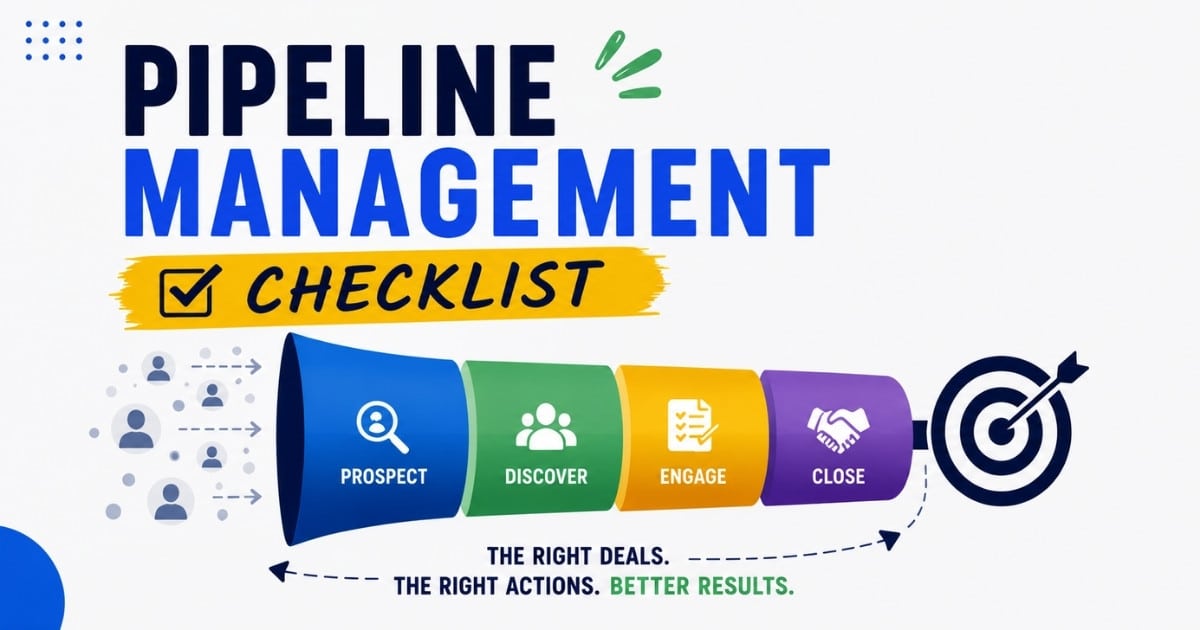
7 Point Pipeline Management Checklist For B2B Sales Teams
This is the operational core of the article. The checklist covers seven non-negotiable areas that turn pipeline management from a weekly meeting into a disciplined revenue system.
Ideal Customer Profile And Lead Generation Discipline
Effective lead generation is crucial as it sets the foundation for future sales, emphasizing the need to identify potential clients and nurture these leads effectively, which is where a focused CRM to help sales teams manage leads becomes essential. But not all leads are created equal. Research shows that 60 percent of marketing-qualified leads fail to convert due to misalignment with ideal customer profiles, often hidden inside assumptions that the top of the funnel looks fine.
Use firmographic, technographic, and behavioral signals to score fit. Lead scoring should include explicit rules for company size, industry, urgency, engagement, and buying intent. Using qualification frameworks like BANT (Budget, Authority, Need, Timeframe) and a clear understanding of MQL vs SQL lead qualification helps to weed out bad-fit prospects early.
Aligning Sales and Marketing teams on what constitutes a Sales-Qualified Lead (SQL) is crucial for optimizing the pipeline, and choosing the right B2B sales CRM for revenue teams helps keep those definitions consistent in day-to-day execution. Companies with structured pipelines see a 16% higher win rate compared to those without, highlighting the importance of effective lead generation strategies.
Stage Design With Clear Entry And Exit Criteria
Pipeline stages must reflect buyer progress, not seller optimism, and a well-designed visual sales pipeline that improves deal clarity helps teams see that progress in real time. Common stages include New Lead, Qualified, Discovery Completed, Proposal Sent, Negotiation, and Closed Won or Closed Lost.
Establishing concrete, verifiable actions for leads to move from one stage to the next is vital in pipeline management. Setting clear entry and exit criteria for each stage of the sales pipeline ensures that deals do not stall and helps maintain momentum throughout the sales process.
For example, a deal should not move into Proposal Sent until budget is validated, key stakeholders are identified, pain is quantified, and success criteria are documented. Exit criteria reduce inflated forecasts and help sales operations keep reporting consistent.
Ownership, Handovers, And Activity Cadence
Every opportunity needs one owner. A handover from SDR to AE should include qualification notes, buyer goals, decision process, next step, and relationship history, all of which depend on managing contacts better to build stronger relationships. This keeps the team accountable and protects momentum.
Research shows that 62 percent of buyers abandon after one ignored touch, highlighting the importance of consistent follow-ups in the sales process. Companies with structured follow-up processes see a 16% higher win rate compared to those without, emphasizing the need for a well-defined follow-up strategy.
Effective follow-up strategies should include a tangible next step with a specific future date for every active deal to maintain its status as a deal. Timely follow ups and personalized communication strengthen relationships and reduce inconsistent follow ups.
Performance Metrics, Conversion Rates, And Velocity
Monitoring key performance indicators (KPIs) like average deal value, win rates, and sales cycle length is essential for effective pipeline management. Sales performance metrics include stage conversion rates, which track the percentage of leads moving from one stage to the next in a sales pipeline, and are essential for identifying areas needing improvement.
Track performance metrics by segment, source, rep, region, and product. Useful critical metrics include lead conversion rates, opportunity-to-close rate, average deal size, sales cycle length, and stage aging, all of which improve with disciplined sales deal tracking for modern sales teams.
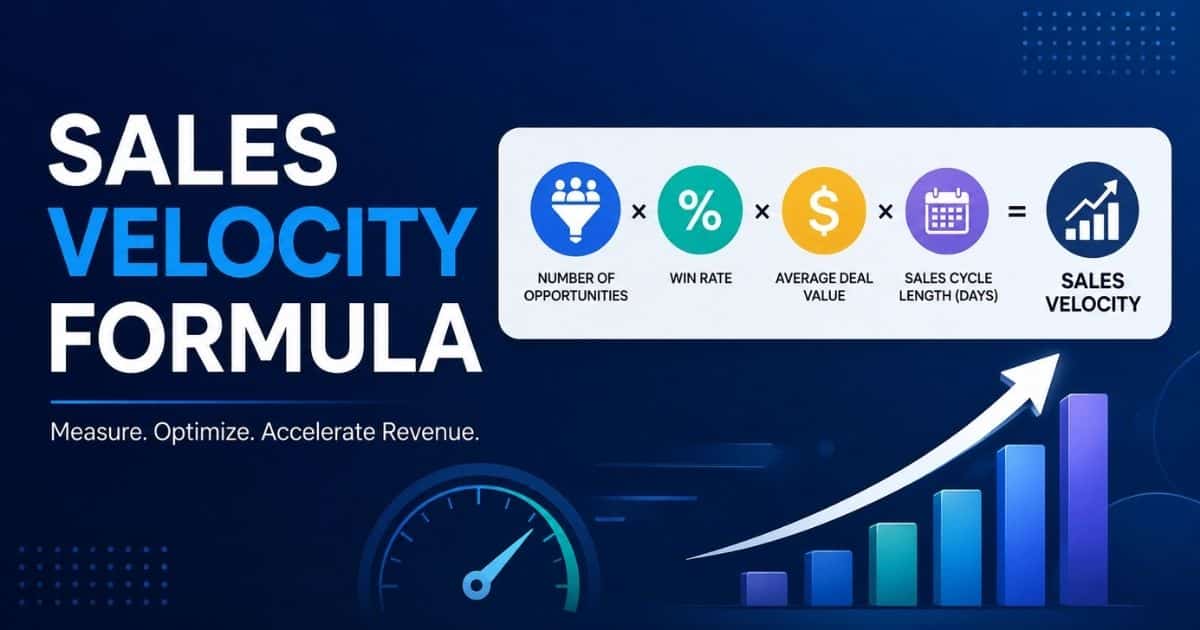
Sales velocity measures how quickly a deal moves from initial contact to a win, and is one of several critical sales performance metrics that can indicate the efficiency of the sales process. The formula is:
Sales Velocity = Opportunities × Average Deal Value × Win Rate ÷ Sales Cycle Length
Forecasting Discipline And Scenario Planning
Forecast categories need rules. Commit should mean verified timing, budget, authority, legal or procurement path, and next step. Best Case can include strong opportunities that still need one or two buyer actions.
Maintaining pipeline coverage involves ensuring enough deal value in the pipeline to hit targets, with many teams aiming for a coverage ratio of 3 × to 6 × their quota. If quota is $1 million and win rate is 25%, a team may need $4 million or more in qualified pipeline to feel confident.
Scenario planning creates valuable insights. If MQL-to-SQL conversion improves by five percentage points, one benchmark showed closed revenue could rise materially, in some cases by up to 18%. That helps leaders identify opportunities for coaching, campaign changes, or better territory focus.
Data Hygiene And CRM Governance
A clean CRM is the foundation of accurate tracking, and teams get more value when they support it with a simpler sales workflow inside their CRM. Required fields should include primary decision maker, deal value, close date, qualification notes, next step, stage, source, and buying committee.
Poor data quality leads to wasted effort, weak sales productivity, and inflated expectations. Daily updates by reps, weekly stuck-deal reviews, and monthly duplicate cleanup keep reports credible.
Sales operations should own governance. A consistent policy for fields, definitions, and pipeline stages prevents fragmented reporting and gives leadership a reliable visual representation of the business.
Continuous Improvement And Feedback Loops
A sales pipeline stages guide for B2B teams is closely related to a sales pipeline audit, which is a comprehensive review of a company’s sales operation, including strategies, processes, tools, and team performance, to identify inefficiencies and growth opportunities.
Run quarterly audits to compare intended behavior with actual CRM activity. Look for areas for improvement such as stale close dates, missing decision makers, weak proposal conversion, or slow follow-up after demos.
Customer feedback, win-loss reviews, and data collection should feed back into the sales strategy. No checklist can guarantee success, but regularly reviewing pipeline performance helps teams identify areas that deserve training, process changes, or new messaging.
Pipeline Stage Architecture For Modern B2B Sales
Modern B2B buying rarely moves in a straight line. More people are involved, buyers do more research before speaking with sales, and key decisions may depend on security, finance, legal, or executive approval. Pipeline architecture must match the buyer’s journey.
Discovery And Qualification Stage Design
Discovery should capture pain, current solution, business impact, urgency, budget, authority, and timeline. Lead qualification should separate early interest from real purchase intent.
Marketing Qualified Leads and Sales Qualified Opportunities must use shared rules. A prospective customer may engage with content, but that does not mean the account is ready for a sales conversation. BANT, MEDDIC, or a blended framework gives reps a consistent way to qualify.
Structured discovery templates also support data analytics and become far more useful when combined with dynamic contact management for smarter relationship tracking. Over time, leaders can compare why some prospective clients move forward and others stall.
Proposal, Evaluation, And Mutual Action Plans
Proposal stages should be based on buyer activity, not just a document sent by the seller, and a strong visual sales pipeline software to manage deals makes those activities easier to track and act on. The buyer may be reviewing ROI, checking security, comparing vendors, or sharing financial documents internally.
A mutual action plan keeps both sides aligned on milestones, responsibilities, evaluation criteria, and procurement steps. It also prevents late-stage surprises.
Before a deal enters Commit, confirm success metrics, approval path, legal review, and decision date. These details improve conversion rates from proposal to closed won.
Closing, Implementation, And Early Value Realization
Closing deals is not only signature collection. It is the transition from promise to delivery, and it sets the tone for retention, referrals, and expansion.
Late-stage risks include new decision makers, budget changes, competitive pricing, or delayed procurement. Reps should revalidate business impact and executive sponsorship before assuming the deal is safe.
Plan the first value moment before close. When buyers know what will happen after signature, confidence increases and friction drops.
Expansion, Renewal, And Account Growth Motions
A well managed sales pipeline does not stop at the first contract, and robust Gain.io features for smart CRM teams help extend pipeline discipline into expansion and renewal motions. Existing customers can become a second pipeline for renewal, cross-sell, and upsell.
Account plans should include growth hypotheses, usage milestones, stakeholder maps, and renewal risks. Track churn reasons, expansion rate, and net revenue retention where relevant.
This keeps relationship management connected to revenue, not treated as a separate activity.
Alignment Between Marketing, Sales, And Customer Success
Marketing, sales, and post-sale account teams need shared definitions for lead, SQL, opportunity, customer, expansion, and renewal. Misalignment creates duplicate numbers and weak decisions.
Cross-functional reviews should examine lead quality, campaign source performance, speed to qualified opportunity, win rate, and handoff quality.
When everyone works from the same pipeline data, leaders can spot issues earlier and coordinate action faster.
Time, Resource Allocation, And Focus Across The Pipeline
A strong sales pipeline can still fail if reps spend time in the wrong places. Effective pipeline management helps teams decide which deals deserve focus, which need requalification, and which should be closed lost, starting with a clear understanding of what a sales pipeline is and how to build one.
Prioritizing High Probability Opportunities
Score opportunities by fit, engagement, stage, size, and timing. A high-fit account with active executive engagement deserves more attention than a large but silent opportunity. Historical win rates by industry, deal size, and source help guide focus. If a potential client has not responded for weeks and no next step exists, the sales rep should requalify or remove it from the active forecast.
Strong prioritization also prevents sales teams from wasting resources on low-conversion deals that slow pipeline movement. Businesses that regularly review opportunity quality often improve forecast accuracy, sales productivity, and overall revenue performance.
Balancing Prospecting And Active Deal Work
Pipeline health depends on both active deal work and steady prospecting. If reps only work current opportunities, future sales suffer. Managers can set weekly targets for new opportunities created, discovery calls completed, and follow-ups scheduled. A practical AE calendar might reserve mornings for outbound and follow-up, afternoons for demos, proposal work, and negotiation.
Balanced activity planning also helps sales teams maintain stable pipeline growth during slower market periods. Organizations that consistently combine prospecting with active deal management usually create more predictable revenue opportunities and stronger long-term pipeline health.
Automation Without Losing Personalization
Automation should reduce repetitive tasks, not replace judgment. Use reminders, email follow-up prompts, meeting scheduling, and stale-deal alerts to keep momentum. Guardrails matter. Messages should adjust by role, stage, and engagement level. Personalized communication helps buyers feel understood while automation keeps timely follow-ups from slipping.
Well-managed automation also improves team efficiency without damaging relationship quality during the sales process. Sales organizations that balance automation with human interaction often create stronger buyer trust, higher engagement rates, and more successful deal progression.
Capacity Planning And Territory Design
Pipeline analytics help leaders decide when to hire, rebalance territories, or adjust quotas. If one region has high pipeline value but falling win rates, reps may be overloaded. Track open opportunities per rep, active proposals per rep, account load, and cycle time. Capacity planning should include new business and existing account work.
Effective territory planning also prevents uneven workload distribution that reduces sales performance across teams. Companies that monitor pipeline capacity closely usually improve rep productivity, customer coverage, and operational efficiency within growing sales organizations, especially when they augment their CRM with an AI sales assistant for pipeline efficiency.
Data Analytics To Redirect Effort
Data analytics reveal where sales efforts produce the best return. A campaign may generate many potential leads but poor opportunity conversion, while another source may produce fewer leads and higher revenue.
Monthly reviews should compare sources, segments, sales cycle length, and conversion rates. The output should be clear action: shift spend, change messaging, coach reps, or refine ICP rules, supported by strong sales visibility into deals and activities.
Consistent pipeline analysis also helps leadership teams identify weak sales stages and underperforming acquisition channels earlier. Businesses that act on performance insights quickly often improve conversion efficiency, resource allocation, and long-term revenue forecasting accuracy.
Improved Forecasting, Reporting, And Revenue Visibility
Forecasting is not a finance exercise at the end of the quarter. It is the result of daily pipeline discipline. Clean stages, clear next steps, and reliable data produce more accurate predictions.
Trustworthy Pipeline Reports
A strong report segments pipeline by stage, owner, product, region, source, and time frame. Current-quarter, next-quarter, and full-year views answer different leadership questions.
Reports should highlight risk, including deals with no next step, old close dates, missing stakeholders, or stage aging beyond normal thresholds. Centralizing reports in the CRM reduces spreadsheet errors.
Consistent reporting structures also help sales leaders identify bottlenecks earlier and improve operational visibility across revenue teams. Businesses with reliable pipeline reporting often make faster decisions around hiring, forecasting, and resource allocation.
Forecast Methodologies And Commit Practices
Common methods include stage-weighted forecasts, rep-level commits, and data-driven models. Each works better when the underlying pipeline is clean.
Checklists standardize when a rep can mark a deal as Commit or Best Case. For example, Commit may require a confirmed budget, an identified economic buyer, an agreed timeline, and a procurement path.
Standardized forecasting processes also improve accountability across sales teams and reduce inconsistent pipeline judgment. Organizations that define clear commitment rules often improve forecast accuracy and strengthen confidence in revenue planning discussions.
Executive Visibility And Cross-Functional Reporting
Executives need pipeline data for hiring, budget, quota, and revenue planning. Finance and sales must agree on definitions for pipeline value, forecast category, close date, and risk.
Transparent reporting builds trust because leadership can see not only the number, but also the action plan behind it.
Shared visibility across departments also improves alignment between sales, finance, marketing, and operations teams. Businesses with connected reporting structures often reduce forecasting conflicts and improve long-term strategic planning across revenue operations.
Pipeline Insights Linked To Strategic Planning
Pipeline trends over six to twelve months can reveal strategic signals. Longer enterprise cycles may show a need for earlier legal involvement. Strong conversion in one vertical may justify new sales content or a focused campaign.
These insights should influence pricing, packaging, enablement, and market focus. Pipeline management becomes a source of strategic intelligence, not only deal tracking.
Long-term pipeline analysis also helps organizations identify emerging market opportunities and operational weaknesses before revenue declines occur. Companies that use pipeline insights strategically often improve sales efficiency and competitive positioning over time.
Continuous Improvement Reviews Close The Loop
Post-quarter reviews should compare forecast to actuals, inspect major slips, and identify root causes. Were deals poorly qualified? Did buyers go silent? Were stage rules too loose?
Update playbooks, coaching plans, and checklist rules based on findings. Continuous improvement turns forecasting into a learning system.
Regular review cycles also help revenue teams adapt faster to changing buyer behavior and market conditions. Organizations that consistently refine forecasting practices usually improve sales execution, pipeline quality, and long-term revenue predictability.
How Gain.io Supports B2B Pipeline Management Checklists
Gain.io is a modern all-in-one CRM to grow your sales and team built for sales teams that need clear pipeline visibility without unnecessary complexity. It helps teams manage leads, prospects, customers, opportunities, follow-ups, notes, sales emails, and meetings in one connected workflow.
With Gain.io, sales managers can create visual pipelines that reflect real pipeline stages, track progress from initial contact to close, and keep deal-related activity organized. Reps can manage contacts, log sales conversations, schedule demos, set follow-up tasks, and keep important notes tied to the right opportunity.
Gain.io also supports daily pipeline discipline. Teams can use pipeline views to spot stalled deals, review upcoming activities, and keep close dates, deal values, and next steps current. That supports improved sales forecasting and helps managers coach from facts rather than assumptions.
The value is practical: fewer scattered tools, stronger sales productivity, better visibility into closing deals, and a clearer path from pipeline management checklist to day-to-day execution. Teams ranging from startups and small sales teams adopting CRM to scale-ups comparing Gain.io vs Salesforce CRM options have seen that a focused platform can accelerate execution, as shown in a recent case study on closing deals faster with Gain.io.
Frequently Asked Questions
How Often Should B2B Teams Review And Update Their Pipeline Checklist?
Most B2B teams should run a light checklist review every quarter and a deeper audit once a year. Review sooner if the company launches a new product, enters a new market, changes pricing, or misses the forecast for two consecutive quarters. Regular reviews also help sales organizations adjust pipeline criteria based on changing buyer behavior, market conditions, and internal sales processes. Teams that refresh checklists consistently usually maintain better forecast accuracy and operational alignment.
What Is The Best Way To Roll Out A New Pipeline Checklist To An Existing Sales Team?
Start with a pilot group of experienced reps and one sales manager for 30 to 60 days. Use live opportunities in enablement sessions, then reinforce the checklist during one-on-one deal reviews and team pipeline meetings. A phased rollout also helps leadership identify workflow friction, training gaps, and adoption challenges before company-wide implementation. Teams that test checklist processes early often improve long-term consistency and sales team acceptance rates.
How Can Teams Use A Checklist Without Slowing Down Experienced Reps?
Position the checklist as a safety net, not a script. Senior reps should have flexibility in how they sell, as long as core fields, defined criteria, next steps, and buyer evidence are captured. Flexible checklist usage also encourages experienced sales reps to maintain their personal selling styles without sacrificing reporting accuracy. Organizations that balance structure with autonomy often improve both sales productivity and CRM data quality.
How Should Pipeline Checklists Adapt To Very Long Enterprise Sales Cycles?
Long enterprise cycles need sub-stages or milestones, such as proof of concept completion, executive sponsorship, procurement review, and security approval. These checkpoints prevent a nine-month deal from hiding risk inside one broad stage. Detailed enterprise milestones also help revenue teams monitor deal progression more accurately across lengthy buying processes. Businesses that segment complex opportunities clearly usually reduce forecasting uncertainty and improve executive pipeline visibility over time.
What Metrics Indicate That A Pipeline Checklist Is Actually Working?
Look for better stage-to-stage conversion rates, shorter sales cycles, higher win rates, cleaner CRM data, and fewer quarter-end surprises. Also, compare quota attainment and forecast accuracy before and after implementation while accounting for seasonality. Successful checklist adoption may also improve rep accountability, pipeline consistency, and coaching effectiveness across sales teams. Organizations that monitor performance metrics regularly often identify operational improvements faster and strengthen long-term revenue predictability.