Sales leaders cannot improve performance without clear visibility into pipeline activity, deal movement, and revenue opportunities. Modern sales pipeline management helps teams understand how many deals are currently in progress, which active deals require attention, and whether current efforts align with overall sales targets. Without accurate visibility, teams often rely on assumptions instead of data-driven decisions.
A structured pipeline also helps sales leaders evaluate sales tactics, identify weak points in the sales process, and prioritize leads based on deal quality, urgency, or conversion potential. Better visibility allows teams to understand where each deal stands, reduce forecasting errors, and improve decision-making across the sales cycle. As competition increases, organizations need stronger pipeline visibility to maintain consistent growth, improve team accountability, and close revenue gaps more effectively.
What Is Sales Pipeline Visibility
Sales pipeline visibility refers to the ability to clearly track and understand every opportunity across the sales process. A typical sales pipeline gives sales teams a visual representation of where prospects stand, from the first interaction to the final purchase decision. Unlike a sales funnel that focuses mainly on conversion percentages, pipeline visibility helps businesses monitor movement from one stage to the next with greater accuracy.
Strong visibility helps teams identify pain points, detect warning signs, and gain a deeper understanding of stalled opportunities before revenue is affected. Many businesses realize half of their forecasting challenges come from limited visibility into deal progress and pipeline activity. With better pipeline visibility, sales leaders can track performance, improve decision-making, and manage opportunities more effectively throughout the entire sales cycle.
Reasons Sales Leaders Need Better Pipeline Visibility
This section details the six most critical reasons modern sales leaders cannot afford to run with partial or misleading pipeline visibility. Each subsection focuses on a specific leadership-level outcome: forecasting accuracy, pipeline health control, resource planning, coaching effectiveness, strategic decisions, and board-level credibility.
Greater Forecast Accuracy For Board And Executive Stakeholders
Accurate forecasting relies on pipeline visibility, as it enables sales teams to base their predictions on actual buyer engagement rather than just rep updates, leading to more reliable revenue projections. The common pattern of over-weighting late-stage but low-engagement deals creates systematic forecast inflation. When managers cannot see who from the buyer organization has engaged with content, attended meetings, or reviewed proposals, they default to trusting optimistic rep probability assessments.
Consider a scenario where a $500K deal sits in the proposal stage with high stated probability, but engagement data shows no proposal opens and no stakeholder activity in three weeks. Without visibility into these signals, this deal appears in committed forecast. When it slips, the quarter misses.
Stronger Control Over Pipeline Health And Risk
Pipeline health encompasses several key metrics: coverage ratio relative to target, stage distribution across the funnel, days-in-stage for identifying stalled deals, and win rates by stage. Each metric tells a different story about pipeline viability.
With a clear view of your pipeline, you can quickly identify any bottlenecks in the sales process, allowing you to address them promptly and keep deals moving through the pipeline more efficiently. Leaders might spot too many deals stuck over 45 days in proposal stage, or a sudden conversion drop from Discovery to Evaluation. These signals enable early intervention through re-qualification or resource redirection. Each stage of the sales pipeline helps identify the next best steps based on where prospects are on the road to a sale.
Smarter Resource Allocation Across Reps, Regions, And Channels
Better resource allocation allows organizations to identify bottlenecks and reallocate resources to support deals that are close to closing. Strong sales visibility enables leaders to balance territories, manage rep workload, and direct solution engineering or enablement support to high-impact opportunities.
Visibility into deal velocity and stage conversion across regions reveals which markets are under-resourced or overstaffed. If one region shows strong pipeline coverage but weak win rates while another has thin coverage but strong conversion, resource allocation looks different for each. Marketing budget allocation follows similar logic. Doubling down on channels that consistently create faster-moving, higher-converting opportunities produces better returns than spreading budget evenly.
Better Coaching And Performance Management For Sales Teams
Improved coaching and accountability involve managers reviewing specific deal stages and rep activities to provide targeted coaching. Detailed pipeline views reveal patterns like reps who overfill early stages but underperform at negotiation, or those who struggle specifically at the evaluation to proposal transition.
Visibility into both activity levels and genuine buyer engagement enables precise coaching. A rep might show high activity with a particular deal but if buyer engagement metrics remain low, the outreach is not resonating. Coaching can address specific messaging or approach issues. Regular pipeline reviews help identify stalled deals, allowing sales teams to determine specific next actions to get them moving again. When reps know they will face detailed questions about specific deals in weekly reviews, they update CRM data more consistently and think more strategically about deal progress.
More Informed Strategic Decisions And GTM Adjustments
Aggregated pipeline data reveals which segments, products, and use cases produce the best combination of win rate, average deal size, and deal velocity. These patterns inform go-to-market adjustments that compound over time.
Reliable pipeline visibility supports prioritization of enablement initiatives. If analysis shows reps consistently underperform at the proposal stage, training should focus on proposal writing and negotiation rather than discovery skills. Sales enablement tools and a dedicated sales visibility CRM help sales teams improve their skills and close deals efficiently by providing content, coaching modules, and training courses tailored to current market and buyer needs, supported by real-time pipeline insights.
Greater Credibility With Investors And Finance Teams
CFOs and investors increasingly require scenario-based forecasting grounded in high-quality pipeline data rather than optimistic rollups. Leaders who can articulate why coverage is lower in a region or why win rates improved after adjusting pricing have more credibility than those who simply miss targets without explanation.
When leadership evaluations include forecast accuracy as a metric, leaders naturally prioritize pipeline discipline and data quality. This cascades to managers and reps, creating a culture where accurate pipeline reporting is expected. The downstream effect is smoother planning conversations with finance and more credible investor communications.
Foundations Of Effective Sales Pipeline Visibility
Building effective visibility requires establishing core infrastructure before layering on advanced analytics. Accurate visibility starts with a well-defined sales process, disciplined data management, and a customer relationship management system that reflects reality rather than just logging activity.
Role Of Customer Relationship Management Platforms
Companies should adopt a centralized sales pipeline CRM as the single source of truth to improve sales pipeline visibility and enhance sales processes. Customer relationship management software is essential for managing and organizing customer data, tracking interactions, and monitoring the sales pipeline, enabling better customer engagement and sales efficiency.
Good CRM usage means every meaningful interaction is logged, next steps are defined, and standardized fields are completed for each opportunity. A well-implemented B2B sales CRM system supports this discipline in complex sales cycles where multiple stakeholders and long decision processes are common. Setting minimum data requirements for each stage enforces discipline. For example, a deal should not move past qualification without identifying the decision-maker and confirming budget availability.
Importance Of Clear, Actionable Deal Stages
Vague or overlapping pipeline stages cause inaccurate pipeline reporting and forecast confusion. Defining clear, standardized stages ensures everyone follows a standard sales process with clear criteria for moving a deal between stages.
A stage should be defined as “mutually confirmed problem and success metrics” rather than “second call completed.” This distinction matters because two reps could complete identical call counts but have entirely different levels of buyer alignment. Documenting each deal stage in a simple internal playbook ensures consistent interpretation across new and tenured reps.
Data Hygiene As A Leadership Responsibility
Pipeline visibility depends on reliable CRM data, which requires leadership emphasis rather than just rep reminders. Working from bad data clouds pipeline visibility and leads to lost revenue.
Non-negotiable standards include: deals updated before weekly pipeline reviews, realistic close dates maintained, and values based on actual pricing rules rather than arbitrary estimates. Sales ops or RevOps should run regular audits to catch missing fields, outdated close dates, or deals with excessive age in stage. Tracking key metrics such as deal age can help identify bottlenecks, as longer lead times may indicate that prospects are stuck in the pipeline.
Cross-Functional Alignment Around Pipeline Data
Pipeline visibility is a shared responsibility across marketing, finance, product, and customer success. Fostering collaboration between sales and marketing teams helps define lead quality and ensures a smooth handoff process.
Creating shared dashboards showing pipeline coverage, stage distribution, and forecast by segment for all revenue teams eliminates misinterpretation. Marketing can see which campaigns produce leads that progress most quickly. Customer success can prepare onboarding plans based on upcoming closes. Product teams can see which features appear most frequently in proposals.
Governance And Ownership Of Pipeline Management
Clear ownership hierarchy prevents pipeline decay: individual reps update deals, managers coach and validate, RevOps maintains structure and reporting, and sales leadership sets standards.
Organizations should document a pipeline governance charter describing roles, responsibilities, and review cadences. For example, the charter might state that all deals must be updated with next steps within 24 hours of a key meeting, or that any deal over 90 days in stage requires manager review.
Methods To Improve Sales Pipeline Visibility Across Your Team
This section provides a tactical playbook for sales leaders looking to materially improve pipeline visibility in the next one to three quarters. The focus is on practices that scale: structured reviews, shared dashboards, automation, and engagement tracking standards.
Structured Pipeline Review Cadences
Regular structured pipeline reviews using live data can help in discussing deal health, next steps, and bottlenecks. A two-tier cadence works well: weekly deal-level reviews between managers and reps, and monthly leadership reviews focused on trends and coverage.
A high-quality weekly review focuses on top deals per rep, deals at risk, and specific next actions rather than reading every CRM line. Monthly reviews examine win rates by stage, average deal velocity, and changes in segment performance.
Limiting meetings to focused time blocks with consistent agendas keeps them actionable. The frequency of reviews directly impacts data quality. When reps know they face detailed questions Monday morning, they prepare more thoroughly Friday, improving CRM accuracy naturally.
Shared Dashboards And Key Pipeline Metrics
Key metrics for shared dashboards include pipeline coverage ratio, deal velocity, win rates by stage, average deal size, and pipeline age distribution. Tracking these sales performance metrics for SaaS teams helps both managers and executives quickly assess pipeline health without examining every deal.
Segmenting dashboards by region, product line, or customer segment surfaces localized issues and opportunities. A dashboard showing strong top-of-funnel creation but weak conversion at proposal stage points to specific coaching needs. Near real-time updates ensure leaders make decisions on current data, not month-old snapshots.
Automation To Reduce Manual Pipeline Updates
Automation of routine tasks, such as scheduling follow-ups or updating deal status, allows sales reps to focus on selling. Applying targeted sales workflow automation strategies and connecting sales engagement platforms, call recording systems, and contract tools so status changes update pipeline fields automatically reduces rep burden.
Automation rules can flag deals with no activity over a set period or approaching close dates without recent engagement. Key performance indicators for sales include pipeline velocity, conversion rates between stages, and customer acquisition costs, all of which can be calculated automatically.
Tracking Deal Velocity And Time-In-Stage
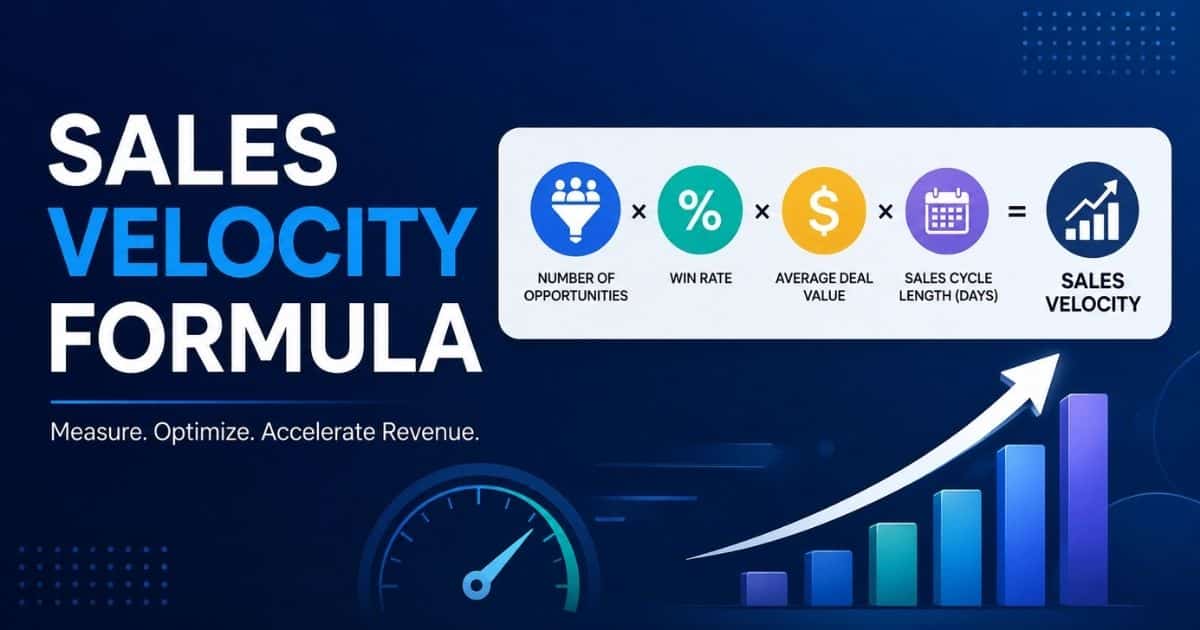
Deal velocity combines the number of deals, average value, win rate, and sales cycle length. Understanding velocity requires disciplined sales deal tracking to see how fast deals move through the pipeline and where they concentrate at each stage.
Improving velocity by even a few days frees rep capacity and accelerates cash flow. Sales cycle length directly impacts revenue timing and resource planning. A visual sales pipeline that improves deal clarity makes stage-by-stage velocity analysis easier and reveals where process changes could accelerate progression.
Using Buyer Engagement Signals To Validate CRM Data
Integrating buyer behavior data like email opens, content views, and multi-stakeholder meeting attendance into pipeline visibility validates what CRM stages suggest. AI-driven sales assistant tools for pipeline efficiency can surface these engagement signals automatically. Deals that appear advanced in CRM but lack recent engagement are likely at risk.
Combining engagement scores with deal status prioritizes coaching and management time on high-value but engagement-light opportunities. This validation layer addresses the limitation of CRM data that only reflects what reps enter rather than what buyers actually do.
Pipeline Visibility For Accurate Forecasting And Growth Planning
Pipeline visibility connects directly to financial planning, headcount decisions, and revenue growth strategies. Building a structured sales pipeline that actually works is foundational, and accurate forecasting then requires systematically analyzing pipeline data quality, deal quality, and historical performance rather than simply counting deals.
Connecting Pipeline Coverage To Revenue Targets
Pipeline coverage must align with historical win rates and sales cycle length. A team with 25% win rate needs approximately 4x coverage, while a team at 40% win rate might manage with 2.5x coverage.
Walking through this calculation: targeting $1M quarterly revenue with $100K average deal size and 25% win rate requires $4M in pipeline to reasonably expect hitting target. Tracking coverage by segment and quarter matters because healthy coverage three quarters ahead differs from near-term expectations.
Using Historical Pipeline Data To Improve Forecasts
Sales forecasting is the process of estimating future sales performance based on historical data, market trends, and other variables, which is essential for effective business planning and resource allocation. Analyzing 12 to 24 months of historical data reveals true conversion rates by stage, segment, and average deal size band.
Accurate sales forecasts depend on having clear visibility into the sales pipeline, allowing businesses to make data-driven predictions about future revenue and plan accordingly. Using visual sales pipeline software to monitor movement by stage ensures historical patterns adjusted for current conditions produce better forecasts than rep-entered probabilities alone.
Scenario Planning With Pipeline Insights
Leaders use pipeline visibility to model best-case, likely, and downside scenarios for upcoming projects and quarters. Segmenting pipeline into tiers based on stage, engagement, and historical similarities creates this structure.
Scenario planning informs decisions about hiring, quota setting, and marketing spend. Modeling the impact of a 5-point drop in win rate or two-week extension in average sales cycle on quarterly revenue reveals whether contingency plans are needed.
Aligning Sales, Marketing, And Finance On Forecast Inputs
Forecast reliability improves when sales, marketing, and finance agree on how pipeline metrics and assumptions are defined. Quarterly calibration sessions reviewing conversion assumptions and demand-generation plans together prevent misalignment.
Marketing commits to generating a certain volume of qualified leads while sales commits to maintaining specific stage conversion rates. Finance must understand which parts of the forecast revenue is pipeline-backed versus dependent on yet-to-be-created opportunities.
Linking Forecast Accuracy To Leadership Accountability
Sales leaders should track forecast accuracy over time as a core performance metric for themselves and their management team. Publicly reviewing forecast versus actual results, discussing which assumptions held and which broke down, creates accountability.
Tying leadership evaluations partly to forecast accuracy incentivizes better pipeline visibility practices and more honest deal assessments. This discipline builds credibility with boards and investors, making it easier to secure resources when needed.
Effective lead qualification can significantly improve conversion rates, long-term retention, and customer lifetime value by ensuring that only suitable leads are pursued. A structured lead qualification guide for sales teams helps implement this in practice. Common frameworks for lead qualification include SPIN selling, the Challenger sales model, and GPCTBA/C&I, which help sales teams identify qualified leads based on specific criteria.
Best Practices For Maintaining High Pipeline Visibility Over Time
Sustaining visibility requires consistent routines, cultural reinforcement, and continuous improvement. Simplifying your sales workflow and getting more from your CRM ensures a one-time cleanup does not produce only temporary benefits that erode without ongoing discipline.
Regular Pipeline Hygiene And Cleanup Cycles
Monthly or quarterly pipeline hygiene sessions close out stale deals, low-engagement opportunities, or obviously unqualified prospects. Enforcing maximum permissible deal age per stage prevents forecast inflation.
An initial cleanup often reduces apparent pipeline value by 20 to 30 percent but dramatically improves forecast accuracy. Managers should lead by example, actively participating in cleanup and not tolerating hope deals that lack evidence of progress.
Coaching Reps To Value Quality Over Volume
Sustainable pipeline visibility requires a culture that rewards realistic deal assessments and disciplined qualification over headline pipeline numbers. Performance conversations should shift partly toward win rates, deal velocity, and forecast accuracy per rep.
Coaching a rep who chronically overstates deal stage or probability requires showing data from past deals. If deals they labeled 60% probability historically closed at 35%, the adjustment conversation becomes data-driven rather than subjective.
Embedding Visibility Into Team Rituals And Tools
Incorporating pipeline views into daily standups, weekly team meetings, and one-to-ones keeps visibility top-of-mind. Shared digital workspaces or dashboards, powered by smart CRM tools for sales teams, displayed in recurring meetings maintain alignment on current status.
A simple pipeline health scorecard reviewed at the same time each week creates consistent focus. When visibility is built into regular rituals, data quality improves naturally as reps anticipate questions and understand expectations.
Aligning Compensation And Incentives With Data Integrity
If compensation plans reward only bookings and ignore data quality, reps naturally deprioritize accurate updates. Small but meaningful incentives for maintaining high-quality crm data reinforce desired behaviors, especially when teams see how centralized CRM helps sales teams manage leads and enables reliable sales performance metrics.
Management performance reviews can include forecast accuracy and pipeline quality as evaluation criteria. Aligning eligibility for accelerators or strategic account assignments with adherence to pipeline management standards creates positive reinforcement.
Continuous Improvement Based On Pipeline Analytics
Leaders should treat pipeline visibility as an ongoing improvement project. Quarterly analytics reviewing conversion by stage, time-in-stage, and lost reasons identify where training or process changes are needed.
Analysis revealing that deals involving a specific competitor stall at the same stage prompts improved battlecards or messaging. Discovering that prospects who attend architecture reviews close at higher rates suggests expanding that program.
How Gain.io Supports Sales Pipeline Visibility For Modern Revenue Teams
Gain.io provides sales leaders with the pipeline visibility infrastructure needed to track deal progress and make informed decisions. As an all-in-one CRM to grow your sales and team built specifically for revenue teams, Gain.io centralizes contact details, communication history, and deal records in a single platform that eliminates data silos between team members.
The visual sales pipeline in Gain.io gives leaders immediate insight into where each prospect stands in the buying process. Sales teams can track deals from first contact through the final stage, with clear visibility into stage progression, deal status, and upcoming projects requiring attention. This unified view supports the accurate data requirements that make forecasting reliable.
For teams focused on closing deals and hitting quota, Gain.io reduces friction in the sales process while providing the visibility leaders need for resource allocation, coaching, and strategic planning. Teams that adopt Gain.io as their CRM often close deals faster and gain more predictable revenue, whether they are startups and small sales teams or growing organizations comparing options like Gain.io vs Salesforce CRM. Sales leaders ready to improve pipeline visibility and forecast revenue more accurately can explore how Gain.io fits their revenue operations.
Frequently Asked Questions
How Long Does It Typically Take To Improve Pipeline Visibility In A Sales Organization?
Meaningful improvements often become visible within one to three months when leaders standardize stages, clean existing data, and introduce consistent review cadences. Fully embedding new habits and reaching stable forecast accuracy may take two to four quarters depending on sales cycle length and team size. Starting with a pilot group or region allows process refinement before organization-wide rollout.
Which Pipeline Visibility Metrics Should A New Sales Leader Prioritize First?
Start with a focused set: pipeline coverage ratio versus target, win rates by stage, average sales cycle length, and pipeline age distribution. These metrics together provide an early view of volume, quality, speed, and staleness without overwhelming the team. More advanced measures like engagement-based health scores or segment-specific conversion should wait until basics are reliable. Benchmarking these metrics against historical performance and industry norms sets realistic improvement goals.
How Can Sales Leaders Increase Rep Adoption Of New Pipeline Processes And Tools?
Involving respected top performers in designing new processes makes them feel practical and credible to the wider team. Demonstrating how better visibility helps reps personally through better coaching, more accurate quotas, and fewer last-minute surprises builds buy-in. Short, focused training sessions and quick reference guides work better than lengthy workshops.
What Is The Best Way To Handle Legacy Deals?
Segment legacy deals by size and strategic importance, then systematically review them during pipeline hygiene sessions. Use age and engagement criteria to flag deals likely non-viable. For example, no meaningful activity in 60 or more days should trigger review. Leaders should encourage clear decisions: actively re-engage with a concrete plan including contact details for next steps, downgrade probability, or close the deal as lost with a documented reason.
How Does Pipeline Visibility Support Post-Sale Success And Customer Retention?
Clear visibility into which deals are likely to close, and when, allows customer success and onboarding teams to plan resources. Sharing pipeline insights helps CS teams maintain relationships, prepare for implementation complexity, and anticipate expansion opportunities. Aligning post-sale handoff stages with specific pipeline milestones ensures critical context about customer lifetime value potential transfers between sales and delivery.