Lead generation remains one of the most critical challenges for B2B teams in 2026. Crowded SaaS markets make it harder to stand out, so choosing between inbound vs outbound lead approaches is just the beginning of building a predictable pipeline. Teams must decide whether to run inbound programs or invest in outbound lead gen to reach potential customers.
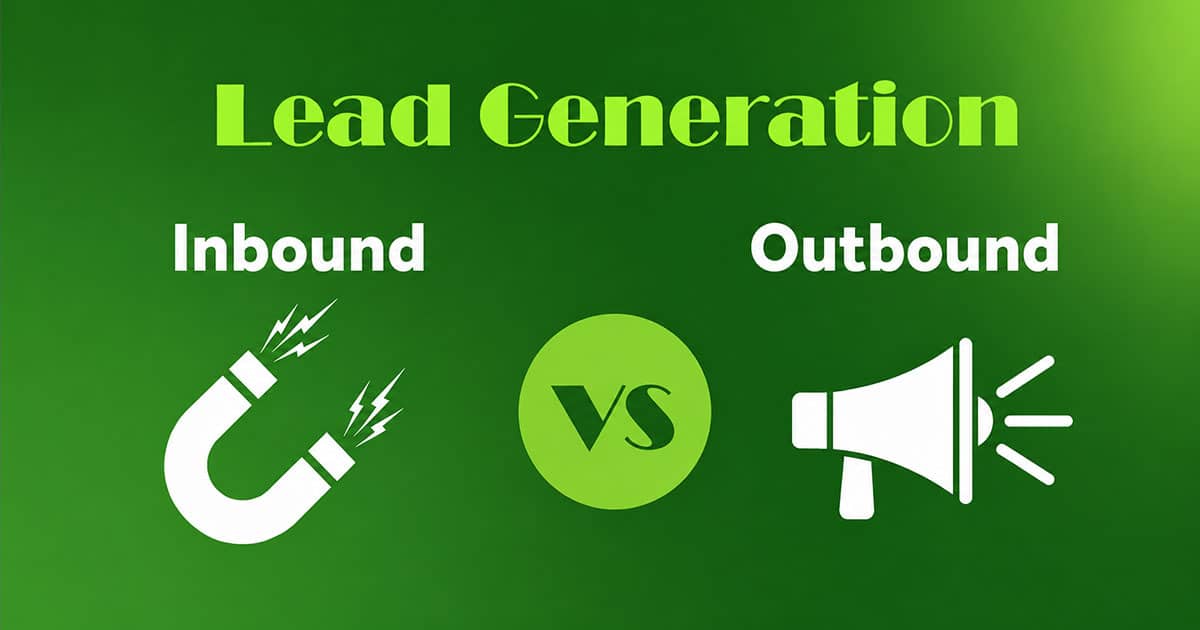
A lead is someone who shows buying interest through actions like booking demos or requesting resources. Inbound lead gen focuses on pull marketing through search, valuable content, and social media marketing, while outbound strategies rely on push marketing, direct outreach, and interruption marketing to initiate contact.
This article explains inbound lead generation strategies, outbound lead gen tactics, and how a successful inbound strategy combined with test messaging helps teams balance inbound vs outbound lead generation effectively.
Main Comparison Table Of Inbound And Outbound Lead Generation
Before diving into the details, here is a high-level comparison of the two approaches:
Factor | Inbound Lead Generation | Outbound Lead Generation |
|---|---|---|
Definition | Prospects discover you through content marketing, SEO, and social media platforms | Your team initiates contact through cold calling, cold email, and direct outreach |
Control of Timing | Prospects decide when to engage | Your sales team decides when to reach out |
Lead Quality | Typically higher; prospects have existing awareness | Typically lower initial quality; prospects may not be actively searching |
Time to Results | 3-6 months for consistent organic traffic | Weeks if targeting and messaging are strong |
Cost Profile | Higher upfront investment, lower cost per lead over time | Direct ongoing costs for data, tools, and labor |
Sales Cycle | Often shorter due to pre-built trust | Often longer; trust must be built from scratch |
Primary Channels | Blog content, SEO, webinars, social media engagement | Cold email, cold calling, direct mail, LinkedIn outreach |
Asset Lifespan | Long-lived; evergreen content keeps generating leads | Short-lived; outbound sequences need regular refreshing |
Targeting Approach | Broad reach based on topics and keywords | Precise targeting based on job title, industry, company size |
Team Skills Required | Content creation, SEO, marketing automation | Prospecting, personalization, outbound sales skills |
This table provides a foundation for understanding the strategic trade-offs between inbound and outbound methods.
Inbound Lead Generation
Inbound lead generation focuses on attracting interested buyers by providing value first. Rather than interrupting prospects, you create valuable content and experiences that pull them toward your brand on their own terms.
Common inbound channels include search engine optimization, educational blog content, downloadable resources like eBooks and templates, webinars, email nurtures, and organic social. These organic channels work together to create a path for prospects to discover your company naturally.
An inbound lead is someone who engages with your content and takes action. This might be signing up for a free trial, requesting a demo, subscribing to a newsletter, or downloading a guide. These prospects typically arrive with clearer intent because they searched for a problem or clicked a specific resource.
Platforms like Gain can help convert inbound interest into booked meetings by reducing friction between content consumption and scheduling. When your inbound engine runs smoothly, prospects move from discovery to conversation without unnecessary barriers.
How Inbound Leads Are Created In Practice
Understanding how inbound leads actually form helps you build better inbound strategies. Here is a realistic example journey:
A marketing director at a SaaS company searches “content approval workflow tool” on Google. They find a blog post on your site that explains how streamlined approval processes save time. After reading, they click a call to action to book a demo. They have just become an inbound lead.
Key inbound tactics that support this journey include:
- Publishing weekly SEO-focused articles targeting search terms your target audience uses
- Optimizing landing pages with clear value propositions and conversion paths
- Offering checklists, templates, or guides behind forms to capture contact information
- Running educational webinars that address pain points your prospects face
Data from these interactions helps your sales team prioritize leads. Pages visited, assets downloaded, and time spent on site all signal intent and interest level.
Benefits Of Inbound Leads
Inbound builds long-term trust and brand authority. When prospects consistently see helpful content from your company, they begin to view you as an expert in your space. This trust transfers to sales conversations and makes prospects more receptive.
Cost per lead often decreases over time with inbound efforts. A well-written blog post from 2023 can keep attracting organic traffic and generating leads in 2025 and beyond without additional spend. This compounding effect makes inbound increasingly efficient as your content library grows.
Inbound leads usually have clearer intent. They searched for a problem, found your content, and chose to engage. This self-qualification means your sales team spends less time explaining why your solution matters.
The data from inbound marketing efforts provides insights for continuous improvement. Traffic sources, keywords, and content performance show what resonates with your target market. Marketing teams can use this feedback loop to refine messaging and positioning.
Limitations Of Inbound-Only Strategies
Inbound is powerful but not a complete solution on its own. Teams that rely exclusively on inbound often face challenges that limit their pipeline growth.
Building meaningful organic traffic and content authority usually takes 3-6 months or more. For teams with aggressive quarterly targets, this timeline is often too slow. New products or market expansions cannot wait half a year for momentum to build.
Inbound relies heavily on algorithms and platform rules. Search engine updates can shift rankings overnight. Social media platforms change how content gets distributed. These external factors create unpredictable volume swings.
Inbound often attracts early-stage researchers who may not have budget or urgency. More leads do not always mean more opportunities. Some inbound leads are simply gathering information with no intent to buy.
For teams needing short-term pipeline volume, inbound alone rarely delivers enough qualified leads fast enough.
Outbound Lead Generation
Outbound lead generation involves proactive outreach to specific accounts and decision-makers that match your ideal customer profile. Rather than waiting for prospects to find you, your team initiates contact directly.
Common outbound methods include cold email campaigns, cold calling, LinkedIn outreach, industry events, and targeted paid ads. These outbound tactics put your message in front of potential clients whether or not they were actively searching.
An outbound lead is a prospect who responds positively to your outreach. This might be someone who replies to a cold email and agrees to a discovery call, or a contact who engages with your direct mail piece.
Outbound gives teams more control over which segments to target, when to reach out, and how fast to fill pipeline. You decide the timing, the audience, and the channel. This makes outbound especially relevant for high-value B2B deals where a small number of accounts drive most revenue.
How Outbound Leads Are Created In Practice
Understanding the outbound prospecting motion helps clarify how leads are generated. Here is a typical step-by-step view:
First, you identify your ideal customer profile. For example, marketing teams at mid-market SaaS companies in North America with 50-500 employees.
Next, you build a target account list from that profile. This involves researching companies that fit your criteria and identifying decision-makers like marketing directors or operations leaders.
Your sales team then crafts personalized outreach. A strong cold outreach message references the prospect’s current workflow and invites them to see a streamlined process in a live demo. This targeted outreach shows you understand their specific situation.
When prospects decide to respond, tools that reduce scheduling friction help move conversations forward quickly. The goal is removing barriers between interest and action.
Benefits Of Outbound Leads
Outbound works well when speed and control are priorities. Teams that need pipeline now rather than in six months often lean heavily on outbound lead generation strategies.
Outbound can produce meetings within weeks if targeting and messaging are strong. This makes it useful for new product launches, entering new markets, or compensating for slow inbound periods.
Teams can precisely target industries, roles, and company sizes. This focus ensures outreach efforts concentrate on high-lifetime-value accounts rather than casting a wide net.
Conversations with outbound prospects give real-time market feedback. You learn quickly whether your messaging resonates, whether pricing makes sense, and what feature gaps matter most.
Outbound can be scaled up or down month by month. If you hire more reps, you can increase outbound efforts. If capacity tightens, you can pull back. This flexibility helps match lead generation to revenue goals.
Limitations Of Outbound-Only Strategies
Outbound comes with clear financial and operational trade-offs that teams must acknowledge.
Outbound requires continuous investment in reps, data, tools, and ads. Unlike evergreen inbound assets, outbound campaigns need constant fuel. Pipeline slows quickly if outreach pauses.
Prospects often receive many cold messages. Response rates decline if outreach is not highly relevant and personalized. Generic outbound sequences get ignored or marked as spam.
Risks include email deliverability issues, list fatigue, and platform policy changes. LinkedIn limits connection requests. Email providers filter aggressive senders. These disruptions can derail outbound channel performance.
Outbound-only teams often struggle with lower trust. Prospects have little prior exposure to your brand. Every conversation starts cold, with no content to build credibility. This makes sales cycles longer and close rates lower.
Inbound Vs Outbound Lead Generation: Key Differences
This section breaks down the most important dimensions where inbound and outbound differ. Each subtopic contrasts the two approaches so you can map the differences to your own sales and marketing setup.
Understanding these key differences helps you make informed decisions about resource allocation, team structure, and strategy.
Timing And Control Of Engagement
With inbound, prospects decide when to search, click, and convert. Volume fluctuates with market interest, seasonal trends, and algorithm changes. You cannot force demand that does not exist.
Outbound lets your team decide when to push outbound campaigns. Launching a new feature? Closing a quarter? You control when outreach ramps up.
Inbound timing aligns poorly with fixed quarterly targets. If organic traffic dips in summer, your pipeline suffers. Outbound can compensate with a targeted campaign to create demand when needed.
A hybrid model uses inbound for consistent background demand and outbound for time-sensitive pushes. During a slow July, your SDRs can run targeted outbound sequences while the inbound engine continues building momentum for fall.
Lead Intent And Qualification
Inbound leads usually show clear interest. They searched for solutions, compared tools, or downloaded resources related to their pain points. This signals they are actively researching.
Outbound leads may not be actively looking. However, they fit the right profile and can be educated into recognizing their need. Your outreach introduces problems they may not have consciously identified.
Sales teams often find inbound conversations warmer but less predictable in volume. Outbound conversations are colder but more controlled. An inbound demo request might close faster than an outbound meeting booked after three touches.
Lead scoring matters for both types. Clear qualification criteria help your sales team prioritize the highest quality leads regardless of source. Without scoring, sales capacity gets wasted on prospects unlikely to buy.
Cost Profile And Efficiency Over Time
Inbound usually has higher upfront content and SEO costs. Creating quality blog posts, guides, and webinars requires investment in content creation and distribution.
However, marginal cost per lead decreases over time as traffic compounds. A well-optimized article keeps generating leads without additional spend.
Outbound has direct, ongoing costs for data, tools, and labor. Cost per lead often remains flat or increases as you scale. Buying more lists and hiring more reps means proportionally higher expenses.
For early-stage teams, outbound may look cheaper at first because results show up quickly. But comparing costs after 3 months, 6 months, and 12 months often reveals inbound becoming more efficient.
The right choice depends on your time horizon and capital constraints.
Asset Lifespan And Reusability
Inbound assets like evergreen blog posts and recorded webinars are long-lived resources. A guide published today can generate potential leads for months or years with occasional updates.
Outbound assets have shorter lifespans. A specific email sequence performs well initially, then response rates decline. Ad creative gets stale. Cold outreach scripts lose effectiveness.
Updating and repurposing inbound assets extends their value. Refreshing a 2023 guide for 2024 with updated industry trends can revive performance with minimal effort.
Even in outbound, good collateral supports multiple campaigns. Case studies and one-pagers created for inbound can strengthen outbound emails and calls. This reusability bridges both strategies.
Building a library of inbound assets creates compounding value. One-off campaigns deliver short-term results but do not accumulate strategic advantage.
Targeting, Reach, And Channel Mix
Inbound draws a broad audience based on topics and keywords. Visitors who find your blog might include ideal prospects, curious researchers, students, and competitors. Not everyone who arrives is qualified.
Outbound targeting starts from firmographics and roles. You define the exact job title, company size, and industry before outreach begins. This gives more control over who enters the top of the funnel.
Modern teams use multiple channels for each approach. Inbound leverages search, social media channels, and referral channels. Outbound uses email, phone, LinkedIn, and direct mail.
Data from inbound can inform outbound targeting. If your blog post about content approval workflows gets the most demo requests, your outbound team can prioritize companies likely to have that pain point. This feedback loop strengthens both strategies.
Team Skills, Tools, And Processes
Inbound success requires skills in content strategy, copywriting, search engine optimization, design, and marketing automation. These typically sit within marketing teams.
Outbound success depends on prospecting, personalization, cold calling, email crafting, and pipeline management. These skills typically sit within sales teams.
Tools often differ between approaches. Inbound relies on CMS platforms, analytics, and marketing automation software. Outbound leans on CRM, sequencing tools, and data providers.
Regardless of lead source, shared reporting and clear handoffs between marketing and sales matter. When both teams see the same data and understand qualification criteria, leads move through the sales process more smoothly.
How To Choose Between Inbound And Outbound (Or Combine Them)
Most teams do not need to pick a single method. The question is finding the right mix for your stage, resources, and goals.
Key factors to consider when determining your inbound vs outbound balance:
- Company age: Newer companies often need outbound speed to build initial traction
- Deal size: Higher ACV deals justify more personalized outbound investment
- Sales cycle length: Longer cycles benefit from inbound trust-building
- Budget: Limited budgets may favor focused outbound before building inbound infrastructure
- Internal expertise: Play to your team’s strengths initially
- Revenue targets: Aggressive short-term goals require outbound; long-term efficiency favors inbound
A simple rule of thumb: younger companies and product launches lean heavier on outbound at first, then gradually increase inbound investment as they establish market presence.
Established brands with strong organic traffic often shift more budget toward inbound while maintaining targeted outbound for strategic accounts.
Review your inbound-to-outbound ratio every quarter based on pipeline performance. What worked last quarter may not match this quarter’s needs.
Practical Hybrid Strategy Example
Here is a concrete scenario showing how a B2B SaaS team can run both strategies effectively:
The marketing team drives inbound through weekly blog posts targeting search terms their target audience uses. They run monthly webinars on topics like pipeline management and run inbound campaigns on social media platforms. SEO work ensures their content ranks for relevant queries.
Meanwhile, SDRs run targeted outbound to high-value accounts. They focus on prospects matching the ideal customer profile who have not yet discovered the brand organically.
Inbound content serves as proof and educational material for outbound. SDRs include links to case studies and blog posts in their outreach efforts. When a prospect receives a personalized email and clicks through to a relevant article, they see evidence of expertise before the first call.
The workflow looks like this: prospect receives outreach email, clicks to read a case study, and uses an embedded scheduler to book a meeting. The content pre-sells the conversation.
Marketing reviews which topics contribute most to closed deals and doubles down on those themes. This data-driven approach improves both inbound and outbound over time.
A hybrid motion creates a more predictable and resilient pipeline than relying on either approach alone. Inbound builds the foundation; outbound accelerates specific opportunities.
How Gain.io Helps Teams Optimize Lead Generation
Gain.io is built for sales teams that need to manage leads, track deals, and close faster without juggling scattered tools.
When inbound leads enter your pipeline, Gain.io’s visual sales pipelines help you track each opportunity from first touch to close. Contact management keeps prospect details organized so your team knows every interaction history.
For outbound efforts, Gain.io’s email integration supports sales outreach and follow-up tracking. Your team can see which prospects engaged and when, making it easier to prioritize warm opportunities.
Sales task management ensures follow-ups happen on time. Whether a lead came from organic traffic or cold outreach, reminders and deal-related actions keep nothing falling through the cracks.
Calendar management helps schedule demos and meetings efficiently, reducing friction for both inbound and outbound prospects ready to talk.
FAQs
How Many Inbound Vs Outbound Leads Should I Aim For?
There is no universal ratio. Many B2B teams start with roughly 50-50, then adjust based on which channel delivers better quality opportunities. Teams with long sales cycles and high deal values often lean heavier on outbound. Product-led tools may see more inbound volume. Track closed revenue by source for at least one or two quarters before making major shifts.
How Long Does It Take To See Results From Inbound Compared To Outbound?
Outbound can generate meetings within weeks if targeting and messaging are strong. This makes it useful for short-term pipeline goals. Inbound typically needs 3-6 months of consistent content and optimization before delivering steady organic lead flow. Many teams use outbound to support early pipeline while inbound assets build momentum.
What Metrics Should I Track For Inbound And Outbound Leads?
For inbound, track organic traffic, conversion rate on key pages, marketing-qualified leads, and pipeline value from inbound sources. For outbound, track response rates, meetings booked, opportunity creation rate, and pipeline value from outbound campaigns. The most important metric for both is closed revenue influenced by each channel.
Can Small Teams Effectively Run Both Inbound And Outbound?
Yes. Small teams can run a simplified hybrid motion by focusing on one or two inbound channels and one core outbound channel initially. Repurposing content helps stretch limited resources. Turn a webinar into multiple blog posts and sales assets. Start with narrow targeting for outbound and a single content theme for inbound.
What Is The Biggest Mistake Teams Make With Lead Generation?
Many teams commit fully to one approach without testing the other. Inbound-only teams struggle with unpredictable volume and slow ramp times. Outbound-only teams face high costs and trust deficits. The most successful teams run inbound and outbound together, using data from each to improve the other continuously.