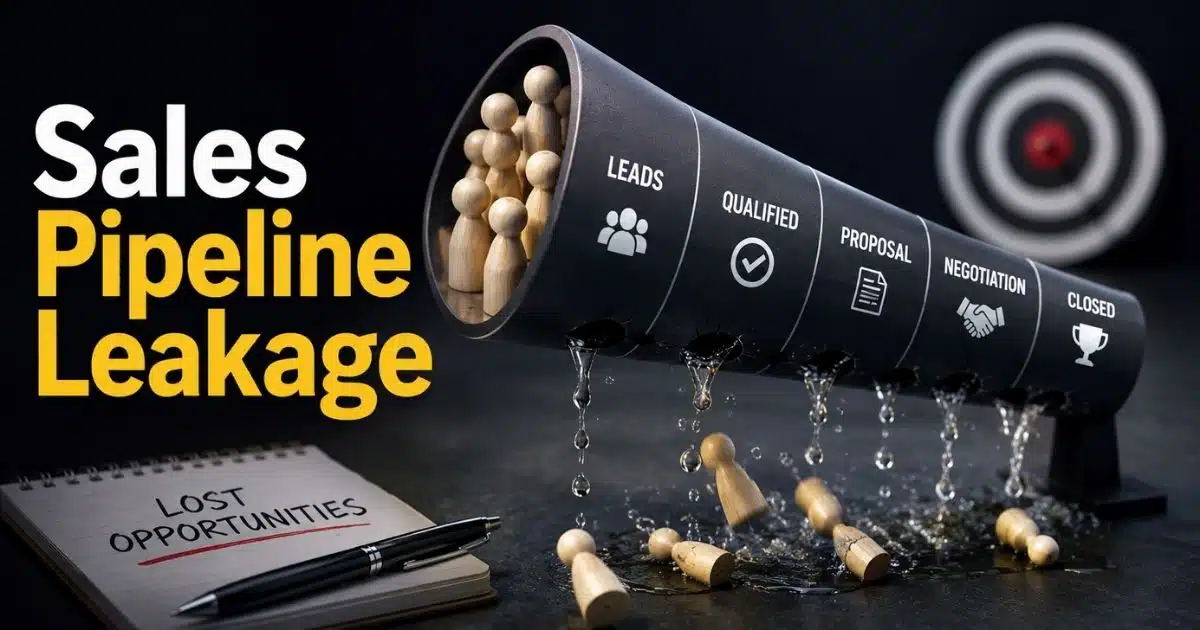
Every sales team wants a full pipeline. More leads, more meetings, and more deals usually look like a good sign. But many companies still miss revenue targets even with strong pipeline numbers. Opportunities quietly disappear between stages. Follow-ups stop. Leads lose interest. Sales reps focus on the wrong accounts. That is where sales pipeline leakage starts.
Most businesses do not notice the problem until revenue drops or forecasts fail. Small gaps inside the sales process slowly turn into lost deals and wasted marketing spend. A weak pipeline also creates pressure on sales and revenue teams.
This guide breaks down the real causes of sales pipeline leakage, the warning signs to watch for, and the practical ways to stop revenue from slipping away.
What Is Sales Pipeline Leakage
Sales pipeline leakage happens when potential customers drop out of the sales pipeline before becoming paying customers. Leads may stop replying, lose interest, or move to competitors during the sales process. A leaky sales funnel often comes from weak follow-up, poor lead qualification, or gaps between sales and marketing efforts. When revenue leakage occurs, businesses lose potential revenue without noticing the problem early.
Pipeline leakage also affects sales revenue, conversion rate, and revenue growth. Sales managers and revenue teams struggle with incorrect forecasts and missed targets when sales leakage grows across key stages. Poor lead quality, manual processes, and weak lead scoring can make sales cycles longer and reduce closed deals. Strong sales pipeline management helps sales reps prioritize leads, improve customer experience, and align sales and marketing on the same page. Better data-driven insights also help teams make informed decisions and increase revenue generation.
Common Causes Behind Sales Pipeline Leakage
Sales pipeline leakage rarely happens because of one problem. Most sales teams lose deals through small gaps across the sales funnel. Poor follow-up, weak lead qualification, and disconnected sales and marketing efforts slowly reduce pipeline value. Over time, those issues hurt conversion rate, sales revenue, and revenue growth.
Poor Lead Qualification
Many businesses chase more leads instead of the right leads. That creates a leaky sales funnel from the start. Sales reps spend time on potential buyers who do not match the ideal customer profile. Weak lead scoring also makes it harder to prioritize leads with real deal value.
Research shows only 25% of leads are sales-ready when they enter the sales pipeline. Poor lead qualification creates longer sales cycles and lower conversion rates. Strong lead qualification helps sales managers align sales and marketing teams around clear definitions and better customer acquisition goals.
Slow Follow-Up
Late responses often kill promising leads before the sales process even starts. Potential customers usually contact multiple vendors at the same time. A slow reply gives competitors the advantage and creates pipeline leakage across key stages of the marketing funnel.
Recent studies show 78% of buyers choose the first company that responds to their inquiry. Another report found the average lead response time is now more than 29 hours. Fast follow-up improves customer experience and increases the chances of converting leads into paying customers. Sales leaders who use automation and email marketing tools usually close deals faster.
Weak Sales And Marketing Alignment
Sales and marketing teams often work with different goals and different data. Marketing focuses on lead volume while sales teams focus on closed deals. That disconnect creates revenue leakage and poor sales pipeline management.
Companies with weak alignment struggle with lead activity tracking and customer success. Sales reps may reject leads that marketing considers qualified. At the same time, marketing teams may keep sending low-intent leads into the sales funnel. Shared sales goals, same definitions, and data-driven decisions help revenue teams stay on the same page and improve actual performance.
Manual Processes And Bad Data
Manual processes slow down the entire sales strategy. Outdated CRM records, missing contact details, and incorrect forecasts make pipeline leakage worse. Sales managers cannot make informed decisions without the right data.
Reports show businesses that use CRM systems are almost nine times more likely to exceed sales goals. Clean data gives valuable insights into deal size, customer lifetime value, and average deal sizes. Better sales pipeline management also helps teams nurture leads and improve revenue generation without losing money on poor-fit accounts.
Complex Buying Journeys
Modern B2B sales cycles involve multiple decision makers and longer review stages. A single deal may require approval from finance teams, executives, and operations managers. That complexity creates more opportunities for sales leakage across the pipeline.
Potential customers also expect a smooth customer experience across landing pages, email marketing, and sales conversations. Weak communication during those touchpoints can reduce trust and slow down closing deals. Sales teams that focus on constant improvement and personalized follow-up usually maintain stronger pipeline value and increased revenue over time.
Warning Signs That Show Leakage Inside Your Sales Funnel
Sales pipeline leakage often starts quietly. Most sales teams notice the damage only after missed targets and lower sales revenue appear. Small warning signs inside the sales funnel can reduce pipeline value, hurt customer acquisition, and create incorrect forecasts if sales leaders ignore them for too long.
Low Conversion Rates
A weak conversion rate is one of the biggest signs of pipeline leakage. Potential customers enter the sales pipeline, but very few become paying customers. That usually points to poor lead qualification, weak follow-up, or low lead quality inside the sales process.
Recent reports show the average B2B sales conversion rate is below 3%. (saleshandy.com) A leaky sales funnel also wastes sales and marketing efforts because teams spend time on poor-fit leads. Better lead scoring, a clear understanding of B2B sales conversion rates, and data-driven insights help sales reps prioritize leads with stronger deal value and customer lifetime potential.
Longer Sales Cycles
Longer sales cycles often signal sales leakage across key stages. Potential buyers may delay decisions because of poor communication, unclear pricing, or weak customer experience. Multiple decision makers can also slow the process and reduce momentum inside the marketing funnel, which is why focused long sales cycle strategies and metrics matter.
Research shows the average B2B sales cycle increased by 24% over the last two years. Sales managers that monitor lead activity and follow up closely usually reduce delays. Faster response times and stronger nurture leads strategies help revenue teams improve closing deals and increase revenue growth.
High Drop Off Between Stages
Healthy sales pipeline management depends on smooth movement between stages. A large number of leads stuck between calls, demos, or proposals often shows pipeline leakage. Sales reps may fail to follow up or qualify leads correctly during the sales process.
A study from Salesforce found that 79% of leads never convert because of poor lead nurturing. Weak sales strategy and disconnected marketing processes can also create leaky pipelines. Sales and marketing teams need the same definitions and right data to keep promising leads moving toward closed deals.
Unreliable Revenue Forecasts
Incorrect forecasts create major problems for sales leaders and revenue teams. Forecast numbers may look strong, but actual performance often tells a different story. Revenue leakage occurs when deal size, pipeline value, or close probability data becomes outdated.
Manual processes and old CRM records usually make the problem worse. Sales managers may overestimate potential revenue because sales reps fail to update lead activity or customer status. Data-driven decisions depend on clean and accurate records, and strong sales visibility across the pipeline. Better sales pipeline management helps businesses make informed decisions and align sales goals with real opportunities.
Low Response From Qualified Leads
Qualified leads that suddenly stop replying can expose hidden sales pipeline leakage. Potential customers may lose trust because of weak email marketing, poor customer success support, or slow sales efforts. A lack of personalization also reduces customer engagement during important sales cycles.
Studies show 80% of sales require at least five follow-ups, yet many sales reps stop after one or two attempts. Consistent communication across landing pages, calls, and outreach campaigns improves customer experience and supports increased revenue. Strong follow-up habits also help sales and marketing teams stay on the same page.
How Sales Pipeline Leakage Affects Revenue Forecasting
Revenue forecasting depends on accurate sales pipeline data. Small gaps inside the sales funnel can quickly create incorrect forecasts and missed sales goals. When pipeline leakage grows, sales managers lose visibility into actual performance, deal value, and future revenue growth across the sales process.
Inflated Pipeline Value
Many sales teams overestimate pipeline value because outdated leads stay inside the sales pipeline for too long. Sales reps may keep inactive opportunities open even after potential customers lose interest. That creates a false picture of future sales revenue and potential revenue.
Research from Salesforce shows 67% of sales leaders say accurate forecasting is harder now than three years ago. Weak sales pipeline management and poor lead qualification often increase sales leakage. Clean CRM records and better lead scoring help revenue teams make informed decisions with the right data.
Unpredictable Sales Cycles
Longer sales cycles make revenue forecasting less reliable. Potential buyers now spend more time comparing solutions, reviewing budgets, and involving multiple decision makers. Delayed responses during the sales process can reduce conversion rate and increase pipeline leakage.
A recent HubSpot report found 53% of sales professionals say longer sales cycles are one of their biggest challenges. Poor follow-up and weak nurture leads strategies also hurt customer acquisition. Sales and marketing teams that align sales goals and customer experience usually create more stable forecasting models.
Missed Revenue Targets
Revenue leakage occurs when promising leads fail to convert into paying customers. A leaky sales funnel lowers closed deals and reduces revenue generation over time. Sales leaders may forecast increased revenue based on more leads, but actual performance often falls short.
Weak sales efforts and disconnected marketing processes usually create the problem. Marketing teams may attract low-intent leads through landing pages or email marketing campaigns. Sales reps then waste time on poor-fit accounts instead of prioritize leads with stronger deal size and customer lifetime value.
Poor Data Quality
Revenue forecasting depends on fresh and accurate data-driven insights. Manual processes, duplicate records, and missing lead activity often create forecasting errors. Sales managers cannot track pipeline leakage correctly without updated CRM information.
Studies show poor data quality costs businesses an average of $12.9 million every year. Weak data also affects lead qualification helps strategies and customer success planning. Better sales pipeline management gives revenue teams valuable insights into sales cycles, average deal sizes, and pipeline health across key stages.
Weak Alignment Across Teams
Sales and marketing alignment plays a major role in forecast accuracy. Different definitions, disconnected reports, and inconsistent lead scoring often create leaky pipelines. Sales and marketing teams may disagree on lead quality, conversion rates, or ideal customer profiles.
Businesses with strong alignment generate 208% more revenue from marketing efforts, according to research from MarketingProfs. Shared dashboards and same-page communication improve data-driven decisions across revenue teams. Better collaboration also supports constant improvement, stronger customer experience, and more predictable sales revenue.
Sales Pipeline Stages Where Most Opportunities Disappear
Every sales pipeline has weak points where opportunities quietly disappear. Some potential customers leave during lead qualification, while others drop out before closing deals. Small gaps across key stages of the sales funnel can create serious pipeline leakage and reduce long-term revenue growth.
Lead Qualification Stage
The first major leak often appears during lead qualification. Sales teams may collect more leads through landing pages and marketing efforts, but many of those contacts are not the ideal customer. Common lead generation mistakes and weak lead scoring also make it harder to prioritize leads with real buying intent.
Research from MarketingSherpa shows 79% of marketing leads never convert into sales. Poor lead quality creates longer sales cycles and wastes sales efforts. Strong lead qualification helps sales reps focus on promising leads that match customer acquisition goals and improve pipeline value over time.
First Contact Stage
Many opportunities disappear right after the first outreach. Potential buyers expect fast and relevant communication from sales reps. A delayed response or generic email marketing message often damages customer experience and reduces conversion rate.
Studies show businesses that respond within five minutes are 21 times more likely to qualify a lead compared to waiting 30 minutes. Weak follow-up also increases sales leakage inside the marketing funnel. Sales and marketing teams that stay on the same page usually create better customer engagement and stronger revenue generation across the sales process.
Demo Or Presentation Stage
The demo stage creates another common source of sales pipeline leakage. Potential customers may lose interest if the presentation focuses too much on features instead of business problems. Poor preparation also hurts trust during important sales cycles.
Modern B2B sales often involve multiple decision makers. Sales leaders must tailor presentations to different pain points and deal value expectations. Data-driven insights, the right long sales cycle strategies, and customer success examples help sales teams build stronger conversations. Better demos improve customer lifetime value and increase the chances of closed deals.
Proposal Stage
Proposal delays often create leaky pipelines. Buyers may compare vendors, review budgets, or pause conversations before final approval. Slow manual processes and unclear pricing can reduce momentum during this stage of the sales funnel.
HubSpot reports that 54% of buyers want more transparency during the buying process. Poor communication and outdated CRM data also create incorrect forecasts for sales managers. Fast proposals, clear sales strategy, and sales workflow automation strategies for personalized follow-up help revenue teams maintain pipeline value and improve actual performance.
Closing Stage
Many sales teams lose deals near the finish line. Potential buyers may hesitate because of pricing concerns, contract confusion, or weak customer experience. Sales pipeline management becomes difficult when sales reps fail to track lead activity during final conversations.
Research from Gartner shows B2B buyers spend only 17% of their time meeting with potential suppliers during the purchase journey. That limited interaction increases pressure on sales and marketing alignment. Better communication, clear next steps, and constant improvement across sales processes help businesses reduce revenue leakage and achieve increased revenue.
Best Strategies To Reduce Sales Pipeline Leakage
Sales pipeline leakage can hurt conversion rate, pipeline value, and long-term revenue growth. Small fixes inside the sales process often create major improvements in customer acquisition and closed deals. Strong sales pipeline management and structure helps revenue teams reduce losing money and turn more promising leads into paying customers.
Improve Lead Qualification
Strong lead qualification reduces wasted sales efforts from the start. Sales teams should focus on potential buyers that match the ideal customer profile instead of chasing every contact inside the sales funnel. Better lead scoring also helps sales reps prioritize leads with higher deal value.
Research from Gartner shows companies with effective lead qualification generate 50% more sales-ready leads at lower costs. Poor lead quality often creates longer sales cycles and missed targets. Sales and marketing teams that use the same definitions and customer data usually improve conversion rate and revenue generation faster.
Speed Up Follow-Up
Fast follow-up keeps potential customers engaged during key stages of the sales pipeline. Buyers often compare multiple vendors at the same time. Delayed replies create pipeline leakage and damage customer experience before real conversations even begin.
Studies show businesses that contact leads within one hour are nearly seven times more likely to qualify the opportunity. Automated email marketing, sales automation software, and CRM alerts help sales reps respond faster without relying on manual processes. Quick communication also improves customer success and increases the chances of closing deals across complex sales cycles.
Align Sales And Marketing Teams
Weak alignment between sales and marketing creates leaky pipelines and incorrect forecasts. Marketing teams may send low-intent leads while sales managers focus only on short-term revenue goals. That disconnect slows customer acquisition and reduces actual performance.
HubSpot reports companies with strong sales and marketing alignment achieve 36% higher customer retention rates. Shared dashboards, same page communication, and common sales goals supported by a focused B2B sales CRM improve data-driven decisions across revenue teams. Better collaboration also supports constant improvement across landing pages, nurture leads campaigns, and customer engagement strategies.
Use Accurate CRM Data
Clean data plays a major role in sales pipeline management. Outdated records, duplicate contacts, and missing lead activity create sales leakage across the sales process. Revenue leakage occurs faster when sales leaders work with incomplete information.
Research from IBM estimates poor data quality costs businesses trillions globally every year. Accurate CRM records give valuable insights into average deal sizes, pipeline value, and customer lifetime trends. Better data-driven insights and a clear view of how CRM helps sales teams manage leads also help sales reps make informed decisions and improve lead qualification helps strategies across the marketing funnel.
Track Pipeline Metrics Regularly
Regular pipeline reviews help sales managers spot problems before opportunities disappear. Conversion rate, deal size, lead activity, and sales cycle length all reveal hidden weaknesses inside the sales funnel. Small drops in performance often signal growing pipeline leakage.
Sales leaders that monitor the right data usually improve revenue forecasting and increase revenue over time. Real-time reporting tools also help revenue teams align sales strategy with customer behavior and market changes. Better tracking creates more predictable sales revenue and supports stronger closed deals across every stage of the pipeline.
CRM And Automation Tools That Help Prevent Pipeline Leakage
Modern sales teams cannot rely on manual processes alone. CRM systems and automation tools help businesses track lead activity, improve follow-up, and reduce sales pipeline leakage across every stage of the sales funnel. Better tools also improve data-driven decisions, customer experience, and revenue forecasting accuracy.
CRM Platforms For Pipeline Visibility
A strong CRM platform gives sales managers a clear view of the entire sales pipeline. Teams can track potential customers, monitor deal value, and identify weak points inside the sales process before opportunities disappear.
Research from Nucleus Research shows CRM systems deliver an average return of $8.71 for every dollar spent. Better visibility helps revenue teams reduce incorrect forecasts and improve sales pipeline management. Accurate customer data also supports lead qualification helps strategies and improves customer acquisition across longer sales cycles.
Automation For Faster Follow-Up
Automation tools help sales reps respond faster to promising leads. Delayed outreach often creates pipeline leakage and weak customer engagement. Automated workflows can send email marketing messages, reminders, and follow-up sequences without manual effort.
Studies show companies that automate lead management increase qualified leads by more than 450%. Faster response times improve conversion rate and reduce losing money from missed opportunities. Automation and a simpler, CRM-driven sales workflow also help sales and marketing teams stay on the same page during key stages of the marketing funnel.
Lead Scoring Tools
Lead scoring tools help sales teams prioritize leads with higher buying intent. Many businesses waste sales efforts on low-quality contacts that never become paying customers. Strong scoring models improve lead quality and reduce sales leakage across the pipeline.
Modern platforms analyze lead activity, customer behavior, and engagement patterns in real time. Sales leaders can use those valuable insights to focus on ideal customer profiles and larger deal size opportunities. Better lead scoring models also support increased revenue and stronger closed deals over time.
Analytics And Reporting Tools
Analytics platforms help revenue teams make informed decisions with the right data. Sales deal tracking and analytics let sales managers monitor pipeline value, sales cycles, average deal sizes, and conversion rates across every stage of the sales funnel.
Reports from McKinsey show businesses that use advanced analytics outperform competitors in revenue growth and customer success. Data-driven insights from an AI sales assistant for pipeline efficiency also reveal hidden gaps inside marketing processes and sales strategy. Regular reporting supports constant improvement and helps businesses prevent leaky pipelines before revenue leakage occurs.
Integration Between Sales Tools
Disconnected systems often create poor customer experience and missed targets. CRM platforms, landing pages, customer success software, and email marketing tools should work together smoothly. Strong integration improves sales and marketing alignment across the entire customer journey.
Sales reps also gain access to new data without switching between multiple platforms. Better integration reduces manual processes and keeps revenue teams focused on converting leads instead of fixing data issues. Unified systems and a visual sales pipeline help businesses improve actual performance and maintain stronger sales revenue over time.
Key Metrics To Track And Improve Pipeline Health
Strong sales pipeline management depends on accurate numbers, not assumptions. Sales teams that track the right metrics can spot pipeline leakage early and improve revenue forecasting with confidence. Clear data also helps revenue teams make informed decisions and improve actual performance across the sales funnel.
Conversion Rate
Conversion rate shows how many potential customers move through the sales pipeline and become paying customers. A low conversion rate often points to poor lead quality, weak follow up, or gaps inside the sales process.
Research from Ruler Analytics shows the average B2B conversion rate across industries is around 2.9%. Sales managers should track conversion rates across key stages instead of only final closed deals. Better lead qualification and stronger sales and marketing alignment help businesses improve customer acquisition and reduce sales leakage over time.
Sales Cycle Length
Sales cycle length measures how long it takes to close deals after the first contact. Longer sales cycles usually signal pipeline leakage, weak customer engagement, or delays from multiple decision makers.
HubSpot reports that many B2B sales cycles now take several months because buyers spend more time researching solutions. Sales reps that nurture leads consistently and use data-driven insights often shorten the process. Faster sales cycles improve pipeline value, increase revenue growth, and reduce losing money from stalled opportunities.
Pipeline Value
Pipeline value tracks the total potential revenue inside the sales funnel. Healthy pipeline value gives sales leaders a clear understanding of future sales revenue and forecasting accuracy. Weak numbers often reveal leaky pipelines or poor lead scoring practices.
Sales managers should also monitor deal value and average deal sizes across different customer segments. Accurate CRM data, structured deal tracking, and automation tools help revenue teams track changes in real time. Better visibility supports smarter sales strategy decisions and improves revenue generation across the marketing funnel.
Lead Response Time
Lead response time measures how quickly sales reps contact potential buyers after lead activity appears. Slow responses often damage customer experience and increase pipeline leakage before conversations even begin.
Studies show responding within five minutes can improve lead qualification rates dramatically. Manual processes and disconnected sales and marketing systems usually create delays. Automated workflows, email marketing tools, and CRM alerts help teams prioritize leads faster and maintain stronger customer success throughout the sales process.
Win Rate
Win rate tracks how many opportunities turn into closed deals. A declining win rate often signals weak sales efforts, poor lead qualification, or incorrect forecasts inside the sales pipeline.
Businesses with strong sales pipeline management usually review win rates by sales reps, deal size, and customer type. Data-driven decisions help sales leaders identify patterns behind missed targets and revenue leakage occurs situations. Better tracking also creates valuable insights for constant improvement, stronger customer lifetime value, and increased revenue across future sales cycles.
How Gain.io Helps Reduce Sales Pipeline Leakage
Sales pipeline leakage often starts with poor visibility, slow follow-up, and disconnected customer data. Gain.io helps sales teams manage the entire sales pipeline from one place. The platform combines visual pipeline tracking, automation, and customer data management to improve sales pipeline management and reduce revenue leakage. Smart workflows also help sales reps focus on promising leads instead of wasting time on manual processes.
Gain.io supports faster follow-up through smart CRM features for sales teams, automation tools, reminders, and centralized lead activity tracking. Sales managers gain a clear understanding of pipeline value, deal size, and sales cycles with real-time visibility. The platform has already helped teams close deals faster and improve forecast accuracy. Better data-driven insights help revenue teams make informed decisions, improve conversion rate, and align sales and marketing efforts on the same page. Stronger pipeline visibility also improves customer experience, closed deals, and long-term revenue growth.
FAQs
Can Small Businesses Also Face Sales Pipeline Leakage?
Yes, small businesses often face sales pipeline leakage because of limited sales resources and manual processes. Weak follow-up, poor lead qualification, and disconnected sales and marketing efforts can quickly reduce conversion rate and sales revenue inside a small sales pipeline.
Why Do Qualified Leads Suddenly Stop Responding?
Potential customers may stop replying when follow-up feels generic or delayed. Poor customer experience, unclear value, and weak nurture leads strategies also create sales leakage across the sales funnel. Multiple decision makers can slow down the sales process as well.
Can Automation Improve Sales Pipeline Management?
Yes, automation tools help sales reps track lead activity, send faster follow-up messages, and reduce manual processes. Better automation improves pipeline value, customer acquisition, and revenue forecasting through more accurate and consistent sales efforts.
How Often Should Sales Teams Review Pipeline Health?
Sales managers should review sales pipeline health every week. Regular reviews help revenue teams identify leaky pipelines, incorrect forecasts, stalled deals, and weak conversion rates before missed targets affect revenue growth and closed deals.
Does Poor Sales And Marketing Alignment Cause Revenue Leakage?
No, pipeline leakage rarely comes from one issue alone, but poor sales and marketing alignment is a major factor. Different lead scoring methods, weak communication, and inconsistent customer data often create longer sales cycles and lower actual performance.