B2B sales no longer rewards teams that rely on scattered outreach, loose notes, and optimistic pipeline reviews. Buyers research independently, involve multiple stakeholders, compare vendors across digital channels, and expect every sales conversation to add value.
This b2b sales process checklist gives sales leaders, sales operations teams, and sales representatives a practical way to tighten lead qualification without slowing the entire sales process. The goal is simple: identify potential customers with genuine interest, real fit, and the ability to become paying customers before sales reps spend weeks on low-probability opportunities.
What Is The B2B Sales Process For Modern Revenue Teams
The B2B sales process is a structured framework that guides prospects from initial contact to becoming paying customers. Modern revenue teams use a defined sales process to create consistent buyer experiences, improve conversion rates, and generate predictable revenue.
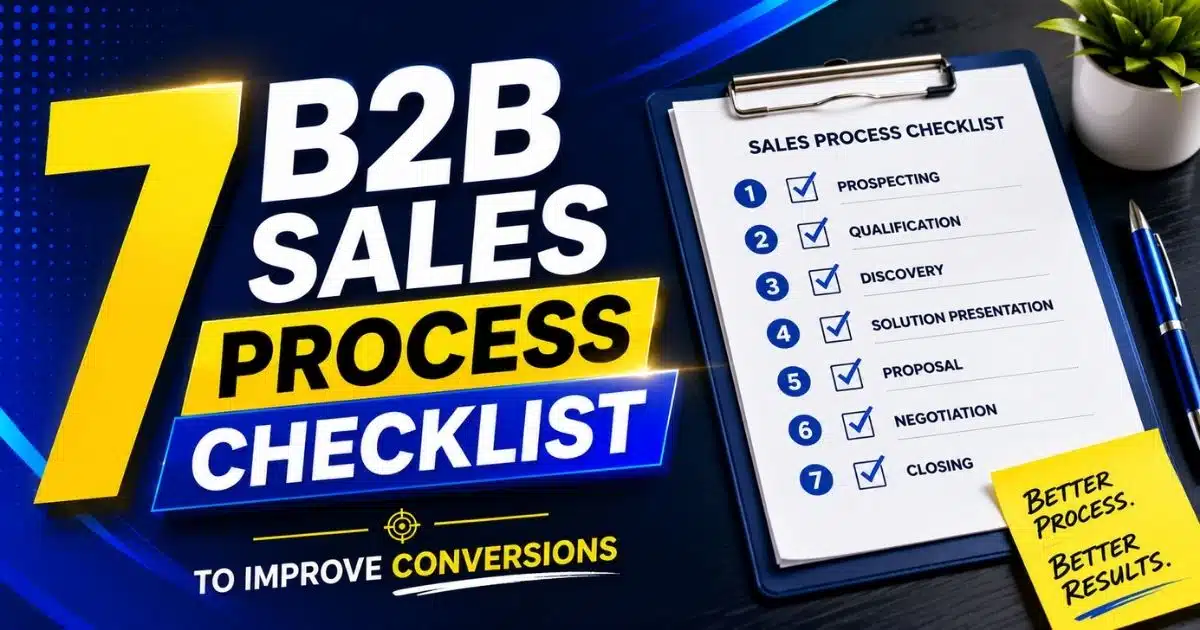
A typical B2B sales process includes prospecting, lead qualification, discovery, solution presentation, proposal creation, negotiation, closing, and post-sale follow-up. Each stage helps sales representatives understand customer needs, address challenges, and move opportunities through the pipeline more efficiently.
Unlike traditional sales approaches, modern B2B teams rely on CRM platforms, AI-driven sales automation tools, data analytics, and cross-functional collaboration between sales, marketing, and customer success teams. This alignment helps teams identify high-value prospects, personalize outreach, and shorten sales cycles.
A well-defined B2B sales process also improves forecasting accuracy, sales performance, and customer retention, making it an essential component of sustainable business growth that benefits from clearly defined sales pipeline stages.
Why Lead Qualification Determines Sales Process Effectiveness
Poor lead qualification inflates the sales pipeline, lowers conversion rates, and wastes SDR and AE capacity. Lead qualification is the process of determining whether a prospect is a good fit for a company's offerings, focusing sales efforts on potential buyers with genuine interest and the ability to purchase.
Win Rate Depends On Fit
A clear Ideal Customer Profile separates strong-fit accounts from distractions. Ideal Customer Profile (ICP): Define target company sizes, budgets, industries, and pain points. Research and industry benchmarks consistently show that companies with clear ICP discipline often report 60% to 70% higher win rates and more accurate forecasts, although the exact lift varies by market and sales methodology.
Sales Cycle Length Reflects Qualification Quality
Weak qualification creates longer sales cycles because deals stall after discovery, during proposal review, or when missing decision makers appear late. Defining clear stages with exit criteria in the sales process can lead to 18% higher revenue growth and 13% shorter sales cycles, emphasizing the need for a structured approach.
Average Deal Size Improves With Better Nurture
Nurtured leads generate 50% more sales at 33% lower cost, highlighting the importance of ongoing engagement with customers post-purchase. Nurtured prospects also tend to buy more because they understand the value proposition before negotiation begins, which can lift average deal size and reduce pricing concerns.
Objection Handling Starts Before Negotiation
Objections are a natural part of the sales process and should be embraced as opportunities to provide clarity and build trust with potential customers. Top-performing sales representatives handle objections by reframing the conversation around value rather than price, often asking questions to uncover the real concerns behind objections.
Resource Allocation Protects Sales Efficiency
A structured sales process helps sales reps focus their efforts on high-quality leads, reducing wasted time on low-probability opportunities, which is essential for closing deals effectively. Top-performing sales organizations that effectively follow a structured sales methodology have a 588% higher likelihood of improving pipeline predictability compared to low performers.
The following checklist turns lead qualification into a repeatable operating system for better sales process effectiveness.
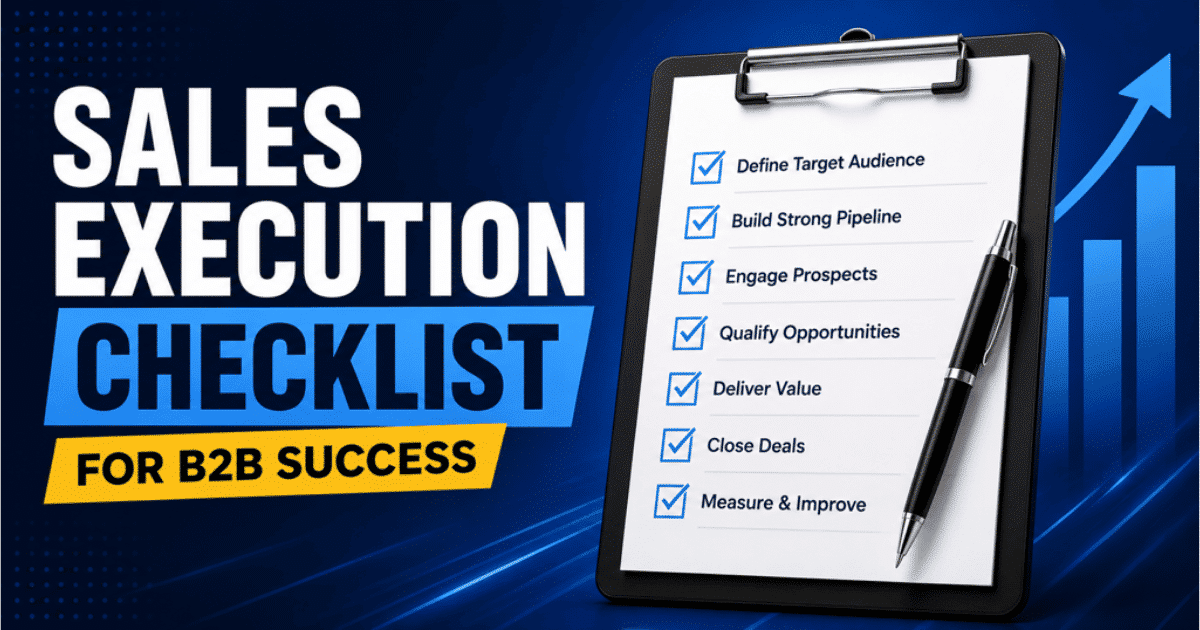
7 B2B Sales Process Checklist For Better Lead Qualification
This is the core b2b sales process checklist. Each item should be inspectable in your CRM, visible in pipeline reviews, and easy for managers to coach.
1. Define A Data Driven Ideal Customer Profile
ICP clarity is the first gate in a modern sales process because it shapes targeting, cold outreach, cold calling, lead generation, messaging, and lead scoring. A strong ICP should include firmographics such as industry, company size, revenue, region, and target market, plus technographics such as current tools and integrations. It should also include trigger events such as funding, expansion, new leadership, compliance changes, or product transformation.
For example, a SaaS company might target US-based B2B teams with 50 to 500 employees, $5 million to $50 million in revenue, legacy tools in place, clear pain points around workflow visibility, and deal size above $15,000. Those criteria help sales professionals identify potential customers worth pursuing and unqualified leads that should not enter active deal stages.
Encode ICP criteria into CRM fields so sales reps can qualify quickly. Required fields might include company size, industry, budget range, current system, business goals, and primary pain.
2. Score And Prioritize Leads Against Qualification Criteria
Lead scoring should combine demographic fit, behavioral signals, and buying intent. A prospect that matches the ICP, views the pricing page twice, attends a webinar, and replies to a follow up deserves faster attention than a poor-fit contact who downloaded one generic guide.
Simple tiers work best:
Tier | Meaning | Sales Action |
|---|---|---|
A | Strong fit and high intent | Same-day AE follow up |
B | Good fit or rising intent | SDR qualification and nurture |
C | Low fit or unclear timing | Drip campaign and monitor |
3. Standardize Discovery Calls Around Buyer Qualification
Discovery calls should feel like curiosity rather than cross-examination, allowing reps to connect deeply with the right prospects and build trust early in the sales process. A strong 30 to 45 minute discovery framework covers current tools, pain, urgency, budget range, decision making process, timeline, key stakeholders, and success criteria.
Useful questions include: “What prompted this evaluation now?”, “Who else will influence the decision?”, “What would success look like in the next 90 days?”, and “What happens if this problem is not solved?” Using qualification frameworks like BANT (Budget, Authority, Need, Timeline) or MEDDIC can help sales teams assess buying process readiness and filter out low-potential leads early.
Training sales reps to treat objections as invitations to dig deeper can transform pushback into a productive dialogue that advances the sales process. Call recordings, notes, and manager coaching help make discovery quality consistent, especially when combined with automated sales task workflows that keep follow-ups and next steps organized.
4. Map Stakeholders And Decision Dynamics Early
Most complex deals involve 6 to 10 stakeholders, and larger enterprise clients may involve even more. Missing one key person often explains why deals stall after a promising demo.
Sales reps should identify the champion, economic buyer, technical gatekeeper, procurement contact, finance reviewer, and potential blockers. In the CRM, use role tags, notes, visual sales pipeline context, and dynamic contact management to capture who cares about ROI, risk, implementation time, compliance, and adoption.
Early stakeholder mapping is especially important for opportunities above $25,000 or $50,000. After discovery, send a recap that confirms decision makers, approval steps, and next actions. That simple follow up prevents late-stage confusion.
5. Align Qualification With Measurable Buyer Intent Signals
Positive sales conversations are useful, but data confirms whether there is real momentum. Buyer intent signals include repeat website visits, pricing page views, proposal opens, demo attendance, email replies, and re-engagement with comparison content.
When a contact reopens a proposal or forwards an email to new stakeholders, that can signal internal discussion. Sales reps should respond by scheduling the next meeting, asking who else should join, and clarifying whether the buying process has changed.
For trials or product-led motions, product usage can also support lead qualification, especially when CRM follow-up automation keeps engagement steady without relying on manual effort. The key is not to overestimate initial interest based on enthusiasm alone.
6. Set Clear Stage Exit Criteria Focused On Qualification
Exit criteria are the buyer-verified conditions that must be met before an opportunity moves forward. They prevent seller optimism from creating fake pipeline.
For example, before moving from discovery to proposal, the rep should document the business problem, budget range, decision makers, implementation timeline, and agreed next step. Before negotiation, the buyer should have reviewed the proposal, confirmed approval steps, and raised known risks.
Closing deals involves setting clear exit criteria that both seller and buyer agree on, which helps to de-stress the final stages of the sales process and fosters collaboration. Contract Finalization: Ensure all legal and financial terms are reviewed and signed. Keep sales process stages to 6 to 8 core pipeline stages so the process stays manageable and forecastable, as shown in case studies where teams closed deals faster with Gain.io by standardizing their pipelines.
7. Disqualify Decisively And Nurture Intelligently
Disqualification protects sales efficiency. Common triggers include no budget, no urgent pain, unrealistic timelines, missing must-have features, no access to the economic buyer, or a poor fit with the company’s value proposition.
Do not discard every disqualified account. Implementing drip campaigns, which send a series of timed, personalized emails, can effectively guide prospects from initial interest to conversion without constant manual input, especially when supported by a simpler CRM-driven sales workflow. Re-qualify promising accounts every 3 to 6 months or when trigger events appear.
Continuing to engage with customers after the initial sale through personalized content and proactive outreach can identify upsell opportunities and drive renewals. This is where strong contact management practices and shared context between sales, marketing, and customer success ensure future revenue growth is not lost.
Key Metrics To Measure B2B Sales Process Effectiveness
What gets measured gets improved. Qualification quality should show up clearly in core key metrics, not just in anecdotal pipeline reviews.
Lead To Opportunity Conversion Rate
Track how many leads become opportunities by source, ICP fit, and score tier. If inbound leads from one channel convert poorly, the issue may be messaging, targeting, or qualification rules.
A healthy conversion rate indicates that marketing and sales teams are attracting prospects that match ideal customer profiles. Regular analysis helps identify high-performing acquisition channels, refine targeting strategies, and allocate resources toward lead sources that consistently generate qualified pipeline opportunities.
Opportunity To Close Conversion Rate
Opportunity-to-close conversion shows whether your defined sales process is creating real pipeline. Segment it by qualified leads that met all checklist requirements versus opportunities that entered with missing data.
This metric helps sales leaders evaluate the effectiveness of discovery, stakeholder alignment, and solution positioning. Higher close rates among fully qualified opportunities often validate qualification criteria, while lower rates may reveal process gaps, competitive challenges, or inconsistent sales execution.
Average Deal Size
Average deal size should be reviewed by ICP segment, lead source, industry, and qualification score. If stronger-fit accounts consistently produce larger contracts, prioritize those accounts in your sales strategy.
Monitoring deal size trends helps teams identify the most profitable customer segments and sales opportunities. Larger average contract values may indicate better alignment between product offerings and customer needs, enabling revenue teams to focus on accounts with greater long-term value potential.
Sales Cycle Length
Sales cycle length reveals where time spent accumulates. If discovery drags, reps may not be reaching key stakeholders. If proposal review drags, decision criteria or pricing concerns may not have been addressed early enough.
Shorter sales cycles often reflect effective qualification, stakeholder engagement, and clear communication throughout the buyer journey. Reviewing stage-by-stage progression can uncover bottlenecks, improve process efficiency, and help sales teams accelerate revenue generation without sacrificing deal quality.
Forecast Accuracy
A predictable pipeline depends on clean qualification data. Sales teams using AI-driven analytics and machine learning for sales forecasting gain deeper insights into pipeline health and future revenue potential, enhancing their sales technology capabilities, especially when paired with a CRM that integrates email communication for complete activity tracking. Even without advanced AI, a well-defined sales process gives sales leaders better visibility into risk.
Forecast accuracy measures how closely projected revenue aligns with actual sales outcomes. Consistently accurate forecasts improve budgeting, resource planning, and strategic decision-making. Organizations that maintain reliable pipeline data can identify potential revenue gaps earlier and take corrective actions before performance targets are affected.
Common B2B Lead Qualification Mistakes To Avoid
Even teams with a modern sales process lose more deals than necessary when qualification becomes shallow or inconsistent.
Basic BANT Questions Without Depth
BANT is useful, but shallow questions create weak answers. “Do you have budget?” is less useful than “How is this initiative funded, and who approves that spend?”
Effective qualification requires uncovering the context behind each answer. Deeper conversations reveal purchasing processes, internal priorities, approval workflows, and business drivers. Sales representatives who ask follow-up questions gain more accurate information and can better assess deal viability and stakeholder commitment.
Weak Champions
A friendly contact is not always a champion. A real champion has influence, urgency, access to decision-makers, and a reason to help the deal move forward.
Strong champions help navigate internal politics, secure stakeholder buy-in, and advocate for the solution during evaluation. Without a credible internal supporter, sales teams may struggle to maintain momentum, gain executive visibility, or overcome objections throughout the purchasing process.
Single Contact Interest
One enthusiastic user does not equal a buying committee. In B2B sales, multiple stakeholders must agree that the problem matters, the solution fits, and the risk is acceptable.
Successful deals often require support from executives, department leaders, finance teams, procurement specialists, and end users. Engaging multiple stakeholders early reduces surprises later in the sales cycle and helps create broader organizational alignment around the proposed solution.
Early Over-Qualification
Over-qualification can block promising accounts in emerging segments. If a prospect is outside the historic ICP but has severe pain, strong budget, and clear urgency, sales leaders should review the opportunity before rejecting it.
Qualification frameworks should provide guidance rather than rigid restrictions. Market conditions, product evolution, and changing customer needs can create new opportunities outside traditional target segments. Periodic reviews help ensure qualification criteria remain aligned with current business objectives.
Negative Signals
Long delays, repeated reschedules, no stakeholder access, vague timelines, and missing next steps are risk signals. Anticipate Pushback: Prepare responses for common B2B objections regarding price, implementation time, and risk. Deal post-mortems and recorded sales conversations help turn these patterns into better checklist rules.
Tracking negative signals allows revenue teams to identify at-risk opportunities before they stall completely. Consistent documentation of warning signs improves forecasting accuracy, strengthens qualification standards, and helps sales managers coach representatives on addressing potential obstacles earlier in the buying journey.
How Revenue Teams Can Operationalize This Checklist
A checklist only works when it becomes part of daily sales behavior. Sales, marketing, sales operations, and customer success should agree on the criteria, handoffs, and ownership behind each step.
CRM Stage Definitions
Update CRM stages so each stage matches the buying process and requires qualification data. Teams can customize pipeline stages by segment, but the logic should stay consistent.
Clear stage definitions reduce confusion across sales teams and improve pipeline visibility. When every opportunity follows the same qualification standards, managers can identify bottlenecks faster, forecast revenue more accurately, and maintain consistency across territories, products, and customer segments, which is especially critical for startups and small sales teams choosing CRM tools.
Required Qualification Fields
Make key fields mandatory before stage movement: ICP fit, budget range, decision makers, pain points, timeline, next step, and stakeholder roles. This keeps the entire sales process visible.
Mandatory data fields improve CRM accuracy and prevent opportunities from advancing with incomplete information. Consistent data collection helps revenue teams analyze performance trends, identify qualification gaps, and make better decisions based on reliable pipeline insights, particularly when they choose CRM tools that fit their workflow.
Discovery Templates
Create discovery templates that guide reps through pain, urgency, current tools, business goals, budget, stakeholders, and risks. This turns proven strategies into a practical sales playbook.
Standardized discovery frameworks ensure every representative gathers critical information during customer conversations. Templates also improve onboarding, reduce missed qualification details, and create a repeatable process that supports more effective prospect evaluation and opportunity management when paired with smart CRM tools for sales teams.
Enablement And Coaching
Use role play, call reviews, and short coaching sessions to improve consultative selling. Focus training on one checklist item at a time instead of broad sales tips.
Targeted coaching helps sales representatives strengthen specific skills without becoming overwhelmed by large training programs. Continuous feedback, practical exercises, and real-world examples reinforce best practices and encourage consistent application of qualification standards across the team, especially when automated sales task management keeps daily execution on track.
Dashboard Reviews
RevOps should compare conversion rates, sales cycle, average deal size, and closed deal outcomes for opportunities that met checklist standards versus those that did not. Monthly reviews help sales leaders adjust qualification rules and drive revenue growth.
Regular dashboard reviews transform sales data into actionable insights. Performance comparisons reveal which qualification criteria contribute most to successful outcomes, allowing revenue teams to refine processes, improve forecasting accuracy, and continuously optimize sales execution across the organization while evaluating options like a Gain.io vs Salesforce CRM comparison to support their strategy.
Gain.io And The Future Of Structured B2B Sales Processes
Gain.io is built for sales teams that need clarity, consistency, and momentum across the sales process. As a focused sales CRM, Gain.io helps teams manage contacts, track deals in visual sales pipelines, capture notes from sales conversations, assign sales tasks, manage follow-ups, connect email activity, and schedule sales meetings through calendar management, in ways that also benefit retail teams using CRM tools to stay organized.
For a b2b sales process checklist, that matters. Reps can keep ICP details, stakeholder notes, discovery insights, follow-up actions, and deal history in one place. Managers can review pipeline stages, coach next steps, and spot opportunities where exit criteria are missing before the forecast becomes unreliable.
Gain.io helps sales professionals stay focused on high-quality leads instead of chasing unqualified prospects across scattered tools. By embedding a structured process into everyday CRM workflows, Gain.io supports a modern, data-informed, and repeatable b2b sales process that helps teams close more deals and build a stronger revenue engine, whether they are optimizing a simpler CRM sales workflow or enabling real estate agents to save time with CRM tools.
Frequently Asked Questions
How Often Should We Update Our B2B Sales Process Checklist?
Most teams should review the checklist quarterly. Update it after a new product launch, entry into a new vertical, major pricing change, or two consecutive quarters of sharp movement in conversion rates. A review cycle tied to market changes helps ensure the sales process defines current buyer behavior, competitive conditions, and evolving customer expectations.
Which Qualification Framework Works Best For B2B Sales?
BANT and MEDDIC are strong starting points, but the best framework depends on deal size, target market, and sales motion. Focus less on the acronym and more on buyer pain, urgency, stakeholder structure, budget reality, and decision criteria. Complex enterprise sales environments often require deeper qualification frameworks that account for multiple stakeholders, longer buying cycles, and formal approval processes.
How Do We Balance Speed With Thorough Lead Qualification?
Use fast response times and focused discovery. Inbound leads should be contacted quickly, often within 5 to 10 minutes, while discovery calls can stay efficient at 30 to 45 minutes with pre-call research and standardized questions. Tools such as LinkedIn Sales Navigator can help sales teams gather prospect insights before outreach, reducing research time while improving qualification quality.
Should SDRs And AEs Use The Same Qualification Checklist?
SDRs and AEs should share the same core checklist but use it at different depth. SDRs confirm fit, urgency, and initial interest. AEs expand into ROI, decision process, stakeholder influence, negotiation risk, and close planning. A shared framework ensures alignment across deal stages and creates a smoother handoff between prospecting, qualification, and opportunity management.
How Can We Prove That Better Qualification Is Improving Revenue?
Compare before-and-after performance for win rate, sales cycle length, average deal size, forecast accuracy, and pipeline coverage. Also compare opportunities that met all qualification criteria against opportunities that skipped steps. Additional validation can come from tracking industry events, buyer engagement levels, and the impact of qualification standards on a successful sales process over time.