A strong sales process does not happen by chance. It requires clear steps, defined responsibilities, and consistent execution across the entire sales team. Without a structured approach, opportunities often stall, follow-ups are missed, and revenue goals become difficult to achieve.
A sales execution checklist helps businesses standardize activities, improve accountability, and create a more successful sales process. It guides teams through every stage of the buyer journey, from prospecting and qualification to closing and post-sale engagement.
Modern B2B organizations also rely on customer success teams to maintain long-term relationships and support customer success after the deal closes. When sales and customer teams work together, businesses can improve retention and drive sustainable growth.
Building an effective sales execution checklist strengthens your sales strategy, improves team performance, and creates a repeatable process that delivers consistent results.
What Is A Sales Execution Checklist
A sales execution checklist is a structured framework that guides sales teams through every stage of the sales cycle. It outlines the activities, responsibilities, and milestones required to move opportunities from prospecting to closing. By following a consistent process, teams can reduce errors, improve accountability, and create a more predictable sales process.
A checklist often includes qualification criteria, value proposition development, follow-up activities, and performance measurement. Sales managers also use key performance indicators and marketing metrics to evaluate results and identify improvement opportunities.
Project management tools and B2B sales CRM platforms help teams track progress, reduce sales cycle length, and maintain visibility across deals. Organizations also review success stories and past wins to refine their approach and improve overall sales performance.
What Causes Sales Execution Gaps
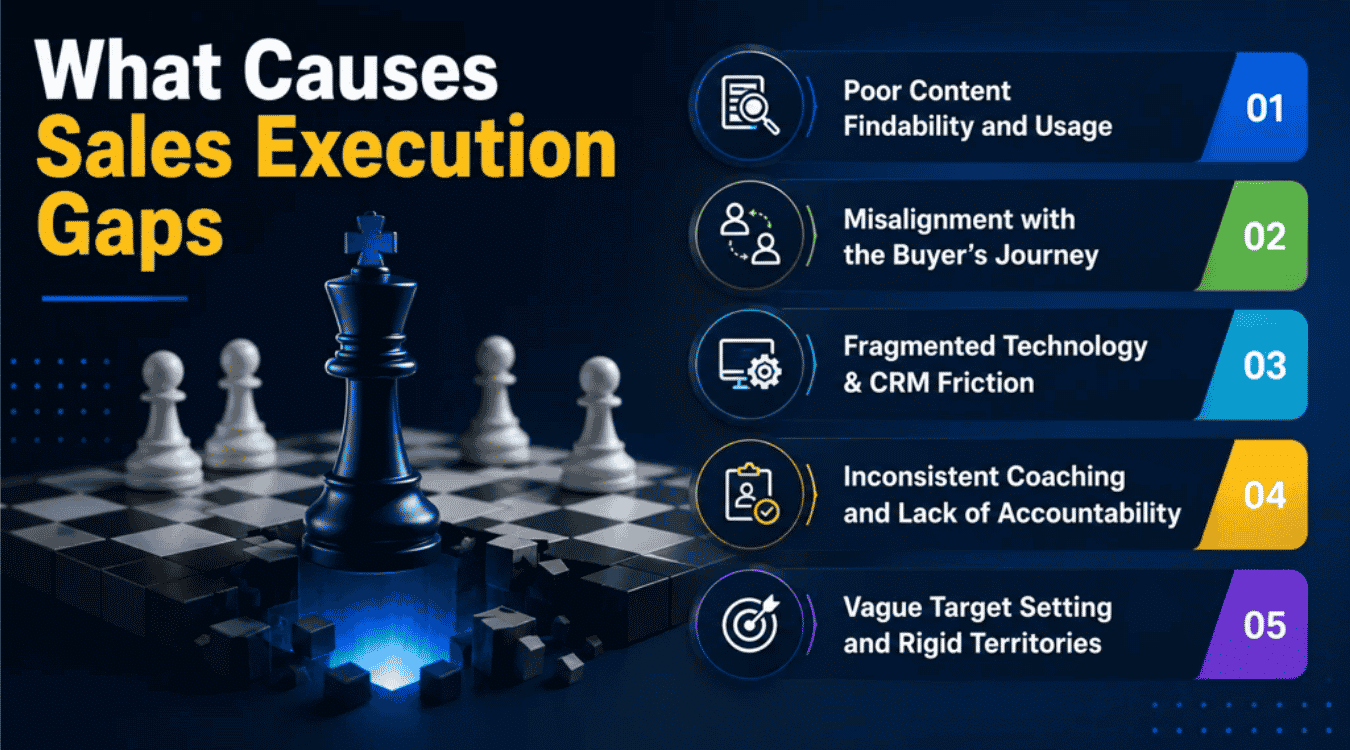
Poor sales execution often happens because teams lack alignment, visibility, and consistent processes. Even experienced sales reps can struggle when workflows, technology, and communication fail to support the entire sales process.
Poor Content Findability And Usage
Sales teams rely on content to educate potential customers and support conversations throughout the sales pipeline. When presentations, case studies, and proposals are difficult to find, sales reps often use outdated materials or create their own assets.
Poor content accessibility affects sales performance and creates inconsistent messaging. Teams may struggle to communicate value effectively to different customer segments or address the concerns of the economic buyer. Easy access to sales content helps improve consistency and supports better sales execution.
Misalignment With The Buyer's Journey
Many B2B sales teams focus heavily on internal processes instead of buyer behavior. Potential customers often move through the buying process at different speeds, but sales activities may remain rigid and standardized.
When sales teams fail to understand customer needs, deals can stall. Market feedback and customer conversations provide valuable insights that help teams adjust their approach. Aligning sales activities with the buyer's journey improves engagement and creates a better customer experience.
Fragmented Technology And CRM Friction
Many organizations use multiple tools that do not work together. Data becomes scattered across emails, spreadsheets, CRM systems, and communication platforms.
Fragmented technology creates duplicate work and makes sales tasks more difficult to complete. Sales reps spend valuable time updating systems instead of speaking with customers. A disconnected technology stack also limits visibility into the sales pipeline and reduces cross-functional collaboration between teams.
Inconsistent Coaching And Lack Of Accountability
Sales managers play an important role in improving performance. Without regular coaching and clear accountability, teams often develop different selling habits and inconsistent processes.
Performance reviews, coaching sessions, and measurable goals help establish accountability. Sales execution improves when managers monitor progress, provide feedback, and support professional development. Consistent coaching also helps sales reps adapt to changing market conditions and customer expectations.
Vague Target Setting And Rigid Territories
Unclear goals and poorly designed territories often create confusion within sales teams. Representatives may compete for the same accounts or focus on the wrong customer segments.
Clear targets help teams prioritize opportunities and allocate resources effectively. Businesses should review territories regularly to reflect market conditions, buyer behavior, and business goals. Flexible planning allows organizations to adjust strategies as markets change.
Strong sales execution depends on several key elements, including alignment, accountability, technology, and collaboration. Addressing these common gaps helps B2B sales teams improve performance, strengthen customer relationships, and create a more predictable sales process.
How To Build A Sales Execution Checklist For B2B Success
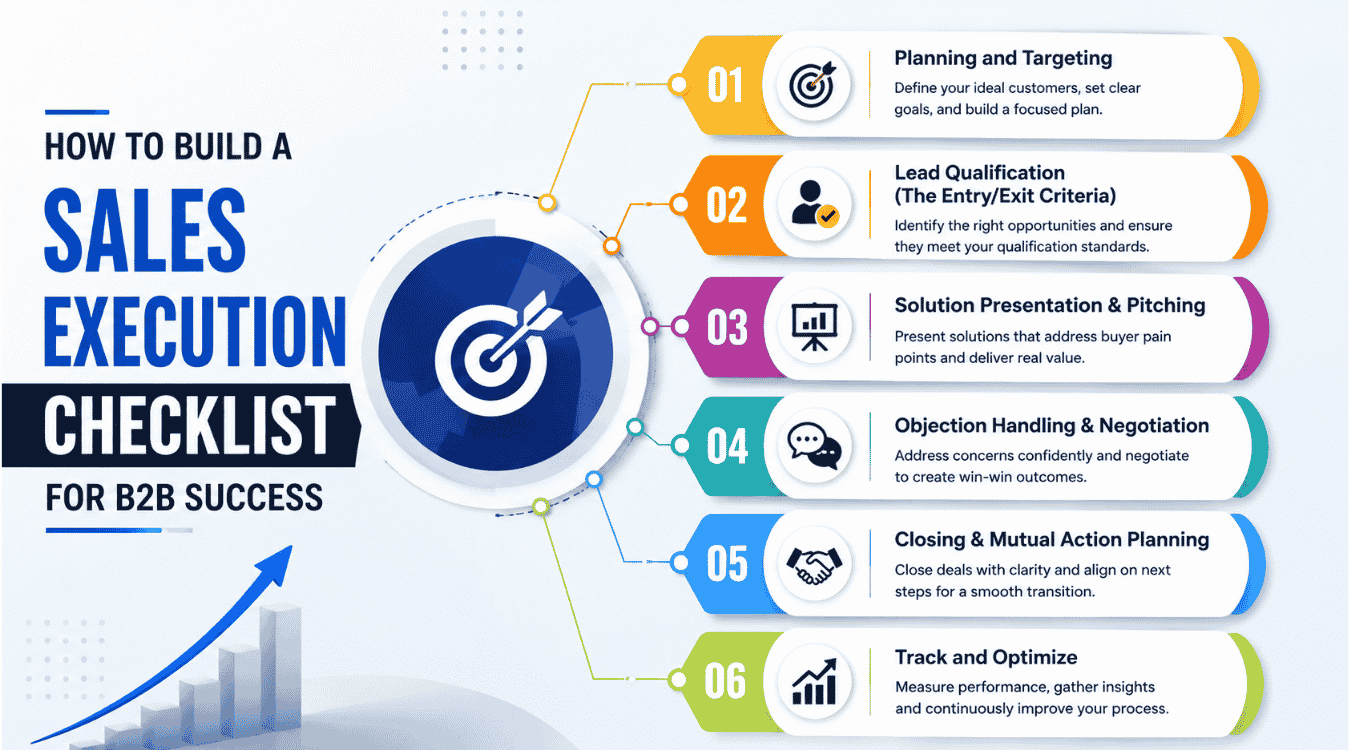
Building a repeatable sales process with clear stages and steps helps teams improve consistency, increase revenue, and create better customer experiences. A structured checklist gives revenue teams clear direction and supports execution excellence across every stage of the buyer journey.
Planning And Targeting
Every successful sales approach starts with proper planning. Teams should identify their target market, analyze customer segments, and understand the needs of key stakeholders.
Clear planning improves resource allocation and helps sales teams focus on high-value opportunities. Understanding customer pain points also allows teams to deliver more relevant messaging and create stronger connections with buyers.
Lead Qualification (The Entry/Exit Criteria)
Qualification criteria help sales teams determine which opportunities deserve attention. Clear entry and exit rules prevent wasted effort and improve pipeline quality.
Sales teams can evaluate budget, authority, business needs, and purchase timelines before moving opportunities forward. Strong qualification also helps increase average deal size by focusing on prospects that match the ideal customer profile. Consistent qualification criteria support execution excellence and improve forecasting accuracy across revenue teams.
Solution Presentation And Pitching
A successful presentation focuses on customer problems rather than product features. Sales teams should demonstrate how their solution addresses pain points and delivers measurable business value.
Sales enablement materials such as case studies, presentations, and success stories help communicate value effectively. Teams that tailor presentations to customer needs often achieve better engagement and stronger buying interest. Clear communication also helps build trust with decision-makers and key stakeholders.
Objection Handling And Negotiation
Questions and objections are common in B2B sales. Teams should prepare responses for pricing concerns, implementation questions, and competitive comparisons.
Effective negotiation focuses on customer outcomes instead of discounts. Sales representatives who understand customer priorities can address concerns and maintain momentum throughout the buying process. Strong communication during negotiations often leads to successful outcomes and higher customer satisfaction.
Closing And Mutual Action Planning
Closing a deal requires clear next steps for both parties. Mutual action plans outline responsibilities, timelines, and implementation activities.
Collaboration between sales teams and customer success teams improves handoffs after the sale. Early involvement from customer success supports customer retention and creates a better onboarding experience. Clear expectations also help maintain trust and reduce delays after contract signing.
Track And Optimize
Sales execution requires continuous improvement. Teams should monitor key metrics such as conversion rates, average deal size, pipeline velocity, and customer retention.
Tools such as CRM platforms and Google Analytics provide valuable insights into sales performance and buyer behavior. Regular reviews help teams identify opportunities for improvement and adjust strategies as market conditions change.
Organizations that prioritize measurement and optimization create stronger sales processes, improve customer satisfaction, and achieve long-term execution excellence.
Essential Elements Of A B2B Sales Checklist
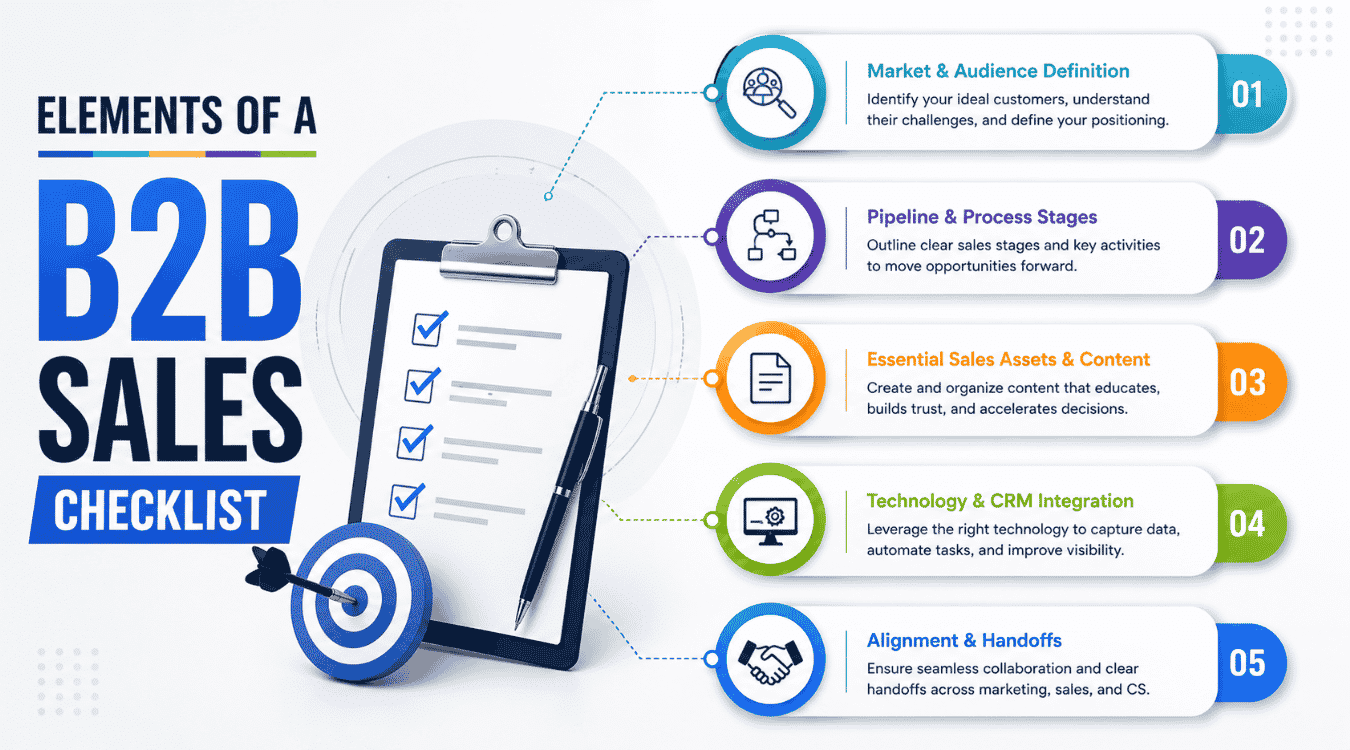
A B2B sales checklist provides structure and consistency throughout the entire sales process. It helps teams stay organized, align activities, and improve performance in a competitive world where buyers expect personalized experiences and faster decisions.
Market And Audience Definition
Every sales strategy should begin with a clear understanding of the market and target audience. Teams need to identify their ideal customer profile, analyze customer needs, and create detailed buyer persona documents.
Understanding potential buyers and decision makers helps teams deliver relevant messaging. Market research and digital channels also provide actionable insights that improve targeting and increase engagement throughout the buyer journey.
Pipeline And Process Stages
A defined sales process helps teams manage opportunities from prospecting to closing deals. Clear stages establish expectations and guide activities throughout the entire journey.
An iterative process allows teams to review performance and make adjustments when needed. Clear B2B sales pipeline stages and lead scoring also help prioritize opportunities and ensure sales representatives focus on qualified prospects.
Well-defined stages prevent deals from stalling and create greater visibility across the pipeline.
Essential Sales Assets And Content
Sales content plays a critical role during every stage of the buyer journey. Case studies, presentations, proposals, and personalized content help teams address customer concerns and demonstrate value.
Without the right assets, conversations often fall flat. Content should support different customer needs and help decision makers understand the benefits of the solution.
Sales enablement materials also improve consistency and strengthen communication across the team, especially when combined with modern sales communication tools for internal and customer-facing conversations.
Technology And CRM Integration
Modern sales teams rely on technology to manage activities, monitor performance, and improve productivity. Simplified CRM workflows with automation and analytics provide valuable data throughout the sales process.
Integration between systems helps teams access information quickly and maintain accurate records. Technology also provides actionable insights that support forecasting, lead management, and customer engagement.
These sales pipeline CRM tools help sales teams work more efficiently and improve overall performance.
Alignment And Handoffs
Successful sales execution depends on collaboration between teams. Sales, marketing, and customer success teams should remain on the same page throughout the customer journey.
Clear handoffs prevent communication gaps and improve customer experiences after closing deals. Alignment also supports customer retention and helps businesses drive revenue over the long term.
Whether launching a new product launch or entering new markets, strong collaboration ensures teams work toward shared goals and deliver a consistent experience to customers.
How Does A CRM Improve Sales Execution
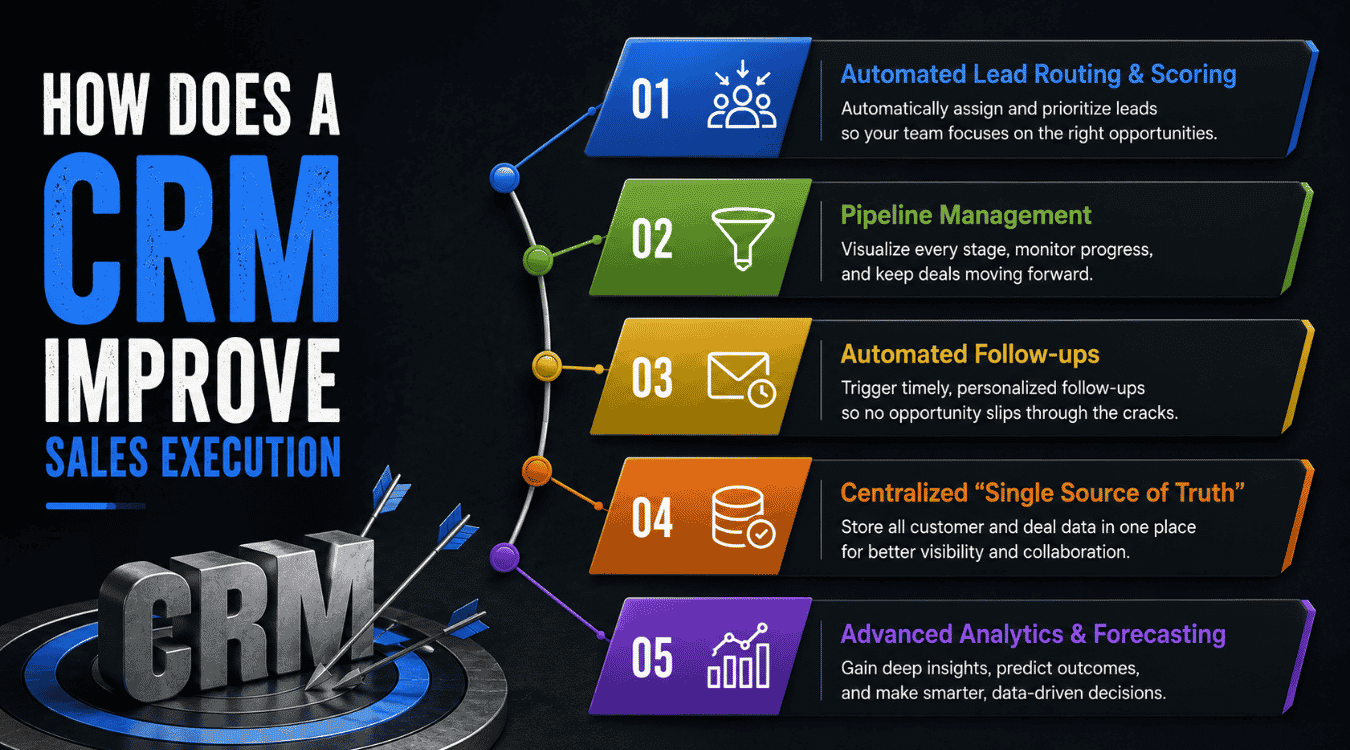
A CRM helps sales teams manage activities, improve visibility, and create a more consistent sales process. By automating tasks and organizing customer data, CRM software supports better decisions and helps teams close more deals.
Automated Lead Routing & Scoring
Sales teams often lose opportunities when leads are assigned manually. Automated lead routing sends inquiries to the right prospects based on territory, industry, or company size.
Lead scoring helps teams identify high-value opportunities and maintain a clear focus on accounts that are more likely to convert. CRM-based lead management also supports faster response times, creating a stronger first impression and improving conversion rates.
Pipeline Management
A CRM provides a structured approach to managing opportunities throughout the sales process. Visual sales pipelines that improve deal clarity help teams track deals, monitor activities, and identify bottlenecks within the pipeline.
Pipeline visibility helps managers allocate resources effectively and ensure alignment across the organization. Sales representatives can prioritize activities and focus on moving opportunities toward closing.
Better sales pipeline management often leads to more deals and improved forecasting accuracy.
Automated Follow-Ups
Following up consistently plays a crucial role in B2B sales. Automated reminders, emails, and task notifications help sales teams maintain communication without missing important opportunities.
Automation helps ensure consistency across the sales process and reduces administrative work. Sales activity tracking software also ensures representatives can spend more time speaking with customers instead of managing repetitive tasks.
Regular follow-ups also help maintain engagement throughout the buying journey.
Centralized "Single Source Of Truth"
Customer information often becomes scattered across spreadsheets, emails, and multiple systems. A CRM creates a centralized database where teams can access contacts, activities, notes, and interactions.
This single source of truth helps ensure alignment between sales, marketing, and customer success teams. Everyone works from the same information, reducing confusion and improving collaboration.
Centralized data also supports privacy compliance and helps organizations maintain accurate customer records.
Advanced Analytics & Forecasting
CRM analytics provide valuable insights into sales activities, pipeline health, and team performance. Managers can review conversion rates, sales trends, and forecast future revenue.
Advanced reporting helps teams identify opportunities, adjust strategies, and improve decision-making. Data from CRM platforms also supports social proof by highlighting successful deals and customer outcomes.
Organizations that use analytics effectively can improve performance, increase efficiency, and create more predictable sales results.
How To Build A High-Performance Sales Process
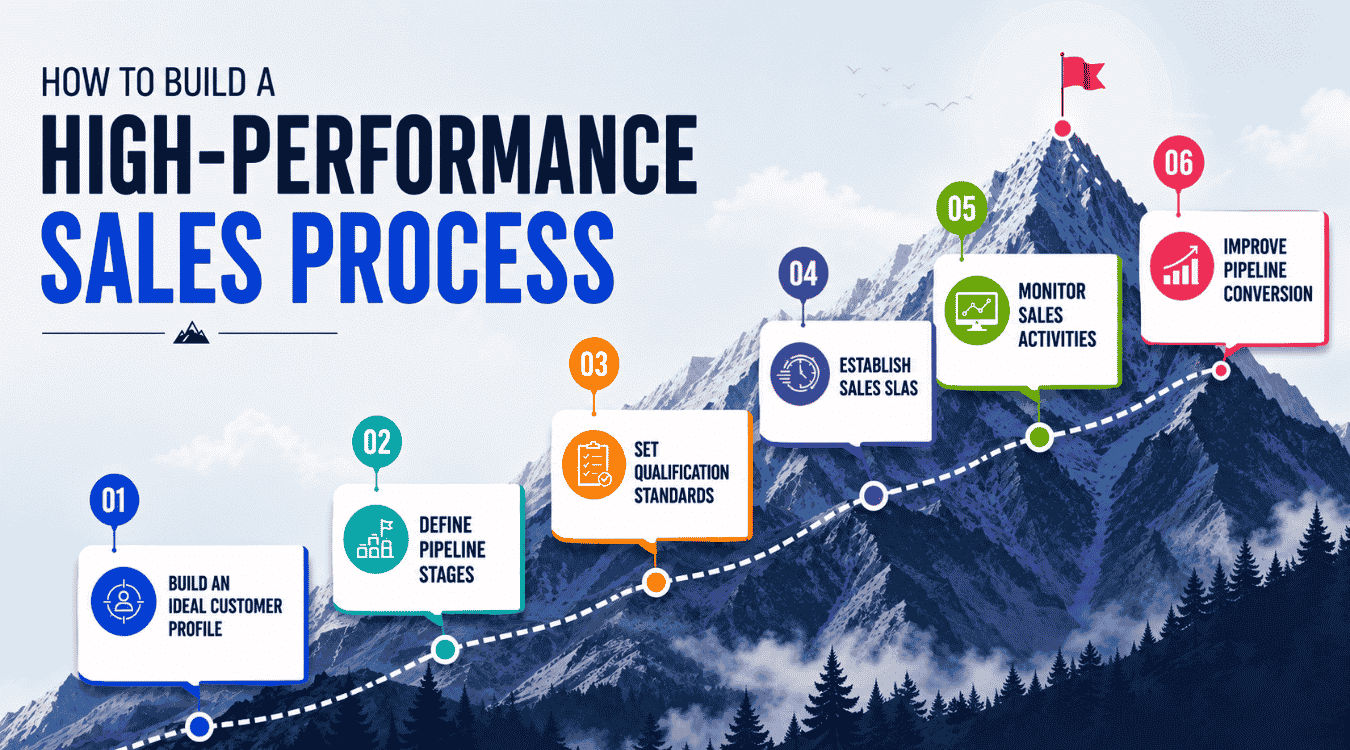
A high-performance sales process creates consistency, improves productivity, and helps teams achieve better results. Clear stages, defined responsibilities, and continuous improvement allow sales teams to reduce wasted time and move opportunities through the pipeline more efficiently.
Build An Ideal Customer Profile
Every successful sales process begins with understanding the right customer. Teams should identify company size, industry, goals, and common challenges to create an ideal customer profile.
A clear profile helps sales representatives focus on qualified opportunities instead of pursuing poor-fit accounts. Understanding customer needs also improves messaging and increases the chances of success.
Define Pipeline Stages
Well-defined pipeline stages help sales teams understand where every opportunity stands. Each stage should have specific actions, goals, and expected outcomes.
Clear stages prevent confusion and reduce wasted time. Sales managers can also identify bottlenecks and improve visibility throughout the buying process. Consistent pipeline management creates a smoother experience for both sales teams and customers.
Set Qualification Standards
Qualification standards help teams determine whether a prospect is ready to move forward. Budget, authority, needs, and timelines often play an important role during evaluation.
Strong qualification reduces unnecessary activities and helps representatives focus on high-value opportunities. Sales teams can also identify common objections earlier and prepare better responses during future conversations.
Establish Sales SLAs
Sales service level agreements create accountability and establish clear expectations. Response times, follow-up schedules, and activity requirements help teams maintain consistency.
Sales managers can use email templates, communication guidelines, and workflow standards to improve productivity. Clear expectations help sales representatives stay organized and deliver a consistent customer experience.
Monitor Sales Activities
Tracking sales activities provides valuable insights into performance. Calls, meetings, emails, and task management for sales teams help managers understand what drives results.
CRM systems allow teams to monitor activities, identify trends, and improve decision-making. A scalable sales process for growing teams, combined with regular coaching sessions and role play exercises, also helps representatives develop stronger selling skills and handle customer conversations more effectively.
Improve Pipeline Conversion
Improving conversion rates requires ongoing evaluation and continuous improvement. Sales teams should review performance data, identify obstacles, and adjust their approach based on results.
Building trust with prospects often plays a major role in moving deals forward. Customer success stories, social proof, and personalized conversations can increase confidence and improve buying decisions.
A high-performance sales process is never static. Teams that review their results, refine their methods, and focus on customer success create stronger relationships and achieve long-term sales success.
When Should Sales Teams Review Their Execution Process
Sales teams should review their execution process regularly to identify gaps, improve performance, and adapt to changing market conditions. Revisiting custom sales stages for different teams is part of this work. Most B2B organizations conduct quarterly reviews, while high-performing teams evaluate their processes monthly.
Several situations also require immediate reviews. Declining conversion rates, longer sales cycles, missed revenue targets, and lower win rates often indicate execution problems and may be improved by approaches similar to the Gain.io sales acceleration case study. Changes in customer behavior, new competitors, or product updates may also affect existing sales processes.
Sales leaders should analyze pipeline performance, sales activities, and customer feedback during each review. Metrics such as deal velocity, win rates, and pipeline coverage help teams identify areas for improvement.
Regular reviews also create opportunities for coaching, process optimization, and better alignment between sales and marketing teams. A continuous review process helps organizations improve execution, maintain consistency, and respond quickly to changing business conditions.
How Can Gain.io Improve B2B Sales Execution?
Gain.io, an all-in-one CRM, helps B2B sales teams create a more organized and consistent sales process. Instead of managing deals through spreadsheets, emails, and disconnected tools, teams can track contacts, opportunities, tasks, and activities from a single platform.
The platform provides visual pipeline management to improve deal clarity, allowing sales teams to monitor deal progress, prioritize opportunities, and identify stalled deals more quickly. Task management, activity tracking, and other smart CRM features help representatives maintain momentum throughout the sales cycle.
Gain.io also centralizes customer information, notes, emails, and activities, giving teams complete visibility into every opportunity through a visual sales pipeline view of deals. This improves collaboration and keeps sales activities aligned across the entire pipeline.
For growing B2B teams, Gain.io supports better sales execution by providing clearer sales pipeline CRM visibility, organized workflows, and a single workspace for managing daily sales activities.
Frequently Asked Questions
Can Small B2B Businesses Use A Sales Execution Checklist?
Yes. Small businesses often benefit the most because a checklist creates consistency and reduces mistakes. It helps teams follow the same process, prioritize opportunities, and manage customer interactions more effectively, even with limited resources.
Who Should Own The Sales Execution Process?
Sales managers typically lead the sales execution process, but successful implementation requires support from sales representatives, marketing teams, customer success teams, and revenue operations teams. Shared ownership of sales activity tracking and execution improves accountability and keeps everyone aligned.
What Tools Support Sales Execution?
CRM platforms, simplified sales automation workflows, pipeline management software, modern sales communication platforms, and reporting solutions help teams manage activities and improve visibility. These tools reduce manual work and provide data that supports better decision-making.
How Often Should A Sales Checklist Be Updated?
Sales teams should review their checklist at least once every quarter. Changes in customer behavior, market conditions, products, or sales goals may require updates, especially as they refine a scalable sales process for growing teams. Regular reviews help teams improve performance and maintain a consistent sales process.
How Long Does It Take To Build A Sales Execution Checklist?
The time required depends on the complexity of the sales process and the size of the sales team. Small teams can build a basic checklist within a few days, while larger organizations may need several weeks to define stages, responsibilities, and performance standards. Regular updates also help keep the checklist relevant as business needs change.