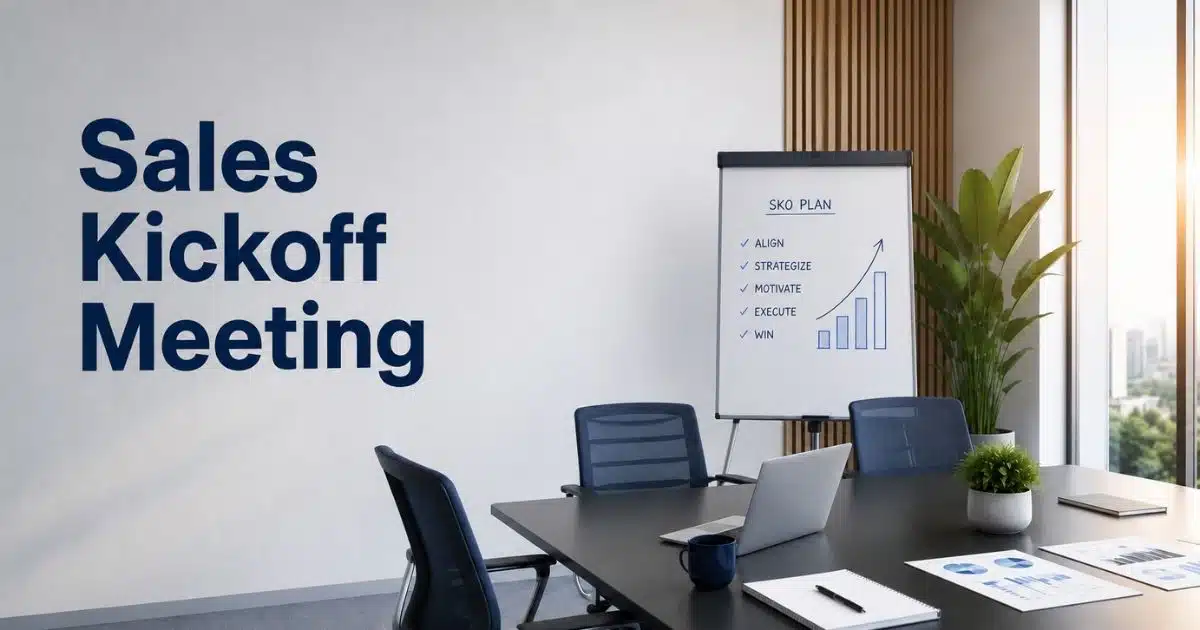
A sales kickoff meeting is the yearly event where a sales team comes together to align on goals, learn new strategies, and get ready for the year ahead. Most companies hold their sales kickoff at the start of the fiscal year or a new quarter. It sets the tone for how reps sell, what they prioritize, and how they use their tools going forward.
A strong sales kickoff agenda covers strategy updates, product training, and skill-building sessions, all built around clear objectives. Without a solid plan, a sales kickoff can turn into a long meeting with no lasting impact. This guide covers what a sales kickoff meeting should include and how to plan one that actually works.
What Is a Sales Kickoff Meeting (SKO)
A sales kickoff (SKO) is an annual sales kickoff event where the entire sales team comes together to align on goals, review the past year, and prepare for what's next. It usually happens once a year, often right after a new sales plan is set.
A successful sales kickoff brings sales reps, managers, and leadership into one room, or one call for a virtual sales kickoff, to walk through strategy, product updates, and changes to the sales process. The entire team leaves with a shared understanding of targets and priorities. Some companies run this event in person. Others hold a virtual sales kickoff to save on cost and logistics.
Benefits Of A Well-Run Sales Kickoff
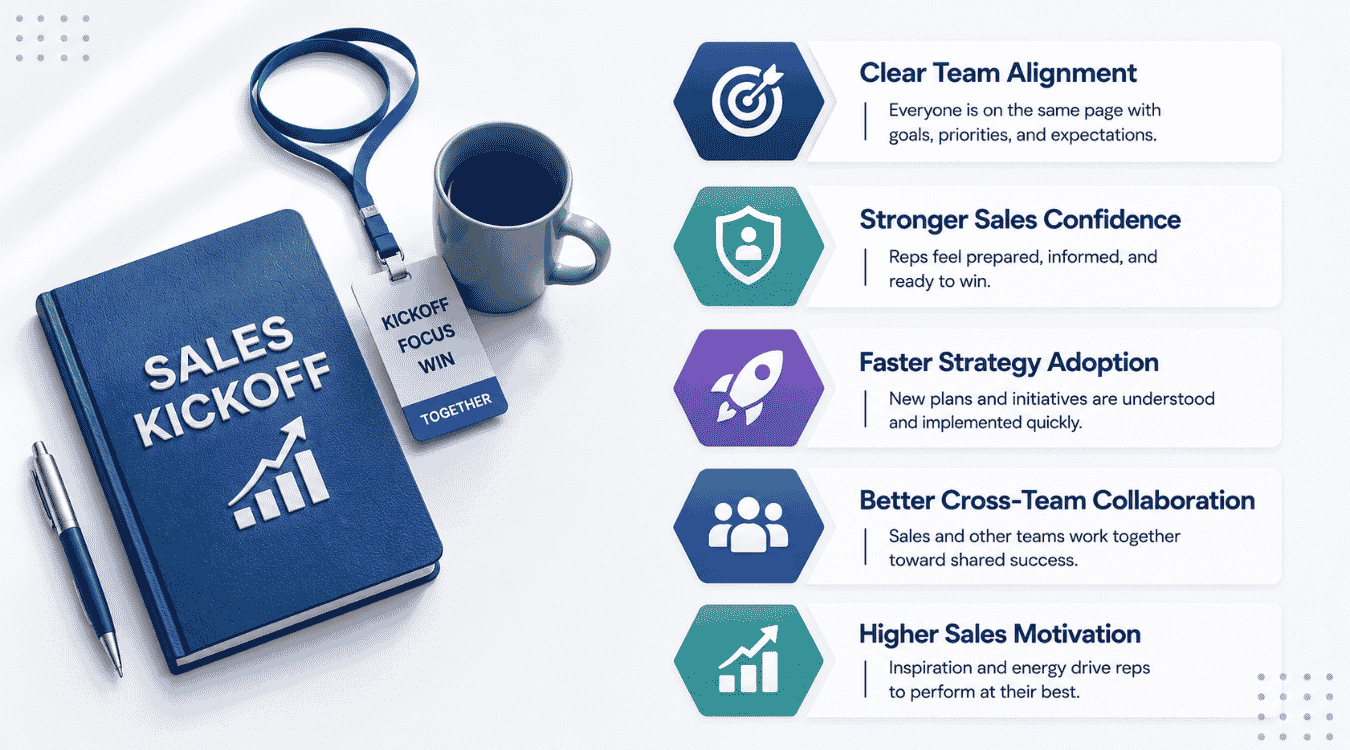
A well-run sales kickoff does more than boost energy in the room. It shapes how the sales organization performs for the rest of the year, from alignment to confidence to collaboration.
Clear Team Alignment
Sales leaders use the annual sales kickoff meeting to put everyone on the same page. Reps hear the same goals, the same numbers, and the same priorities directly from leadership instead of picking up fragments through email or Slack.
Confusion drops once every rep understands where the company is headed. Managers spend less time repeating updates one-on-one, and reps spend more time selling with a shared sense of direction across regions and teams.
Stronger Sales Confidence
Sales managers often use the kickoff to walk through wins from the past year, including specific success stories from top performers. Hearing how a colleague closed a tough deal gives reps practical tactics they can copy right away.
Confidence builds when reps see proof that the strategy works. New hires benefit most here, since they get exposed to real examples instead of theory, which shortens the time it takes them to close their first few deals.
Faster Strategy Adoption
A clear sales kickoff meeting agenda gets new strategies into daily use faster. Reps who understand the reasoning behind a change adopt it quicker than those who just receive a memo about it.
Sales organization leaders who tie training sessions directly to real deal scenarios see stronger uptake, especially when they reinforce CRM adoption. Reps leave with practiced skills, not just notes, so the new approach shows up in calls and pipeline reviews within days, not months.
Better Cross-Team Collaboration
Marketing, product, and customer success teams often join the kickoff, whether it runs in person or through virtual sales kickoff events. This shared setting breaks down the silos that usually keep departments working separately and sets the stage for adopting a sales collaboration CRM.
Virtual sales formats make it easier to include remote teams and regional offices without travel costs, particularly when supported by an integrated CRM calendar for modern sales and support teams. Reps get direct access to product and marketing contacts, which speeds up how quickly customer feedback and market insight travel back into daily sales conversations, especially when supported by modern sales communication tools.
Higher Sales Motivation
A successful sales kickoff meeting reminds reps why their work matters, beyond the numbers on a dashboard. Recognition of top performers in front of the whole team builds momentum that carries into the first weeks of the new quarter.
Momentum fades without reinforcement, so the effect depends on follow-through after the event. Reps who leave with clear next steps and visible support from leadership stay motivated longer than those who only get a one-day energy boost.
How To Plan A Sales Kickoff Meeting
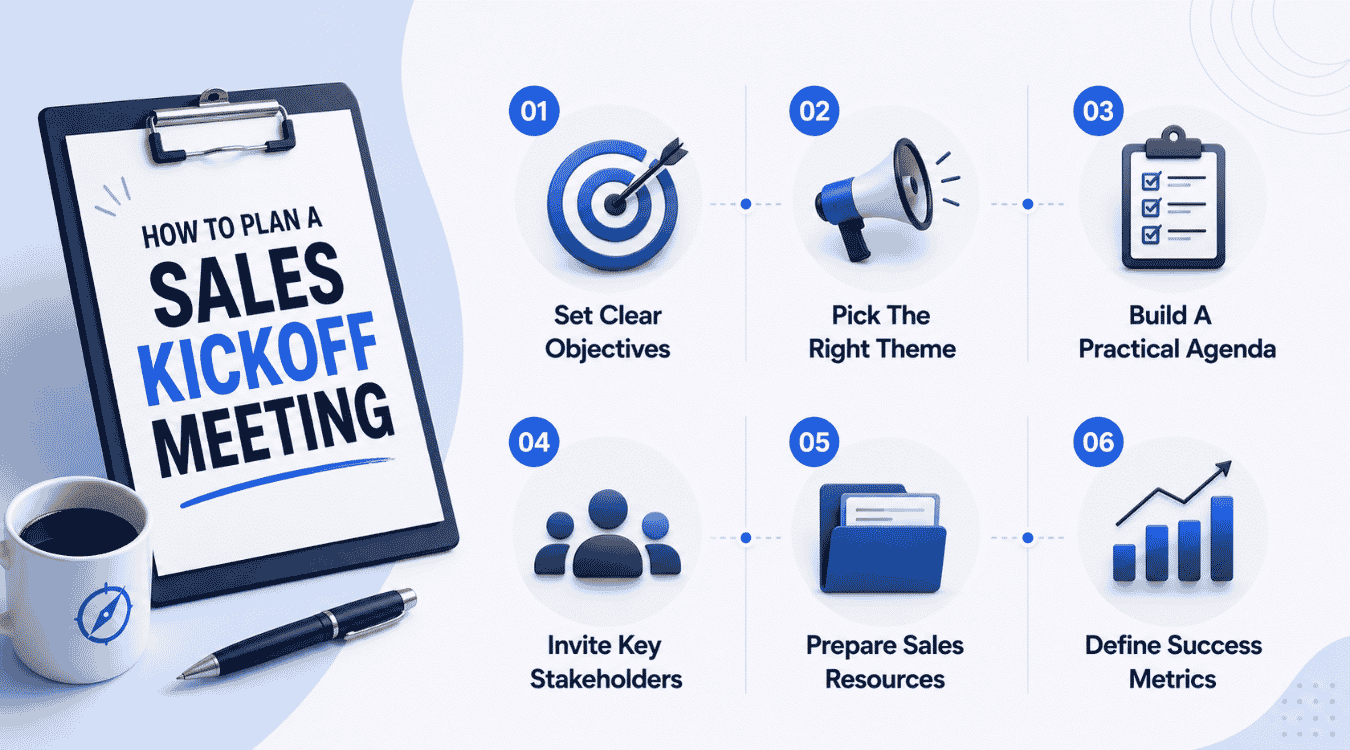
Planning starts long before the event date. Getting the sales kickoff meeting goals, agenda, and logistics right upfront is what separates a productive kickoff from a wasted day.
Set Clear Objectives
Every sales kickoff meeting needs a defined purpose before anything else gets planned. Are you launching a new sales strategy, addressing a rough quarter, or introducing a new product line? The objective shapes every other decision that follows.
Vague goals lead to unfocused agendas and disengaged reps. Company executives should agree on two or three priorities max, then build sessions that support those priorities directly. This keeps the sales kickoff meeting goals measurable instead of just motivational.
Pick The Right Theme
Good sales kickoff meeting ideas often start with a theme that ties the agenda together. A theme gives structure to speeches, slides, and even team-building exercises, making the whole event feel cohesive instead of a string of unrelated sessions.
Skip vague or overused themes that don't say anything specific. Tie the theme to the actual sales strategy for the year, whether that's expanding into new markets or improving close rates. Reps remember specific, relevant themes far longer than generic ones.
Build A Practical Agenda
An agenda packed with back-to-back sessions wears out the sales force fast. Balance strategy updates and training with breaks, discussions, and team-building activities that keep energy up throughout the day or days.
Order sessions so the most demanding topics come early, when attention is sharpest, and use that time to introduce tools like sales calendar software. Save lighter, interactive segments for later in the day. A practical agenda respects people's time and avoids the common mistake of trying to cover everything in one sitting, mirroring proven sales time management tips.
Invite Key Stakeholders
A sales kickoff works best when it's not just sales in the room. Bring in customer success, marketing, and product teams so reps hear directly from the people who support deals after they close.
Company executives should also have visible speaking roles, not just a welcome message. Their presence signals that the sales strategy has real backing from the top. Cross-functional input during the event also reduces friction between teams once everyone is back at their desks.
Prepare Sales Resources
Reps need something tangible to take away besides notes. Updated playbooks, battle cards, and product sheets should be ready and shared before or during the kickoff, not scrambled together the week after.
Resources tied to the new sales strategy help reps apply what they learned immediately. Skipping this step means good ideas from the kickoff never make it into daily selling, which wastes the time and budget spent on the event itself.
Define Success Metrics
A sales kickoff meeting needs a way to measure whether it worked. Decide in advance what success looks like, whether that's faster ramp time for new reps or improved adoption of a new process, and link those outcomes to the right sales KPIs for smarter revenue decisions.
Track these metrics for weeks after the event, not just on the day itself, and connect them to focused sales activity management. Comparing performance before and after the kickoff shows company executives whether the investment paid off and gives planners real data to improve the next one.
What To Include In Your SKO Agenda
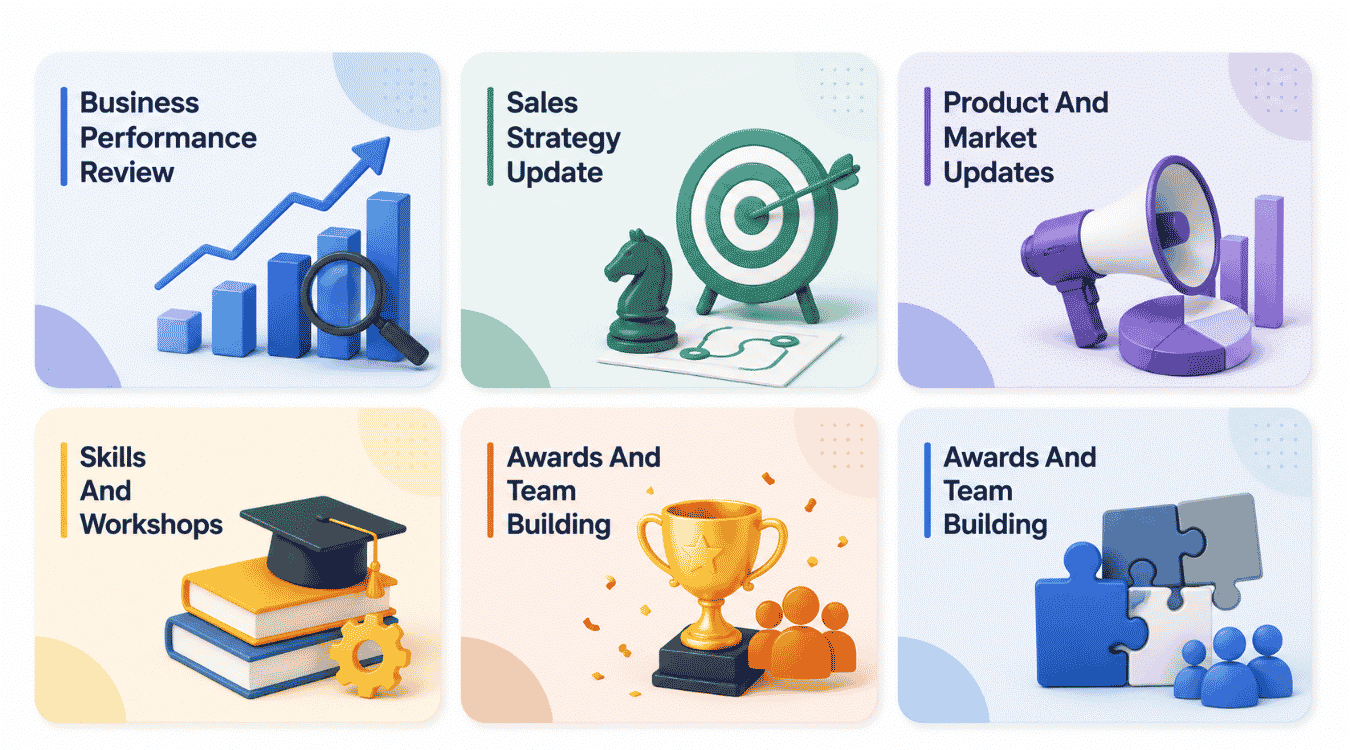
A strong kickoff meeting agenda covers more than pep talks. It should walk sales professionals through performance, strategy, product knowledge, and skill-building before the new fiscal year picks up speed.
Business Performance Review
Numbers from the past year set the stage for the year ahead. Reps need to see where the team landed against quota, which regions outperformed, and where the sales cycle slowed down or sped up.
Honest data builds more trust than a highlight reel. Sales professionals respond better to a clear picture, wins and misses included, than to a filtered version of the year. This review also gives context for whatever strategy changes come next in the agenda.
Sales Strategy Update
This is where the sales kickoff theme usually comes to life. Leadership walks the team through what's changing, whether that's a new sales strategy, updated targets, or a shift in how deals move through the pipeline.
Concrete examples matter more than slides full of bullet points. Reps want to know how the strategy changes their day-to-day sales techniques, not just the big-picture reasoning behind it. Tying updates to real scenarios from the sales cycle helps the message land.
Product And Market Updates
Reps can't sell what they don't understand. This segment covers new features, pricing changes, and shifts in the competitive landscape that reps will run into during calls and demos.
Bringing in the marketing department for this section adds useful context on messaging and positioning, including how email tracking CRM features improve outreach and follow-up. Sales professionals leave with sharper talk tracks and fewer gaps when prospects ask detailed product questions. This is also a natural spot for a short Q&A to clear up confusion before the fiscal year gets underway.
Skills And Workshops
Breakout sessions give reps a chance to practice, not just listen. Role-plays, objection-handling drills, and smaller group workshops build sales skills in a way that a keynote speech never will and should include practice around avoiding common sales follow-up mistakes that stall deals.
One of the most useful sales kickoff tips is to keep these sessions small and hands-on. Sales training that includes real practice sticks longer than passive lectures. Reps walk away with sharper sales techniques they can use in their very next call, not just theory to forget by next week.
Awards And Team Building
Recognition deserves real space on the agenda, not just a quick mention before lunch. Calling out top performers by name reinforces the behaviors that leadership wants to see repeated across the team.
Team building activities toward the end of the kickoff meeting give reps a chance to connect outside of formal sessions. This mix of recognition and connection sends people into the new fiscal year with energy, not just information, which is often what separates a forgettable event from a memorable one.
How To Run A Sales Kickoff For A Small Or Growing Sales Team
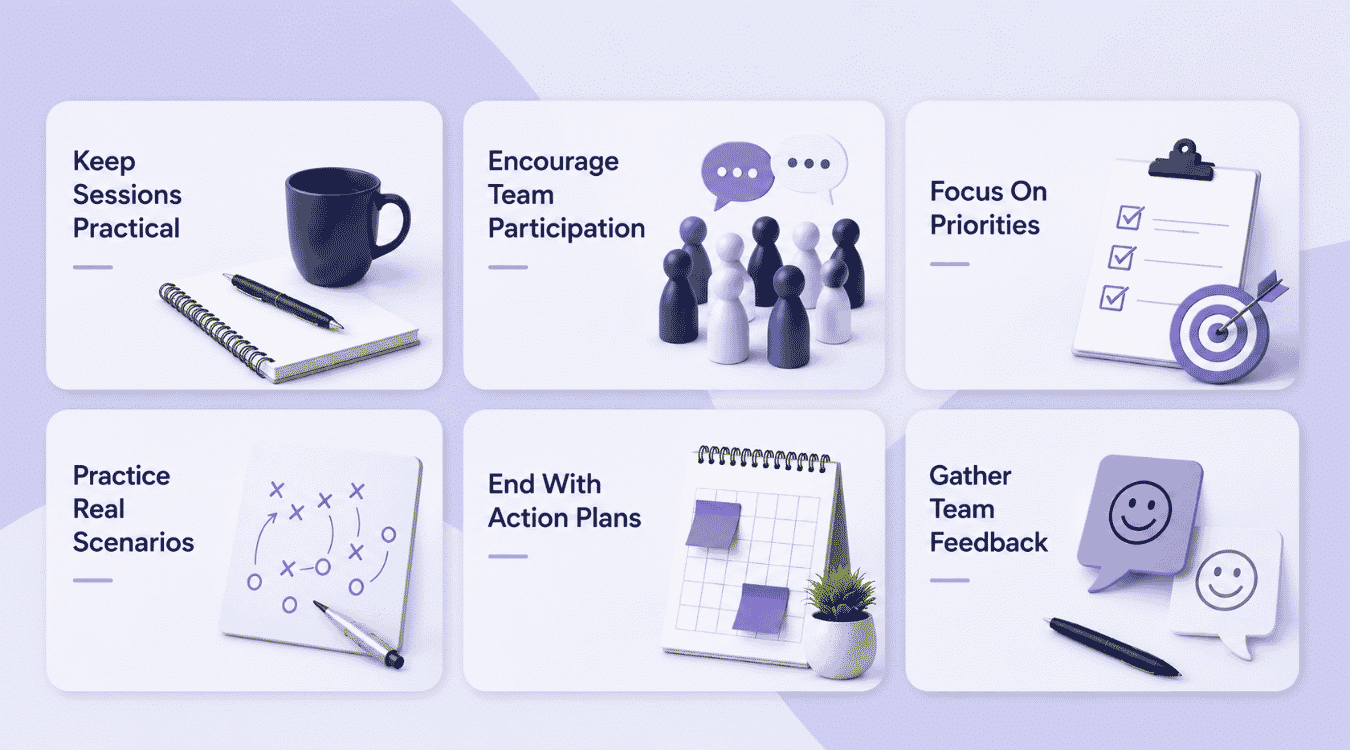
Small sales teams don't need a five-day annual event with a huge budget. A great sales kickoff scales down to fit the team size while still delivering real value.
Keep Sessions Practical
Small teams get more value from short, focused sessions than long strategy lectures. A few hours covering ambitious revenue goals, pipeline priorities, and process changes usually covers what a smaller sales force actually needs.
Cutting filler content keeps energy high throughout the day. Team members retain more when sessions stay tight and specific to their actual accounts, rather than generic training built for a much larger organization with different challenges.
Encourage Team Participation
A growing team benefits when everyone contributes, not just leadership. Open the floor for team members to raise questions, share blockers, and suggest ideas for the year ahead instead of just listening passively.
Smaller groups make this easy to pull off without breakout rooms or complex logistics. Direct participation also builds buy-in faster, since reps feel like the sales strategy reflects their input rather than a plan handed down from above.
Focus On Priorities
A small team can't chase every initiative at once. Pick two or three key messages that matter most for the year and build the entire kickoff around them.
Trying to cover too much dilutes the impact of the event. Sharper focus means reps leave the annual event with a clear sense of what to prioritize first, rather than a long list of takeaways that get forgotten within a week.
Practice Real Scenarios
Role-play still works well even without big breakout sessions. A live customer presentation walkthrough or objection-handling drill gives reps something concrete to practice before they're back on calls.
Pairing reps up for scenario practice works especially well in smaller groups. Reps leave with sharper talk tracks and more confidence handling tough conversations, since they've already worked through similar situations out loud with a teammate.
End With Action Plans
A kickoff without a clear next step loses momentum fast. Close the meeting by having each rep write down two or three specific actions tied to their own accounts and goals.
Managers should collect these plans and follow up within the first week. This turns kickoff energy into daily habits instead of letting the ambitious revenue goals discussed on stage fade once everyone gets back to their desks.
Gather Team Feedback
A quick feedback round after the event helps improve the next one. Ask team members what worked, what felt like a waste of time, and what topics deserve more attention next time.
Feedback also surfaces networking opportunities and success stories worth highlighting later. Teams that consistently share success stories from past kickoffs, including wins from top performers, build a stronger case for what to repeat in future planning.
How To Turn SKO Goals Into Tracked Results In Your CRM
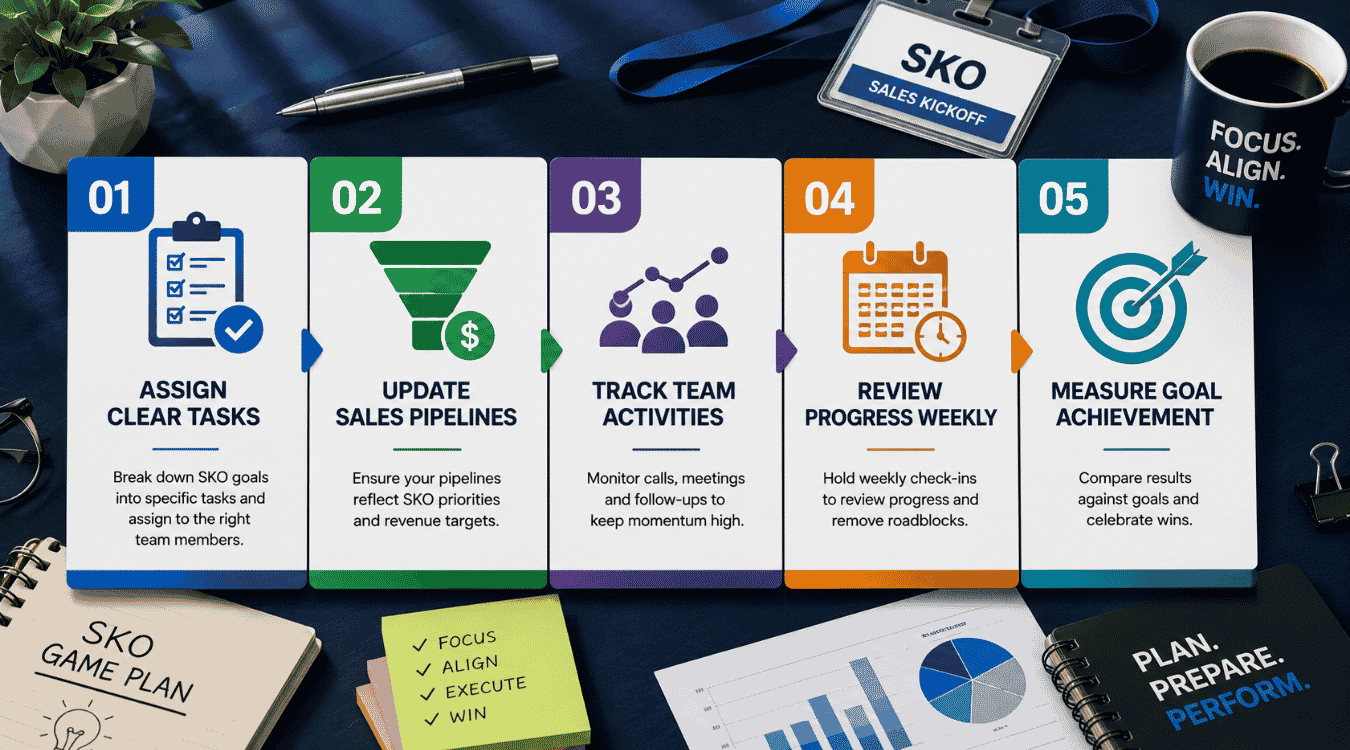
Annual sales kickoffs generate ideas and energy fast, but that energy fades without a system to track it or to support sales workflow automation strategies. A CRM turns kickoff commitments into visible, measurable progress across the entire year, especially when teams use smart CRM features to organize and manage sales activities.
Assign Clear Tasks
Every goal from the kickoff needs an owner and a deadline logged somewhere trackable. Vague commitments made during a keynote speaker session or a breakout discussion rarely survive the trip back to the office.
Reps and managers should enter these tasks into the CRM before the week ends, ideally tying them directly to deals in a sales pipeline CRM. Company goals stay visible when tasks sit next to actual deals and contacts, not buried in a notebook or a slide deck nobody opens again.
Update Sales Pipelines
Kickoff often brings changes to targets, territories, or deal stages, and pipelines need to reflect that right away, which is easier when you’ve defined custom sales stages tailored to different teams. Waiting weeks to update the CRM creates a gap between what leadership announced and what reps are actually working from.
Clean pipelines also make it easier to compare this year's start against the previous year, particularly when you’re using a unified Sales Calendar CRM to connect schedules and deals. Reps who update deal stages consistently avoid the common trap where a strong opening month gets lost in outdated or duplicate records, especially when they rely on a visual sales pipeline that improves deal clarity.
Track Team Activities
Calls, emails, and meetings booked after the kickoff show whether new sales techniques from role play sessions are actually being used, especially when monitored through sales activity tracking software for smarter teams. Activity tracking in the CRM gives managers a factual view instead of relying on gut feel.
Reps who logged fewer activities than usual after an annual sales event often need a quick check-in, not a lecture. Early activity data helps managers catch reps who lose focus before it shows up in missed numbers weeks later.
Review Progress Weekly
A single check-in right after the kickoff isn't enough to keep momentum going. Weekly reviews using CRM dashboards keep company goals in front of the team instead of fading into a memory from the past year.
Short, consistent reviews work better than long monthly ones. Reps stay accountable when progress gets discussed every week, and managers can adjust coaching before small issues from the upcoming year turn into bigger problems by the entire year's end.
Measure Goal Achievement
The real test of any kickoff is whether goals actually get hit by year end. CRM reporting should track progress against the specific targets set during the event, not just overall revenue.
Comparing results to the previous year shows whether new strategies actually moved the needle. This data also feeds directly into planning the next kickoff, turning ongoing learning from one annual sales event into sharper decisions for the one after it.
Common Sales Kickoff Mistakes To Avoid
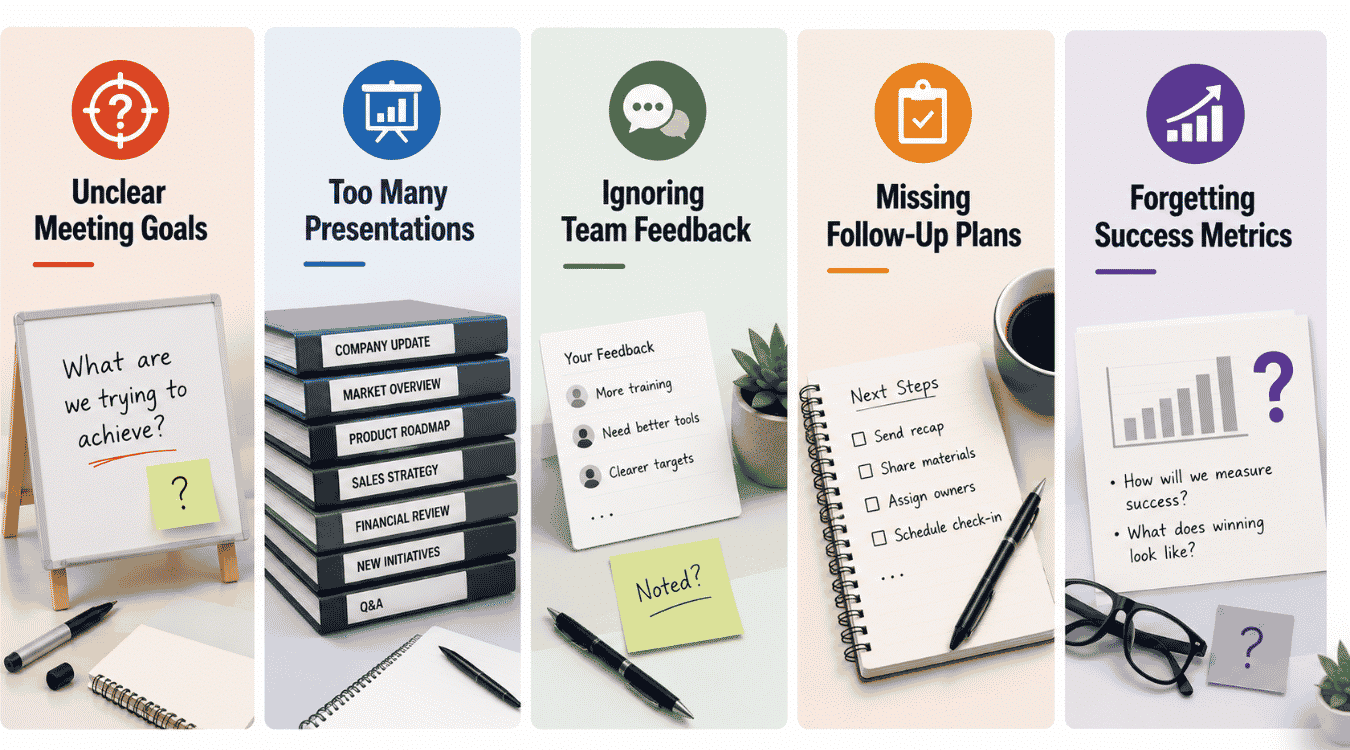
Even a well-funded kickoff can fall flat when a few common mistakes creep into the planning. Avoiding these keeps the event focused and worth the time invested.
Unclear Meeting Goals
A kickoff without defined sales goals turns into a string of updates with no real direction. Reps leave unsure of what actually changed or what they're expected to do differently.
Spending a few minutes upfront to state the meeting's purpose out loud sets the tone for everything after. When leadership and reps start on the same page, training sessions and strategy updates land with far more impact.
Too Many Presentations
Back-to-back slides wear reps out fast, even with great guest speakers on the agenda. Attention drops sharply after the first hour or two of one-way presentations.
Interactive sessions break up the day and keep reps engaged. Mixing product training with role-play, discussion, or small group work helps encourage collaboration instead of leaving reps passively watching slide after slide.
Ignoring Team Feedback
Skipping feedback after the event means the same mistakes repeat next year. Reps often know exactly which sessions felt useful and which ones wasted their time.
A short survey sent out shortly after the kickoff captures honest input while the event is still fresh. Teams that actually act on this feedback tend to run tighter, more relevant kickoffs the following year.
Missing Follow-Up Plans
Momentum from the kickoff fades fast without a plan to track progress afterward. Reps go back to their desks, and the energy from the event disappears within the first few weeks.
A simple follow-up cadence, even a quick weekly check-in, keeps sales goals visible instead of letting them slide. Without this step, training sessions and strategy updates rarely turn into changed behavior on actual calls.
Forgetting Success Metrics
Running a kickoff without a way to measure its impact makes it impossible to know if the investment paid off. Leadership ends up guessing whether the event actually helped.
Deciding in advance what success looks like, and checking those numbers weeks later, gives real proof of impact. This turns the kickoff from a one-off event into something leadership can justify repeating year after year.
Final Thoughts
A great sales kickoff does more than fire up the room for a day. It gives the entire sales team a shared sense of direction, clear priorities, and practical skills they can use right away. The agenda matters, but follow-through matters more. Goals set on stage only count once they show up in the CRM as tracked tasks, updated pipelines, and measurable progress.
Whether it's a large annual event or a lean kickoff for a small team, the same principles hold. Keep sessions focused, involve the whole team, and build in a way to track results long after the event ends. That's what separates a memorable sales kickoff from one that actually changes how the year plays out.
FAQs
How Long Should A Sales Kickoff Meeting Last?
Most sales kickoffs run one to two days for small and mid-sized teams. Larger sales organizations sometimes stretch to three days, but longer events often lose attention and cost more than they're worth. A tighter agenda focused on real priorities beats a long one packed with filler sessions.
Who Should Attend A Sales Kickoff?
Sales reps and managers make up the core of the room, but marketing, product, and customer success often join too. Bringing in other departments helps reps understand the full picture behind deals, not just the sales side. Leadership attendance also signals that the strategy has real backing.
How Often Should A Company Hold A Sales Kickoff?
Once a year is standard, usually at the start of a new fiscal year. Some companies add smaller check-ins between the annual event and the next event to keep priorities fresh. Ongoing training throughout the year works best when it builds on what got covered at the kickoff, rather than repeating it.
How Do You Measure Sales Kickoff Success?
Track whether reps hit the sales goals discussed on stage, not just how the event felt in the room. Real-time feedback collected right after sessions helps gauge what landed. Longer term, compare pipeline activity and closed deals in the weeks following the kickoff against the same period the year before.
Can A Small Sales Team Skip A Formal Kickoff?
Skipping it entirely usually costs more than it saves. Even a half-day version focused on a few clear opportunities ahead keeps a small team aligned. A short, well-run session can still translate into more business over the following quarter, without the budget of a full multi-day event.