Selling has become harder for many sales teams. Around 53% of salespeople say closing deals feels more difficult than last year. A missing lead scoring model often makes the situation worse. Sales reps spend nearly 25% of their week researching prospects and deciding which leads deserve attention. Many end up chasing people who have no real interest in buying.
A clear lead scoring model removes that guesswork. Sales teams can rank prospects based on behavior, interest, and fit. That way, reps focus on people who are more likely to convert instead of wasting time on cold leads.
Strong lead scoring models help improve conversions and sales productivity. The right approach also aligns sales and marketing around the same priorities. This guide explains what a lead scoring model is, shares real examples, and outlines best practices your team can apply right away.
What Is Lead Scoring Model
A lead scoring model ranks potential customers based on how likely they are to buy. Marketing and sales teams use a lead scoring system to sort leads and focus on the most promising prospects. Lead scoring helps rank potential customers with point values based on different data points. Common scoring criteria include job title, company size, and behavioral data such as visits to a pricing page or lead forms. A scoring process assigns more points to engaged leads and subtracts points through negative lead scoring when signals show low interest.
A lead scoring model helps marketing and sales teams identify qualified leads and high-quality leads faster. The marketing team can pass a marketing-qualified lead to the sales team once a lead reaches a certain score range. Sales reps then focus their sales efforts on high-scoring leads and high-value leads instead of cold leads. Strong sales and marketing alignment improves sales efficiency and supports a smoother sales process.
Modern lead scoring software also uses predictive lead scoring. Predictive scoring uses machine learning and historical data to evaluate intent signals and implicit behavioral data. Predictive lead scoring automates the scoring process and highlights the best leads. Different lead scoring models help teams prioritize leads, improve lead quality, and guide leads generated through marketing campaigns into the sales funnel.
Why Lead Scoring Models Drive High Conversion Rates
Companies using lead scoring models see up to 70% increase in lead generation return on investment compared to those without scoring systems. The average conversion rate from prospects to qualified leads jumps to 15-20% with lead scoring, while companies without it struggle at around 10%. These numbers explain why lead scoring models have become non-negotiable for high-conversion sales funnels.
Sales Team Efficiency And Productivity Gains
Sales reps waste hours on leads that will never convert. The average conversion rate sits at just 10% without a lead scoring system, and only 1-6% of leads ended up becoming customers. Low quality leads in queues cause these dismal numbers.
Lead scoring fixes this by identifying high-value leads before your sales team wastes time. Sales reps spend 9% of their week researching prospects, 8% prospecting, and 8% prioritizing leads. That's 25% of their week just figuring out who to contact. A lead scoring model eliminates most of this guesswork and works best when paired with a CRM that improves sales productivity.
Think about a sales rep with 100 potential customers in their pipeline. They randomly pursue all of them without scoring. With lead scoring, they rank those prospects and narrow down to the best 10 using scoring criteria. This targeted approach means they focus on leads most likely to convert rather than spinning wheels on dead ends.
Better Alignment Between Marketing And Sales
Marketing and sales teams often clash over lead quality. Sales complains marketing sends junk leads. Marketing insists sales isn't following up fast enough. Lead scoring creates a shared language that ends this friction.
The lead scoring process requires both teams to define what makes a lead "sales-ready" together. They establish scoring rules based on job title, company size, and behavioral data, often drawing from a structured lead qualification guide for sales teams. This collaboration means everyone agrees on when a marketing-qualified lead becomes a sales-qualified lead.
A survey from Gartner shows that 64% of sales reps are more likely to follow up on marketing qualified leads when qualification criteria is agreed upon in advance. That's a massive jump in cooperation. The sales team works the leads instead of ignoring them when they trust the marketing team's lead scoring.
Regular feedback loops keep the scoring system accurate. Both teams meet to discuss quality as marketing-qualified leads transition to sales-qualified leads. The scoring criteria get adjusted if the sales team receives too many leads that aren't ready to purchase. This continuous refinement improves lead quality over time.
Improved Pipeline Velocity And Revenue Forecasting
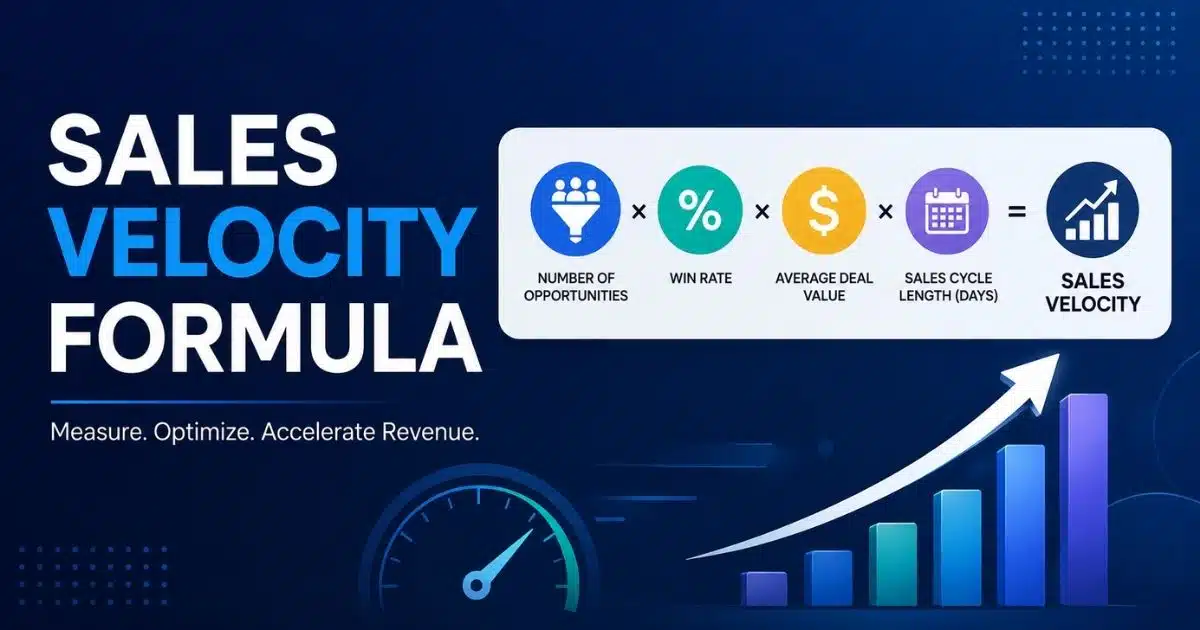
Pipeline velocity measures how quickly qualified opportunities move through the sales funnel and convert into revenue. Lead scoring accelerates this by ensuring only promising prospects enter the pipeline.
Organizations using predictive analytics in lead management see up to 20% increase in pipeline conversion rates and 15% improvement in deal velocity. These gains show up directly in core sales conversion rate metrics for B2B teams. DocuSign reported a 38% increase in conversions from marketing qualified leads to sales qualified leads within 6 months, plus a 27% improvement in lead-to-close time.
These improvements happen because lead scoring models identify intent signals early. The scoring system flags them as hot when a prospect visits your pricing page multiple times or downloads multiple resources. Sales can respond while interest peaks. This speed matters. The longer a lead sits uncontacted, the higher the chance they choose a competitor.
Core Lead Scoring Models For Conversion Optimization
Different lead scoring models serve specific purposes in qualifying and ranking potential customers. Your sales and marketing teams need to understand which models fit your business to build an effective lead management process and scoring system.
Demographic And Firmographic Scoring Model
Demographic scoring assesses individual attributes like job title, location and education level. Age, gender and personal income show lead quality for B2C companies. B2B organizations rely more on firmographic data since company characteristics determine conversion likelihood rather than individual traits.
Firmographic scoring gets into company size, industry, annual revenue, growth rate, number of locations and tech stack. A B2B software provider targeting C-level executives assigns higher points to leads with titles like "Chief Marketing Officer" or "VP of Sales" compared to junior employees. Businesses focusing on enterprise clients prioritize leads from large corporations over small startups in the same way, especially when they organize sales leads effectively around these attributes.
Behavioral And Engagement Scoring Model
Behavioral scoring tracks how prospects interact with your website, emails and digital marketing. This lead scoring model reveals engagement levels and purchase intent through actions rather than attributes.
Website activity provides strong intent signals. A lead who visits your pricing page multiple times shows more interest than someone browsing the homepage. The number of times a prospect takes an action matters. A lead has looked at your pricing page 80 times in the past week? That shows they're a hot lead.
Email engagement measures open rates and click-through rates. How often leads open emails, which types they interact with most, and whether they click links all contribute to their engagement score. Integrating this data into a CRM with email integration ensures engagement signals flow directly into your scoring model. Different activities carry different point values. A whitepaper download might earn more points than an email open because it signals stronger interest.
Predictive Lead Scoring With AI And Machine Learning
Predictive lead scoring uses algorithms and machine learning to expand traditional scoring methods. Predictive scoring automates the entire process and incorporates broader data points, unlike manual approaches.
The system analyzes historical data to identify patterns among leads that converted versus those that didn't. Machine learning models refine scoring criteria over time as new patterns emerge. This allows businesses to find correlations that human analysts might miss due to bias.
Predictive lead scoring requires sufficient data to train the model. Organizations need at least 40 qualified and 40 disqualified leads created within the chosen timeframe to generate accurate predictions. The more leads available for training, the better the prediction results and the more reliable your sales performance metrics for SaaS teams become.
Negative Scoring And Score Decay Systems
Negative scoring subtracts points for attributes or behaviors showing low conversion potential. This approach filters unqualified prospects and improves sales efficiency.
Common negative scoring criteria include unsubscribing from emails, using generic email addresses, visiting career pages instead of product pages and coming from industries you don't serve. Students downloading resources for academic purposes rather than purchasing also receive negative scores, as do contacts generated through common lead generation mistakes that hurt conversions.
Score decay reduces point values over time when engagement stops. A lead score half-life represents how long it takes for a lead's score to become half as valuable as it was during their last interaction. This categorizes leads based on recent activity rather than outdated engagement.
How To Build A Lead Scoring System That Converts
Building a lead score model requires specific steps that arrange your marketing and sales teams on what constitutes a qualified lead. Miss one step and your scoring system produces inaccurate results that waste sales efforts.
Define Buyer Personas
Analyze your existing customers first to identify who provides the most value. Review your CRM data to manage leads and find patterns among top customers. Look at customer lifetime value, long-term relationships and deals that closed with minimal obstacles.
Your ideal customer profile focuses on company characteristics. Which customers deliver the highest lifetime value? Who renews or expands contracts? Which accounts are profitable without draining resources? Patterns emerge around industry, company size, region and technology use, especially for a CRM built for startups and small sales teams that need clarity on where to focus.
Buyer personas differ from your ICP. The ICP defines which companies to target. Buyer personas identify who inside those companies makes purchasing decisions. A buyer persona has role and responsibilities, goals and KPIs, decision-making authority, information consumption habits and objections that hold them back.
Identify Key Scoring Attributes
Review won and lost deals to identify what actually associates with closed deals. Ask which job title converts at the highest rate, which company size has the best win rates, which behavioral signals predict pipeline progression and which engagement patterns indicate buying intent.
Let your conversion data guide criteria selection, not assumptions. Common attributes are industry match, job title arrangement, company revenue fit, geographic location and behavioral actions like pricing page visits, all of which are easier to track with dedicated lead management software for sales teams.
Assign Point Values
Not all scoring criteria are created equal. Assign numerical values to each data point based on how it associates with conversions. Use a scale of 1 to 100.
A pricing page visit might earn 40 points while a blog subscription gets 5 points. Enterprise companies with 1,000+ employees might receive 30 points because they fit your ICP. The point values should reflect actual conversion association from your historical data.
Set MQL And SQL Thresholds
Determine what score range represents sales readiness. A common starting threshold is 50 points for marketing qualified lead status and 75 to 100 for sales qualified lead designation. These thresholds require testing when you first implement lead scoring.
Sales and marketing arrangement happens here. Both teams must agree on qualified lead definitions so marketing doesn't send junk and sales follows up. Around 21% of MQLs become SQLs on average, so monitor conversion and get into where leads fall off.
Implement Score Degradation
Scores should decrease over time if engagement stops. A lead who downloaded content 18 months ago is less sales ready than one who did so last week, especially if your sales workflow in the CRM is simple enough for reps to act quickly on fresh scores.
Automation rules provide two options for score degradation: reduce score by X every Y days of inactivity, or reduce score to X after defined inactivity periods. Score decay prevents your sales team from chasing stale leads based on scores that no longer reflect reality. The changes made by these automation rules cannot be reversed, so take an informed approach to this decision.
Lead Scoring Best Practices For Maximum Conversions
Building a lead scoring model is one thing. Making it work requires proven best practices that marketing and sales teams often overlook.
Line Up Sales And Marketing
Sales reps cherry-pick leads or bypass marketing qualified leads when scoring criteria are based on surface-level engagement rather than buying intent. This happens because lead scoring should be co-owned, not marketing-controlled, and it depends on strong sales visibility into pipeline and activity.
Help teams line up by running a workshop where you define ideal customer profile attributes and disqualification criteria. Then build your scoring logic around this shared definition. Research shows that 64% of sales reps are more likely to follow up on marketing qualified leads when qualification criteria is agreed upon in advance.
Use Account-Level Scoring
Account scoring scores the company rather than the individual. It aggregates contact scores across the buying committee. This approach works best for enterprise deals with ACV above $25,000 that involve multi-stakeholder decisions.
The average B2B buying committee now has 6 to 13 decision-makers across IT and finance. A rising engagement score across multiple roles beats one hyperactive champion, which is where a dedicated sales pipeline CRM for visibility and performance becomes essential.
Audit And Refine Your Scoring Model
Schedule a quarterly review at minimum to check whether high-scoring leads are converting. Compare lead scores with actual conversion rates using your visual sales pipeline for deal clarity. A discrepancy between the two indicates the need for recalibration.
A high-performing lead scoring model should relate to revenue outcomes, not just engagement metrics.
Create Automated Workflows
Define clear score thresholds: 0-30 points get nurture content, 31-60 points go to sales development reps for targeted outreach, and 61+ points receive direct handoff to account executives. Trigger a workflow to set off automated actions at the time a contact surpasses a certain score.
Speed matters more than most teams realize. Contacting a lead within 5 minutes of their marketing qualified lead trigger is 100 times more effective than contacting them 30 minutes later.
Lead Scoring Examples And Real-World Applications
Real-life companies use different lead scoring models based on their sales process and customer experience. These examples show how marketing and sales teams assign point values to potential customers and tie them directly to a structured sales pipeline that actually works.
B2B Software Company Scoring Implementation
HubSpot combines behavioral and demographic scoring criteria. Marketing Manager job titles get +10 points. Companies over 100 employees get +5, and pricing page visits earn +15. Email unsubscribes subtract 15 points using negative lead scoring.
Pardot separates scoring from grading. Scoring tracks engagement while grading measures fit on an A-F scale. A lead with 100 points and an A grade is sales-ready.
Marketo's B2B SaaS model assigns +25 for live demo attendance and +20 for C-suite titles. Automated alerts notify the sales team when scores exceed 70, helping reps prioritize outreach and manage contacts better to build stronger relationships.
E-Commerce Lead Scoring Strategy
E-commerce platforms prioritize behavioral data in different ways. Product page views earn +7 points. Cart additions get +15, and purchase history receives +20. Newsletter subscriptions add +5 points to the engagement score, especially when combined with tools that accelerate deals and shorten sales cycles.
Multiple Persona Scoring Systems
Companies with multiple buyer personas need separate scoring models. An Edutech business serving teachers and parents requires different scoring criteria for each audience. B2B companies tracking buyers and influencers benefit from persona-specific scoring.
How Gain.io Strengthens Smarter Revenue Growth
Gain.io helps marketing and sales teams build a stronger lead scoring model and improve revenue decisions. The all-in-one CRM to grow your sales and team connects marketing campaigns, behavioral data, and lead management in one place. Its smart features for sales teams give sales and marketing teams the data to rank potential customers and identify quality leads.
Marketing and sales alignment improves when a clear scoring process exists. Gain.io supports scoring leads with flexible scoring criteria such as job title, company size, and engagement score. Marketing teams pass a marketing-qualified lead to the sales team once high-scoring leads appear.
Predictive lead scoring and machine learning evaluate historical data and intent signals. Sales reps can prioritize leads and focus sales efforts on the most promising prospects. Better lead quality shortens the sales cycle and improves sales efficiency across the marketing and sales process.
FAQs
How Do Multiple Data Points Improve Accuracy In A Lead Scoring Model?
A lead scoring model becomes more reliable when it combines many data points such as job title, company size, behavioral data, and intent signals. Marketing and sales teams assign point values to each signal. A scoring system that evaluates several indicators identifies high quality leads and ranks potential customers with stronger accuracy.
Can Predictive Lead Scoring Replace Manual Scoring Rules In Complex Sales Funnels?
Yes. Predictive lead scoring uses machine learning and historical data to analyze lead’s characteristics and engagement score automatically. Predictive lead scoring automates the scoring process and helps marketing and sales teams prioritize leads with the highest likelihood to convert.
Does Negative Lead Scoring Improve Lead Quality In B2B Sales Processes?
Yes. Negative lead scoring subtracts points when signals show low buying intent. Negative scoring criteria may include career page visits, generic email domains, or industries outside your target market. A negative scoring model filters cold leads and improves sales efficiency by highlighting the best leads.
How Does Account-Level Lead Scoring Support Sales And Marketing Alignment?
Account-level scoring evaluates engagement across several contacts within the same company. Sales and marketing teams aggregate engagement score, behavioral data, and intent signals across the buying group. This scoring process identifies high-value leads and improves sales and marketing alignment in complex B2B sales cycles.
What Role Does Score Decay Play In Maintaining An Effective Lead Scoring System?
No. A scoring system without score decay quickly becomes inaccurate. Score decay reduces point values when leads engage less over time. The lead scoring process then keeps high scoring leads current while pushing low scoring leads or inactive contacts back into the marketing funnel.