
Revenue can grow for many reasons. You might close more deals, raise your prices, or land bigger customers. Total sales only show the outcome. They don't explain what changed. Average deal size fills that gap. It shows the typical value of every closed deal and helps you understand where your revenue is really coming from. Sales leaders also use it to forecast revenue, set realistic targets, and measure sales performance over time.
A rising average deal size often means your team is winning larger opportunities or selling more value to each customer. A falling number can point to pricing issues, heavy discounting, or a shift towards smaller accounts. Once you know how to calculate and interpret this metric, you can make better decisions about your sales strategy. In this guide, you'll learn how average deal size works, how to calculate it correctly, and practical ways to increase it.
What Is Average Deal Size?
Average deal size means the average amount of revenue your business earns from each successful sale during a specific period. You calculate average deal size by dividing your total revenue from closed-won opportunities by the number of deals closed in the same period. It is a key metric that helps sales teams understand the typical deal value they generate instead of focusing only on total sales.
For many businesses, average deal size is more than just a number. It reflects how well your sales process converts opportunities into larger deals and whether your team is attracting the right customers. Sales leaders often track it alongside average contract value, sales cycle length, and other sales metrics to measure sales performance, forecast how much revenue they can expect, and identify opportunities for revenue growth. The higher your average deal value, the greater your chances of generating more revenue without increasing your sales volume.
Why Average Deal Size Is Important In Sales
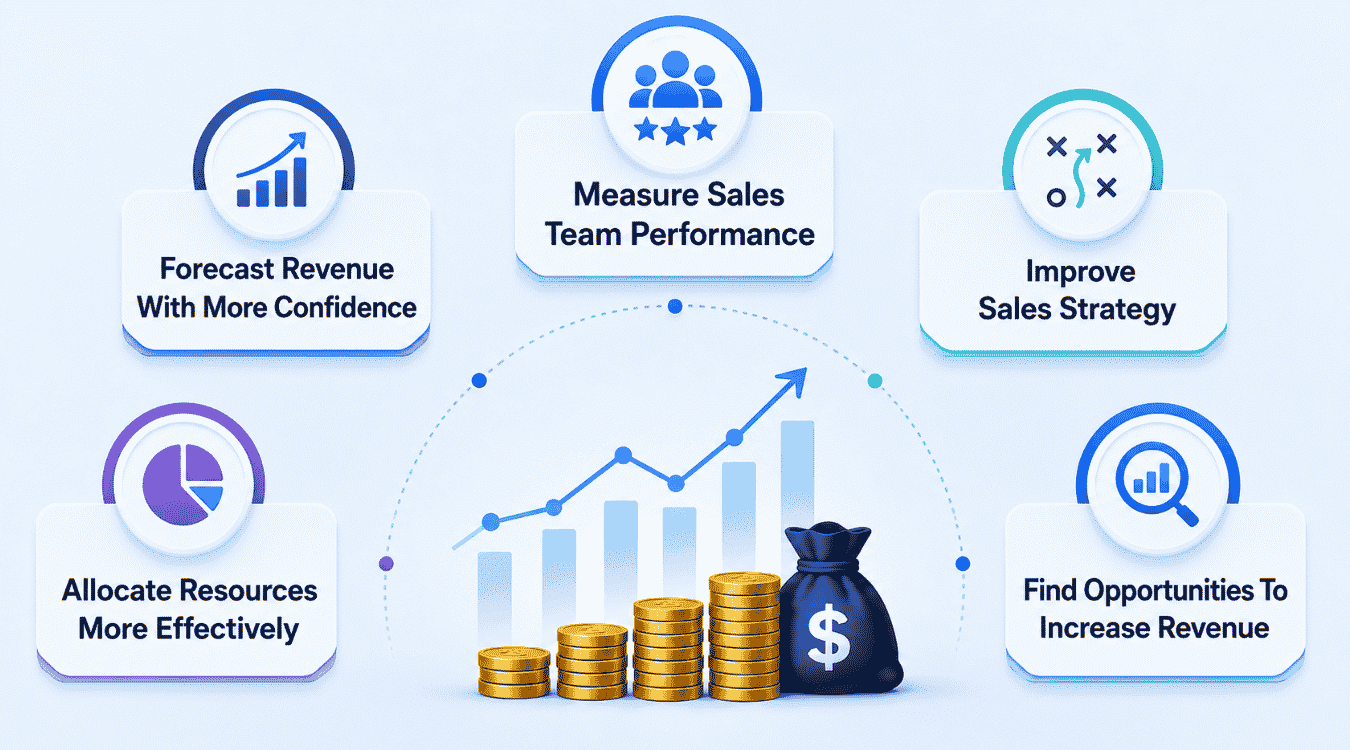
Average deal size does more than show how much revenue each sale brings in. It helps you understand whether your sales process is moving in the right direction. A single metric can reveal trends in customer behaviour, pricing, and sales performance. When you track it alongside other sales metrics, you can make better decisions and build a stronger sales strategy.
Forecast Revenue With More Confidence
Revenue forecasts become more reliable when you know the typical value of every closed deal. Instead of making rough estimates, sales leaders can use historical data to predict how much revenue the sales team is likely to generate during a given period.
Average deal size also helps estimate how many deals are needed to hit revenue targets. Salesforce recommends tracking it with closed-won opportunities and pipeline data because it provides a clearer picture of future sales performance.
Measure Sales Team Performance
Sales performance is not only about how many deals your team closes. The value of those deals matters just as much. A higher average deal size often shows that sales reps are closing higher-value deals instead of relying on a large sales volume.
Sales leaders usually compare average deal value with win rate, sales cycle length, and customer lifetime value. Looking at those metrics together helps identify areas where the team performs well and where improvements are needed.
Improve Sales Strategy
Average deal size helps you understand whether your current sales strategies are delivering the right results. A drop in deal value may point to pricing issues, weak qualification, or targeting customers who are less likely to buy premium plans.
A steady increase usually means your business is attracting higher value customers or creating more value through upselling, cross-selling, and better positioning. Those insights support data-driven decisions instead of guesswork.
Allocate Resources More Effectively
Every business has limited time, budget, and people. Average deal size helps managers allocate resources where they can produce the biggest return. Teams can focus more attention on larger deals that have a greater impact on total revenue.
Larger deals often involve a longer sales cycle and a more complex approval process. Knowing that in advance helps businesses assign experienced sales reps and plan resources more efficiently.
Find Opportunities To Increase Revenue
Average deal size is a helpful metric because it highlights where more revenue may already exist. Existing customers often respond well to complementary products, premium plans, or annual contracts when they solve real pain points.
Small improvements can make a major impact. Value-based pricing, product bundles, and targeted upselling help increase average deal size without needing the same number of new customers. That approach supports steady revenue growth while making the sales funnel more profitable.
How To Calculate Average Deal Size With Real Examples
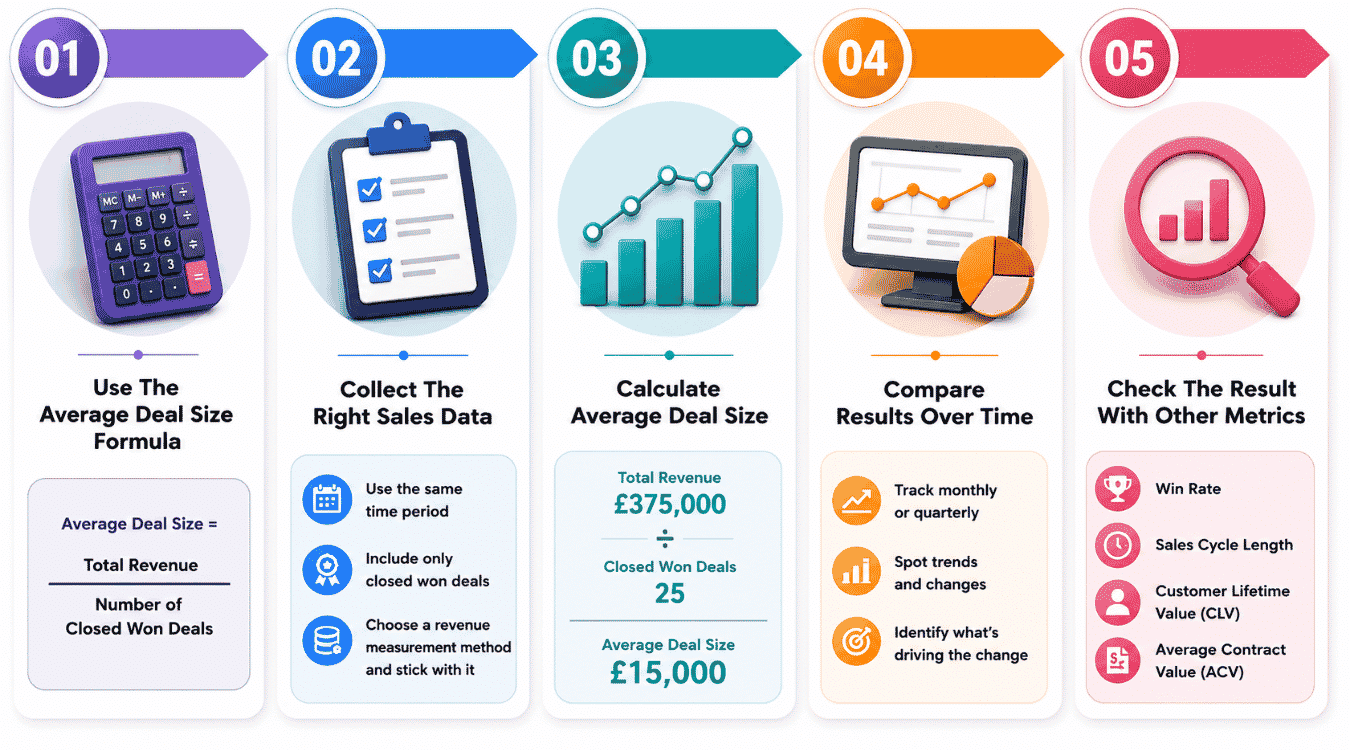
Average deal size is easy to calculate once you know which numbers to use. You only need your total revenue and the number of closed-won opportunities during the same period. A consistent calculation helps you compare sales performance, forecast revenue, and make better business decisions over time.
Use The Average Deal Size Formula
The average deal size formula is simple. Divide your total revenue by the number of deals closed during a specific period. Count only closed won opportunities. Exclude lost deals and open opportunities to keep the result accurate.
For example, if your sales team generated £240,000 from 40 deals, your average deal size is £6,000. Use the same time period every time you calculate average deal size. That makes comparisons more meaningful and helps track changes in sales performance.
Collect The Right Sales Data
A good calculation starts with clean data. Use revenue from the same period and make sure every deal has reached the closed-won stage. Mixing different time periods or including pending deals can distort the average deal value.
Many SaaS companies also decide whether to measure average contract value, total contract value, or first-year revenue. Choose one method and stick with it. A consistent approach gives sales leaders a more reliable metric for forecasting revenue and measuring growth.
Calculate Average Deal Size With An Example
Suppose your business closed 25 deals in one quarter. Those sales generated £375,000 in total revenue. Divide £375,000 by 25, and your average deal size is £15,000.
Now compare that with the previous quarter. If you closed the same number of deals but generated £450,000, your average deal size rises to £18,000. Even though sales volume stayed the same, each deal brought more value. That usually points to stronger pricing, better qualification, or higher value customers.
Compare Results Over Time
One calculation tells you where you stand today. Regular tracking shows where your business is heading. Compare average deal size every month or quarter using the same reporting method. That makes trends much easier to spot.
A higher average deal size may reflect successful upselling, cross-selling, or value-based pricing. A lower figure may reveal discount pressure or a shift towards smaller customers. Looking at the metric over time helps identify areas that need attention before they affect revenue growth.
Check The Result With Other Metrics
Average deal size works best alongside other sales metrics and effective deal tracking. A larger average deal is positive, but it should not come at the cost of a much longer sales cycle or fewer deals closed. Looking at one metric alone can lead to the wrong conclusion.
Compare your average deal size with win rate, sales cycle length, customer lifetime value, and average contract value. Together, they show how well your sales process performs and whether your sales strategies are driving sustainable growth instead of short-term gains.
What Is A Good Average Deal Size?
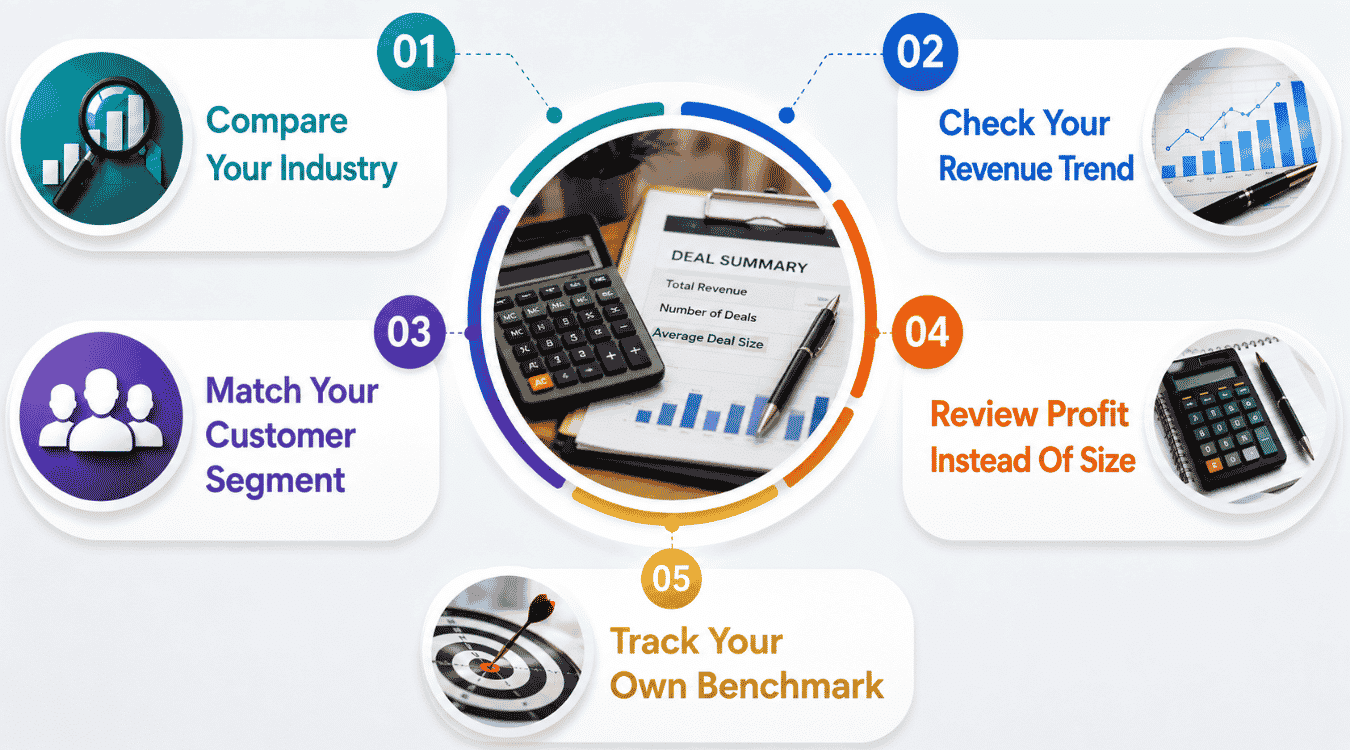
There is no single number that defines a good average deal size. The right benchmark depends on your business model, pricing, target market, and customers. Instead of chasing a fixed number, focus on whether your average deal size supports steady revenue growth and long-term profitability.
Compare Your Industry
Average deal size varies across industries. A software development company often closes higher-value deals than an e-commerce platform. Enterprise SaaS companies also have a much higher average contract value than businesses that sell low-cost subscriptions.
That is why there is no universal benchmark. Compare your performance with businesses that have a similar business model, company size, and target market. A like-for-like comparison gives a much clearer picture of your sales performance.
Check Your Revenue Trend
A higher average deal size is useful only if it supports healthy revenue growth. One large contract can increase the average amount for a month, but it does not always mean your sales process has improved.
Look at the trend over several months instead of one reporting period. A steady increase usually shows that your sales team is closing higher-value deals consistently. That makes revenue targets easier to achieve and forecast.
Match Your Customer Segment
Your customer base has a direct impact on deal value. Businesses that sell to enterprise buyers often close larger deals than companies that focus on small businesses. Enterprise sales usually involve a longer approval process and more stakeholders, which often extends the sales cycle length.
Customer segmentation also matters. Repeat customers may spend more because they already trust your brand, while new customers often start with smaller purchases. Targeting the right customers helps increase average deal size over time.
Review Profit Instead Of Size
A bigger average deal is not always better. Heavy discounting can increase the number of deals closed, but it may reduce profit and customer lifetime value. Every sale should create enough value for both your customer and your business.
Focus on profitable growth rather than a higher price alone. Value-based pricing and the right pricing tiers help customers see the benefits of your solution without relying on unnecessary discounts. That leads to more sustainable revenue.
Track Your Own Benchmark
The best benchmark is your own historical data. Calculate average deal size for the same period every month or quarter. Then compare the results to see whether your sales strategies are moving in the right direction.
Sales leaders rarely judge this key performance indicator on its own. They review it with sales cycle, customer lifetime value, win rate, and other sales metrics. Together, those numbers provide a much better view of business performance and sales visibility and help teams make data-driven decisions.
Average Deal Size Benchmarks By Industry
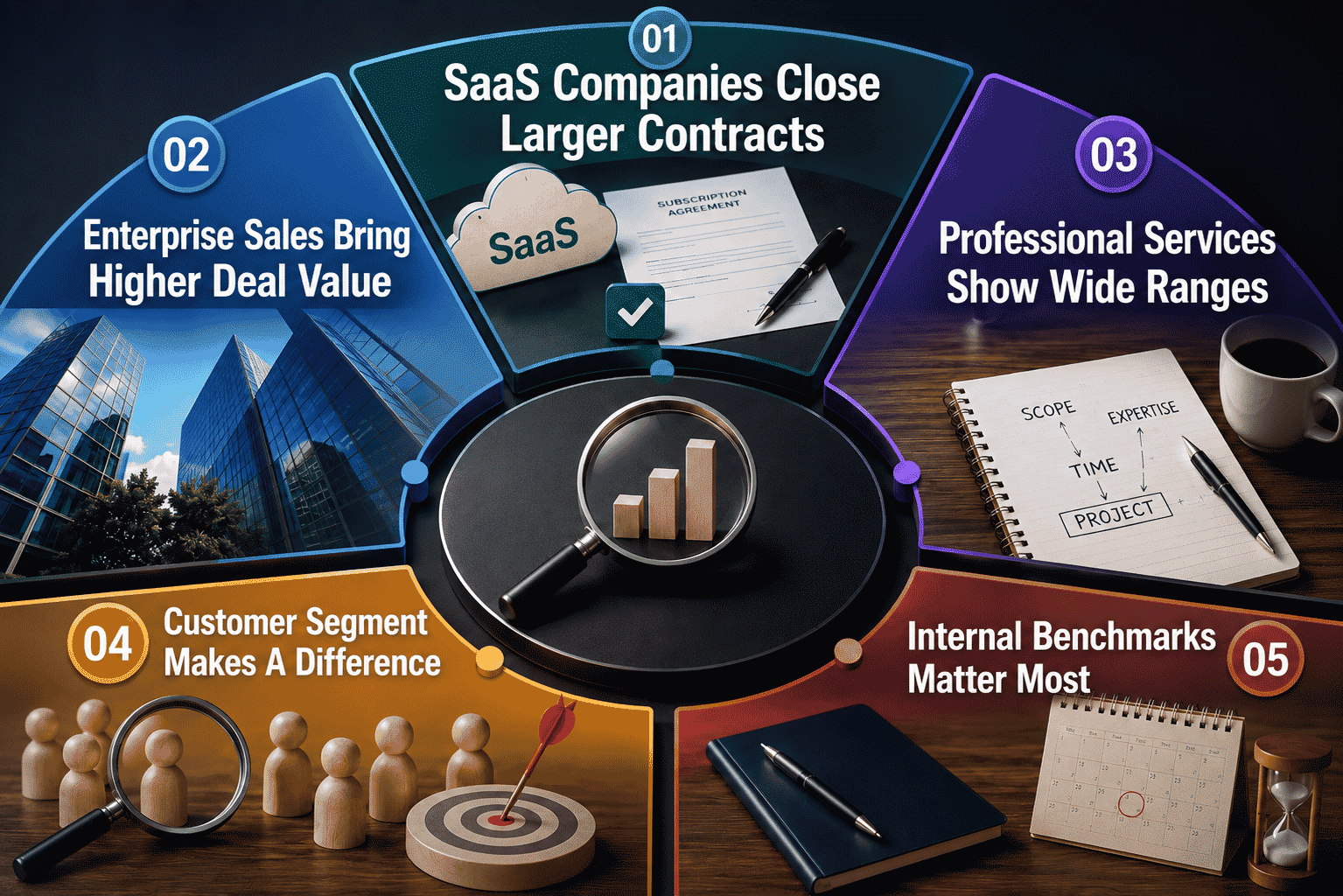
Average deal size looks different from one industry to another. Product pricing, customer type, and sales cycle all influence the final number. Instead of comparing your business with every company, measure your results against businesses that sell similar products to similar customers.
SaaS Companies Close Larger Contracts
SaaS companies often report a higher average deal size because they sell subscriptions, annual contracts, and enterprise plans. Self-serve SaaS products usually have a lower average contract value than sales-assisted or enterprise solutions. As customer size grows, contract value often grows as well.
Recent B2B benchmark data shows median deal values increase from about $12,000 for sales-assisted SMB SaaS to around $45,000 for mid-market SaaS. Enterprise SaaS deals can exceed $150,000, although results vary by product and target market.
Enterprise Sales Bring Higher Deal Value
Enterprise businesses usually target higher value customers with complex needs. Those customers often require custom pricing, multiple approvals, and tailored solutions. As a result, the typical deal size is much larger than in the SMB market.
Larger deals also take longer to close. More stakeholders join the approval process, and contract reviews become more detailed. That longer sales cycle often leads to higher average contract value because enterprise customers purchase more licences, services, or long-term agreements.
Professional Services Show Wide Ranges
Professional services firms rarely have a fixed average deal value. Consulting, legal, marketing, and software development companies all price projects differently. Scope, expertise, and project length can create a large gap between one contract and another.
For that reason, average deal size may change from month to month. Businesses should review several reporting periods instead of judging one month in isolation. Looking at trends over time provides a more accurate picture of sales performance and revenue growth.
Customer Segment Makes A Difference
Your customer base has a major impact on average deal size. Companies that serve enterprise clients usually generate larger deals than businesses focused on small organisations. The same product can produce very different results depending on who buys it.
Customer segmentation also affects purchasing behaviour. Existing customers often spend more because trust already exists. New customers may begin with lower price points before upgrading. Targeting the right customers helps increase average deal size without relying only on higher sales volume.
Internal Benchmarks Matter Most
Industry averages provide useful context, but they should not become your only target. Every business has its own pricing strategies, sales funnel, and business model. A number that works for another company may not fit yours.
Track your average deal size during the same period every month or quarter. Compare the results with your own historical performance and other sales metrics. That approach helps sales leaders make data-driven decisions, allocate resources wisely, and identify areas for steady improvement.
Key Factors Of Average Deal Size
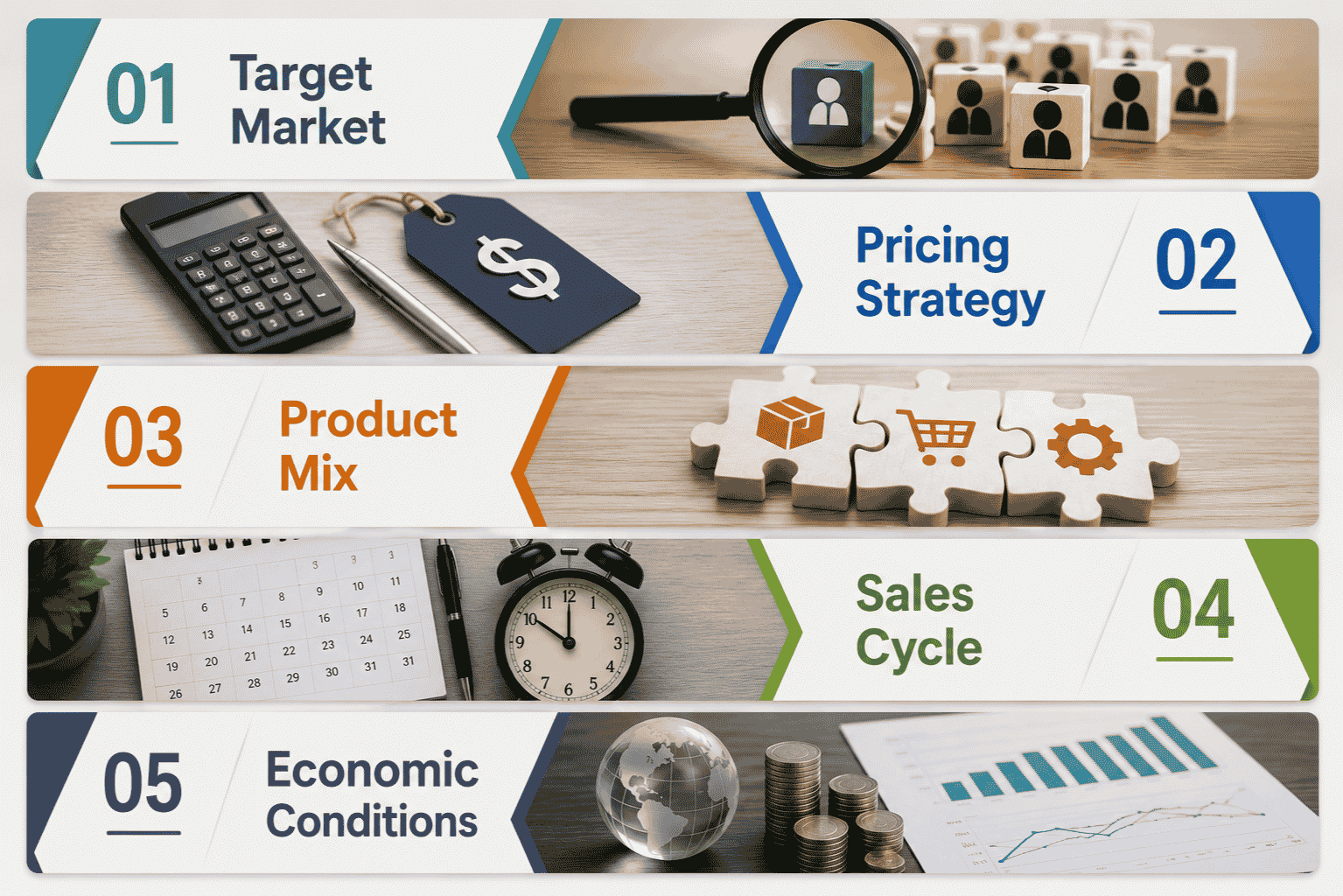
Average deal size does not change by chance. Several factors influence how much customers spend and how much revenue each deal generates. Understanding those factors helps sales leaders refine pricing, improve the sales process, and build proven strategies for steady growth.
Target Market
Your target market has a direct effect on average deal size. Businesses that sell to enterprise customers usually close higher-value deals than those focused on small businesses. Enterprise buyers often purchase more licences, request custom features, and sign larger contracts.
Customer segmentation also shapes deal value. Repeat customers may spend more because they already trust your brand. New customers often start with a smaller average contract before expanding later. Choosing the right customers can make a major impact on long-term revenue growth.
Pricing Strategy
Pricing strategy plays a bigger role than many businesses realise. A higher price does not always reduce demand if customers clearly understand the value. Strong value-based pricing helps improve perceived value and encourages buyers to choose premium pricing tiers.
Heavy discounting creates the opposite effect. Research shows excessive discounts can reduce customer lifetime value by around 30% in SaaS businesses. Clear pricing strategies protect contract value while helping sales reps close profitable deals.
Product Mix
The products customers choose also influence the average deal value. Companies with multiple solutions often generate larger deals because buyers purchase complementary products instead of a single service. Product bundles can also increase the average amount spent in one transaction.
Cross-selling and upselling work well when they solve real pain points. Instead of pushing extra products, successful sales teams recommend solutions that create more value for existing customers. That approach helps increase average deal size while improving the customer experience.
Sales Cycle
Sales cycle length often reflects deal complexity. Simple purchases may close within days, while larger deals can take weeks or even months. More decision-makers usually join the approval process as contract value increases.
A longer sales cycle is not always a problem. Enterprise customers often need internal reviews before making a purchase. Although those deals require more effort, they usually generate higher average contract value and more revenue once closed.
Economic Conditions
Market conditions can also influence deal size. During periods of strong economic growth, businesses often invest more in technology, expansion, and new projects. That confidence can lead to higher value deals and larger average contracts.
Economic uncertainty usually has the opposite effect. Buyers become more cautious, approval processes slow down, and budgets become tighter. Sales leaders should monitor those changes and adjust their sales strategies, resource allocation, and revenue targets to match current market conditions and visibility needs.
Average Deal Size Vs Other Sales Metrics
Average deal size is an important sales metric, but it should never be viewed on its own. Other metrics provide the context behind the numbers. Together, they help sales leaders understand pipeline health, forecast revenue more accurately, and make better business decisions.
Sales Metric | What It Measures | How It Differs From Average Deal Size | Why You Should Track Both |
|---|---|---|---|
Average Deal Size | The average revenue generated from each closed-won deal. | Focuses only on the typical value of a deal. | Shows whether your team is closing larger or smaller deals over time. |
Win Rate | The percentage of opportunities that become customers. | Measures how often deals close, not how much they are worth. | A high win rate with a low average deal size may still limit revenue growth. |
Sales Velocity | How quickly revenue moves through the sales funnel using opportunities, average deal size, win rate, and sales cycle length. | Combines several metrics instead of looking at deal value alone. | Reveals whether revenue is growing because of faster sales, larger deals, or better conversions. |
Customer Lifetime Value (CLV) | The total revenue a customer is expected to generate throughout the relationship. | Looks beyond the first sale, while average deal size measures only the initial transaction. | Helps balance larger upfront deals with long-term customer profitability. |
Pipeline Value | The total potential revenue from all active opportunities. | Includes open deals, while average deal size only uses closed-won opportunities. | Helps forecast future revenue and identify whether the pipeline is large enough to meet revenue targets. |
Common Mistakes When Measuring Average Deal Size
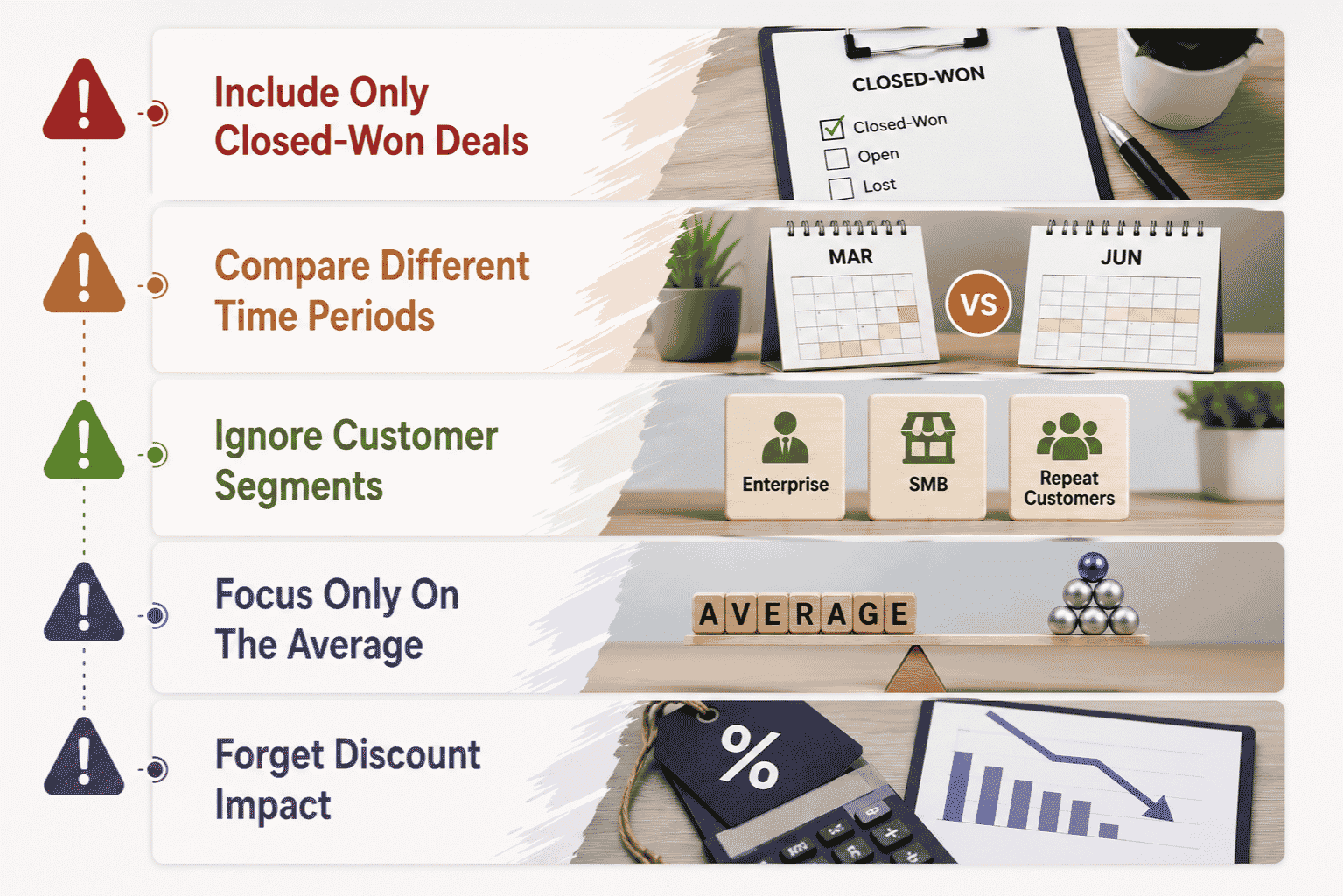
Average deal size is only useful when you measure it the right way. Small reporting mistakes can lead to poor forecasts and weak sales decisions. Avoiding a few common errors helps you track performance more accurately and make better use of your sales data.
Include Only Closed-Won Deals
A common mistake is adding open opportunities or lost deals to the calculation. Average deal size should only include closed-won opportunities. Otherwise, the final number does not reflect actual revenue.
Use the same rule every time you calculate average deal size. Consistent data gives sales leaders a reliable key metric for forecasting revenue and evaluating sales performance. A CRM with accurate records makes the process much easier.
Compare Different Time Periods
Average deal size can change from month to month. Comparing one month with a full year often creates misleading results. Seasonal demand, product launches, and market conditions can all affect sales transactions.
Always compare the same period, such as one quarter against another quarter or one month against the previous month. A consistent reporting window helps identify real trends instead of temporary changes.
Ignore Customer Segments
Many businesses rely on one overall average for every customer. That approach hides important insights. Enterprise customers, small businesses, and repeat buyers often have very different deal values.
Break the data into customer segments whenever possible. Segment analysis helps identify areas with stronger pricing power and shows where higher value customers contribute the most revenue. It also supports better data-driven decisions and resource allocation.
Focus Only On The Average
Average deal size is a helpful metric, but it never tells the whole story. A few very large contracts can raise the average even if most deals remain small. That makes the business appear healthier than it really is.
Review average deal size alongside metrics like win rate, sales cycle length, pipeline value, and customer lifetime value. Some analytics platforms also recommend comparing the mean with the median because outliers can distort the average.
Forget Discount Impact
Heavy discounting can increase the number of deals closed while quietly reducing average contract value. Looking only at the final deal count may hide the real effect on revenue and profitability.
Track discounts together with average deal size and contract value. A clear approval process helps sales reps avoid unnecessary price cuts and protects long-term revenue growth. Businesses that monitor both metrics make better pricing decisions and improve sales efficiency over time.
How To Increase Average Deal Size
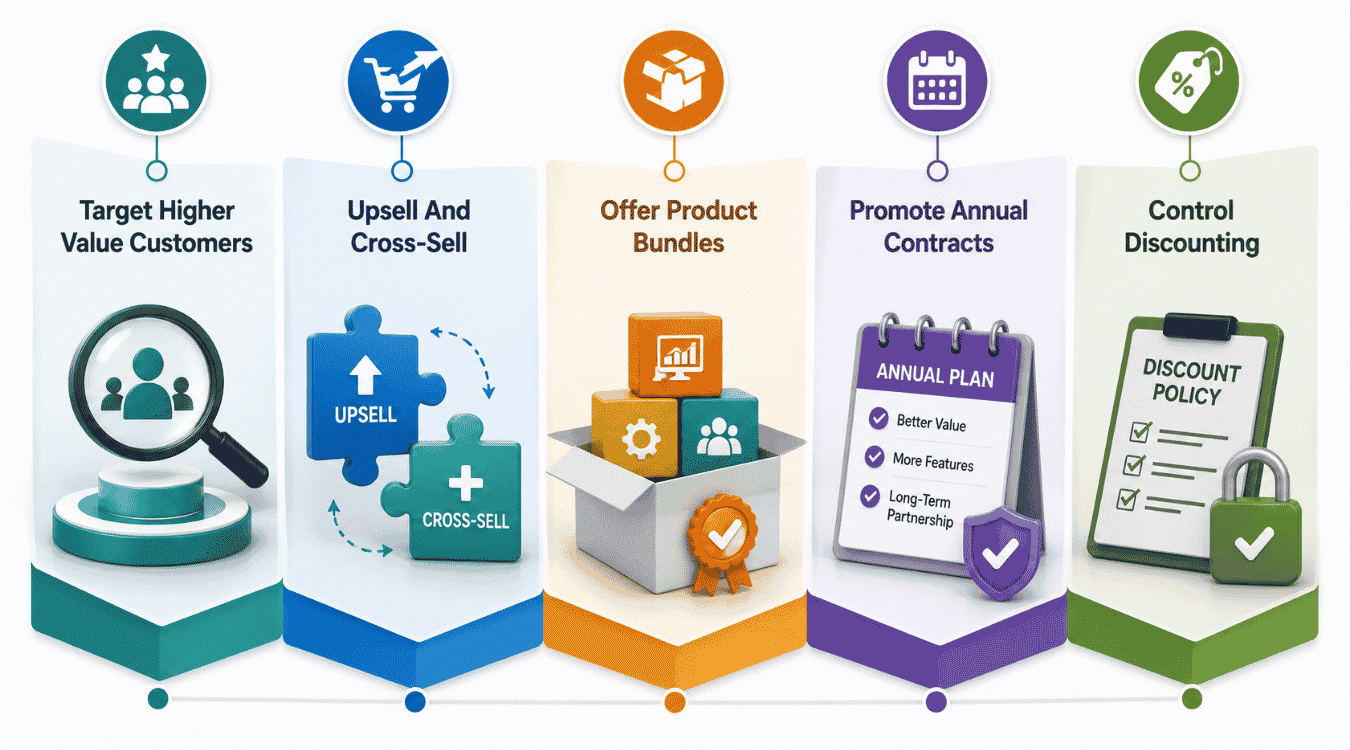
A larger average deal size rarely happens by accident. It comes from better pricing, stronger customer relationships, and a smarter sales process. Small improvements at each stage of the sales funnel can increase revenue without relying only on closing more deals.
Target Higher Value Customers
Not every customer brings the same business value. Some customers need basic features, while others need advanced solutions, larger teams, or custom services. Focusing on higher value customers and better-managed leads often leads to larger deals and stronger revenue growth.
Review your customer base and identify the segments that generate the highest contract value. Sales reps can then spend more time on accounts with greater long-term potential instead of chasing every opportunity. That improves sales performance and helps allocate resources more effectively.
Upsell And Cross-Sell
Existing customers are often the easiest place to find more revenue. Once they trust your product, they are more open to additional features or complementary products that solve new pain points. Upselling and cross-selling naturally increase average deal size when they deliver real value.
Recent industry data shows that 91% of salespeople actively use upselling, while 87% use cross-selling as part of their sales process. Both tactics contribute an average of 21% of company revenue when used effectively.
Offer Product Bundles
Customers often prefer complete solutions instead of buying one product at a time. Bundle products that work well together and solve related business problems. A well-designed package increases the average amount spent while making the buying decision easier.
The bundle should provide more value than individual purchases. Customers feel they receive a better deal, while your business increases average deal value. This strategy works especially well for SaaS companies with multiple pricing tiers or complementary services.
Promote Annual Contracts
Monthly plans reduce the upfront commitment, but annual contracts usually produce a higher average contract value. Customers pay more at the beginning, which improves cash flow and increases deal size even when the monthly price stays the same.
Many SaaS companies encourage annual contracts with additional features or small pricing incentives instead of deep discounts. That approach increases upfront revenue while building longer customer relationships and more predictable recurring income.
Control Discounting
Discounts help close some opportunities, but they should never become the default sales strategy. Large discounts reduce deal value and make it harder to maintain healthy profit margins. They can also lower the perceived value of your product.
Set a clear approval process for discount requests and encourage value-based pricing instead. Sales teams that focus on business outcomes rather than price are more likely to close higher value deals. Regularly tracking average deal size also helps identify whether discounting is reducing long-term revenue.
How Gain.io Helps You Track And Increase Average Deal Size
Average deal size is easier to improve when every opportunity is visible. Gain.io gives sales teams a clear view of deals, contacts, tasks, and pipeline stages in one place. You can monitor deal values, organise opportunities, and track progress through a visual sales pipeline instead of relying on spreadsheets or scattered tools.
Gain.io also helps your team follow a consistent sales process. Sales reps can link tasks, notes, and customer conversations to each deal, making follow-ups more organised. Real-time pipeline visibility helps sales leaders identify larger opportunities, prioritise high-value deals, and forecast revenue with greater confidence. By keeping accurate deal data in one CRM, your team can track average deal size over time and make informed decisions to increase revenue.
Frequently Asked Questions
Can Average Deal Size Increase While Sales Volume Drops?
Yes. A business can generate more revenue from fewer deals if it closes higher-value deals. Better customer targeting, value-based pricing, and larger average contract value can offset a decline in the total number of deals.
Should Renewals Be Included When Calculating Average Deal Size?
It depends on your reporting goal. Many sales teams calculate average deal size using only new closed-won opportunities, while others include renewals and expansion revenue. The key is to use the same method every reporting period so your sales metrics remain consistent.
Can A CRM Help Track Average Deal Size?
Yes. A CRM stores deal values, closed-won opportunities, and sales transactions in one place. That makes tracking average deal size easier and helps sales leaders compare trends, forecast revenue, and evaluate sales performance over time.
Does Average Deal Size Affect Sales Quotas?
Yes. Sales leaders often use average deal size when setting revenue targets and sales quotas. Knowing the typical deal value helps estimate how many deals each sales rep needs to close to achieve their target during a given period.
How Often Should You Track Average Deal Size?
Review average deal size monthly or quarterly, depending on your sales cycle. Regular tracking helps identify trends early, measure the impact of pricing changes, and support better data-driven decisions for future revenue growth.