Your reps dial all morning, most calls go to voicemail, and someone on the team says cold calling is dead. It's a fair frustration, but the numbers tell a different story. Cognism's 2026 State of Cold Calling report, built on more than 200,000 calls, found the average success rate climbed to 2.7%, up from 2.3% a year earlier. Its own sales team converted at 11.3%, over four times that rate.
The phone still works. What stopped working is random dialing, stale lists, and generic pitches. If you run a sales team, work as an SDR, or own a small business deciding where to spend outbound effort, the real question is when cold calling is worth it and how to make it pay off.
The Short Answer: Yes, But Cold Calling Has Changed
Yes, cold calling still works in 2026. For B2B sales teams, it remains a high-intent, real-time engagement tool. A live call lets sales reps hear objections, qualify interest, and book next steps in minutes, which no inbox can match. What's changed is how it works best. Standalone cold calling, where reps dial lists with no other touchpoints, is largely outdated.
Cold calling effectiveness depends on inputs, not effort. Targeting, data quality, timing, messaging, and follow-up decide whether a call lands. Two reps can make the same 50 dials and walk away with different results. That's why call volume and sales outcomes aren't the same. For sales professionals and founders running cold outreach, the goal is to waste fewer dials and have more conversations.
Why Do People Say Cold Calling Is Dead?
The "cold calling is dead" argument didn't come from nowhere. Connect rates dropped, buyers got harder to reach, and many teams kept using outdated tactics. Here's what's behind the doubt.
Declining Connect Rates
Connect rates are the first thing reps notice. Most teams reach a live person on roughly 2% to 10% of dials, and Gong's analysis of 300 million calls puts the average at 5.4%. Most prospects never hear the pitch.
Conversions are thin too. LinkedIn research cited by Salesforce found less than 2% of cold calls lead to a meeting. When cold callers spend an hour dialing and book nothing, the "cold calling dead" narrative feels true, even when the problem is how the calls are set up.
Call Screening And Buyer Resistance
Buyers have learned to ignore unknown calls. Pew Research Center found that eight in ten Americans don't generally answer their cellphone when an unknown number calls. Carrier spam labels and built-in screening tools make it even easier to let a sales call ring out.
Resistance goes beyond the ring. When an unexpected call does connect, the prospect often assumes it's spam or a scam. Reps start on the defensive in the first seconds. Cold calling gets labeled high-friction and low-conversion, especially when it runs in isolation.
Poor Contact Data
Bad data kills more calls than bad technique. Office lines ring at empty desks, numbers go stale when people change jobs, and records with incomplete data send reps to the wrong person. Every wasted dial pushes response rates lower.
Gong's data shows the top 25% of reps connect on 13.3% of calls, compared with 5.4% for the average rep. A big part of that gap comes from removing bad numbers and tracking every attempt. When cold callers blame the channel, the list is often the real culprit.
Generic Sales Scripts
A rigid cold calling script is easy to spot. Prospects hear a long intro, a company overview, and a sales pitch that could fit anyone. Most decide within seconds whether to stay on the line, and generic openers give them a reason to hang up.
Short calls leave no room for filler. Cognism's 2026 report found the average cold call lasted just 82 seconds. Reps who read word for word sound robotic and miss cues. The script isn't the issue. Treating it as a monologue instead of a guide is.
The Rise Of Digital Sales Channels
Buyers now have more ways to learn than ever. Modern B2B buyers often research products on their own, reading reviews, comparing pricing, and watching demos before they talk to a vendor. By the time a rep calls, many already have a shortlist.
Sales teams also gained cheaper channels. Cold emails, LinkedIn outreach, and inbound content scale faster than dialing, so many leaders shifted budget away from the phone. Still, those channels work better together. Gong found email reply rates nearly double when a call comes first.
What Still Makes Cold Calling Effective?
Cold calling survives because it does things other channels can't. When calls are targeted and well timed, the phone still opens doors that emails and social messages often leave shut.
Direct Human Conversations
A phone call gives buyers something automated outreach can't: a real person on the other end. That human connection matters more as seniority rises. RAIN Group's prospecting research found 57% of C-level and VP buyers prefer to be contacted by phone, compared with 51% of directors and 47% of managers.
B2B calls face less skepticism than B2C calls. Decision makers expect vendors to reach out about business problems, while consumers treat unknown calls as intrusions at home. For senior executives, phone outreach is a normal part of the workday.
Faster Qualification
Phone calls provide immediate feedback in a way emails and social messages don't. Within a minute, reps can hear hesitation, ask a follow-up question, and handle an objection while the prospect is still listening. Nobody waits three days for a reply.
Speed helps teams qualify leads early. When a prospect answers a few quick questions, reps learn about budget, timing, and fit. Good leads move forward, and poor ones drop out fast. Clear disqualification saves hours that would otherwise go into chasing accounts that were never going to buy.
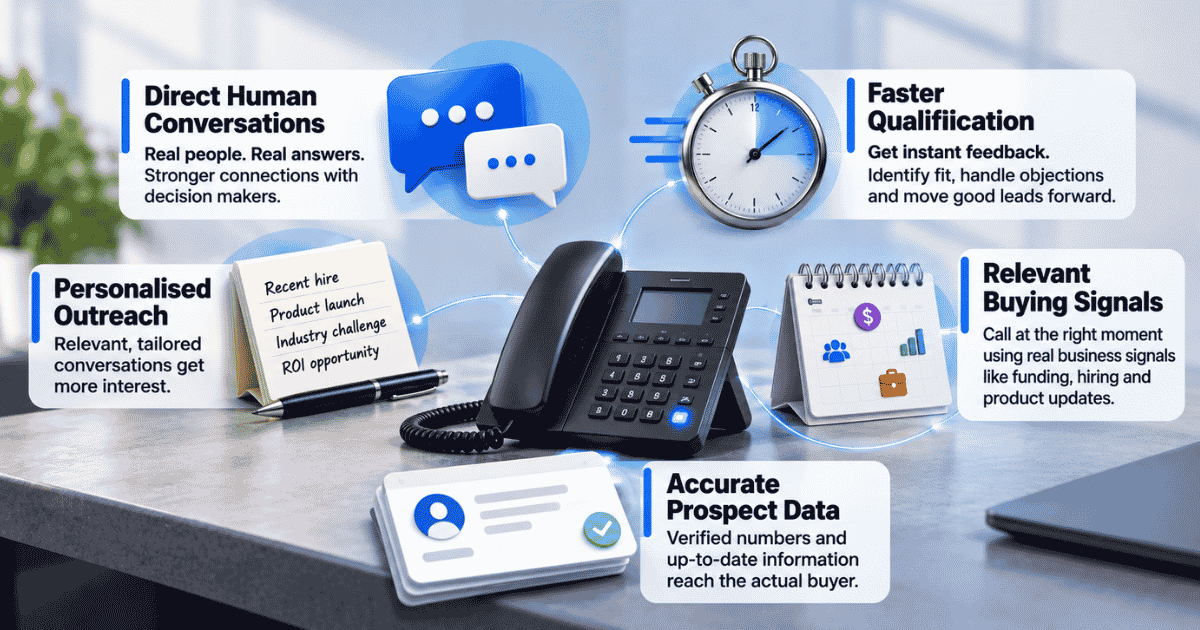
Personalised Outreach
Generic pitches fail because they ignore the buyer's world. Strong reps open with something specific, like a recent hire, a product launch, or a known challenge in the prospect's industry. The first ten seconds should prove the call isn't random.
Tailoring works best when it connects pain points to a clear value proposition. RAIN Group data shows senior buyers are more likely to book meetings when outreach includes ROI cases and content tailored to them. On a call, that means naming the problem first, then showing the outcome.
Relevant Buying Signals
Timing turns a cold call into a welcome one. Funding rounds, leadership changes, new job postings, and tech stack updates all hint that a company may need help. Calling around those moments gives reps a natural reason to reach out.
Buyers are more open to it than most reps assume. RAIN Group reports 62% of buyers who accept meetings want to talk with sellers when they're actively looking for a solution. Signal-based calling puts reps in front of decision makers during that window instead of months too early.
Accurate Prospect Data
Effectiveness relies on data hygiene. Verified direct dials and mobile numbers reach the actual buyer, while outdated office lines send reps to voicemail or a gatekeeper. Regularly cleaning lists, removing dead numbers, and updating job changes keep every calling session productive.
Better data also cuts wasted effort. Cognism's 2026 report found reps now need 1.55 dials on average to reach a prospect. Its own team converted at 11.3%, a result it ties to verified mobile data and tighter targeting. Read that as a vendor benchmark, but the pattern holds across studies.
When Is Cold Calling Worth It?
Cold calling isn't right for every business. It pays off in specific situations, usually where deals are big, buyers are reachable, and a live conversation shortens the path to yes; especially when it's part of a structured, multi-channel B2B lead generation strategy.
High-Value B2B Sales
The math favors big deals. When one closed account is worth tens of thousands in annual revenue, a low dial-to-meeting rate still produces strong returns. A single meeting from 40 dials is a bargain if the contract is large enough.
Low-ticket products rarely work the same way. If a customer pays $30 a month, the cost of rep time can easily outweigh the revenue it brings in. Sales organizations with larger contract values have the margin to invest in research, follow-up, and the patience cold calling needs.
Complex Products And Services
Some offers are hard to explain in an email. Software that replaces a core workflow, consulting engagements, or technical services often raise questions that a short message can't answer. A conversation lets reps clear up confusion before it turns into a quiet no.
Complex sales also involve more stakeholders and more risk. Potential customers want to know who they're dealing with and whether the vendor understands their situation. Warm conversations built on real questions earn trust faster than a polished deck sitting unread in an inbox.
Narrow Ideal Customer Profiles
A tight ICP makes cold calling far more efficient. When the target list covers a few hundred right prospects instead of thousands of loose fits, reps can research each account and tailor every opener. Quality beats reach when the market is small and avoids common lead generation mistakes that hurt conversions.
Narrow markets make warm calling possible too. Reps can lean on referrals, shared connections, and their own audience, such as webinar attendees or content subscribers. Referred leads consistently convert better than raw cold outreach, and a warm introduction gives the call instant credibility.
Decision-Maker Access
Cold calling works best when reps can actually reach the right person. Many senior buyers still take phone calls, especially at the VP and C-level. When verified direct dials exist for your targets, the phone skips layers that emails often get stuck in.
Access varies by industry. Some buyers sit behind gatekeepers, shared switchboards, or strict screening policies, and reaching them takes more effort than it's worth. Before building a calling program, test a sample list. If reps can't reach decision makers, other channels will create more business opportunities.
Account-Based Sales Strategies
Account-based selling and cold calling fit naturally. Instead of random dialing, reps work a defined list of target accounts, study each one, and call with a clear reason. Calls built on an account-based selling strategy tend to outperform lists dialed top to bottom.
Triggers make the timing sharper. A trigger event like a funding round, a new executive hire, or an expansion announcement signals change inside the account. Pairing those moments with intent data, such as pricing page visits or competitor research, tells reps exactly who to call first.
How Many Calls Does It Take To Book One Meeting?
There's no single answer, but at the 2026 industry average of 2.7%, one meeting takes roughly 37 dials. Your real number depends on data, targeting, and how your funnel converts.
The Cold Calling Funnel From Dials To Meetings
Every booked meeting sits at the end of a sales funnel with three drop-off points. Reps dial, a smaller share of calls connect, fewer turn into real conversations, and only some of those conversations end with a next meeting on the calendar.
Industry figures show how steep that drop is. Cognism's data puts the average cold calling success rate at 2.7% in 2026, after 2.3% in 2025 and 4.82% in 2024. At 2.3%, blind dialing needs around 43 calls per meeting. Improving any single stage cuts that total.
Connect Rate, Conversation Rate, And Meeting Rate
Connect rate measures how often a prospect picks up. Gong's research on 300 million calls found the average rep connects on 5.4% of dials, while the top 25% reach 13.3%. That gap more than doubles how many conversations occur each day.
Conversation rate tracks how many connects become real discussions. Meeting rate tracks how many end in a booking. Gong found average reps book from 4.6% of conversations, while top performers hit 16.7%. Strong teams pair precise data tools with multi-touch cadences, pushing success rates into the 5% to 10% range.
How Many Attempts It Takes To Reach A Prospect
Reaching prospects rarely happens on the first try, or even the second. Many sales guides cite an average of 6 to 8 attempts before a prospect picks up, which is why reps who quit after one or two calls leave meetings on the table.
Better data shortens that curve considerably. Cognism's 2026 report found the average number of dials needed to reach a prospect has dropped to 1.55. Most conversations now happen within the first few attempts. More calls help, but only when they go to the right numbers.
Why Benchmarks Differ Between Sources
There's no universal number because sources measure different things. One report counts success as a booked meeting, another counts any positive conversation, and a third tracks only connected calls. Comparing those figures side by side mixes apples with oranges.
Datasets differ too. Some vendors report on their own trained teams with premium data, like Cognism's 11.3%, while others average thousands of mixed-quality programs. Industry, deal size, region, and buyer seniority all shift results. An industry average is a reference point, not a target your team must match.
Why Your Own Conversion Data Matters
The only benchmark that truly matters is yours. Tracking dials, connects, conversations, and booked meetings by rep, list, and time slot shows exactly where your sales funnel leaks. Without that data, teams guess at fixes and often solve the wrong problem.
Your own numbers also make planning easier. If reps book one meeting every 30 dials and need 10 meetings a month, you know they need 300 dials. A CRM that logs every outcome turns those ratios into a forecast for more meetings, not more guessing.
What High-Performing Teams Do Differently
The gap between average and top-performing teams rarely comes down to effort. It comes down to habits. These six practices separate sales pros who book meetings from reps who dial.
Prioritise The Right Prospects
Top teams don't treat every contact equally. They rank accounts by fit, timing, and buying signals, then spend their best calling hours on the highest-scoring names, often using a structured lead scoring model to prioritize. Most reps work lists alphabetically or by upload date, which spreads effort across prospects who were never likely to buy.
A strong cold calling strategy starts with focus. A smaller list of qualified accounts produces more quality conversations than a huge list of weak matches. Prioritizing also protects rep morale, since fewer dead-end calls means fewer wasted afternoons and a steadier pipeline.
Research Accounts Before Calling
Pre call research is what separates an effective cold call from an interruption. Successful cold calling requires a real understanding of the prospect's needs, from their role and team size to recent company news. Five minutes of prep can shape the entire conversation.
Good research answers three questions before the dial. Who is this person, what problem might they have right now, and why should they care today? Reps who can answer those clearly sound prepared, earn more patience, and ask sharper questions once the prospect engages.
Personalise The Opening
The first few seconds decide whether the call continues. Personalization and relevance are critical because prospects quickly judge whether the caller knows anything about them. An opener that references a recent hire, a product launch, or an industry shift earns the prospect's attention.
Technology makes this easier at scale. Vendor data from Outreach's 2025 dataset found cold calls with AI-generated context converted to meetings 36% more often than generic calls. The tools help with prep, but the rep still has to deliver the line with confidence and keep the door open.
Focus On Conversations, Not Scripts
Scripts give structure, but the best cold calling techniques leave room for genuine curiosity. Top reps use a short framework for the opener and key questions, then listen closely and adjust. The conversation feels natural because the rep responds to what the prospect actually says.
Natural flow matters for objection handling too. A pushback like "send me an email" becomes a chance to ask what would make it worth reading. The average call is short, but successful B2B calls typically run 5 to 10 minutes once real discovery begins.
Follow Up Consistently
One call rarely books a meeting. Top teams build multi-touch cadences that mix calls, emails, and LinkedIn messages across two to three weeks. Each touch adds context, so by the third or fourth attempt, the rep's name already feels familiar.
Consistency is where most reps fall short. They try once or twice, hear nothing, and move on. Following up within 24 hours of a connect, referencing the earlier call, and spacing attempts across different days and times keep momentum without feeling pushy. Skipped follow-ups cost more than skipped dials, and avoiding common sales follow-up mistakes makes every cold call go further.
Measure Outcomes Instead Of Call Volume
Dial counts look good on a dashboard, but they don't pay the bills. High-performing teams track meetings booked, meetings held, and pipeline created per rep, often through dedicated sales activity tracking software. Pure activity metrics reward effort, not results. Those numbers show whether calls are producing quality conversations or just filling time.
Outcome tracking also shapes coaching. When a manager can see that one rep connects often but rarely books, the fix is clear: work on the ask, not the dial rate. Reviewing call recordings alongside CRM data turns every sales technique into something testable.
Cold Calling Within A Multichannel Sales Sequence
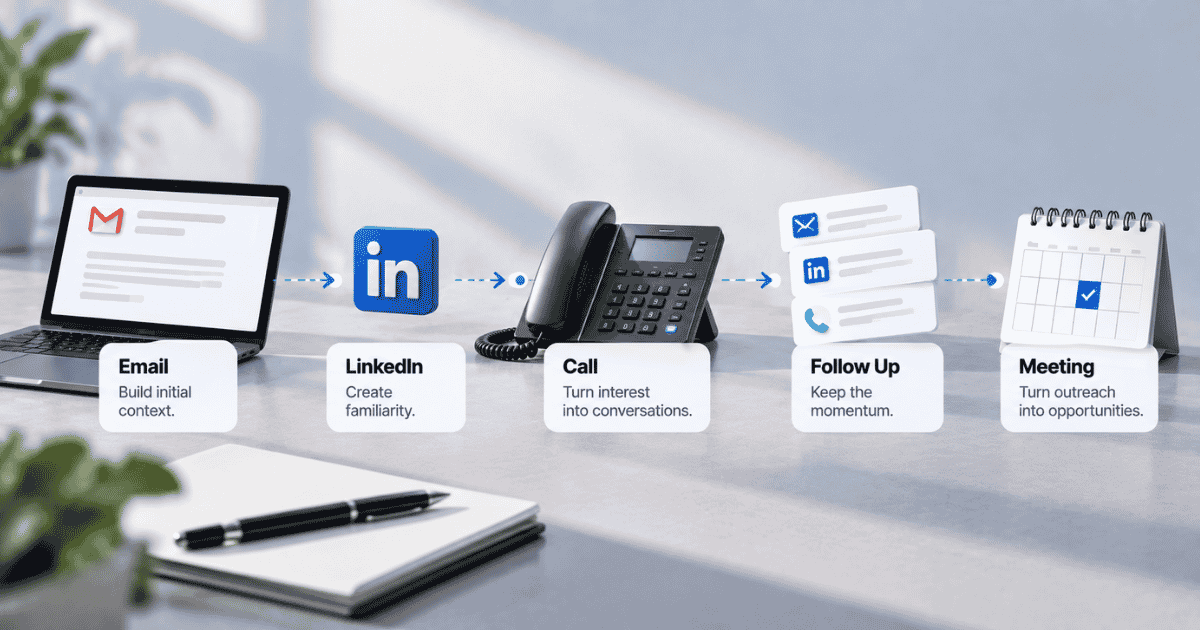
Cold calling works best when it isn't working alone. In a multi channel outreach system, each call builds on emails, social touches, and signals that warm the prospect up first.
Email And Phone
Email and phone make a natural pair. A short, relevant email sent a day before the call gives the prospect context, so the rep isn't a stranger when the phone rings. The call then picks up where the email left off, especially when CRM email integration keeps every message tied to the right contact.
The effect works in reverse too. Gong's research found emails sent without a prior call get a 1.81% reply rate, rising to 3.44% when a call comes first. Even an unanswered call or voicemail raises awareness, which makes the follow up email harder to ignore.
LinkedIn And Phone
LinkedIn gives reps a low-pressure way to warm up a cold account. Viewing a profile, engaging with a post, or sending a short connection request puts a name and face in front of the prospect before cold calling starts. Buyers often check a rep's profile before replying anyway.
Social selling can also generate leads without cold calling. Useful posts and comments attract inbound interest from people who already know your name. When those prospects get a call, the conversation starts warm, and reps spend less time explaining who they are.
Trigger-Based Outreach
Triggers tell reps when to activate the whole sequence. A funding round, a new VP hire, or a spike in website visits signals that an account may be ready to talk. Instead of one call, top teams launch a coordinated burst of email, LinkedIn, and phone touches.
Speed matters here. The first vendor to reach out after a trigger often shapes how the buyer frames the problem. Each channel reinforces the same message, so the prospect hears one clear story instead of three disconnected pitches from the same company.
Follow-Up Sequences
A good sequence gives every touch a purpose. A typical cadence might open with an email, add a LinkedIn touch, then place the first call on day three. Follow up calls land later in the week, each one referencing what came before.
Spacing helps prospects stay engaged without feeling overwhelmed. Two to three weeks with six to eight touches is a common range, varied across days and times. Ending with a polite break-up message often gets replies from people who meant to respond but never did.
Consistent Activity Tracking
Multichannel outreach only works when every touch is recorded in one place. If emails live in one tool, calls in another, and LinkedIn notes in a rep's head, follow up breaks down fast. Reps double-contact prospects or miss the moment to call, which is why many teams lean on a customer engagement CRM to bring interactions together.
A CRM ties the sequence together. It logs each call outcome, email reply, and next step against the contact record, so anyone on the team can see where a prospect stands. Over time, that history shows which channel mix books the most meetings for your market, especially when you use smart CRM features to organize sales activity.
How Do You Track Cold Calling Results In A CRM?
Tracking turns cold calling from guesswork into a repeatable sales process. When every outcome, task, and deal lives in your CRM, you can see exactly what calls contribute to revenue, especially if you're using modern CRM software for sales teams.
Call Activity And Outcomes
Start by logging every attempt with a clear outcome. Standard dispositions like no answer, voicemail, wrong number, gatekeeper, conversation, and meeting booked keep records consistent across the team. Without shared labels, one rep's "conversation" is another rep's "quick chat," and reports become useless.
Logging takes seconds if the fields are set up well. A short dropdown for the outcome and a notes field for context is usually enough. Over a few weeks, those entries show connect rates by list, time slot, and rep inside your cold calling process.
Contact And Conversation History
Every contact record should tell the full story at a glance. Notes from past sales calls, emails sent, objections raised, and priorities the prospect mentioned all belong on one timeline. When a rep picks up the phone, they shouldn't have to dig through inboxes first, and insight-led frameworks like the Challenger sales model for B2B teams become easier to execute.
History matters most when accounts change hands. If a rep leaves or territories shift, the next person can continue the conversation instead of starting cold again. Shared context also stops two reps from calling the same prospect in the same week, which is exactly what a strong contact management CRM is designed to support.
Follow-Up Tasks
Many lost opportunities come from forgotten follow-ups, not bad calls. Creating a task right after each conversation, with a due date and a clear action, keeps the next step from slipping. "Send pricing Thursday" is far more useful than a vague reminder.
Task lists also help reps plan their day. Instead of scrolling through contacts, they open a queue of due callbacks and scheduled touches. Managers can spot overdue tasks early, which helps the team save time and protect deals before they go cold.
Meeting Conversion
Booked meetings are the first real proof that calls are working. Tracking which conversations turn into meetings, and which meetings actually happen, reveals two separate rates worth watching. A high booking rate paired with frequent no-shows usually points to weak qualification.
Link each meeting to the call that created it. That connection shows which lists, openers, and time slots produce meetings that stick. Sales tools and AI tools can summarize patterns, but the underlying data only exists if reps record the source every single time.
Qualified Opportunities
A meeting isn't a deal. The next checkpoint is whether that meeting becomes a qualified opportunity with real budget, need, and timing. Moving the record into a pipeline stage only after qualification keeps forecasts honest and stops inflated numbers from hiding weak calling.
Tagging opportunities with their lead source makes cold calling measurable. You can compare how many cold-sourced opportunities qualify against inbound or referral leads. If cold calls produce plenty of meetings but few qualified deals, that's a clear sign targeting needs work before volume does.
Pipeline And Revenue Impact
The final question is how much revenue cold calling brings in. Following cold-sourced deals through each pipeline stage shows win rate, average deal size, and sales cycle length. Those numbers let you compare cold calling with other channels on real business results.
Revenue data also justifies budget decisions. If cold-sourced deals close at a healthy rate and a solid size, investing in more reps makes sense. If they stall mid-pipeline, the fix may be better handoffs. Either way, clear pipeline data helps teams close deals with confidence.
Cold Calling Compliance Basics For 2026
Cold calling is legal, but it's heavily regulated. In the US, the TCPA and the Telemarketing Sales Rule set most of the rules, and breaking them can get expensive fast.
Do Not Call Requirements
The National Do Not Call Registry lets consumers opt out of telemarketing calls. Businesses calling consumers must scrub their lists against the registry, since the TSR requires checks at least every 31 days. Calls to registered numbers without consent or an established business relationship can trigger penalties.
Company-level lists matter too. When someone asks not to be called again, that request must be honored and recorded. Calls are limited to between 8:00 AM and 9:00 PM in the recipient's local time zone, which matters for teams calling across multiple states.
Consent Requirements
The TCPA requires prior express written consent before making autodialed or prerecorded marketing calls to cell phones. That consent must be in writing, signed (electronically is fine), and clearly authorize the specific seller to call. A vague checkbox or a purchased lead list rarely meets the standard.
Penalties add up per call. TCPA violations carry $500 in damages each, rising to $1,500 when willful, and consumers can sue directly. Separately, the FTC can seek civil penalties of up to $53,088 per TSR violation, so one bad campaign creates serious exposure.
Automated And Prerecorded Calls
The strictest rules target technology, not live conversations. Calls made with an autodialer or a prerecorded or artificial voice face tighter consent requirements than calls a rep dials manually. That includes AI-generated voices, which the FCC ruled in 2024 count as artificial under the TCPA.
Dialer settings matter as well. Under the TSR, predictive dialers can't abandon more than 3% of answered calls per campaign over 30 days, and prerecorded messages need a clear opt-out option. Teams using any automation should review settings with compliance before launching.
Business-To-Business Considerations
B2B marketing calls are mostly exempt from federal Do Not Call rules. The TSR excludes most calls to businesses, so a company number on the registry can usually still be called. One notable exception covers sales of nondurable office or cleaning supplies.
The exemption is narrower than many teams assume. TCPA consent rules for autodialed or prerecorded calls still apply when the number is a cell phone, even a business one. The TSR's bans on deceptive claims and abusive calling also still cover B2B outreach.
State And Country-Specific Rules
Federal law is only the baseline. Several states, including Florida and Oklahoma, have their own "mini-TCPA" laws with stricter consent rules, tighter calling hours, or state-level Do Not Call lists. Some also limit how many times a rep can call the same person in a day.
International calling adds another layer. The UK uses the Telephone Preference Service and Corporate TPS, Canada runs its own National Do Not Call List, and the EU applies GDPR to how prospect data is collected and used. Teams calling abroad need country-specific checks.
Why Sales Teams Should Verify Applicable Regulations
Calling rules change often. Courts reinterpret key terms, the FCC issues new rulings, and states pass fresh laws every year. The FCC's one-to-one consent rule, for example, was vacated in January 2025 just before it took effect. Last year's playbook may already be outdated, just as future CRM technology trends are reshaping how teams manage consent and customer data.
Before launching any campaign, confirm which laws apply based on who you're calling, where they live, and how calls are placed. Keep consent records, opt-out logs, and list scrub dates on file. This section isn't legal advice, so review your program with qualified counsel.