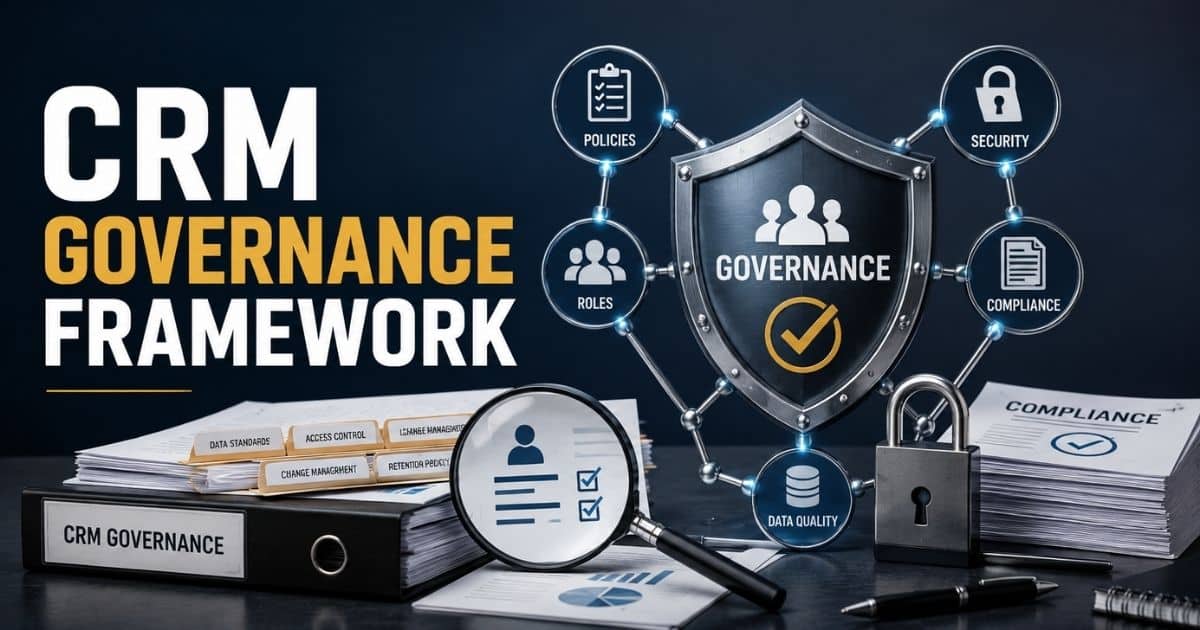
Customer data can quickly become messy without proper control. Duplicate records, outdated information, and inconsistent processes create confusion across sales, marketing, and support teams. Many businesses invest in CRM software but still struggle to keep their data accurate and organized. That is where a CRM governance framework becomes important.
A strong CRM governance framework helps teams manage customer data with clear rules, ownership, and standards. It improves data quality, supports compliance, and keeps every department aligned. Better governance also helps businesses make faster decisions and improve customer relationships.
This guide covers everything you need to know about CRM governance frameworks, including key components, best practices, common challenges, and proven strategies for long-term success.
What Is A CRM Governance Framework
A CRM governance framework is a structured approach that helps organizations manage CRM data, users, processes, and technology in a consistent way. It creates clear responsibilities, access rules, and data governance standards across the business. Many organizations use a governance framework to improve data quality, support compliance, and align CRM strategy with business objectives. Strong CRM governance also helps project teams and business users manage customer relationship data without confusion.
A well-planned CRM governance framework supports better customer experience and business outcomes. It helps teams control change management, integration, and system updates with less risk. Businesses can also track performance metrics, improve the customer journey, and maintain consistent processes across sales, marketing, and support services.
Without proper governance, CRM projects often face challenges like poor data quality, rising costs, and low user buy-in. A strong governance plan helps organizations prioritize resources, create value, and build long-term competitive advantage.
Key Components Of A High-Performing CRM Governance Framework
A high-performing CRM governance framework needs more than rules and documentation. Strong governance depends on clear ownership, accurate CRM data, aligned business objectives, and reliable processes. Organizations with structured governance plans often improve customer experience, data quality, and project success while reducing operational risks and unnecessary costs.
Clear Roles And Responsibilities
Every CRM governance framework needs defined responsibilities. Project teams, business users, and stakeholders should know who controls data access, system updates, and compliance tasks. Clear ownership helps organizations avoid confusion and improve accountability across the CRM platform.
Strong governance also improves decision-making. Sales, marketing, and support teams can work with consistent customer data and aligned objectives. According to Salesforce research, 73% of customers expect companies to understand their needs and expectations. Clear governance responsibilities help businesses deliver that level of customer engagement CRM-driven experience and long-term value.
Strong Data Quality Standards
Data quality is one of the most critical parts of CRM governance. Poor CRM data creates reporting errors, weak customer insights, and failed business strategies. A governance framework should include data validation rules, duplicate control, and regular audits to maintain accurate information.
Many organizations struggle with bad data from external sources and disconnected systems. Gartner reports that poor data quality costs organizations an average of $12.9 million every year. Strong governance practices help businesses create reliable customer relationship records and support better business outcomes across the enterprise.
Structured Change Management
CRM systems constantly evolve with new tools, integrations, and business requirements. A structured change management process helps organizations control updates without disrupting daily operations. It also reduces project risks and improves user buy-in.
Change control policies should define approval workflows, testing procedures, and implementation steps. Teams can then prioritize updates based on business objectives and customer needs. A managed process also helps organizations maintain compliance and system stability while supporting future innovation and CRM capabilities.
Performance Tracking And Reporting
Performance metrics help businesses determine whether CRM governance strategies actually work. A strong governance framework should track user adoption, data accuracy, sales performance, and customer journey improvements. Reliable reporting helps stakeholders measure success and identify challenges early.
Businesses that monitor CRM performance often achieve stronger business outcomes. Research from HubSpot shows companies that use CRM systems effectively can improve sales by up to 29%. Consistent reporting also helps project teams align governance practices with company objectives and long-term strategy and supports structured CRM adoption for sales teams.
Integration And System Control
Modern businesses use multiple platforms for sales, marketing, customer support, and services. CRM integration helps organizations connect those tools into one managed system, especially when core channels such as CRM email integration are managed centrally. Without governance, disconnected technology can create duplicate records and inconsistent customer data.
A governance framework should define integration standards, security rules, and access controls. Teams can then maintain consistent processes across the enterprise. Strong system control also protects customer data and improves operational efficiency. Businesses with aligned CRM processes often gain a stronger competitive advantage in fast-changing markets, including those leveraging flexible open source CRM platforms.
How To Build A CRM Governance Framework Step By Step
A successful CRM governance framework needs clear planning, team alignment, and long-term business focus. Many organizations fail because they skip structure and accountability. A step-by-step governance strategy helps businesses improve CRM data quality, reduce risks, and support better customer relationships across the enterprise, regardless of whether they use a simple CRM vs all-in-one CRM solution.
Step 1: Define Business Objectives
Every CRM project should start with clear business objectives. Teams need to identify what success looks like before they build governance processes. Some companies focus on better customer experience, while others prioritize sales growth, compliance, or data quality improvements.
A clear strategy helps organizations align CRM governance with real business outcomes. Stakeholders, project teams, and business users can then focus on shared goals. According to Gartner, companies with aligned CRM strategies are more likely to improve customer retention and operational efficiency. Strong objectives also help determine project scope, required resources, and long-term investment value.
Step 2: Assign Governance Roles
A CRM governance framework needs clear responsibilities across departments. Every team should understand who controls data access, change management, integration, and system updates. Without ownership, governance processes often become inconsistent and difficult to manage.
Businesses should assign governance leaders, CRM administrators, and data stewards early in the project. This structure improves accountability and creates better communication between sales, marketing, support, and IT teams. Research from PwC shows companies with defined governance roles improve project success rates by more than 30%. Strong leadership also helps organizations prioritize challenges, follow a structured CRM implementation roadmap for successful deployment, and maintain compliance standards.
Step 3: Create Data Standards
Data governance plays a major role in CRM success. Organizations need consistent rules for customer data entry, validation, storage, and updates. Clear standards help teams avoid duplicate records and inaccurate reporting across the CRM platform.
A governance plan should also define data ownership and quality control processes. Teams can then maintain reliable customer relationship records across multiple systems and external sources. IBM estimates that poor data quality costs businesses trillions globally each year. Strong data governance practices protect business value and improve decision-making across the enterprise.
Step 4: Build Change Control Processes
CRM systems evolve as businesses grow. New tools, integrations, and workflows can create risks without proper change control. A structured process helps organizations manage updates without disrupting daily operations or customer services.
Businesses should document approval workflows, testing procedures, and implementation timelines. This keeps CRM governance aligned with business objectives and customer expectations. A controlled process also supports better user adoption and system stability. Companies with effective change management strategies are six times more likely to meet project goals, according to Prosci research.
Step 5: Monitor Performance Metrics
Performance metrics help organizations measure whether CRM governance strategies actually work. Businesses should track CRM data quality, user adoption, customer journey improvements, and operational efficiency. Consistent reporting helps teams identify gaps before they affect business outcomes.
A strong governance framework also supports continuous improvement. Teams can review performance reports, identify new challenges, and refine governance practices over time. Salesforce research shows businesses that actively use CRM analytics improve sales productivity by up to 34%. Regular monitoring helps organizations maintain competitive advantage and prepare for future business growth.
CRM Data Quality Standards Every Organization Should Follow
High-quality CRM data helps businesses improve customer relationships, sales performance, and decision-making. Poor data creates reporting errors, weak customer insights, and wasted resources. Strong centralized contact management and data governance standards help organizations maintain accurate, secure, and consistent customer information across every CRM process.
Accurate Customer Data Entry
Every CRM governance framework should start with accurate data entry standards. Teams need clear rules for customer names, contact details, job titles, and company records. Consistent formatting helps business users avoid duplicate records and incomplete customer profiles by supporting a contact management CRM structure.
Small data errors can create major business problems over time. Research from Experian shows 91% of businesses struggle with data quality issues. Accurate CRM data improves customer experience, sales communication, and reporting accuracy. It also helps project teams maintain trust in the CRM platform and business processes.
Consistent Data Validation Rules
Data validation helps organizations maintain clean and reliable customer records. A CRM system should automatically check email formats, phone numbers, required fields, and duplicate entries before records enter the database. This process improves governance control and reduces human error.
Validation rules also support compliance and better reporting. Teams can work with more reliable customer relationship data across sales, marketing, and support services. According to IBM, poor data quality costs businesses billions every year through operational inefficiencies and lost opportunities. Strong validation practices protect business value and improve long-term CRM success.
Regular Data Audits And Cleanup
CRM data quality declines over time without regular audits. Customer details change frequently, and outdated records can affect business outcomes. A governance framework should include scheduled reviews to identify duplicate records, inactive contacts, and missing information.
Many organizations clean CRM data only after major issues appear. That approach increases operational costs and reporting errors. Gartner research shows poor data quality can reduce business productivity by up to 20%. Regular audits help organizations maintain accurate performance metrics and support better customer journey management across the enterprise.
Secure Access And Data Control
Strong data governance requires clear access control policies. Not every user should have permission to edit or export sensitive CRM data. Businesses should define role-based access rules to protect customer information and maintain compliance standards.
Controlled access also reduces accidental data loss and security risks. Teams can manage customer relationship records more safely across integrated tools and external sources. According to Verizon’s Data Breach Investigations Report, human error remains one of the leading causes of data breaches. Strong governance practices help organizations protect customer trust and business reputation.
Standardized Integration Processes
CRM systems often connect with marketing platforms, customer support tools, and external databases. Without standardized integration processes, businesses can create inconsistent customer records and reporting gaps. A governance plan should define how data moves across systems.
Standardized integration improves operational efficiency and data consistency. Teams can then maintain aligned customer information across every department. Businesses with connected CRM technology often improve customer experience and sales performance faster than competitors, especially when they rely on robust CRM email sync. Strong integration standards also support future scalability and long-term enterprise growth.
Roles And Responsibilities Inside A CRM Governance Framework
A CRM governance framework works best when every team member understands their role. Clear responsibilities improve accountability, reduce confusion, and support better decision-making. Strong governance structures also help organizations maintain data quality, compliance, and long-term CRM success across departments by reinforcing the foundations of CRM software for modern sales teams.
Executive Sponsors And Leadership
Executive leaders set the direction for CRM governance strategy. They align the CRM project with business objectives, approve investments, and support change management across the organization. Leadership teams also help secure buy-in from stakeholders and business users.
Strong executive support improves project success rates. According to PMI research, projects with active executive sponsorship perform significantly better than those without leadership involvement. Leaders also help prioritize resources, manage risks, and ensure governance practices stay aligned with customer experience goals and long-term business outcomes.
CRM Administrators And System Managers
CRM administrators manage the daily operations of the CRM platform. They handle system configuration, user access, security settings, and integration processes. Their role is essential for maintaining system performance and operational stability.
Administrators also support governance control by monitoring workflows and managing technical updates. They help teams maintain consistent CRM data and reduce system errors. Research from Salesforce shows businesses with dedicated CRM management teams achieve higher user adoption and stronger operational efficiency, especially when they follow structured CRM adoption strategies to improve ROI. Clear technical ownership also supports future scalability and enterprise growth.
Data Stewards And Governance Teams
Data stewards focus on data governance and quality control. They create standards for customer data accuracy, consistency, and compliance. Their work helps organizations maintain reliable reporting and better customer relationship management.
Governance teams also review data quality issues, duplicate records, and external source integrations. Strong oversight protects the value of CRM data across sales, marketing, and support services. Gartner reports that poor data quality remains one of the top barriers to business performance. Data stewards help organizations reduce those risks and improve decision-making, especially during complex tasks such as CRM migration from Excel to a modern system.
Business Users And Department Teams
Business users interact with the CRM system every day. Sales teams, marketers, and support agents enter customer information, update records, and manage customer interactions. Their daily actions directly affect CRM data quality and governance success.
Organizations should provide clear governance policies and regular training for users. Well-trained teams create more accurate customer data and follow consistent business processes. HubSpot research shows CRM adoption improves significantly when employees understand the system’s value. Strong user participation also helps organizations improve customer interaction tracking in CRM, customer journey management, and operational consistency.
IT And Integration Specialists
IT teams support the technical side of CRM governance. They manage integrations, security protocols, infrastructure, and system performance across the enterprise. Their role becomes critical when businesses connect CRM tools with external platforms and services.
Integration specialists also help organizations maintain secure data transfers and stable workflows. Proper system integration improves customer experience and operational efficiency. According to MuleSoft, businesses now use hundreds of applications across departments, which increases integration complexity. Strong IT governance helps organizations maintain control, reduce risks, and support future innovation, especially during CRM implementation for scalable business growth.
Common CRM Governance Challenges And Practical Solutions
Many organizations invest heavily in CRM systems but still struggle with governance issues. Poor data quality, low user adoption, and weak processes often reduce CRM value. A structured governance framework helps businesses solve these challenges and improve long-term customer relationship management success.
Poor Data Quality Problems
Poor CRM data creates major business challenges. Duplicate records, outdated customer details, and incomplete profiles reduce reporting accuracy and weaken customer experience. Many businesses also collect inconsistent data from multiple tools and external sources.
A strong data governance strategy helps organizations maintain accurate and consistent records. Teams should use validation rules, scheduled audits, and duplicate control processes. According to Experian, 94% of businesses believe data quality directly affects business performance. Better CRM data quality improves decision-making, sales performance, and customer journey management across the enterprise and helps prevent common CRM implementation mistakes.
Low User Adoption Rates
Many CRM projects fail because employees avoid using the system properly. Business users may see CRM processes as time-consuming or difficult to manage. Poor training and weak communication often create resistance across teams, even when the CRM offers smart features to organize sales better.
Organizations should provide simple workflows, role-based training, and clear governance policies. Executive support also helps teams understand the value of CRM governance. Salesforce research shows that high-performing sales teams are more likely to use CRM systems consistently. Strong user adoption improves data accuracy, customer relationship management, and overall business outcomes, especially when startups choose the right CRM platform compared for new startups.
Weak Change Management
CRM platforms constantly change with new integrations, tools, and business requirements. Without proper change management, organizations face workflow disruptions, system confusion, and operational risks. Teams may also struggle to adapt to updated governance processes.
A structured governance framework should include clear change control procedures and approval workflows. Businesses should test updates before full implementation and communicate changes early. Prosci research shows organizations with strong change management practices are far more likely to achieve project success. Controlled updates help businesses maintain system stability and long term operational efficiency.
Lack Of Clear Ownership
CRM governance often breaks down when responsibilities remain unclear. Teams may assume someone else manages data quality, security, or compliance tasks. This creates gaps in accountability and weakens governance control across the business.
Organizations should assign clear ownership roles for CRM administrators, data stewards, and project leaders. Defined responsibilities improve coordination between sales, marketing, support, and IT teams. According to PwC, businesses with structured governance roles improve project performance and reduce operational risks. Clear ownership also helps organizations maintain aligned business objectives and governance practices.
Integration And Security Risks
Modern businesses use many connected tools across departments. Weak CRM integration processes can create inconsistent customer data and security vulnerabilities. Poor access control also increases the risk of compliance issues and data breaches.
A strong governance framework should define integration standards, user permissions, and security protocols. IT teams should monitor system connections and manage access carefully. Verizon reports that human error remains a leading cause of data breaches worldwide. Better governance control helps organizations protect customer data, maintain compliance, and support long-term business growth.
CRM Governance Framework Best Practices For Security And Compliance
Security and compliance play a major role in every CRM governance framework. Businesses manage large amounts of customer data across multiple systems and teams. Strong governance practices help organizations reduce security risks, maintain compliance, and protect customer trust in a fast-changing digital environment.
Role-Based Access Control
Every CRM system should use role-based access control. Employees only need access to the data and tools required for their responsibilities. Limited access reduces the risk of accidental data exposure and unauthorized system changes.
A strong governance framework should define access levels for sales, marketing, support, and IT teams. Businesses can also review permissions regularly to maintain compliance standards. According to IBM, the average global data breach cost reached $4.45 million in recent years. Controlled access helps organizations protect customer data and reduce operational risks.
Regular Security Audits
Security audits help organizations identify vulnerabilities before they become serious problems. CRM platforms often connect with external sources, cloud tools, and third-party integrations. Weak security controls can expose sensitive customer relationship data.
Businesses should review login activity, access permissions, and integration security on a regular schedule. A clear governance plan also helps teams maintain consistent monitoring processes. Verizon reports that many cyberattacks exploit weak internal controls and outdated systems. Regular audits improve governance visibility and strengthen long-term CRM security strategies.
Clear Data Retention Policies
Many organizations store outdated CRM data for years without proper governance control. Unnecessary customer records increase compliance risks and make data management more difficult. Clear retention policies help businesses maintain cleaner and safer CRM systems.
A governance framework should define how long customer data remains in the system and when records should be archived or deleted. Teams can then manage CRM data more efficiently while meeting legal requirements. Proper retention policies also improve data quality, reduce storage costs, and support better compliance practices across the enterprise.
Employee Training And Awareness
Technology alone cannot protect customer data. Employees play a critical role in CRM governance and security compliance. Poor password habits, phishing attacks, and careless data handling still create major business risks.
Organizations should provide regular security training and clear governance guidelines for business users. Teams need to understand how to handle customer data, manage access, and follow compliance standards. Research from Proofpoint shows human error remains one of the top cybersecurity risks worldwide. Strong employee awareness helps businesses maintain better governance control and customer trust.
Secure Integration Management
Modern CRM platforms connect with marketing tools, support software, payment systems, and external services. Poor integration management can create security gaps and inconsistent customer data across the business. Strong governance practices help organizations maintain secure and stable connections.
Businesses should evaluate every integration before implementation. IT teams should also monitor APIs, encryption standards, and data sharing processes regularly. According to MuleSoft, organizations now manage hundreds of connected applications across departments. Secure integration management helps businesses improve operational efficiency while protecting customer experience and compliance standards, particularly for CRM with email integration to streamline communication.
How To Measure CRM Governance Success With KPIs And Audits
A CRM governance framework needs regular measurement to stay effective. Businesses should track KPIs, audit results, and system performance to identify gaps early. Strong monitoring helps organizations improve data quality, maintain compliance, and achieve better customer relationship management outcomes over time.
Track CRM Data Accuracy
CRM data accuracy is one of the most important governance KPIs. Businesses should measure duplicate records, incomplete customer profiles, and outdated contact information. Accurate data supports better customer experience, reporting, and business decision-making.
Organizations can use automated audits and validation tools to monitor data quality regularly. Teams should also review external source integrations that affect CRM data consistency. According to Gartner, poor data quality costs organizations millions every year through operational inefficiencies and lost opportunities. Better data accuracy improves customer trust and long-term business value.
Measure User Adoption Rates
User adoption shows whether employees actively use the CRM platform. Low adoption rates often signal poor training, weak governance processes, or system usability issues. Businesses should monitor login frequency, feature usage, and workflow completion across departments.
Strong user participation improves customer relationship management and operational efficiency. Managers can also identify which teams need additional support or training. Salesforce research shows companies with high CRM adoption achieve stronger sales performance and customer retention, highlighting how CRM adoption is changing modern sales teams. Consistent usage helps organizations maintain aligned governance practices and better business outcomes.
Review Compliance Performance
Compliance audits help organizations measure whether CRM governance policies meet internal and legal standards. Businesses should review access control, data retention, customer consent records, and security practices regularly. Weak compliance processes can increase financial and reputational risks.
Audit reports also help stakeholders identify governance gaps before major issues appear. Teams can then improve security controls and update governance frameworks when necessary. IBM research shows the global average cost of a data breach continues to rise every year. Strong compliance tracking helps businesses protect customer data and maintain trust.
Monitor Customer Experience Metrics
Customer experience metrics reveal how CRM governance affects real customer interactions. Businesses should monitor response times, customer satisfaction scores, and issue resolution rates across support and sales teams. Strong governance processes often create more consistent customer journeys.
Organizations that track customer experience data can improve service quality faster. Clear CRM processes also help teams deliver personalized communication and better support. According to HubSpot, customers expect fast and connected interactions across every channel. Better customer experience metrics often lead to stronger retention and competitive advantage.
Evaluate Audit And Process Results
Regular audits help organizations measure the effectiveness of CRM governance processes. Teams should review workflow performance, integration stability, and system security on a scheduled basis. Audit findings often reveal operational challenges that daily reporting may miss.
Businesses should also compare audit results with original business objectives and governance goals. This approach helps project teams refine processes and prioritize future improvements. Research from Deloitte shows organizations with continuous governance reviews adapt faster to business and technology changes. Ongoing audits support long-term CRM success and operational consistency.
Final Thoughts
A strong CRM governance framework helps businesses maintain accurate data, improve customer relationships, and support long-term growth. Without proper governance, CRM systems often become disorganized, difficult to manage, and less valuable over time. Clear processes, defined responsibilities, strong data quality standards, and regular audits help organizations keep their CRM strategy aligned with business objectives.
Successful CRM governance also improves compliance, security, and operational efficiency across sales, marketing, and support teams. Businesses that invest in structured governance frameworks can reduce risks, improve customer experience, and gain a stronger competitive advantage. As customer expectations and technology continue to evolve, organizations that prioritize CRM governance will stay better prepared for future business challenges and opportunities.
FAQs
Can Small Businesses Use A CRM Governance Framework?
Yes, small businesses can benefit from a CRM governance framework. Clear governance processes help teams maintain accurate customer data, improve sales workflows, and reduce operational mistakes. Strong governance also helps businesses scale CRM systems more efficiently as customer data and team size grow.
How Often Should A Company Audit CRM Data?
Most organizations should review CRM data quality at least every quarter. Regular audits help businesses identify duplicate records, outdated customer information, and compliance risks before they affect business outcomes. Frequent reviews also improve reporting accuracy and customer experience.
Can CRM Governance Improve Sales Performance?
Yes, strong CRM governance can improve sales performance significantly. Clean customer data and consistent CRM processes help sales teams track leads, personalize communication, and close deals faster. Businesses with effective CRM strategies often achieve better operational efficiency and customer retention.
What Happens Without Proper CRM Governance?
Poor CRM governance often leads to inaccurate data, weak compliance control, and disconnected business processes. Teams may struggle with duplicate records, low CRM adoption, and inconsistent customer experiences. Over time, those issues increase operational costs and reduce the overall value of CRM investments.
Which Teams Should Participate In CRM Governance?
CRM governance should involve sales, marketing, support, IT, compliance, and executive leadership teams. Cross-functional collaboration helps organizations maintain aligned business objectives, stronger data governance, and consistent customer relationship management practices across the enterprise.