Sales gamification software turns everyday sales activities into something reps actually want to do. Points for logged calls, badges for closed deals, leaderboards that update in real time. The goal isn't to make selling feel like a video game for the sake of it. It's to fix a real problem: reps who log activity in a CRM because they have to, not because anything happens when they do.
Sales teams reach for gamification when motivation dips, when new hires take too long to ramp, or when managers can't tell who's actually performing without pulling reports manually. Done right, it turns flat activity numbers into visible, competitive progress. Done wrong, it becomes another dashboard nobody checks after week two.
What Is Sales Gamification Software
Sales gamification software applies game mechanics, points, badges, leaderboards, and contests, to everyday sales activities so sales teams stay motivated and engaged. Instead of relying on quarterly bonuses alone, it rewards the daily actions that build sales performance: calls made, deals moved forward, targets hit.
It usually pulls data straight from a CRM, so nothing needs manual entry. Sales managers set the rules, pick the metrics that matter, and run sales contests that turn routine work into something reps want to show up for. The software just makes existing effort visible and rewarded in real time.
Why Sales Teams Use Gamification Software
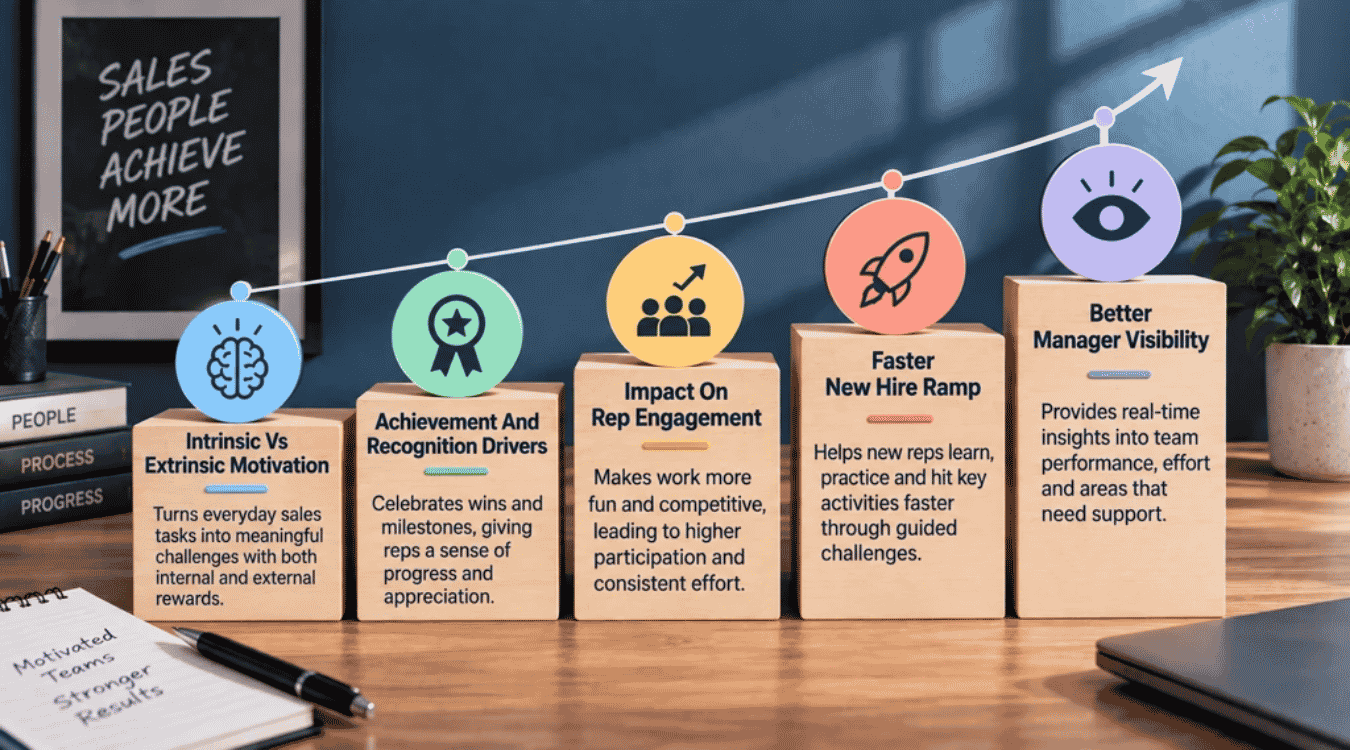
Motivation dips happen in every sales environment, and manual coaching alone rarely fixes it. Sales gamification gives reps a reason to stay consistent, and it gives managers a way to see who needs support before numbers slip.
Intrinsic Vs Extrinsic Motivation
Some reps chase the bonus. Others chase the win itself, the badge, the streak, the feeling of climbing a leaderboard. Good gamification software accounts for both, mixing tangible rewards with recognition that taps into pride and progress.
A rep who only responds to commission checks needs different triggers than one who thrives on competition. Tracking individual and team performance side by side lets a program reward outcomes and effort without ignoring what actually drives each person in a given sales environment.
Achievement And Recognition Drivers
Recognition works because people want their effort seen, not just their results. A badge for five straight days of outreach tells a rep someone noticed, even before a deal closes.
This matters just as much outside pure sales roles. Sales and support teams both respond to visible acknowledgment, whether it's a resolved ticket streak or a closed deal. Gamification software builds that recognition into the workflow automatically, so team performance gets celebrated without a manager having to remember to say something.
Impact On Rep Engagement
Engagement tends to drop when reps can't see how their work adds up day to day. A leaderboard or progress bar fixes that instantly, turning abstract targets into something concrete.
Because the software pulls straight from sales data, reps see individual and team progress update in real time instead of waiting for a weekly report. That immediacy keeps attention on the work itself, not just the end-of-quarter scramble to hit a number.
Faster New Hire Ramp
New reps often take months to find their footing, unsure which activities actually move a deal forward. Gamified milestones give them a clear, visible path: log calls, book meetings, close a first deal, earn recognition along the way.
Picking the right sales gamification software for this matters more than it seems. A tool with clear onboarding challenges and beginner-friendly leaderboards helps new hires compete on effort early, instead of getting buried under reps who've had a two-year head start.
Better Manager Visibility
Sales managers spend a surprising amount of time just figuring out who's on track and who isn't. Gamification software solves that by surfacing performance data on one shared view instead of scattered spreadsheets.
That visibility comes at a cost worth weighing early. Sales gamification software cost varies by team size and feature depth, but the time managers save on manual tracking often offsets it, especially once coaching conversations start relying on real, current numbers instead of guesses.
Types Of Sales Gamification Software
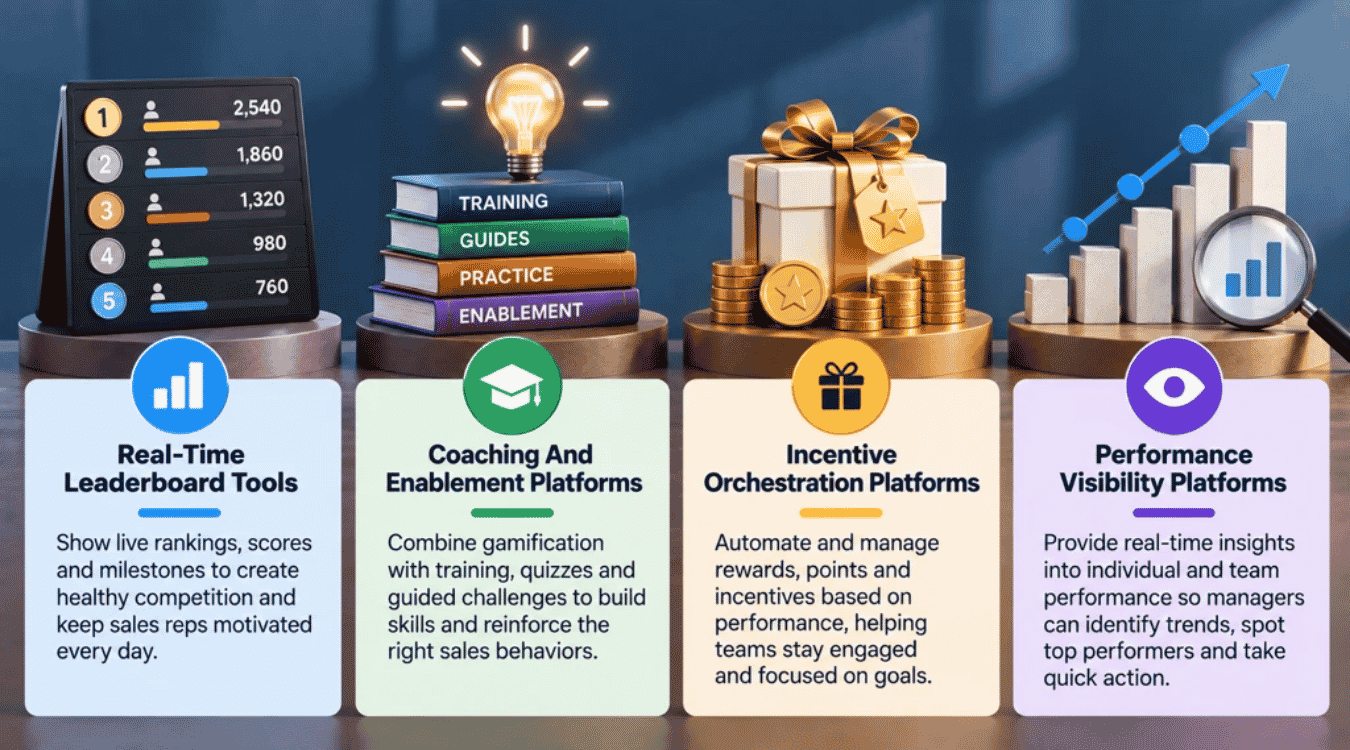
Not every gamification strategy solves the same problem. Sales gamification tools fall into a few distinct categories, and picking the wrong type usually means paying for key features a team never actually uses.
Real-Time Leaderboard Tools
Live leaderboards work best for teams that thrive on daily competition. Every call logged or deal moved updates the board instantly, giving reps instant feedback on where they stand against teammates.
Remote sales teams benefit especially well here, since a shared leaderboard replaces the visibility a physical sales floor would normally provide. Real time feedback keeps everyone accountable even when nobody's sitting in the same room, which helps sales productivity stay consistent across locations.
Coaching And Enablement Platforms
These platforms tie gamification to skill building rather than pure competition. Points and badges get earned through completed training modules, roleplay practice, or certification milestones instead of closed deals alone.
New reps benefit most from this category, since it turns onboarding into a structured, trackable path. Performance tracking here focuses on skill progress over time, helping managers spot exactly where a rep needs coaching before it shows up as a missed quota.
Incentive Orchestration Platforms
Built for teams running more complex reward structures, these platforms manage SPIFs, bonus tiers, and multi-region incentive programs from one place. They handle the logistics that spreadsheets usually break under.
This type suits larger, distributed sales organizations juggling multiple currencies, approval chains, or reward catalogs. It trades the simplicity of a basic leaderboard for the control needed to run incentive programs at scale without losing track of who's owed what.
Performance Visibility Platforms
These tools layer gamification on top of deeper analytics rather than a single data feed. Dashboards pull from multiple sources to show trends, not just daily rankings.
Sales managers overseeing several teams or channels tend to reach for this type, since it connects gamification to broader reporting. Gamification software in this category works less like a contest engine and more like a performance dashboard with motivation built in.
Core Features To Evaluate In Sales Gamification Software
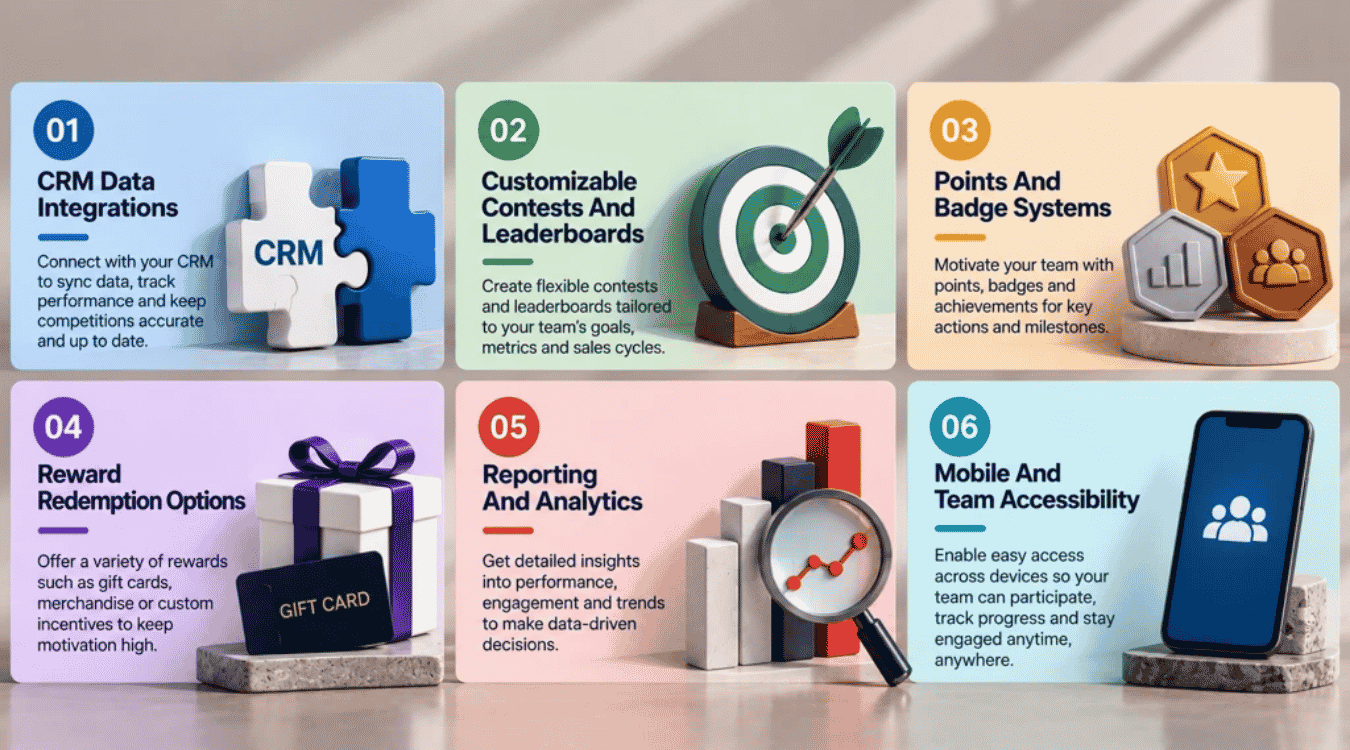
Not every tool with a leaderboard is built the same way underneath. Before picking one, it helps to check for the features that actually track performance accurately and keep a team engaged past the first month.
CRM Data Integrations
A gamification tool is only as good as the data feeding it. If it can't pull straight from your CRM, someone ends up manually logging key sales activities, which defeats the purpose.
Look for integrations that sync automatically and in real time, not on a delay. Sales reps shouldn't have to double-enter calls or deals just to see them reflected on a leaderboard. Clean, direct integration is what makes everything else on this list actually work.
Customizable Contests And Leaderboards
Rigid, one-size-fits-all contests get stale fast. The ability to customize rules, timeframes, and eligible metrics matters more than the leaderboard's visual polish.
Sales managers should be able to set up a contest around a specific goal, like outbound calls for a week, without needing developer help. This flexibility keeps team progress visible against whatever actually matters that month, instead of tracking the same generic metric on repeat.
Points And Badge Systems
Points and badges give small wins visibility, which keeps a team engaged between big deal closures. A rep who hasn't closed anything this week can still earn recognition for consistent outreach.
The best systems let you weight points by difficulty, so a hard-won enterprise call counts for more than a routine follow-up. That nuance is what separates a system that actually reflects effort from one that just rewards volume.
Reward Redemption Options
Recognition sticks better when it leads somewhere. Whether it's gift cards, extra time off, or a redeemable points shop, reward options give the points system real weight.
This isn't limited to sales floors either. Support teams using similar mechanics for ticket resolution streaks see the same lift when rewards are actually redeemable, not just symbolic. Automated recognition paired with a real reward closes the loop instead of leaving it as just a number on a screen.
Reporting And Analytics
Beyond the leaderboard, a manager needs to track performance over weeks and months, not just today's ranking. Real-time data visualization helps spot trends before they turn into a missed quota.
Good reporting shows individual and team trends side by side, flagging who's pulling ahead and who's quietly falling behind. Without this layer, gamification stays a fun distraction instead of a tool that actually helps boost productivity.
Mobile And Team Accessibility
A leaderboard nobody checks outside the office misses half its value. Mobile access matters for field reps and remote teams who aren't sitting at a desk all day.
Notifications for rank changes, badge wins, or contest updates should reach reps wherever they're working. Accessibility across devices is often the quiet difference between a program that keeps a team engaged long-term and one that gets forgotten after the first week.
How To Set Up A Sales Gamification Program
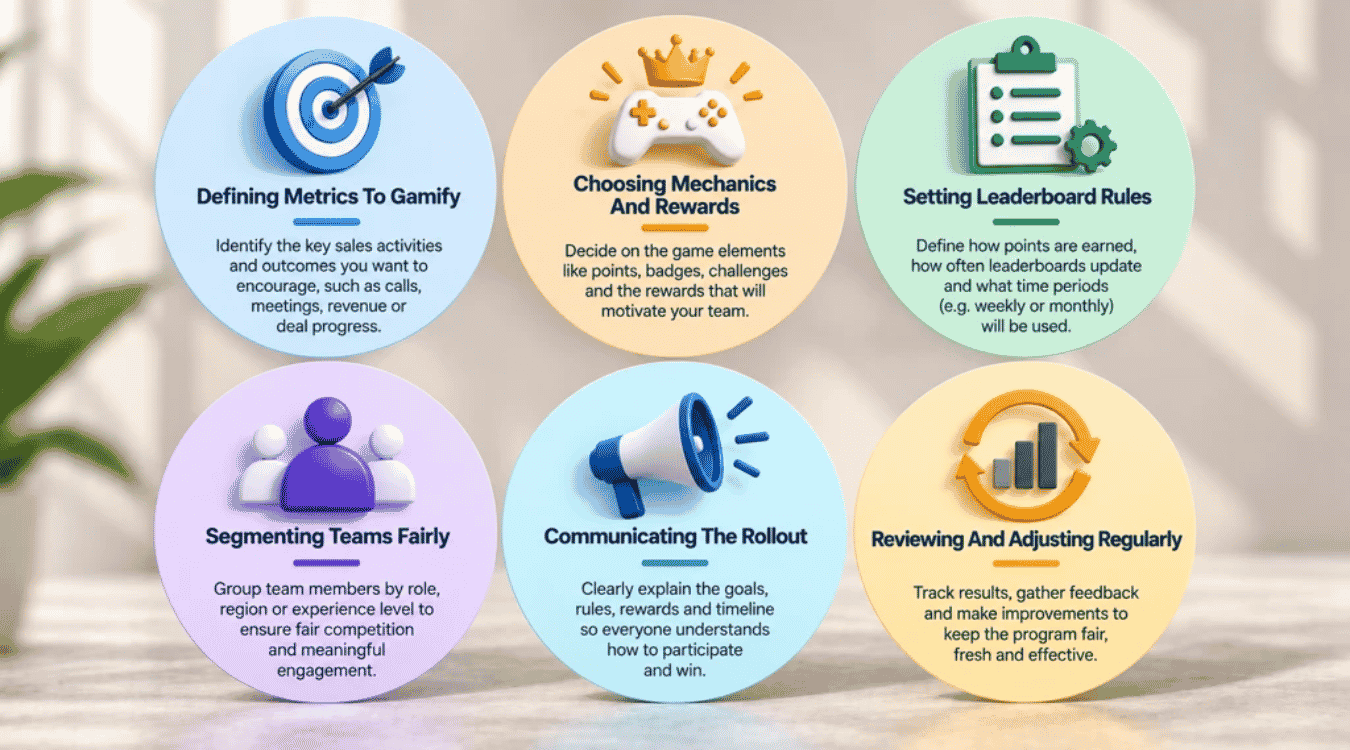
A gamification program works best when it's planned deliberately, not bolted onto a CRM overnight. Getting the setup right from the start keeps team motivation high instead of fading out after the initial excitement wears off.
Defining Metrics To Gamify
Start with the sales goals that actually matter, not every metric the CRM happens to track. Calls made, meetings booked, or closed deals are common starting points because they're easy to measure and directly tied to results.
Picking too many metrics at once dilutes focus and confuses team members about what's actually being rewarded. Two or three clear metrics, tied to real business outcomes, work better than a dashboard cluttered with numbers nobody checks.
Choosing Mechanics And Rewards
Game mechanics should match what actually motivates the team, not just copy what a competitor uses. Points, badges, and streaks work differently depending on whether reps respond more to recognition or tangible prizes.
Some teams pair gamification features with existing loyalty programs or reward catalogs already in place. Others keep it simple with public recognition alone. Either way, the reward needs to feel worth the effort, or the whole system loses credibility fast.
Setting Leaderboard Rules
Clear rules prevent disputes before they start. Decide upfront how ties get broken, how often the board resets, and whether it ranks individuals, teams, or both.
A leaderboard displayed on an office TV works well for creating friendly competition, but only if the rules behind it feel fair. Ambiguous scoring turns healthy competition into frustration, especially once top performers start noticing inconsistencies.
Segmenting Teams Fairly
Pitting a two-year veteran against a rep on their first month rarely goes well. Segmenting by tenure, territory, or role keeps competition realistic and keeps newer team members from checking out early.
Fair segmentation is often what separates a program that keeps agents engaged from one that just reinforces the same top performers winning every cycle. Everyone should have a real shot at recognition somewhere in the structure.
Communicating The Rollout
Even the best-designed program falls flat if reps don't understand how it works. A short walkthrough covering the metrics, rewards, and rules removes confusion before the first contest even starts.
Framing it as a way to boost morale and provide instant feedback, not as extra surveillance, changes how a team receives it. Sales managers who explain the "why" upfront tend to see faster adoption than teams that discover the program cold.
Reviewing And Adjusting Regularly
A program set up once and left alone tends to lose steam within a quarter. Reviewing real time data regularly shows which gamification elements are actually driving behavior and which ones nobody's engaging with.
This is also where targeted coaching comes in, using leaderboard trends to spot reps who need support rather than just real-time recognition for the reps already winning. Small adjustments keep the program feeling fresh instead of static.
Is Sales Gamification Software Right For Every Team
Not every sales team needs this, and forcing it onto a group that isn't ready for it can do more harm than good. Most teams with a CRM already in place and a handful of reps see real value, since gamification simply makes existing pipeline movement more visible and rewards it faster.
A solo founder closing their own deals or a two-person team rarely needs game-like elements layered on top of daily work. But once a team grows past a few reps, motivational messages and the ability to create leaderboards start to matter, giving managers a way to increase productivity without micromanaging every deal. The right tool, chosen with the team's actual size and structure in mind, helps improve performance instead of adding noise. Weighing team size, sales cycle, and existing tools against the options below makes it easier to make informed decisions before committing to one.
Team Situation | Likely Fit | Why |
|---|---|---|
Solo founder or 1-2 reps | Not needed | Too small for leaderboards or contests to mean anything |
Growing team of 5-15 reps | Strong fit | Enough reps for real competition and better performance tracking |
Distributed or remote sales team | Strong fit | Leaderboards replace the visibility a shared office would give |
Long, complex enterprise sales cycles | Partial fit | Better paired with coaching-focused gamification over pure leaderboards |
High-volume, short-cycle sales (SDR/BDR floors) | Strong fit | Daily activity metrics respond well to instant, visible competition |
Team already disengaged or under-resourced | Wait | Fix core process or staffing issues before adding gamification on top |
How Much Does Sales Gamification Software Cost
Pricing varies widely depending on whether a tool is a lightweight leaderboard or a full coaching and incentive platform. Most vendors charge per user per month, though a few price per tracked employee instead, which changes the math for teams with managers or viewers who only watch dashboards.
Entry-level leaderboard tools start under $20 per user per month. Mid-tier platforms that add coaching or deeper analytics typically land between $25 and $45 per user per month. Enterprise-grade incentive orchestration tools with AI features, custom integrations, and dedicated support often run $65 to $75 per user per month, sometimes with annual minimums that push the real floor higher than the sticker price suggests.
Software Type | Typical Price Range | Notes |
|---|---|---|
Lightweight leaderboard tools | $15 to $25/user/month, or flat team pricing under $20/month | Best for small teams wanting basic contests without setup overhead |
Standard gamification platforms (e.g. SalesScreen, Spinify) | $25 to $45/user/month | Often carries a 10 to 15 user minimum, especially on annual plans |
KPI dashboard platforms with gamification (e.g. Plecto) | Roughly $200 to $415/month for 10 tracked users | Priced per tracked employee, not per seat, which can lower cost for larger teams with view-only managers |
Coaching and incentive orchestration platforms (e.g. Ambition) | $45 to $75/user/month | AI add-ons and non-native CRM integrations often cost extra |
Enterprise gamification suites | Custom pricing, 200+ user minimums common | Requires a sales call, security review, and multi-year contract in most cases |
Prices shift often in this category, so treat these as directional ranges rather than fixed quotes, and confirm current numbers directly with a vendor before budgeting.
How To Choose Sales Gamification Software
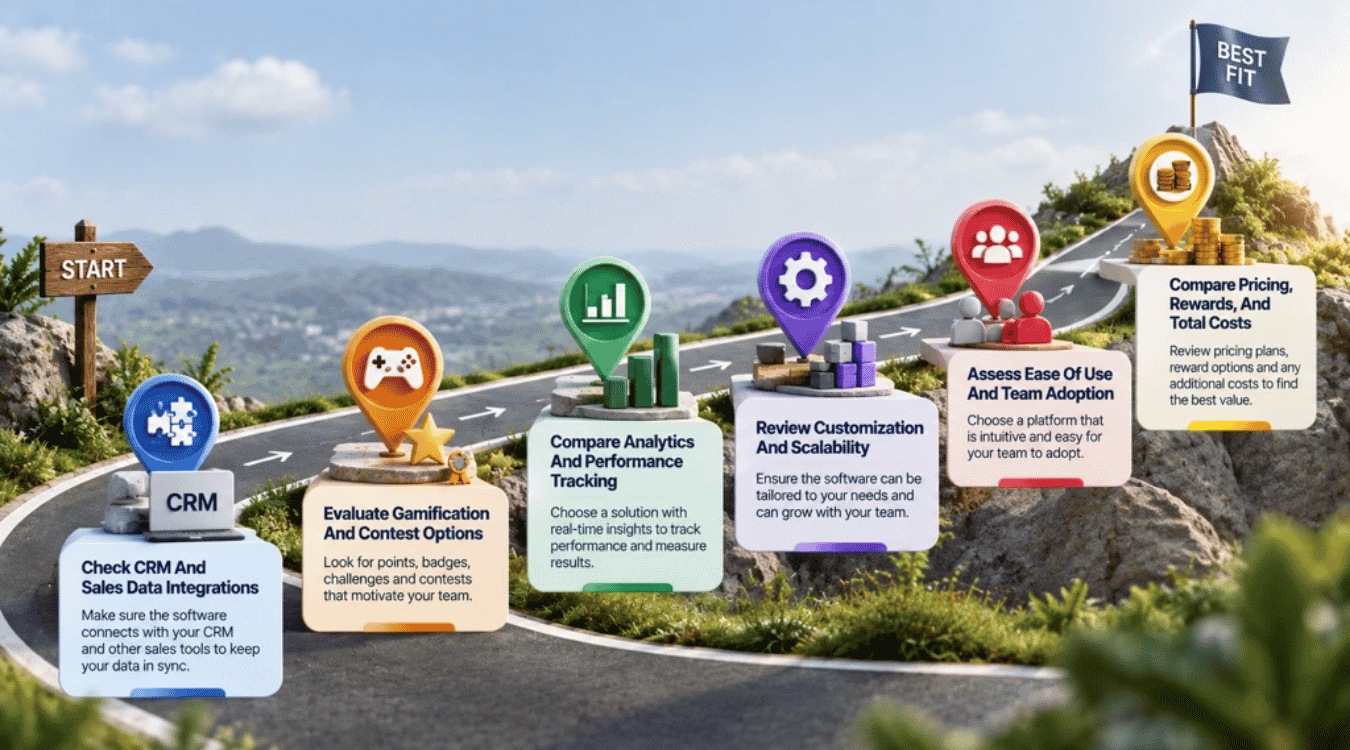
Picking the right tool means looking past flashy leaderboard demos to what actually fits your team. A few checks upfront save months of low adoption and wasted rewards budget later.
Check CRM And Sales Data Integrations
A tool is only useful if it pulls data automatically. Cold calls, meetings booked, and deals closed should flow in from your CRM without anyone manually updating a spreadsheet.
Real-time updates matter here. If leaderboard updates lag behind actual sales activity by hours or days, reps stop trusting the numbers, and the whole system loses credibility fast. Confirm the integration syncs live before signing anything.
Evaluate Gamification And Contest Options
Not every team needs the same mix of game mechanics. Customizable leaderboards, badges, and short contests all serve different purposes depending on what drives daily motivation for your specific teams.
Look for flexibility to run live leaderboards alongside shorter sprints tied to a single goal, like a week of outbound calls. Tools that only offer one rigid contest format tend to feel stale within a few cycles.
Compare Analytics And Performance Tracking
Beyond the leaderboard itself, managers need a way to track performance over time. Good analytics show trends across individuals and teams, not just who's winning today.
Look for reporting that connects activity data to actual sales outcomes, not just raw counts. This is what turns a fun leaderboard into something managers can use for real coaching, catching dips before they become a bigger problem.
Review Customization And Scalability
A tool that fits a five-person team today should still work once that team doubles. Rigid, one-size-fits-all setups tend to break down as headcount and structure grow.
Check whether contests, roles, and reward tiers can be adjusted without vendor support every time something changes. Scalability also means the pricing model won't punish growth with sudden per-seat jumps.
Assess Ease Of Use And Team Adoption
A gamification platform only works if teams actually open it. Complicated setup or confusing dashboards kill adoption before the first contest even finishes.
Ask for a trial period and watch how quickly reps start checking it without prompting. Immediate action from the team, not just curiosity in week one, is the real signal that a tool will stick around.
Compare Pricing, Rewards, And Total Costs
Sticker price rarely tells the full story. Factor in per-user costs, reward budgets, and any add-ons for coaching or advanced analytics before committing.
Recognition and rewards drive motivation, so cutting corners there to save on software fees often backfires. Weighing total cost against what it takes to celebrate achievements properly gives a clearer picture than comparing base prices alone.
Final Discussion
Choosing sales gamification software comes down to matching the tool to how a team actually works, not picking whatever ranks highest on a review site. A five-person startup team and a two-hundred-person enterprise floor need different mechanics, different pricing models, and different levels of complexity.
The real value shows up when reps start checking their standing without being asked, when new hires ramp faster because progress feels visible, and when managers coach based on real data instead of guesswork. Get the setup wrong, ignoring fair segmentation or letting a leaderboard go stale, and it turns into another ignored dashboard.
Start with the metrics that actually matter to your sales process, pick mechanics that fit how your team is wired, and adjust as you go.